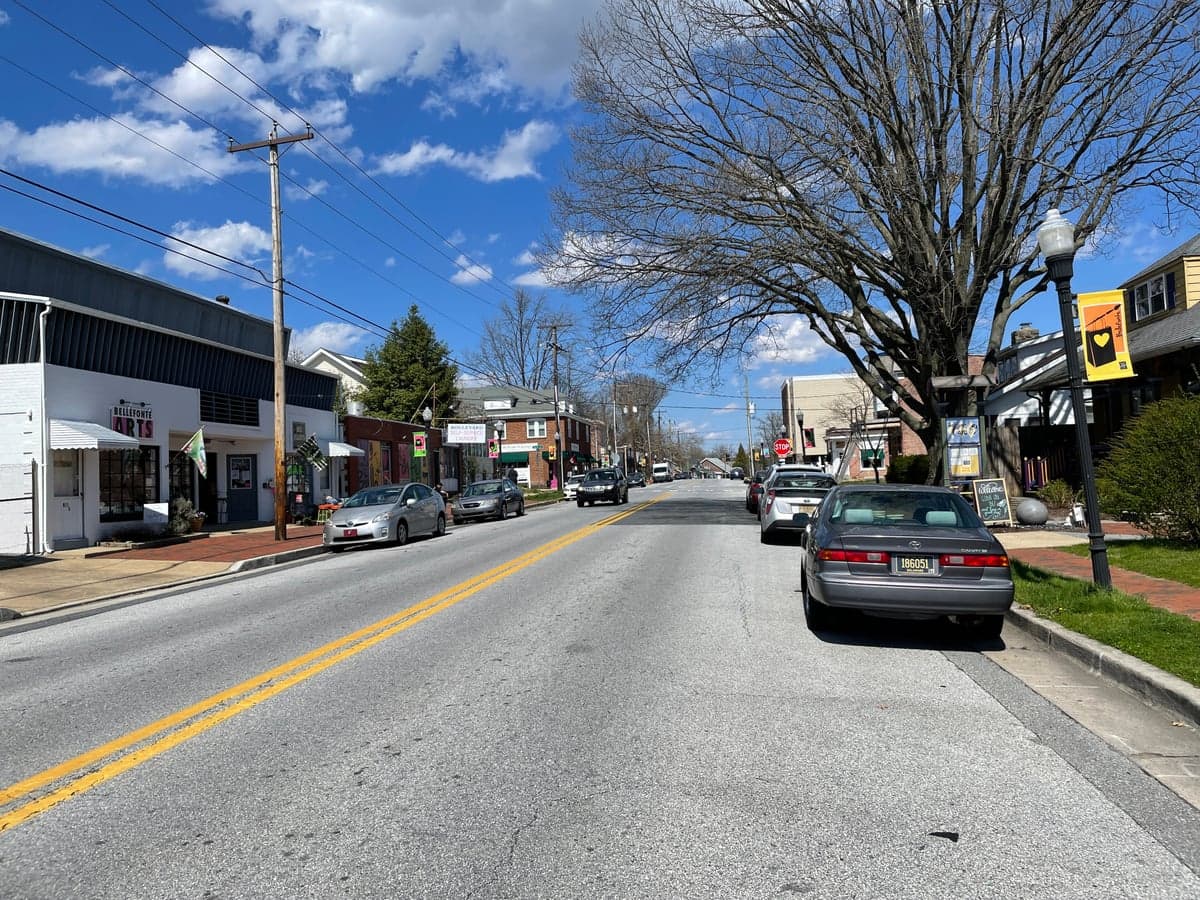
Photo: Wikipedia
Strategic Assessment of Bellefonte, DE
Multiple tactical vulnerabilities. Population density, target proximity, or disaster risk are likely compounding. A retreat property and exit planning is required.
What does the Strategic Assessment tell us?
Our Strategic Assessment grades tactical survivability of an area. Major population centers, military targets, fallout zones, natural disasters, and border exposure all drive risk — lower exposure means a more defensible position in a crisis.
This is heavily inspired by Joel Skousen's Strategic Relocation book. Highly recommended you checkout the book ($)What does this tell us?
Our Strategic Assessment grades tactical survivability of an area. Major population centers, military targets, fallout zones, natural disasters, and border exposure all drive risk — lower exposure means a more defensible position in a crisis.
This is heavily inspired by Joel Skousen's Strategic Relocation book. Highly recommended you checkout the book ($)Strategic Pillars

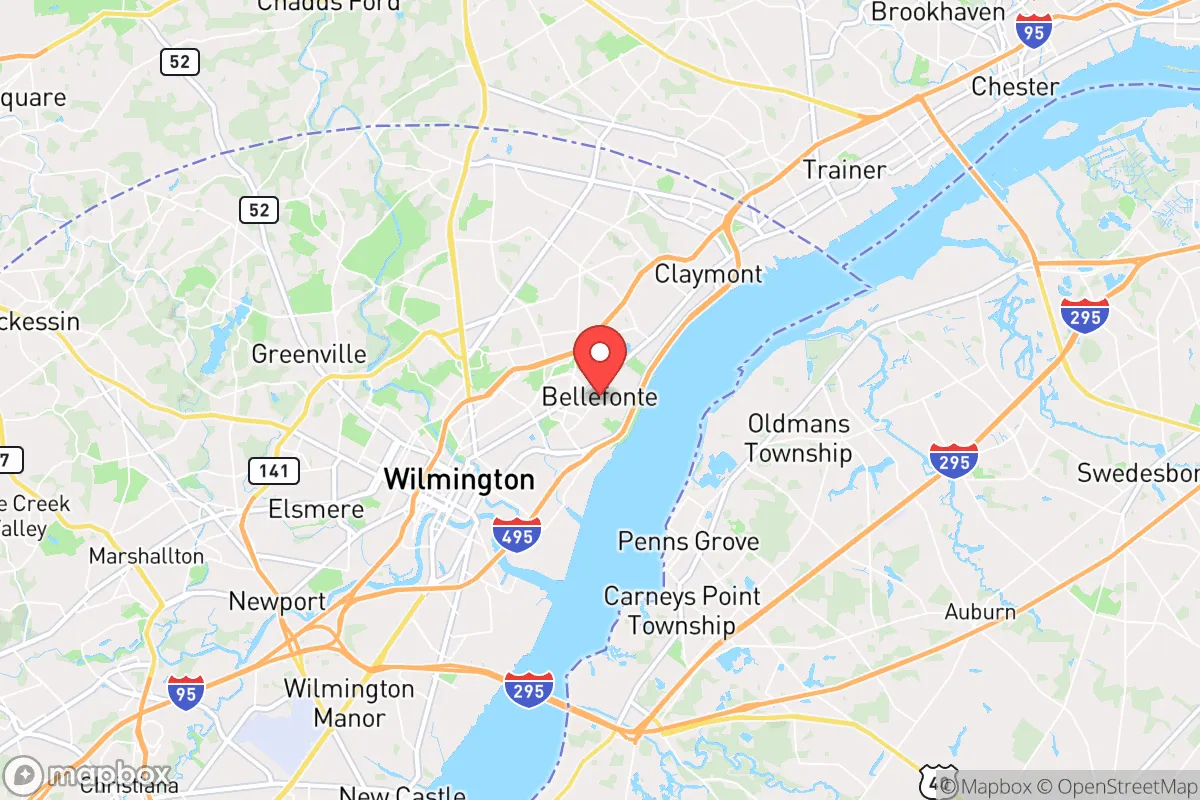
Key Distances
Regional Safe Places
Below is our recommended "safe zones" in Delaware and the surrounding area based on our strategic heuristics. For most people, it's unrealistic to live in a “safe zone” full-time due to work, family or other personal reasons. They tend to be more rural. However, many of these areas are perfect for second homes and retreat properties that double as a vacation home or even a short-term rental.
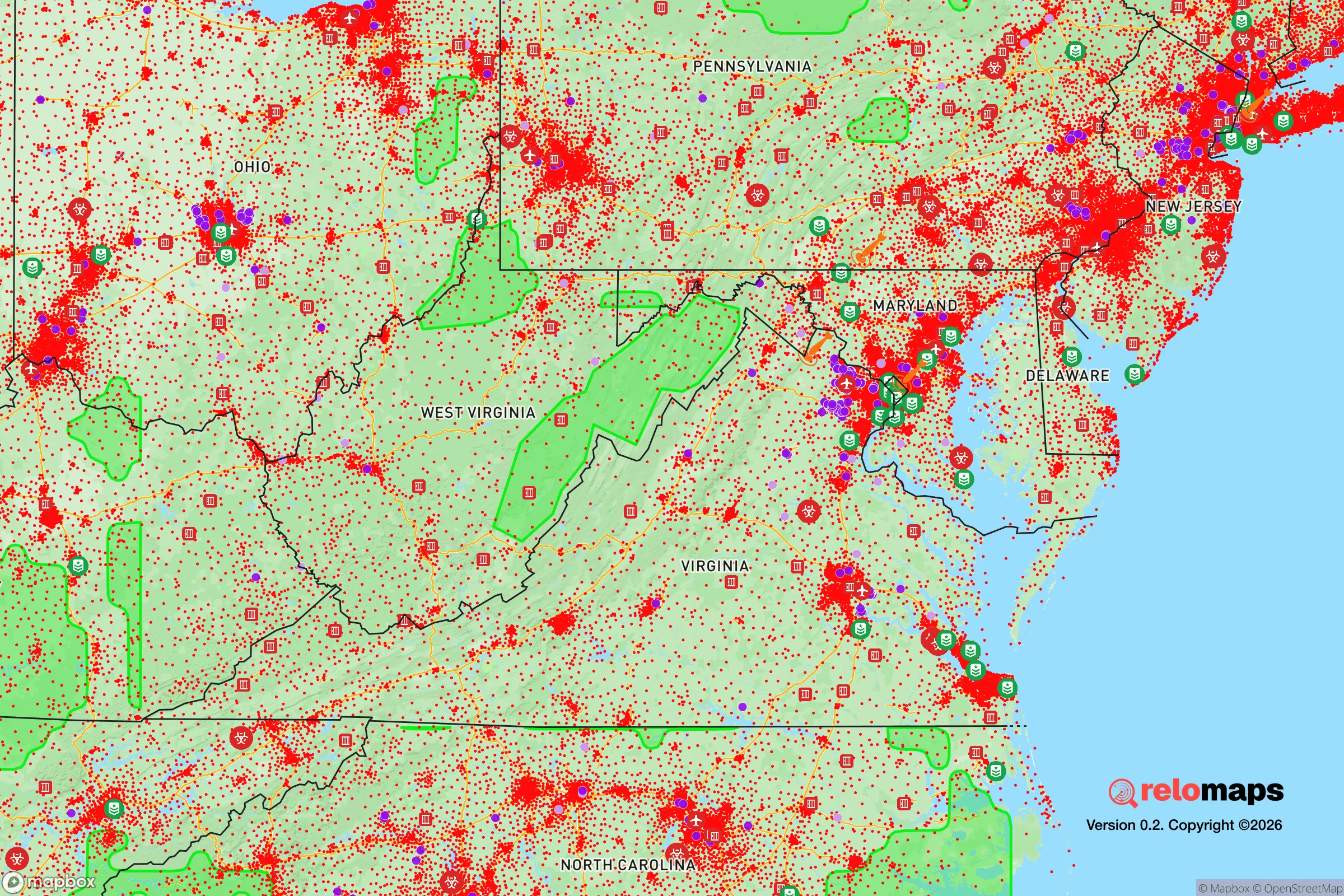
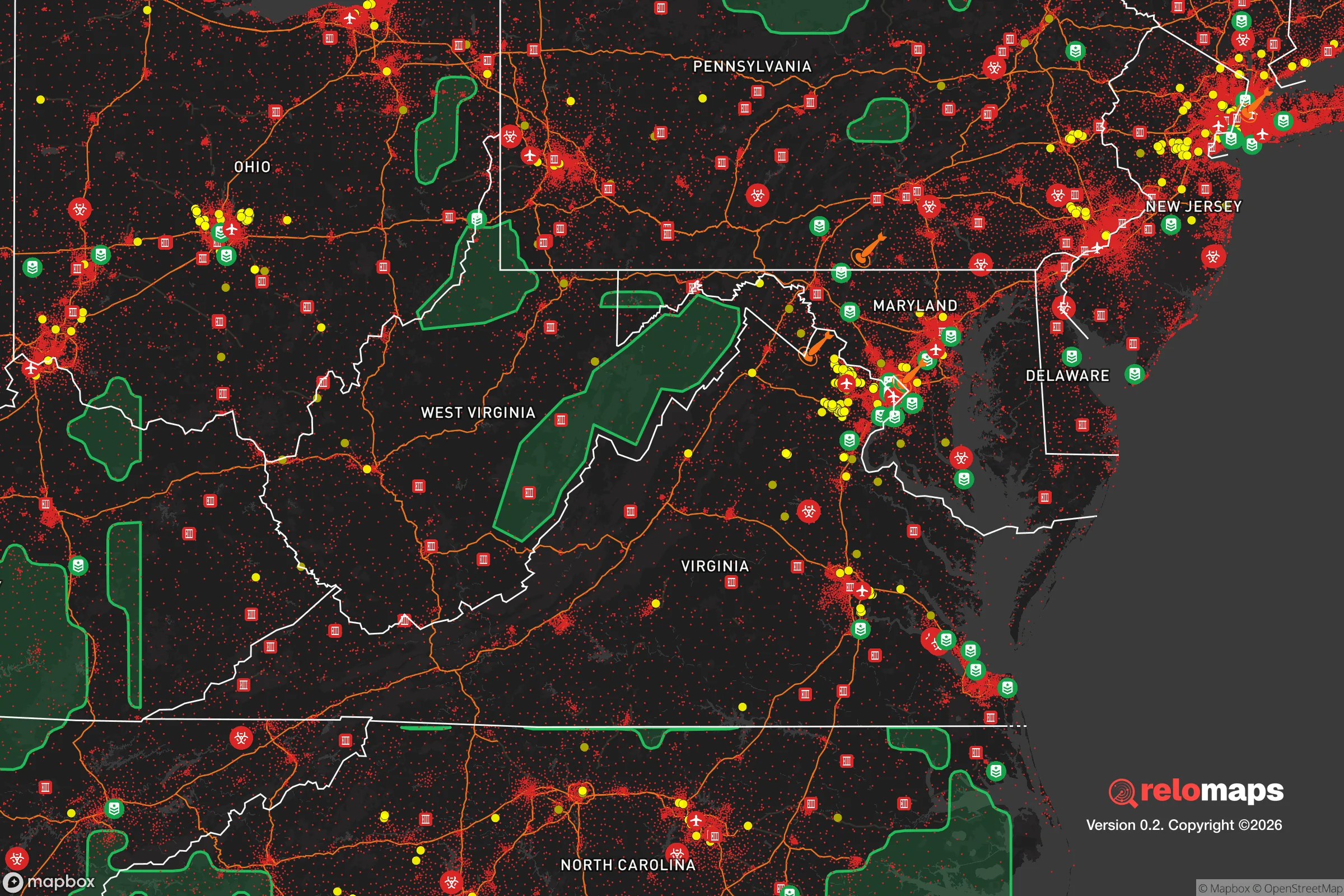


Important Note: For informational purposes only. This does not mean nothing bad ever happens in the green zones. Please use common sense. This is based on public data and modeled with AI. We tried to take a conservative approach but mistakes happen. We update this regularly as new information becomes available.
Solar Generator Recommendations
Backup power matters more here than in safer locations. We've picked three solar generators across budgets and capacity tiers — start with the budget unit if you only need a few essentials, or step up if you want to run a fridge and HVAC for days at a time.

Jackery Portable Power Station Explorer 300
Budget OptionPower on the Go: Weighing only 11 lbs, it's convenient to set up and store with book-sized foldable solar panels

BLUETTI Portable Power Station AC180
Designed for both indoor and outdoor scenarios, AC180 is highly capable as it has a robost capacity and continuous output power.

EF ECOFLOW DELTA Pro Ultra Power Station
Upgraded PickEcoFlow DELTA Pro Ultra is a whole-home energy system designed to grow with your family. Integrated with the Smart Home Panel 2, it scales to meet your evolving energy needs — keeping your home powered, intelligent, and secure through every stage of life.
We earn a commission, at no additional cost to you.
Strategic Assessment Analysis
Bellefonte, Delaware, offers a surprisingly resilient position for those prioritizing strategic relocation, balancing proximity to essential infrastructure with a degree of separation from the most acute risks. Nestled in northern New Castle County, this unincorporated community sits roughly 10 miles from the urban core of Wilmington and about 25 miles from Philadelphia, placing it within a zone that is neither isolated nor dangerously exposed. For a prepper or survivalist mindset, the key advantage is its location along the Delaware River corridor, providing access to water, transport routes, and a buffer against the densest population centers while still allowing for supply runs and medical access. The area’s low population density—under 1,000 residents—and its position outside major floodplains make it a candidate for those seeking a quiet, defensible base within striking distance of resources but not directly in the path of the most likely fallout scenarios.
Geographic position and natural advantages for long-term stability
Bellefonte sits on the eastern edge of the Piedmont Plateau, where the terrain transitions to the coastal plain, offering a mix of gentle hills and flatlands that provide natural drainage and limited flood risk. The Delaware River, less than a mile to the east, is a major freshwater artery, though its tidal nature means direct consumption requires treatment. The area is surrounded by agricultural land in southern Chester County, Pennsylvania, and rural New Castle County, which could support local food production in a prolonged disruption. The nearby White Clay Creek Preserve and Brandywine Creek State Park offer wooded cover and wildlife corridors, useful for foraging or evasion if needed. Critically, Bellefonte is not directly downstream from any major industrial or nuclear facilities, reducing the risk of waterborne contamination from an upstream incident. The region’s temperate climate allows for year-round gardening and moderate heating demands, a practical advantage for off-grid living.
Risks, exposures, and proximity to fallout-relevant landmarks
The most significant strategic liability is Bellefonte’s proximity to the Wilmington-Philadelphia metropolitan corridor, a dense urban zone that would be a primary target in any large-scale conflict or civil unrest. The Port of Wilmington, a major shipping hub for chemicals and petroleum, lies just 8 miles south, and the Delaware Memorial Bridge—a critical transportation chokepoint—is 12 miles away. Both are plausible targets for sabotage or military strikes, and their destruction could trigger secondary hazards like toxic plumes or refugee flows. The Salem Nuclear Generating Station in New Jersey, about 20 miles upriver, is a persistent concern; a containment failure or attack could contaminate the Delaware River and surrounding airshed, with Bellefonte lying within the 10-mile emergency planning zone’s outer edge. Additionally, the area’s proximity to I-95 and Amtrak’s Northeast Corridor means that any disruption in those arteries—whether from terrorism, infrastructure failure, or mass evacuation—would funnel displaced populations through nearby routes. For a relocator, the risk of being caught in a secondary wave of unrest or resource competition is real, though the community’s small size and limited through-traffic reduce the odds of direct exposure.
Practical resilience for a relocator: food, water, energy, and defensibility
For a single individual or family, Bellefonte offers a mixed bag of practical resilience features. Water access is the strongest asset: the Delaware River is a year-round source, though it requires filtration and boiling due to industrial runoff and tidal salinity. Several private wells exist in the area, and the local water table is shallow enough for hand-pump retrofits, but new well drilling is regulated by New Castle County. Food security is moderate—the surrounding farmland produces corn, soybeans, and poultry, but local grocery stores are limited to a few small markets in nearby Claymont and Wilmington. A relocator would need to establish relationships with local farmers or invest in a substantial home garden and seed bank. Energy infrastructure is typical for suburban Delaware: overhead power lines are vulnerable to storms and grid failure, but the area’s tree cover provides some natural windbreak. Solar panels are viable given the region’s 4.5 peak sun hours per day, and wood-burning stoves are common in older homes. Defensibility is the weakest link: Bellefonte is a linear community along a single main road (Philadelphia Pike), with limited natural chokepoints or high ground. Neighbors are close, and the lack of a centralized community organization means that coordinated defense would rely on ad hoc networks. However, the area’s low crime rate—violent crime is roughly 60% below the national average—suggests that in a stable scenario, interpersonal threats are minimal. For a prepper, the key is to treat Bellefonte as a base for resource gathering and retreat, not a fortress.
The overall strategic picture for Bellefonte is one of cautious viability for a relocator with a survivalist mindset. It is not a bug-out location in the wilderness sense, nor is it a hardened redoubt. Instead, it offers a middle ground: close enough to urban supply chains and medical facilities to sustain a modern lifestyle during normal times, yet far enough from the most likely flashpoints to provide a buffer during crises. The community’s small size and lack of major infrastructure make it a low-priority target, but its dependence on external systems—grid power, municipal water, and road networks—means that any prolonged disruption would require significant self-sufficiency investments. For a conservative-leaning individual or family seeking a place to ride out societal turbulence without abandoning all conveniences, Bellefonte is a reasonable choice, provided they are willing to drill a well, stockpile supplies, and build local alliances. The area’s greatest strength is its anonymity; its greatest weakness is its proximity to the very systems that make it livable. In a world of increasing uncertainty, that trade-off may be exactly what some are looking for.

* Values derived from national, state, county, city and local statistics and may differ in a specific area. Last updated: 2026-04-30T07:29:22.000Z
Narrative content on this page is AI-generated and may contain mistakes. Verify any details that matter before acting on them.
ReloMaps may earn a commission from affiliate links at no extra cost to you.

