Photo: Wikipedia
Find The Best Places To Live
in Idaho
PRO TIP! You can paste a Zillow or Redfin link to get info on that property.
Best Places to Live in Idaho

Cities in Idaho
Largest Cities in Idaho
What It's Like Living in Idaho
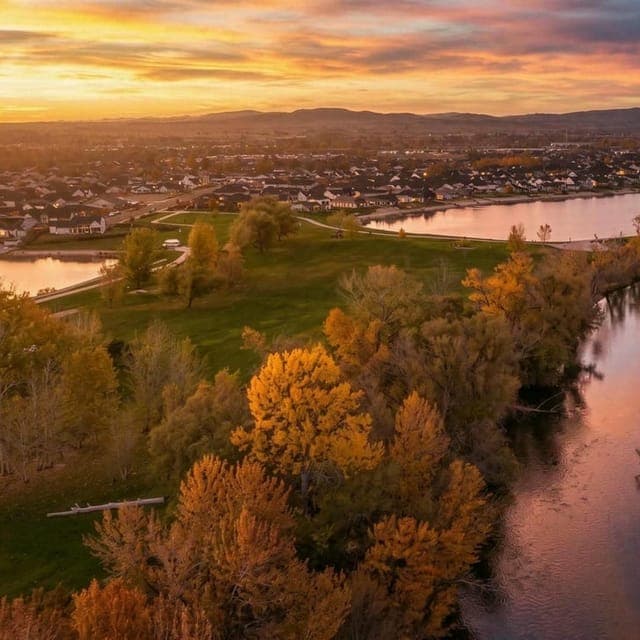
Living in Idaho in 2026 feels like being part of a state that’s still figuring out how fast it wants to grow. You’ve got the booming tech corridor of Boise and Meridian, where new subdivisions and traffic jams are the new normal, and then, just an hour away, you’re in places like McCall or Sandpoint where the biggest decision of the day is whether to hike or fish. It’s a place where the "Idaho way" of self-reliance and outdoor grit still holds strong, even as California transplants and remote workers reshape the economy. The state’s population has climbed to nearly 1.9 million, and that growth is the single biggest story shaping daily life from the Treasure Valley to the Panhandle.
The Daily Rhythm: From Boise’s Bustle to Rural Quiet
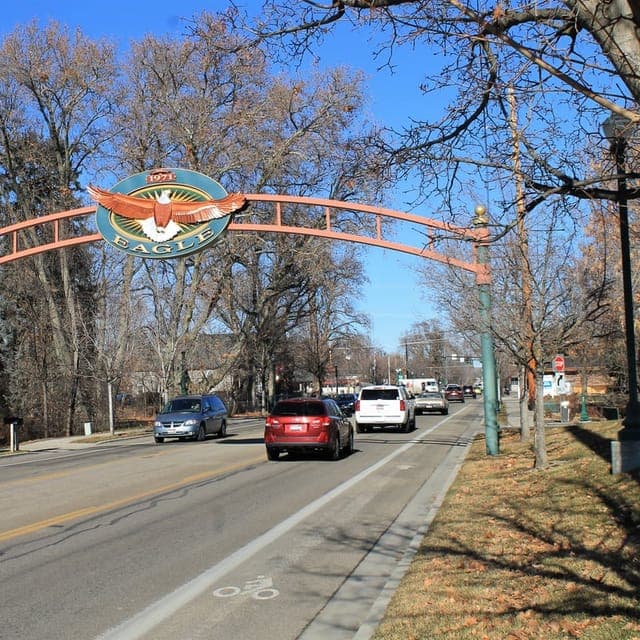
Daily life in Idaho depends almost entirely on which part of the state you’re in. In Boise and its suburbs like Eagle and Nampa, the rhythm is increasingly suburban-American: morning commutes that now average about 21 minutes, coffee runs at a local roaster like Neckar Coffee, and evenings spent at a kid’s soccer game or grabbing dinner at a place like The Wylder. The median age here is 37.1, which tracks with a lot of families and early-career professionals who moved for jobs at Micron, HP, or the growing number of tech startups. In contrast, a place like Idaho Falls or Twin Falls moves slower. People there shop at local co-ops, know their neighbors by name, and weekends are for driving out to Craters of the Moon or Shoshone Falls rather than hitting a concert venue. The cost of living index sits at 113, meaning it’s about 13% pricier than the national average, but that’s mostly driven by housing in the Boise area—out in Lewiston or Pocatello, your dollar still stretches further.
One thing that unites most of the state is the weather. Winters are real—cold, snowy, and dark by 5 PM—but they’re also what make summer so good. People here don’t complain about the snow; they buy a snowmobile or a pair of cross-country skis. The seasonal rhythm is a big part of the identity: spring is for shed hunting and fishing opener, summer for camping and floating the Payette River, fall for elk hunting and football, and winter for skiing at Brundage or Bogus Basin. If you don’t like outdoor activities, you’ll find Idaho boring. If you do, you’ll wonder why you ever lived anywhere else.
Sports, Community, and What People Actually Do for Fun
Sports in Idaho are a big deal, but not in the way they are in Texas or Ohio. There’s no major pro team, but the Boise State Broncos football program is essentially the state’s pro team—blue turf, late-night ESPN games, and a fan base that fills Albertsons Stadium every Saturday. High school football is huge in places like Coeur d’Alene and Meridian, where Friday nights in the fall are community events. For winter sports, the Idaho Steelheads (ECHL hockey) draw solid crowds in Boise, and the Boise Hawks (minor league baseball) are a cheap, fun summer night out. Outside of organized sports, the real entertainment is the landscape itself. The Greenbelt in Boise is a 25-mile paved trail along the river that’s packed with bikers, runners, and dog walkers. In Sandpoint, the Schweitzer Mountain Resort is a legit ski destination. Festivals like Treefort Music Fest in Boise and the Spud Day celebration in Shelley give the state a quirky, local flavor that transplants quickly learn to love.
The cultural identity here is a mix of Western independence and a kind of polite reserve. People are friendly but not pushy. You’ll get a wave from a stranger on a backroad, but don’t expect a deep conversation at the grocery store. There’s a strong libertarian streak—Idahoans generally want to be left alone to live their lives, and that shows in the politics and the pace of life. The state is reliably conservative, but the growing Boise area is more purple, with younger voters and tech workers shifting the balance slightly. Longtime residents sometimes grumble about "Californians" driving up home prices, and the median home value of $376,000 is a real shock for locals who remember when you could buy a house in Boise for under $200K.
Pros and Cons of Living in Idaho
- What people love: The access to the outdoors is unmatched—world-class skiing, fishing, hunting, hiking, and camping are all within a short drive. The schools in suburbs like Meridian and Coeur d’Alene are strong, and the state has a low violent crime rate (215.5 per 100K, well below the national average). The economy is diverse enough that you don’t feel trapped in one industry, and the median household income of $74,636 supports a comfortable middle-class life if you bought a house before 2020.
- What frustrates people: The housing market is the biggest pain point. Rents in Boise have skyrocketed, and inventory is tight everywhere. Traffic on the I-84 corridor between Meridian and Boise is genuinely bad during rush hour—a 20-minute commute can easily turn into 45. The winters are long and gray in the northern part of the state, and some rural areas (like parts of the Magic Valley) struggle with limited healthcare access and a lack of entertainment options. Also, the state’s rapid growth has led to growing pains: more people means more pressure on infrastructure, and some locals feel the small-town character is fading.
Overall, Idaho is best suited for someone who values space, nature, and a slower pace but can handle real winters and a housing market that’s no longer a secret. It’s a state where you can own a boat and a snowmobile, send your kids to decent schools, and still feel like you’re living in a place that hasn’t been completely discovered—even if the secret is definitely out.

* Values derived from national, state, county, city and local statistics and may differ in a specific area. Last updated: 2026-04-14T06:22:46.000Z
Narrative content on this page is AI-generated and may contain mistakes. Verify any details that matter before acting on them.
ReloMaps may earn a commission from affiliate links at no extra cost to you.

