Photo: Wikipedia
Find The Best Places To Live
in Rhode Island
PRO TIP! You can paste a Zillow or Redfin link to get info on that property.
Best Places to Live in Rhode Island

Cities in Rhode Island
Largest Cities in Rhode Island
What It's Like Living in Rhode Island
Living in Rhode Island means you’re never more than a 45-minute drive from the ocean, a decent bowl of clam chowder, or a traffic jam that makes you question your life choices. The state packs a lot of personality into its 1,214 square miles, from the college-town energy of Providence to the quiet coastal villages like Bristol and the more rural stretches of Foster and Scituate. For a conservative-leaning audience, the appeal often lies in the state’s strong sense of local identity, tight-knit communities, and the ability to actually know your neighbors — but you also have to accept that you’re living in one of the most politically liberal states in the country.
The Daily Rhythm: From Providence to the Quiet Corners
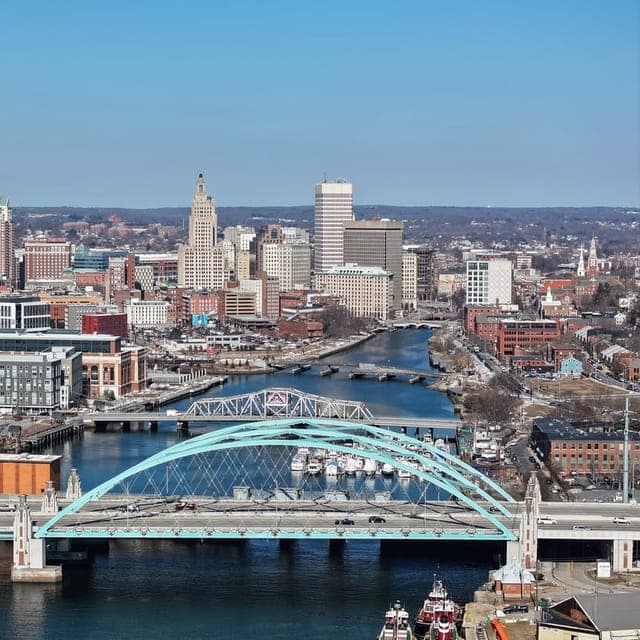
Daily life in Rhode Island varies dramatically depending on where you land. In Providence, you get walkable neighborhoods, a thriving food scene, and the constant hum of Brown University and the Rhode Island School of Design. People here grab coffee at Small Point Café, shop at the Hope Street Farmers Market, and spend weekends exploring the Roger Williams Park Zoo or catching a show at The Strand. The median age in the state is 40.5, and Providence skews younger, with a mix of students, young professionals, and empty-nesters drawn to the city’s artsy vibe. But if you’re a parent looking for good schools and a yard, you’re more likely to land in East Greenwich or Barrington, where the median home value of $368,800 buys you a solid three-bedroom colonial. In these suburbs, weekends revolve around youth soccer games, trips to the local beach (Goddard Park in Warwick is a favorite), and the occasional pilgrimage to the Wickford Art Festival in North Kingstown.
Head west to Foster or Coventry, and the rhythm slows down. You’ll find dirt roads, working farms, and a population that values privacy and self-reliance. The commute to Providence from these areas averages about 25 minutes — the state’s average commute is 25.5 minutes, which is short by national standards. That’s a genuine perk: you can live in the woods and still be at your desk in half an hour. The trade-off is fewer restaurants and a heavier reliance on driving everywhere. The cost of living index sits at 118, meaning everyday expenses run about 18% above the national average, largely driven by housing and energy costs.
Sports, Community, and the Things That Bring People Together
Rhode Islanders are passionate about their sports, but it’s not the pro-level fervor you see in Boston or New York. High school football is a big deal in towns like Cranston and Warwick, where Friday-night games draw hundreds of families. The state’s only Division I college sports program is the University of Rhode Island Rams in Kingston, and basketball games at the Ryan Center have a loyal, if not massive, following. For pro sports, most residents are Boston fans — Red Sox, Patriots, Celtics, Bruins — but the Providence Bruins (AHL hockey) and the Rhode Island FC (USL soccer) give locals a team to call their own without the commute. The Pawtucket Red Sox left for Worcester in 2021, which still stings for longtime residents.
Festivals and traditions are where Rhode Island really shines. The Bristol Fourth of July Parade is the oldest continuous celebration in the country, and it’s a genuinely patriotic, family-friendly event that draws people from all over the state. The Newport Folk Festival and Newport Jazz Festival are world-class, but they’re also expensive and crowded. For a more low-key weekend, locals hit the Scituate Art Festival in October or the Gaspee Days in Warwick, which reenacts a colonial-era boat burning. The food scene is anchored by Olneyville New York System in Providence for a hot wiener (a local specialty), and Iggy’s Doughboys & Chowder House in Warwick for clam cakes and chowder. These are not fancy places — they’re linoleum-floor institutions where you’ll see everyone from lawyers to landscapers.
Pros and Cons of Living in the Ocean State
Let’s be honest about the upsides and downsides. On the plus side, the state is small enough that you can build real community. The median income of $86,372 is decent, and the violent crime rate of 140.1 per 100,000 is below the national average — most of the state feels safe, especially in the suburbs and rural areas. The schools in Barrington and East Greenwich are top-notch, and the state’s 37.3% college-educated rate means you’re surrounded by people who value education. The coastline is stunning, and you can be on a beach in Narragansett or Watch Hill within 30 minutes from almost anywhere.
On the downside, the cost of living is a real squeeze. A median home value of $368,800 is steep for a state with a modest job market outside of healthcare, education, and government. Property taxes are high, and the state’s political climate is overwhelmingly liberal — if you’re conservative, you’ll find like-minded people in the rural towns, but you’ll also feel like a minority in state politics. Traffic on I-95 through Providence is a daily grind, and the weather is a mixed bag: mild summers, but gray, damp winters that can feel endless. The state’s population of 1,095,371 means you’ll run into people you know constantly — which is either charming or suffocating, depending on your personality.
For the right person — someone who values community, doesn’t mind a little rain, and wants quick access to both city amenities and rural quiet — Rhode Island offers a life that’s distinct and grounded. It’s not for everyone, but the people who stay here tend to stay for good.

* Values derived from national, state, county, city and local statistics and may differ in a specific area. Last updated: 2026-04-19T01:38:18.000Z
Narrative content on this page is AI-generated and may contain mistakes. Verify any details that matter before acting on them.
ReloMaps may earn a commission from affiliate links at no extra cost to you.

