Photo: Wikipedia
Find The Best Places To Live
in Utah
PRO TIP! You can paste a Zillow or Redfin link to get info on that property.
Best Places to Live in Utah
Cities in Utah
Largest Cities in Utah
What It's Like Living in Utah
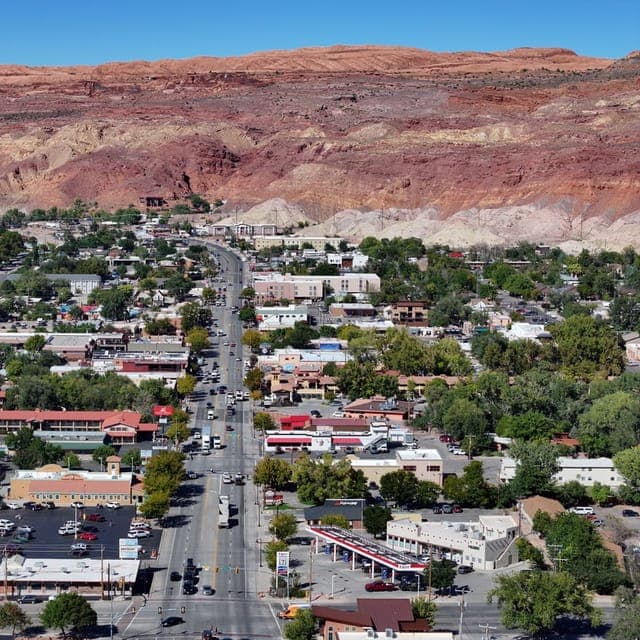
Utah is a state of stark contrasts, where the rugged, red-rock silence of Moab meets the bustling, tech-fueled energy of Lehi, and where a deeply rooted pioneer heritage coexists with one of the fastest-growing, most diverse economies in the country. Living here means navigating a landscape that is as much about community values and outdoor ambition as it is about the literal landscape—a place where the Wasatch Front feels like a sprawling, interconnected small town, and the rural stretches of San Juan County feel like another planet entirely.
The Daily Rhythm: From Silicon Slopes to Red Dirt Roads
Daily life in Utah varies dramatically depending on whether you're in a dense urban center or a remote outpost. Along the Wasatch Front, from Provo up through Salt Lake City to Ogden, the rhythm is driven by a unique blend of high-tech careers and outdoor recreation. A typical weekday might start with a commute that averages just under 22 minutes—short by national standards—before heading to work at companies like Adobe, Qualtrics, or the sprawling L3Harris campus. In the evenings, it's common to see families heading straight from the office to a trailhead in Millcreek Canyon or to a youth soccer game in Sandy. In contrast, life in places like Cedar City or Price is slower, more tied to local government, education at Southern Utah University, or the rhythms of mining and agriculture. The state's median age of 31.7 reflects a youthful energy, especially in Utah County, where the influence of Brigham Young University in Provo creates a distinct, academically focused social scene.
Sports, Community, and the Weekend Playbook
Sports are a near-religious experience here, but the devotion is split. The Utah Jazz in Salt Lake City command a loyal, knowledgeable fanbase that packs the Delta Center, but the real fever pitch is found in college sports. BYU Cougars football in Provo and the University of Utah Utes in Salt Lake City create a rivalry that divides households and offices, with game-day traffic and tailgating culture dominating fall weekends. High school football is also a major social event, particularly in growing suburbs like Herriman and Riverton, where Friday-night games draw thousands. For the outdoor crowd, weekends are a logistical operation: a Saturday might start with skiing at Snowbird or Park City Mountain before the crowds hit, then transition to a concert at the Red Butte Garden Amphitheatre. The Sundance Film Festival in Park City is a cultural anchor, drawing global attention, but locals also swear by smaller events like the Utah Arts Festival in Salt Lake City or the Greek Festival at Holy Trinity Cathedral.
What's There to Do: The Outdoor Capital and Its Urban Perks
Utah's biggest draw is its unparalleled access to public lands. Within a two-hour drive of Salt Lake City, you can be hiking in the Wasatch Range, mountain biking in Moab's slickrock, or floating the Green River through Dinosaur National Monument. The "Mighty 5" national parks—Arches, Bryce Canyon, Canyonlands, Capitol Reef, and Zion—are bucket-list destinations that locals visit on long weekends. But the state also has a surprisingly robust food and drink scene, though it operates under unique rules. The beer in bars is typically 4.0% ABV on tap (stronger bottles are available), and the state-run liquor stores can feel like a relic of the past. Still, spots like the Copper Onion in Salt Lake City or the eclectic eateries in Ogden's 25th Street offer high-quality dining. For families, the Tracy Aviary and Liberty Park in Salt Lake City are staples, while the Thanksgiving Point complex in Lehi offers gardens, a museum, and a farm.
Pros and Cons of Living Here: The Honest Trade-Offs
Longtime residents love the sense of safety and community. The violent crime rate of 215.9 per 100,000 is well below the national average, and many neighborhoods in places like Bountiful or St. George feel genuinely safe for kids playing outside. The median household income of $91,750 is strong, but it's increasingly strained by housing costs. The median home value of $455,000 and a cost of living index of 137 mean that affordability is a growing frustration, especially for young families trying to buy in Davis or Salt Lake County. Traffic along the I-15 corridor, particularly between Lehi and Salt Lake City, has become a genuine headache during peak hours, despite the short average commute. The cultural quirks are real: the dominant LDS Church influence means that many social activities, school schedules, and even business hours are shaped by its calendar. Sundays are genuinely quiet in many towns, with stores closed and a slower pace that can feel peaceful or restrictive depending on your perspective. The air quality in winter, especially during inversions along the Wasatch Front, is a serious health concern that locals grumble about but have learned to live with. For the right person—someone who values outdoor adventure, community ties, and a slower, family-oriented pace—Utah offers a quality of life that's hard to match, even with its trade-offs.

* Values derived from national, state, county, city and local statistics and may differ in a specific area. Last updated: 2026-04-14T06:21:26.000Z
Narrative content on this page is AI-generated and may contain mistakes. Verify any details that matter before acting on them.
ReloMaps may earn a commission from affiliate links at no extra cost to you.

