Photo: City of Casselton
Demographics of Casselton, ND
Affluence Level in Casselton, ND
An upper-middle-class area. Household wealth, education levels, and homeownership run ahead of national benchmarks.
People of Casselton, ND
Casselton, North Dakota, is a predominantly white, family-oriented community of 2,640 residents, characterized by a strong agricultural and railroad heritage and a notably low foreign-born population of just 0.2%. The city’s population is 91.9% white, with a Hispanic or Latino share of 5.2% and a Black share of 1.5%, reflecting a demographic profile that has changed little in recent decades. Residents identify strongly with local schools, the annual Casselton Potato Festival, and a quiet, low-crime lifestyle that appeals to conservative-leaning families and individuals seeking a stable, rural community within commuting distance of Fargo.
How the city was settled and grew
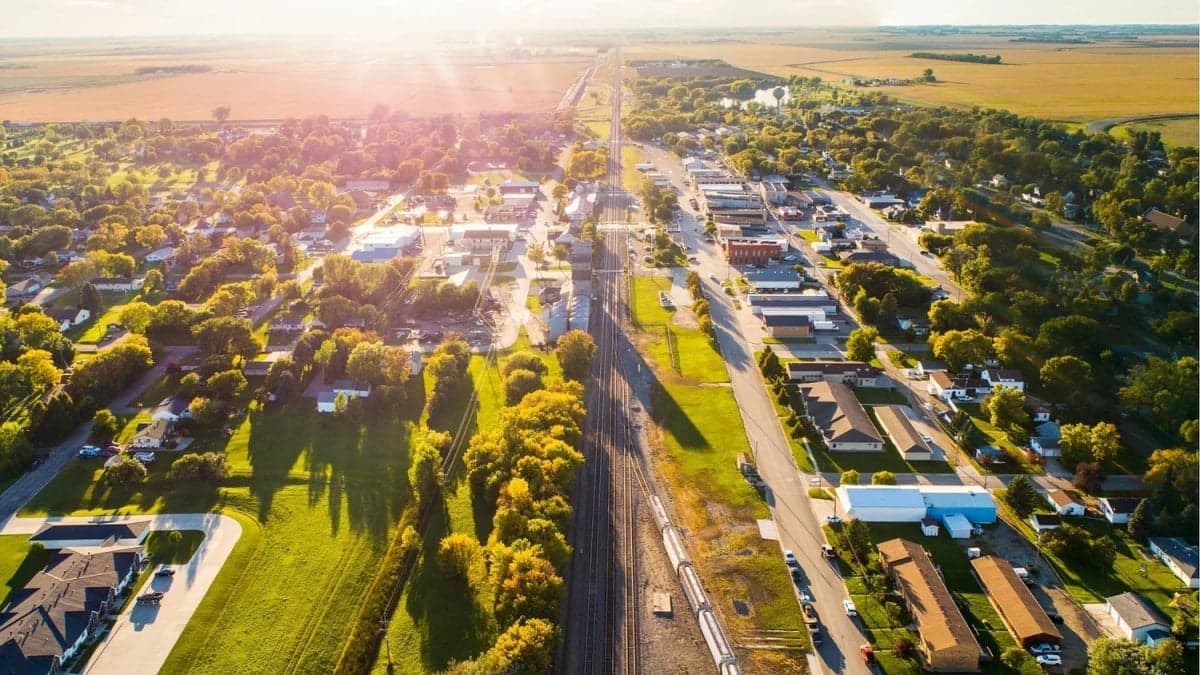
Casselton’s population history begins with the arrival of the Northern Pacific Railway in the 1870s, which transformed the area from open prairie into a bustling grain-shipping point. The city was platted in 1876 and named after George Cass, a railroad executive. The first wave of settlers were predominantly Northern European immigrants—Norwegians, Germans, and Swedes—drawn by the promise of fertile land under the Homestead Act and jobs on the railroad. These early families built their homes in what is now the Original Townsite district, centered around the railroad depot and Front Street. A second wave of German-Russian immigrants arrived in the 1890s and early 1900s, settling primarily in the South Side neighborhood, where they established St. Leo’s Catholic Church and a tight-knit farming community. By 1910, the population had reached roughly 600, and the town’s identity as a conservative, agrarian hub was firmly set. The mid-20th century saw little new in-migration; the population hovered around 1,000 as the children of the original settlers either took over family farms or left for larger cities.
Modern era (post-1965)
After the 1965 Immigration and Nationality Act, Casselton experienced virtually no influx of foreign-born residents, a pattern that continues today. The city’s modest modern growth has come almost entirely from domestic in-migration—primarily white families from rural North Dakota and Minnesota seeking affordable housing and good schools. The Prairie View Addition, developed in the 1990s and 2000s, absorbed most of this new population, offering larger lots and newer homes that attracted young families and commuters working in Fargo, 20 miles east. The Westwood Estates subdivision, built in the 2010s, further expanded the housing stock, drawing a mix of retirees and professionals. The Hispanic population, now 5.2%, is a small but visible presence, largely composed of families working in agricultural processing and construction; they are dispersed throughout the city, with no single ethnic enclave. The Black population, at 1.5%, is similarly scattered. There are no East/Southeast Asian or Indian-subcontinent communities in Casselton, reflecting the city’s continued homogeneity. The college-educated share of 36.8% is above the state average, driven by professionals who commute to Fargo’s healthcare, education, and tech sectors.
The future
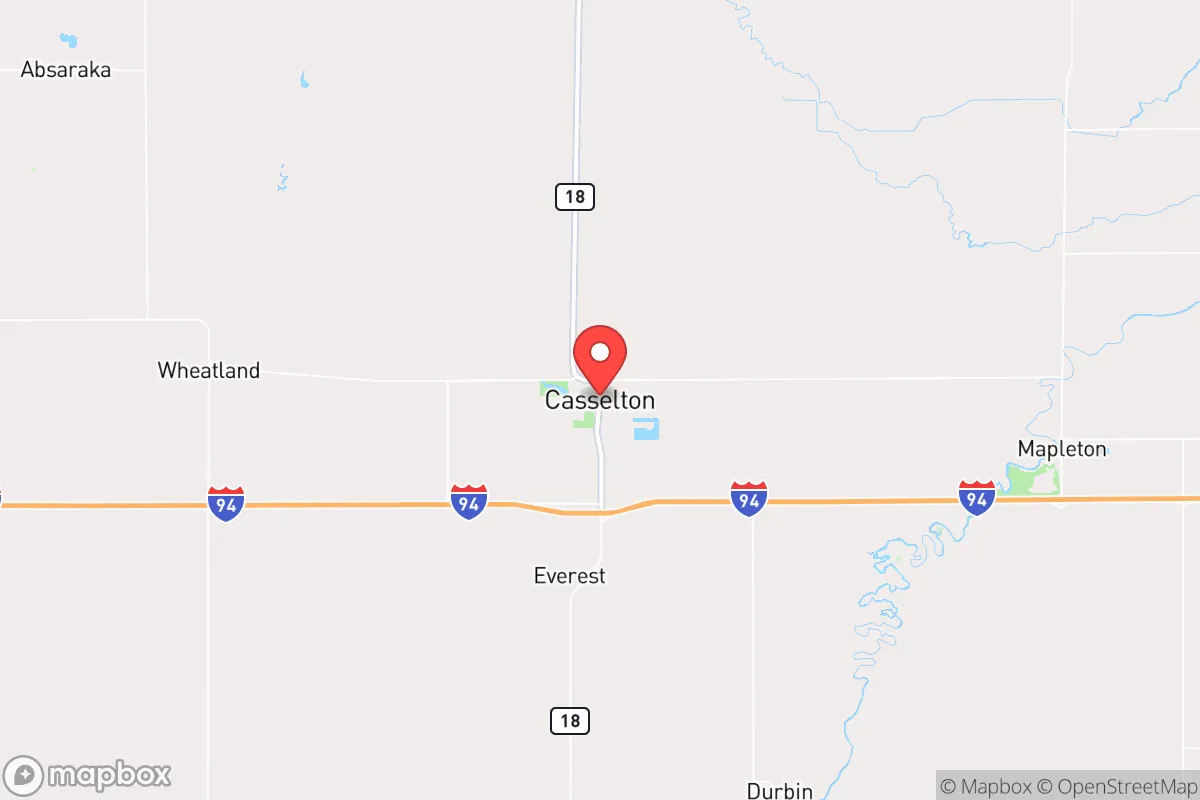
Casselton’s population is projected to grow slowly, likely reaching 3,000 by 2040, driven by spillover from Fargo’s expanding metro area and the city’s reputation for low taxes and safe neighborhoods. The demographic trend is toward homogenization rather than diversification: the white share is expected to remain above 90%, with the Hispanic share rising only modestly as agricultural labor needs persist. The foreign-born population is unlikely to increase significantly, as the city lacks the industrial base or refugee resettlement programs that have driven diversity in larger North Dakota cities like Fargo or Grand Forks. New housing developments, such as the planned North Casselton Addition near the high school, are marketed to young families and will likely attract the same demographic profile as existing subdivisions. The city is not tribalizing into distinct enclaves; instead, it is becoming a more uniform, commuter-oriented suburb, with residents sharing a common lifestyle centered on schools, church, and outdoor recreation.
For a conservative-leaning individual or family considering relocation, Casselton offers a stable, predictable community where demographic change is slow and the social fabric remains largely unchanged from its 20th-century roots. The city is becoming a quieter, more residential extension of the Fargo metro, with a population that values tradition, self-reliance, and low taxes. New arrivals will find a place where neighbors know each other, crime is rare, and the pace of life is deliberately unhurried.

* Values derived from national, state, county, city and local statistics and may differ in a specific area. Last updated: 2026-04-19T05:58:16.000Z
Narrative content on this page is AI-generated and may contain mistakes. Verify any details that matter before acting on them.
ReloMaps may earn a commission from affiliate links at no extra cost to you.

