Photo: Wikipedia
Political ClimatePolitical Climate in Dalton, GA
District shown is the primary district for this city’s centroid. Cities may span multiple districts.
Local Political AnalysisPolitical Analysis of Dalton, GA
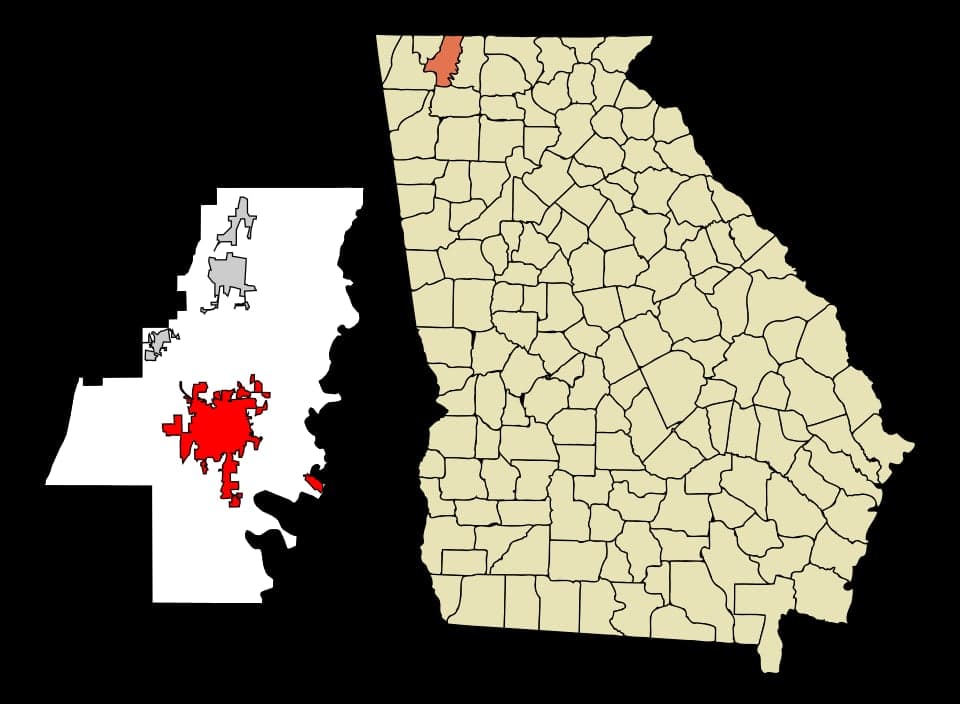
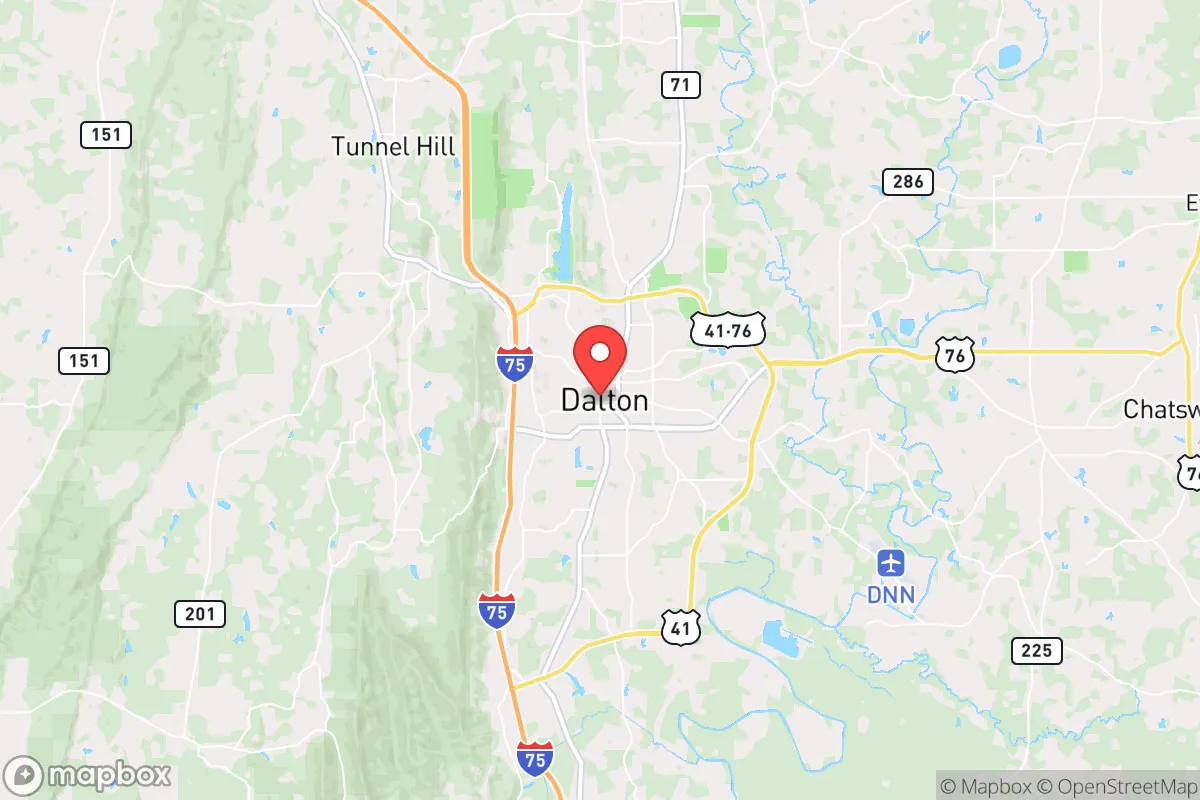
Dalton, Georgia, sits deep in the heart of conservative northwest Georgia, and it’s been that way for as long as anyone can remember. The Cook PVI rating of R+19 tells you the math right off the bat—this isn’t a purple area or a swing district; it’s a place where Republican candidates routinely win by double digits. But if you’ve lived here a while, you know the political climate isn’t just about voting numbers. It’s about a way of life that values personal responsibility, limited government, and the freedom to run your business and raise your family without a bunch of bureaucratic red tape. The trajectory here is still solidly conservative, but like everywhere else, you can feel the pressure from outside influences creeping in, especially as Atlanta’s sprawl pushes further north and brings new folks with different ideas.
How it compares
To really understand Dalton’s politics, you have to look at the counties around it. Whitfield County, where Dalton sits, is reliably red, but it’s not as deep red as some of its neighbors. Drive west into Walker County or north into Catoosa County, and you’ll find even stronger conservative majorities—places where the R+ margin can push into the high 20s. The real contrast, though, is when you head south toward Atlanta. Places like Cobb County or Fulton County are a whole different world, with progressive policies on taxes, zoning, and school curriculum that would never fly up here. Even Chattanooga, just 30 minutes north across the Tennessee line, has shifted noticeably left in recent years, especially in the city proper. Dalton has held its ground better than most, but you can see the writing on the wall when new housing developments start filling up with people who moved here for the lower cost of living but brought their big-city voting habits with them.
What this means for residents
For the people who’ve been here through the ups and downs, the political climate means a few concrete things. First, you still have a local government that generally stays out of your business—no heavy-handed mask mandates that lasted forever, no aggressive push for zoning changes that would price out working families, and a school board that hasn’t gone off the deep end with critical race theory or gender ideology in the classroom. Property taxes are reasonable compared to what you’d pay in the Atlanta suburbs, and the Second Amendment is still respected without a bunch of hoops to jump through. But here’s the concern: as the county grows, there’s a real risk of losing that hands-off culture. You’re starting to see more noise about “affordable housing” mandates and “equity” initiatives in local planning meetings—code words that usually mean more government control and less freedom for property owners. If you value being left alone to live your life, Dalton is still one of the better spots in Georgia, but you need to keep an eye on who’s running for city council and county commission.
The cultural and policy distinctions here are worth noting. Dalton is the carpet capital of the world, and that manufacturing base creates a certain mindset—people who work with their hands and understand that prosperity comes from production, not from government programs. You don’t see the same kind of activist energy you’d find in college towns or big cities. Church attendance is high, family values are still the norm, and there’s a general skepticism of anything that smells like federal overreach. The long-term outlook depends on whether the community can hold the line against the progressive tide that’s washing over so many other parts of the country. If you’re thinking about moving here, know that you’ll find a place where common sense still matters, but don’t take it for granted—it takes active participation to keep it that way.

State Political ClimatePolitical Climate in Georgia
State Political AnalysisPolitical Environment in the State
Georgia has shifted from a reliably red state to a true battleground over the past two decades, with its 16 electoral votes now regularly contested. The state’s political lean is a razor-thin 49.7% Republican to 49.2% Democrat in the 2024 presidential race, a dramatic change from the 8-point GOP margin in 2012. This swing is driven by explosive growth in the Atlanta metro, particularly in Cobb, Gwinnett, and Henry counties, which have flipped from red to blue or purple, while the rest of the state remains deeply conservative. For a conservative considering relocation, Georgia still offers a strong foundation of low taxes and gun rights, but the political ground is shifting underfoot faster than many locals are comfortable with.
Urban vs. rural divide
The political map of Georgia is a tale of two Georgias. The Atlanta metro, home to 60% of the state’s population, is the engine of Democratic gains. Cobb County, once a GOP stronghold, voted for Biden in 2020 and Harris in 2024 by 14 points, driven by suburban professionals and transplants from blue states. Gwinnett County flipped even harder, going +18 Democratic in 2024, fueled by a diverse population of Asian and Hispanic immigrants. Meanwhile, Henry County, south of Atlanta, has become a Democratic suburb as Black families move from the city core. Outside the I-285 perimeter, the state is overwhelmingly red. Forsyth County (north of Atlanta) voted +35 Republican in 2024, and Cherokee County hit +40. Rural south Georgia, places like Valdosta and Thomasville, remain solidly conservative, but their populations are shrinking. The divide isn’t just political—it’s cultural. Atlanta feels like a different country from the rest of Georgia, and that tension is the defining feature of state politics today.
Policy environment
On paper, Georgia’s policy environment is a conservative dream. The state has a flat income tax rate of 5.49% (down from 5.75% in 2022, with a path to 4.99% by 2029). Property taxes are low, with a median effective rate of 0.87% of home value, and there’s no estate or inheritance tax. The regulatory climate is business-friendly, with right-to-work laws and no state-level minimum wage above the federal $7.25. Education policy has been a battleground: Governor Brian Kemp signed the Georgia Promise Scholarship Act in 2024, creating a $6,500 education savings account for students in low-performing schools, a win for school choice. However, the state also expanded Medicaid under the Affordable Care Act in 2023 via a waiver program, which some conservatives view as a step toward government-run healthcare. Election laws have been a flashpoint: the 2021 SB 202 tightened voter ID requirements for absentee ballots and limited drop boxes, but it also expanded early voting hours. Critics call it voter suppression; supporters call it election integrity. For a conservative, the policy mix is mostly good, but the Medicaid expansion and ongoing battles over election rules signal that the state is not immune to progressive pressure.
Trajectory & freedom
Georgia’s trajectory on personal freedom is a mixed bag trending in the wrong direction. On the positive side, the state passed constitutional carry (SB 319) in 2022, allowing permitless carry of firearms for anyone 21 or older. That’s a solid win for Second Amendment rights. Parental rights got a boost with the 2023 HB 117, which requires schools to notify parents of any changes to a child’s mental or physical health, effectively banning secret gender-transition policies. But the state also expanded medical marijuana in 2023, allowing low-THC oil for a broad list of conditions—a step toward normalization that worries some conservatives. The biggest threat to freedom is the Atlanta city government, which has pushed for rent control, sanctuary city policies, and a $15 minimum wage for city contractors. While state preemption laws block some of these, the cultural influence of Atlanta’s progressive politics seeps into state-level debates. Property rights are generally strong, but the state’s eminent domain powers were expanded in 2023 for the Georgia Transmission Corporation to build power lines, a move that alarmed rural landowners. Overall, Georgia is still freer than most states, but the trend line is flat to slightly declining, especially if Atlanta’s growth continues to shift the state legislature left.
Civil unrest & political movements
Georgia has seen its share of political flashpoints. The 2020 election aftermath was intense, with Stacey Abrams and her group Fair Fight Action alleging widespread voter suppression, leading to the SB 202 backlash. In 2021, the Atlanta Public Safety Training Center (dubbed “Cop City”) sparked months of protests, including a fatal shooting of an activist by state troopers in 2023. The left-wing movement is organized and vocal, particularly in Atlanta and Athens (home of UGA). On the right, the Georgia Republican Assembly and MAGA-aligned groups are active in rural counties, pushing for election audits and anti-CRT school board candidates. Immigration politics are hot: HB 1105 (2024) requires local law enforcement to cooperate with ICE, but DeKalb County and Clayton County have declared themselves sanctuary counties, creating a patchwork of enforcement. A new resident in the suburbs will see yard signs for both parties, but in rural areas, it’s almost entirely red. The civil unrest is mostly contained to Atlanta, but the rhetoric around election integrity and immigration is constant and loud.
Projection
Over the next 5-10 years, Georgia will likely become more competitive, not less. The Atlanta metro is adding 100,000 people annually, many from blue states like California and New York. Forsyth County is now 25% Asian, and Gwinnett County is majority-minority; these demographics are pushing the suburbs left. The state legislature is currently gerrymandered to favor Republicans, but a court challenge to the 2024 congressional map could redraw districts. If Democrats flip the state House or Senate by 2030, expect a wave of progressive policies: expanded Medicaid, higher taxes on the wealthy, and stricter gun laws. The rural vote is shrinking, and the GOP’s only hope is to hold the Atlanta exurbs (like Paulding County and Bartow County) while turning out the rural base. For a conservative moving in now, the next decade will be a holding action. The state is not going to turn blue overnight, but the trend is unmistakable. If you’re looking for a place where your vote will count for decades, Georgia is a frontline state—but the front is moving closer to your backyard every year.
For a conservative relocating to Georgia, the bottom line is this: you’ll find low taxes, strong gun rights, and a mostly business-friendly environment, but you’ll also be moving into a state where the political future is uncertain. If you settle in the exurbs or rural areas, you’ll live in a red bubble. If you move to the Atlanta suburbs, you’ll be in a purple-to-blue community where your values are increasingly contested. The state is still a net positive for freedom compared to the Northeast or West Coast, but it’s not the solid red bastion it was 20 years ago. Keep an eye on the 2026 governor’s race and the 2028 presidential contest—those will tell you everything about where Georgia is headed.
* Values derived from national, state, county, city and local statistics and may differ in a specific area. Last updated: 2026-04-29T19:07:30.000Z
Narrative content on this page is AI-generated and may contain mistakes. Verify any details that matter before acting on them.
ReloMaps may earn a commission from affiliate links at no extra cost to you.

