
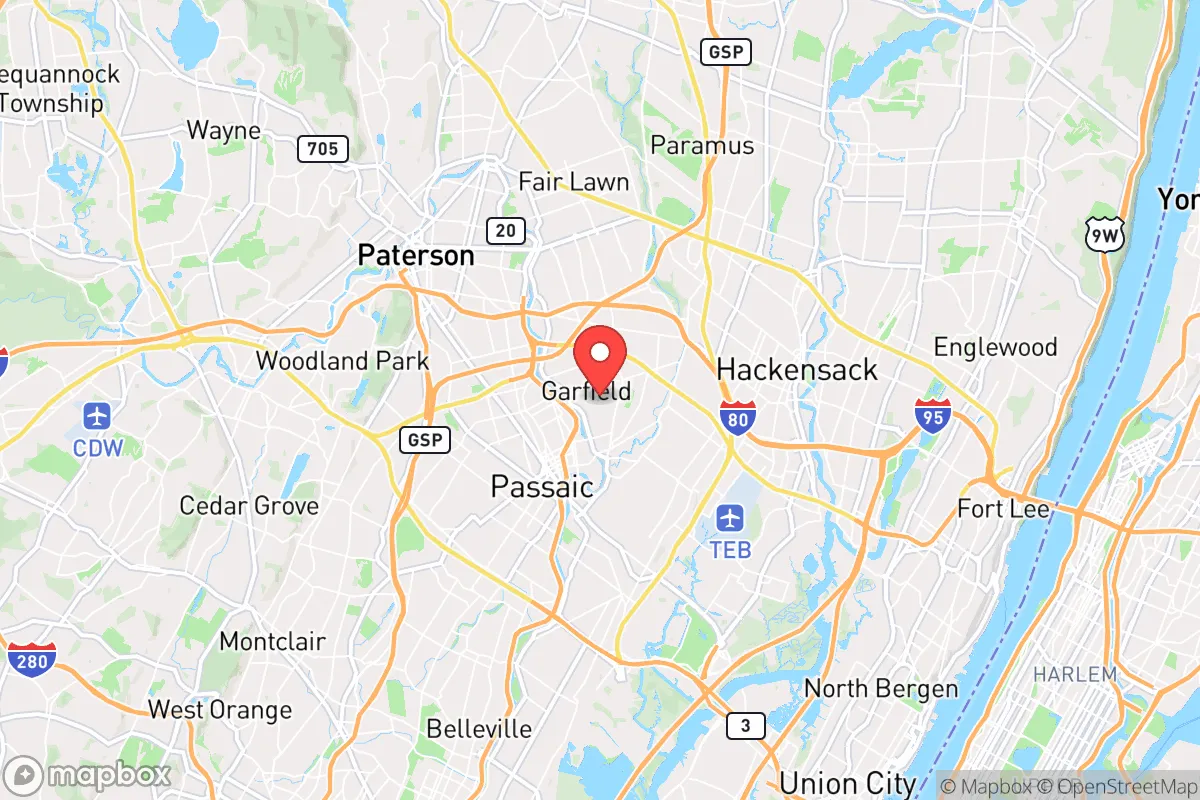
Photo: Wikipedia
Quality of Life in Garfield, NJ
Above-average quality of iife. The area offers a reasonable cost of living, decent mobility, and a mix of neighborhood amenities.
What does Quality of Life tell us?
Quality of Life blends cost of living, nearby amenities, socioeconomic signals, and neighborhood character. City-level scores represent the whole municipality; individual neighborhoods can differ.
What does this tell us?
Quality of Life blends cost of living, nearby amenities, socioeconomic signals, and neighborhood character. City-level scores represent the whole municipality; individual neighborhoods can differ.
Cost of Living
48% above national average
The Real Cost of Living in Garfield, NJ for 2026
| Tier | Individual | Family (4) |
|---|---|---|
| Survival | $26k | $48k |
| Comfortable | $88k | $130k |
| Luxury | $137k+ | $212k+ |
| Elite (Top 5%) | $162k+ | $251k+ |
58%
The Area Signal
A metric tracking the socioeconomic signals of the area.
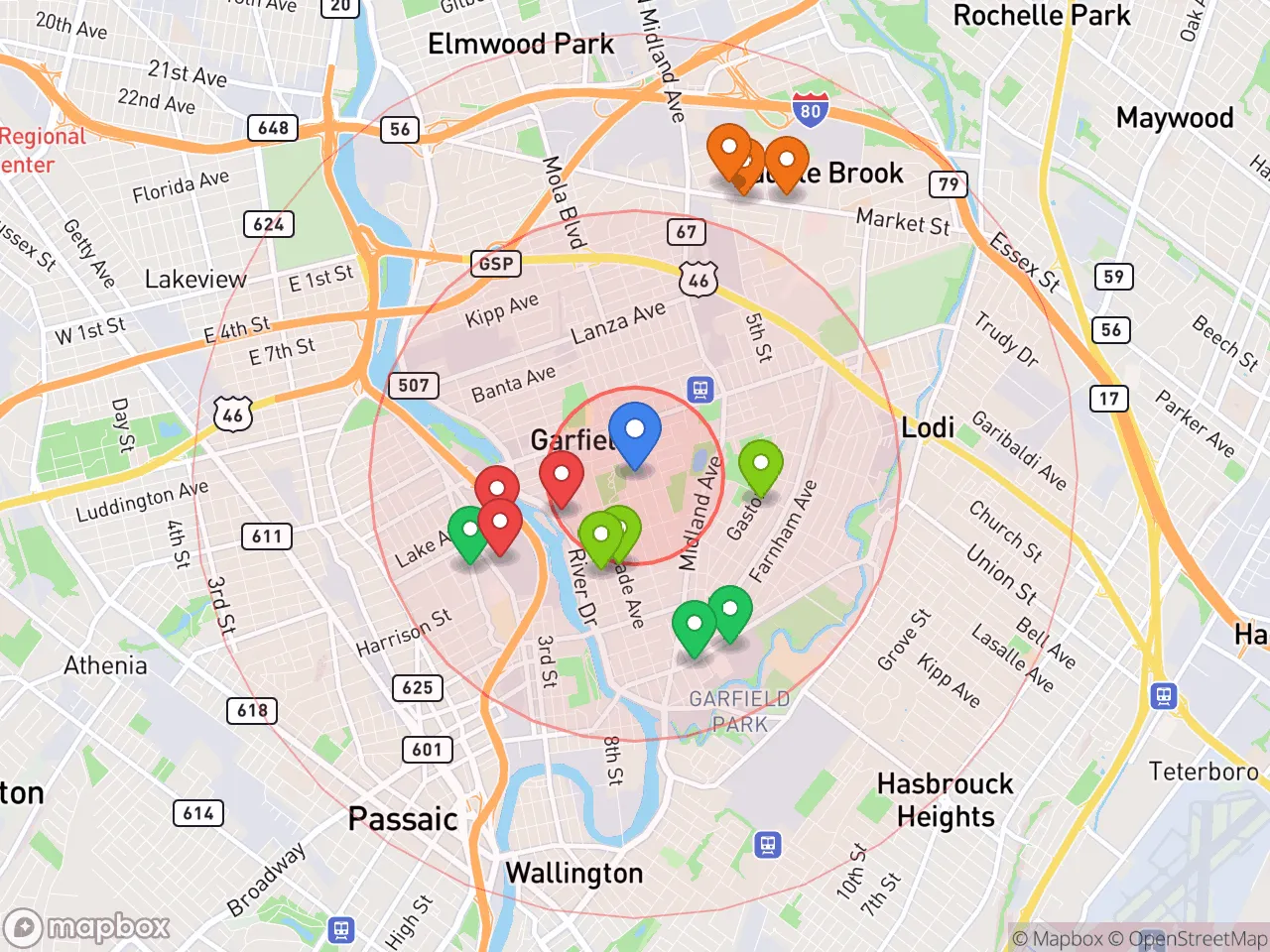
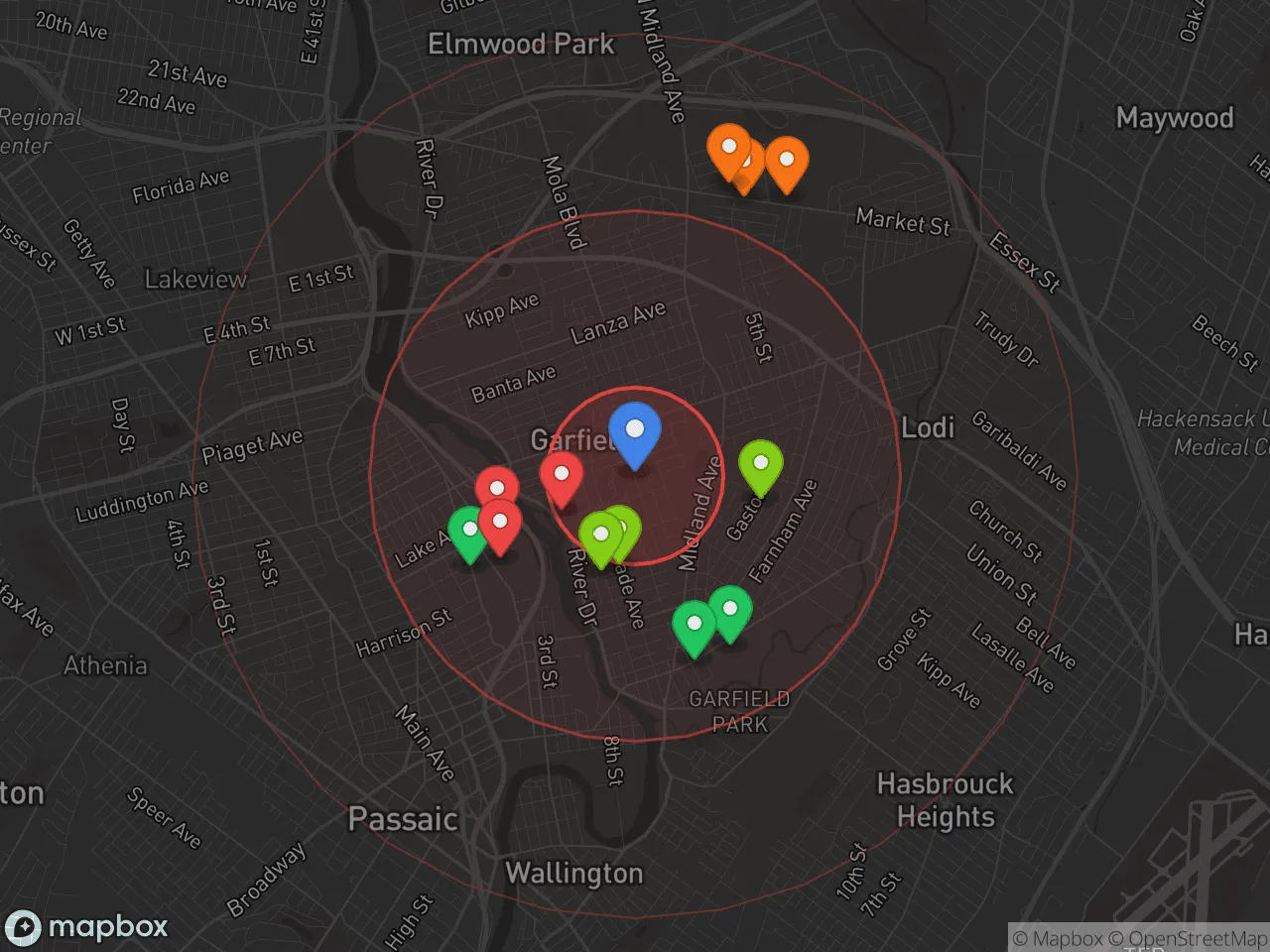
Hobbies
Explore the areaGroceries
0 within 10 miles
Gas
0 within 10 miles
Hospital
0 within 20 miles
Airport
EWR — Newark Liberty International
Post Office
Critical Amenities
Quality-of-Life Analysis
Garfield, New Jersey, presents a quality-of-life profile shaped by its position as a more affordable alternative to neighboring Bergen County hubs like Hackensack and Passaic, while still offering direct access to New York City. With a cost of living index of 148—48% above the national average—the city attracts a mix of working professionals, first-generation immigrant families, and long-term residents who value its dense, walkable neighborhoods and transit connectivity. The population is notably diverse, with a large Hispanic and South American community, and the city’s rhythm is defined by small businesses, local bakeries, and a strong sense of place that contrasts with the more suburban feel of surrounding towns.
Cost of living, housing, and affordability compared to Hackensack and Passaic
Garfield’s housing market is a key draw for those priced out of more expensive Bergen County towns. The median home value sits at $454,300, which is roughly 15-20% lower than in Hackensack and significantly below the Bergen County median of over $500,000. Median rent is $1,612, making it one of the more attainable rental markets in the region, especially compared to nearby Rutherford or Lyndhurst where rents often exceed $1,800. While the overall cost of living index of 148 is high by national standards, it is roughly 10-15% lower than in Hackensack or Teaneck, driven largely by more modest home prices and slightly lower property tax rates (though New Jersey property taxes remain among the nation’s highest). The trade-off is that Garfield’s housing stock is older—many homes are pre-war two- and three-family houses—and inventory is tight, with homes often selling within 30 days. For renters, the market is competitive but still offers more square footage per dollar than in Hudson County or Manhattan.
Daily life, schools, and local amenities for families and commuters
Daily life in Garfield revolves around its compact, pedestrian-friendly core along Outwater Lane and River Drive, where residents find supermarkets, laundromats, and a mix of Latin American and Italian restaurants. The Garfield City School District serves roughly 4,500 students across seven schools, with Garfield High School earning a 5/10 rating on GreatSchools—a middle-of-the-pack performance that leads many families to consider private or parochial options like St. Stanislaus Kostka School. For commuters, the average commute time is 27.8 minutes, which is shorter than the national average of 27.6 minutes and notably faster than many New Jersey suburbs. The city is served by NJ Transit bus routes (the 160 and 161 lines) that reach the Port Authority Bus Terminal in about 40 minutes, and the Garfield Main Street station on the Bergen County Line offers direct rail service to Hoboken and Secaucus. Parks are modest but functional: Dahnert’s Lake Park provides a 10-acre green space with a playground and walking paths, while the nearby Passaic River offers limited recreational access. The city lacks a major hospital, but St. Mary’s General Hospital in Passaic is a 10-minute drive. Grocery shopping is dominated by local bodegas and a ShopRite on Passaic Street, with larger retail options in the Willowbrook Mall area (a 15-minute drive).
Garfield is best suited for budget-conscious commuters who prioritize transit access and urban density over suburban sprawl. It works well for first-time homebuyers who can tolerate an older home and a modest school district, as well as for renters who want a shorter commute to Manhattan than what is available in most of Bergen County. Families seeking top-tier public schools or large single-family lots will likely look to towns like Wyckoff or Ridgewood, while those who value walkability, ethnic diversity, and a lower price point will find Garfield a pragmatic choice. The city’s ongoing redevelopment along the Passaic River waterfront and near the train station suggests gradual appreciation, but it remains a working-class enclave rather than a luxury destination.

Crime in Garfield, NJ
Generally safer than 71% of comparable U.S. locations.
Violent CrimeViolent Crime Analysis
Property CrimeProperty Crime Analysis
Crime Analysis
Garfield, New Jersey, presents a mixed safety profile for potential residents. While the city's violent crime rate of 180.8 incidents per 100,000 residents is notably lower than the national average, its property crime rate of 1,662.9 per 100,000 is significantly higher, creating a situation where residents must be vigilant about theft and burglary. The overall safety picture is further complicated by the city's location within Bergen County, a densely populated area of the New York metropolitan region, where progressive judicial policies can influence crime outcomes and recidivism rates.
Crime in context
Garfield's violent crime rate of 180.8 per 100,000 is roughly half the national average, making serious offenses like homicide, robbery, and aggravated assault less common here than in many comparable American cities. However, the property crime rate of 1,662.9 per 100,000 is approximately 20% higher than the national average, placing Garfield above the typical risk level for theft, burglary, and motor vehicle theft. When compared to New Jersey's statewide rates, Garfield's property crime figures are elevated, while its violent crime numbers are more favorable. This disparity suggests that while violent confrontations are less frequent, property-related crimes are a persistent concern that directly impacts daily life.
What residents experience
For those living in Garfield, the most tangible safety issue is the elevated risk of property crime. Residents commonly report concerns about package theft, car break-ins, and residential burglaries, particularly in areas with higher population density and easier access to major roadways like Route 20 and the Garden State Parkway. The city's proximity to Paterson and Passaic, both of which have higher crime rates, can also contribute to spillover criminal activity. A critical factor for residents to consider is the influence of progressive judicial policies in Bergen County. Liberal-leaning district attorneys and judges in the region often prioritize alternatives to incarceration, such as diversion programs and reduced bail, for property and non-violent offenders. While intended to reduce jail populations, these policies can result in repeat offenders cycling back into the community more quickly, undermining the deterrent effect of the justice system and increasing the likelihood that residents will become victims of the same criminals multiple times.
Neighborhood-level variation in Garfield is notable. The area south of Passaic Street, closer to the Passaic River, tends to experience higher crime density, while the northern sections near the Saddle River border with Elmwood Park are generally quieter. The downtown corridor along Main Avenue sees more petty crime and disorder, particularly in the evenings. Prospective residents should research specific blocks and consider that the city's overall property crime rate masks significant differences between quieter residential streets and more commercial or transit-adjacent zones. The combination of a high property crime baseline and a justice system that may not hold offenders fully accountable means that personal property protection measures—such as security cameras, alarm systems, and secure parking—are strongly recommended for anyone moving to Garfield.
* Values derived from national, state, county, city and local statistics and may differ in a specific area. Last updated: 2026-04-29T21:12:44.000Z
Narrative content on this page is AI-generated and may contain mistakes. Verify any details that matter before acting on them.
ReloMaps may earn a commission from affiliate links at no extra cost to you.

