
Photo: Wikipedia
Personal Sovereignty in Cobb County
Viable for self-reliance. Generally workable, though some barriers may limit total independence.
What does Personal Sovereignty tell us?
Personal Sovereignty measures your capacity for self-reliance and independence with minimal government friction. Higher scores mean fewer barriers between you and the way you want to live... but it assumes you have the space you need and good neighbors.
What does this tell us?
Personal Sovereignty measures your capacity for self-reliance and independence with minimal government friction. Higher scores mean fewer barriers between you and the way you want to live... but it assumes you have the space you need and good neighbors.
State Policy
Energy independence: Importer (12% of energy produced in-state)
Personal Liberty
Homesteading

Personal Liberty Analysis
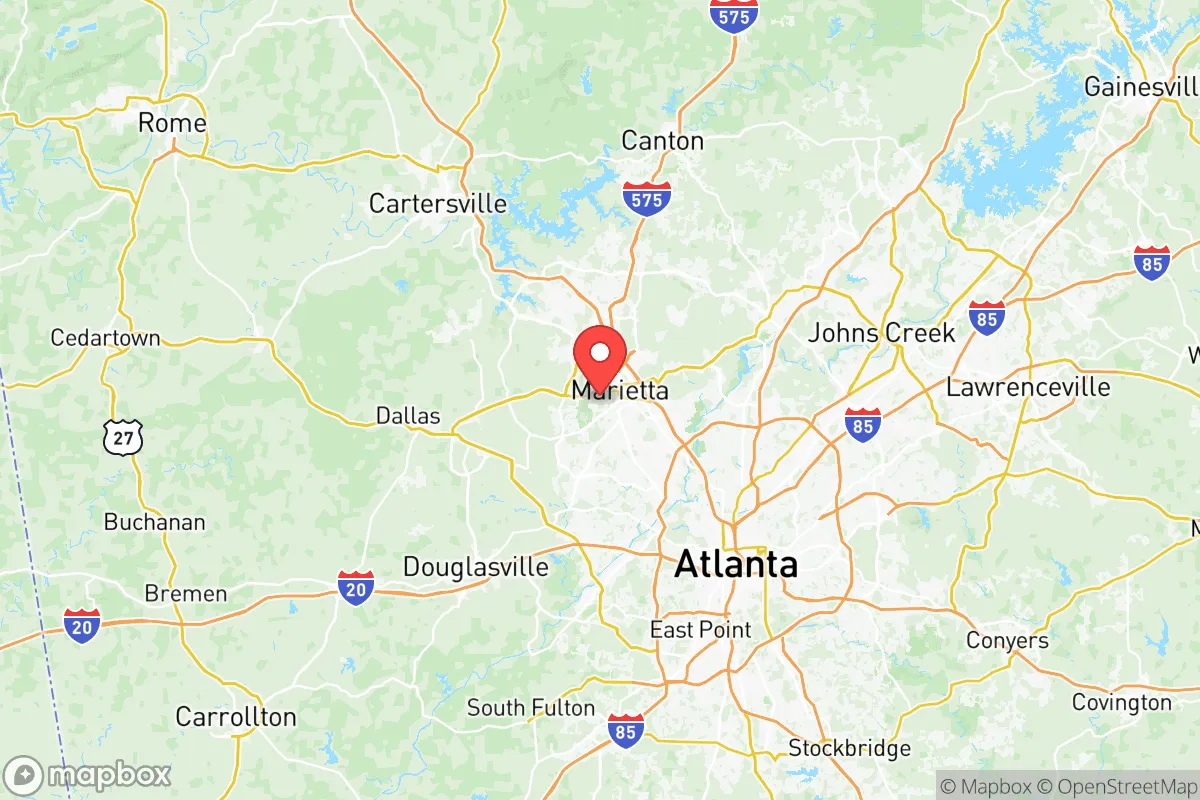
Cobb County, Georgia, presents a complex landscape for personal sovereignty that demands careful evaluation from those prioritizing autonomy and self-reliance. While situated within a state that has generally pushed back against federal overreach, Cobb’s status as a densely populated suburban hub north of Atlanta introduces layers of municipal regulation and local governance that can either protect or constrain individual freedoms depending on the specific city and neighborhood. For the strategic relocator—whether a single professional or a parent—the key is understanding that personal sovereignty here is not uniform; it varies significantly between the unincorporated county, the city of Marietta, and smaller towns like Kennesaw, Smyrna, and Acworth. The overarching environment is one of cautious opportunity: Georgia’s state-level preemption laws shield residents from many of the worst local infringements seen in blue states, but Cobb’s own zoning codes, tax policies, and school board decisions create a patchwork where vigilance is required to preserve one’s autonomy.
Tax burden and regulatory posture: How Cobb County compares to surrounding areas
Cobb County’s tax burden is moderate by national standards but notably higher than its more rural neighbors to the north and west, such as Bartow or Paulding counties. The combined state and local sales tax rate in Cobb is 6%, with an additional 1% for the county’s special purpose local option sales tax (SPLOST), bringing the total to 7% in most areas—though cities like Kennesaw and Acworth may add their own small increments. Property taxes are the primary concern for homeowners: the millage rate in unincorporated Cobb hovers around 10.5 mills, while the city of Marietta adds its own levy, pushing rates closer to 12 mills. This is significantly higher than in Powder Springs or Hiram just to the west, where rates can be 2-3 mills lower. Regulatory posture at the county level is business-friendly in theory, but the permitting process for home-based enterprises or accessory structures can be cumbersome. For example, building a detached workshop or adding a second dwelling unit on a residential lot in Smyrna requires a special use permit and public hearing—a clear obstacle for those seeking self-sufficient property improvements. The county’s zoning code is thick, and while it does not ban chickens or small livestock outright in most residential zones, it imposes setback and lot-size minimums that effectively limit these activities to larger parcels in the northern and western parts of the county.
Self-defense and gun law specifics: What the Second Amendment looks like on the ground
Georgia is a constitutional carry state, meaning no permit is required to carry a concealed firearm for anyone legally allowed to possess one. This applies uniformly across Cobb County, and local law enforcement—particularly the Cobb County Sheriff’s Office—has a reputation for being supportive of gun rights. However, the practical reality varies by jurisdiction. The city of Marietta has a municipal code that restricts carrying firearms in city-owned parks and recreation facilities, a policy that has been challenged but remains on the books. In contrast, Kennesaw famously passed an ordinance in 1982 requiring every head of household to own a firearm and ammunition—a law that, while largely symbolic and unenforced, signals a deeply pro-Second Amendment culture. Acworth and Powder Springs have no such local restrictions and are generally considered more permissive. For the prepper-minded, the key takeaway is that while state law provides a strong baseline, you must check the specific municipal code of your chosen city. Stand-your-ground laws apply statewide, and Georgia’s firearm preemption statute prevents counties from enacting their own bans, but local ordinances on where you can carry (e.g., government buildings, schools, and some private properties) still create friction. The Cobb County Gun Show at the Jim R. Miller Park is a regular event, reflecting a robust local firearms community.
Self-reliance and homesteading viability: Lot sizes, zoning, and off-grid feasibility
True off-grid homesteading is difficult within Cobb County’s borders due to its suburban density and strict building codes. Minimum lot sizes in most residential zones are a half-acre or less, with many newer subdivisions on quarter-acre lots. The county requires connection to public water and sewer in most developed areas, making well-and-septic setups rare and often prohibited. For those seeking serious self-reliance, the northern and western fringes—such as Mableton and the rural pockets near Lost Mountain—offer larger parcels (1-5 acres) where chickens, goats, and even a small garden are feasible. However, even there, the county’s zoning code restricts the number of livestock and requires structures like coops and sheds to meet setback requirements. Solar panels are allowed without special permits for roof-mounted systems, but ground-mounted arrays require a building permit and must be screened from neighbors. Rainwater collection is legal and encouraged, but the county’s stormwater management regulations can complicate large-scale cistern installations. For the serious homesteader, Paulding County to the west or Cherokee County to the north offer far fewer restrictions and larger, cheaper land. Cobb is better suited for a suburban prepper who wants a robust garden, a few chickens, and a well-stocked pantry—not a full-scale off-grid operation.
Personal liberties: Parental rights, medical autonomy, speech, and property
Parental rights in Cobb County are a battleground, particularly in the school system. The Cobb County School District, one of the largest in Georgia, has a conservative-leaning board that has resisted certain state-level mandates on curriculum transparency and parental notification. However, parents have successfully pushed back on library book content and sex education materials in recent years, and the district maintains a strong opt-out policy for objectionable instruction. Medical autonomy is generally respected at the state level, with Georgia having no vaccine mandate for adults and a broad religious exemption for children’s school vaccinations. However, Cobb’s public health department follows state guidelines, and during the COVID-19 pandemic, the county enforced mask mandates in government buildings—a point of contention for those prioritizing medical choice. Free speech is protected under Georgia’s constitution, and Cobb has no local ordinances restricting political signage or public assembly beyond standard time-place-manner rules. Property rights are strong, but the county’s zoning board of appeals has a reputation for denying variances, particularly in denser areas like Smyrna and Vinings. For the property owner, this means that adding a fence, building a shed, or subdividing land requires navigating a bureaucratic process that can feel intrusive. The Cobb County Tax Assessor’s office is known for aggressive property valuations, which can lead to higher tax bills if you improve your land.
Overall, Cobb County offers a moderate level of personal sovereignty that is significantly better than deep-blue metro areas like Atlanta or DeKalb County, but falls short of the rural freedom found in North Georgia’s mountain counties or the wide-open spaces of South Georgia. For the single individual or parent who values self-defense, parental rights, and a degree of self-reliance, Cobb provides a workable middle ground—provided you choose your city wisely. Kennesaw and Acworth lean more libertarian in practice, while Marietta and Smyrna have more municipal oversight. The county’s infrastructure, job market, and schools are strong, but those for whom sovereignty is the highest priority should look to the exurbs or rural counties for fewer strings attached. Cobb is a compromise—a place where you can live free, but not entirely ungoverned.

* Values derived from national, state, county, city and local statistics and may differ in a specific area. Last updated: 2026-05-12T08:57:48.000Z
Narrative content on this page is AI-generated and may contain mistakes. Verify any details that matter before acting on them.
ReloMaps may earn a commission from affiliate links at no extra cost to you.

