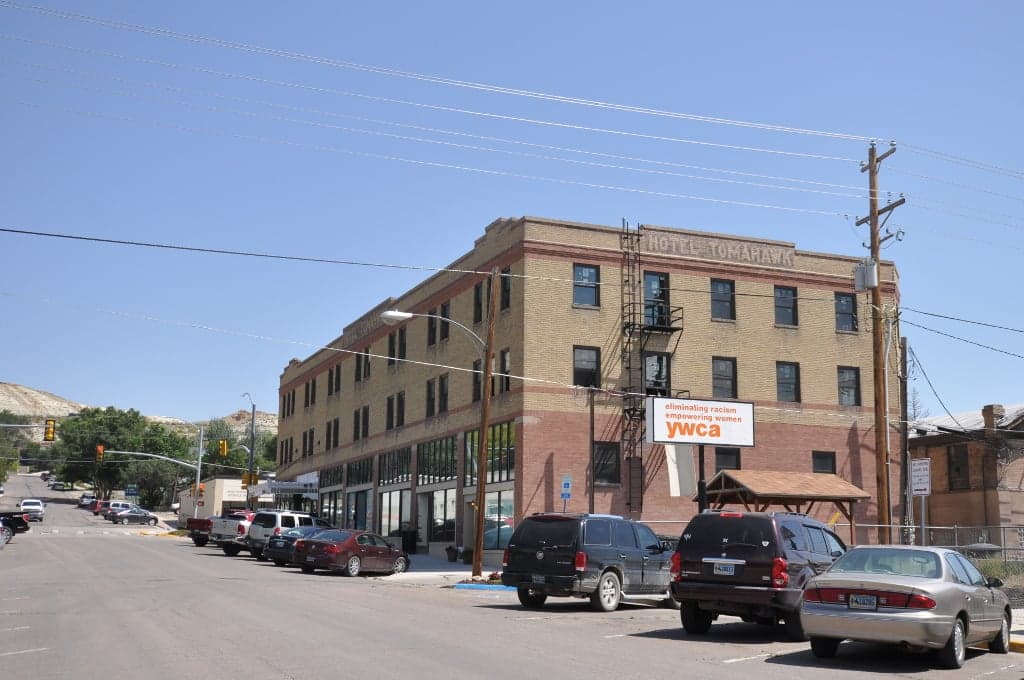
Photo: Wikipedia
Political ClimatePolitical Climate in Green River, WY
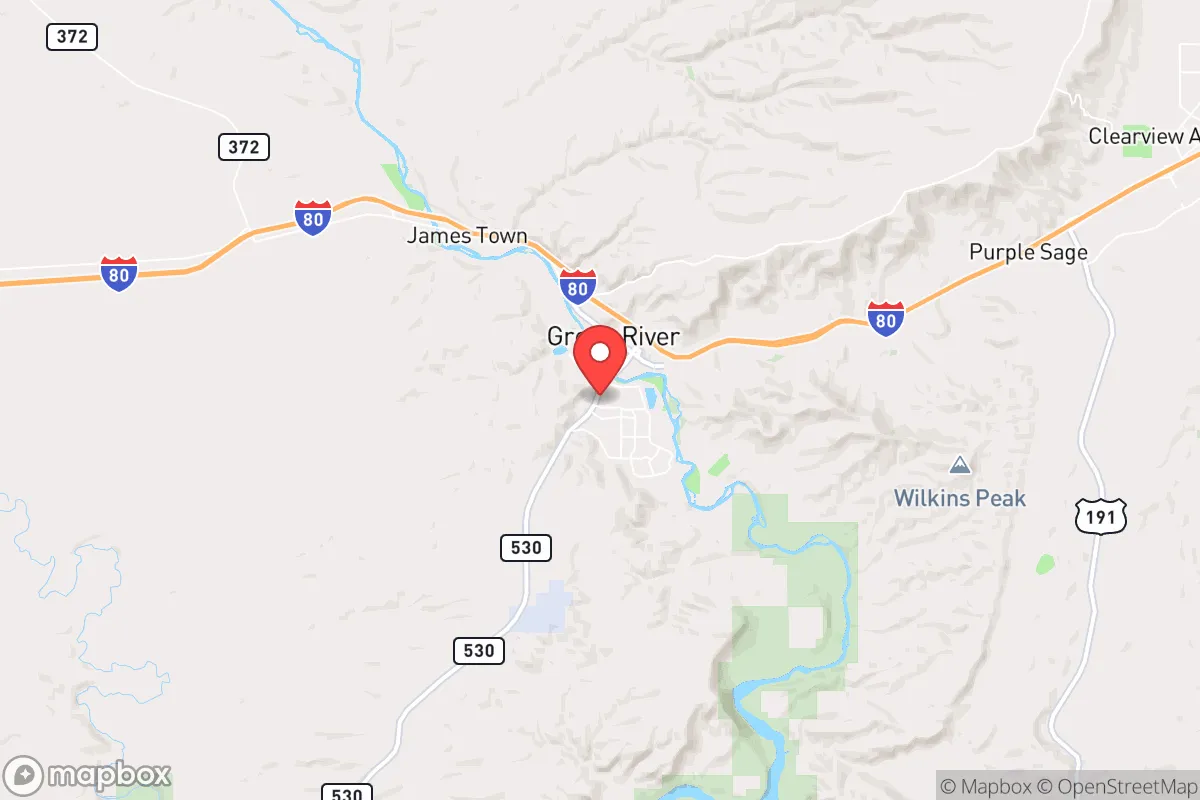
District shown is the primary district for this city’s centroid. Cities may span multiple districts.
Inherited from parent state — no local data available.
Local Political AnalysisPolitical Analysis of Green River, WY
Green River, Wyoming, is about as solidly conservative as it gets, with a Cook PVI of R+23 that puts it deep in the red column. This isn't a purple town or a place that's trending blue—it's a community where traditional values and limited government are still the default, and where most folks have a healthy skepticism of any politician who talks too much about "transformation" or "reimagining" public safety. The political trajectory here has been remarkably stable over the past decade, with no real signs of the progressive drift that's crept into places like Jackson or even parts of Laramie. If anything, the local mood has hardened a bit, as residents watch what's happening in blue states and feel more determined than ever to keep Green River on its own path.
How it compares
To understand Green River's politics, you have to look at the broader region. Sweetwater County as a whole is reliably conservative, but Green River itself is often seen as the more grounded, no-nonsense half of the county's twin cities—Rock Springs, just 15 miles east, has a slightly more mixed political vibe thanks to its larger population and history as a railroad and mining hub. Drive an hour north to Farson or Eden, and you'll find even more libertarian-leaning ranchers who'd rather the county commission be left alone entirely. The real contrast, though, is with places like Jackson (about 150 miles northwest) or Laramie (200 miles east), where university influence and tourism dollars have pushed politics noticeably leftward. Green River residents tend to see those towns as cautionary tales—places where government overreach and progressive social experiments have started to erode the quality of life that Wyoming is supposed to guarantee.
What this means for residents
For the people who live here, the conservative lean isn't just about who wins elections—it shapes daily life in tangible ways. Property taxes remain low, there's no state income tax, and the local government generally stays out of the way when it comes to business regulations or personal choices like gun ownership. The Second Amendment is treated as a given, not a debate topic. You won't find mask mandates or vaccine passports being enforced at local businesses, and the school board has pushed back hard against any curriculum that smacks of critical race theory or gender ideology. That said, there's a growing concern among long-time residents that outside money and federal pressure could start to chip away at this independence. The Biden administration's energy policies, for example, have directly threatened the trona mining industry that anchors the local economy, and there's a real fear that future federal overreach could force the town to adopt policies it doesn't want.
One cultural distinction that sets Green River apart is its strong sense of self-reliance. This isn't a place where people look to government for solutions—neighbors help neighbors, churches and volunteer fire departments handle what other towns might expect from a bureaucracy. The local political discourse tends to focus on practical issues like water rights, road maintenance, and keeping the schools focused on basics rather than social engineering. If you're someone who values personal freedom and wants to be left alone to live your life, Green River offers a political climate that's increasingly rare in America. The trajectory, though, depends on whether the town can hold the line against the progressive tide that's washing over so many other Western communities. For now, it's holding strong, but the fight is far from over.

State Political ClimatePolitical Climate in Wyoming
State Political AnalysisPolitical Environment in the State
Wyoming is one of the most reliably conservative states in the Union, with a Republican lean that has only deepened over the past two decades. The state hasn’t voted for a Democratic presidential candidate since 1964, and in 2024, Donald Trump carried it by roughly 40 points. The dominant coalition is a mix of ranchers, energy workers, and second-amendment advocates, with a growing contingent of remote workers and retirees fleeing blue states. Over the last 10-20 years, the GOP’s grip has tightened as the state’s small Democratic presence has been squeezed out of rural areas and even its few population centers.
Urban vs. rural divide
The political map of Wyoming is stark: the vast rural expanse is deep red, while the few small cities provide the only real blue pockets. Cheyenne, the state capital and largest city, leans Republican but is the most competitive area—Laramie County voted about +15 R in 2024, with the city’s government and railroad workers creating a modest Democratic base. Casper (Natrona County) is solidly red, driven by the energy industry and a strong ranching culture. Laramie, home to the University of Wyoming, is the state’s most liberal enclave—Albany County went for Biden in 2020 and Harris in 2024, a rare blue dot in a sea of red. Jackson (Teton County) is another outlier: wealthy, tourist-driven, and increasingly progressive, it voted +30 D in 2024, but its influence is limited by its small population. The rest—places like Rock Springs, Gillette, and Sheridan—are reliably conservative, with GOP margins often exceeding 50 points in the most rural precincts. The divide isn’t just about cities vs. country; it’s about economic base. Energy and agriculture communities vote red, while university towns and resort areas lean blue.
Policy environment
Wyoming’s policy environment is a conservative’s dream, with low taxes and minimal regulation as the baseline. There is no state income tax, and property taxes are among the lowest in the nation—about 0.6% of assessed value on average. The sales tax is a modest 4%, though local options can push it to 6%. The regulatory posture is business-friendly, especially for energy extraction, agriculture, and manufacturing. Education policy is locally controlled, with school choice options limited but expanding—a 2023 law created a $6,000 education savings account for students in low-performing districts, though it’s not yet universal. Healthcare is a mixed bag: the state refused Medicaid expansion until 2023, and the system remains strained in rural areas, but there’s no state-level push for single-payer or mandates. Election laws are secure: voter ID is required, same-day registration is not allowed, and the state uses paper ballots. Governor Mark Gordon has been a steady hand, signing pro-energy and pro-Second Amendment bills while resisting federal overreach. The state legislature is supermajority Republican, so progressive policy shifts are virtually impossible without a dramatic demographic change.
Trajectory & freedom
Wyoming is becoming more free in many respects, but with some concerning trends. On the positive side, the state has aggressively expanded gun rights: in 2023, it passed a permitless carry law (HB 104), and in 2024, it enacted a Second Amendment Preservation Act that prohibits state enforcement of any future federal gun bans. Parental rights were strengthened in 2023 with a law requiring school districts to notify parents of any curriculum involving sexuality or gender identity. Medical autonomy is strong—Wyoming has no vaccine mandates and banned COVID-19 vaccine passports in 2021. Property rights are protected by a 2022 law that limits eminent domain for carbon pipelines. However, there are red flags: the state’s reliance on federal mineral royalties (about 40% of the budget) creates a vulnerability to federal policy changes. Additionally, a 2024 law (HB 100) expanded the state’s ability to seize property for conservation easements, which some see as a creeping infringement on private land rights. The biggest threat to freedom is the influx of wealthy out-of-staters driving up housing costs in places like Jackson and Teton County, which could eventually shift the political balance if the trend continues.
Civil unrest & political movements
Wyoming is remarkably stable compared to coastal states. There have been no major protests or riots in recent years, and political violence is virtually nonexistent. The most visible movements are on the right: the Wyoming Freedom Caucus, a hardline conservative group in the state legislature, has pushed for nullification of federal gun laws and a state-level gold standard. In 2023, they successfully blocked a proposed sales tax increase, showing their influence. On the left, the only organized activism is in Laramie and Jackson, where groups like the Wyoming Democratic Party and local environmentalists protest energy development—but these are small and largely ignored by the majority. Immigration politics are quiet: the state has a tiny foreign-born population (about 3%), and there are no sanctuary cities. Election integrity controversies are minimal—Wyoming’s system is considered secure, and there were no significant disputes in 2020 or 2024. The only flashpoint a new resident might notice is the tension between long-time ranchers and new arrivals from California or Colorado, who sometimes push for land-use restrictions that clash with the state’s libertarian ethos.
Projection
Over the next 5-10 years, Wyoming will likely remain deeply conservative, but the margins could narrow slightly due to demographic shifts. The state is growing slowly—about 0.5% annually—with most growth in Cheyenne, Gillette, and the Jackson area. The newcomers are a mixed bag: many are conservatives fleeing high-tax states, but a significant number are remote workers and retirees from blue states who bring more moderate or liberal views. If this trend accelerates, places like Laramie and Teton County could become more influential, potentially flipping a state house seat or two. However, the rural areas are not shrinking fast enough to lose their dominance. The energy transition is the wild card: if coal and oil decline, the state’s economy and political culture could shift, but for now, the legislature is doubling down on fossil fuels. Someone moving in now should expect a state that remains a bastion of conservative governance for at least another decade, but with growing cultural friction between old-timers and newcomers.
Bottom line for a new resident: Wyoming offers a high degree of personal freedom, low taxes, and a government that largely stays out of your life. The political climate is stable and conservative, with no serious threat of progressive takeover in the near term. However, be prepared for a housing market squeezed by wealthy transplants, and keep an eye on the energy sector’s health—it drives everything here. If you value gun rights, local control, and minimal government, you’ll feel right at home. If you’re looking for a place where your vote actually matters and your freedoms are respected, Wyoming is one of the last best places in the Union.
* Values derived from national, state, county, city and local statistics and may differ in a specific area. Last updated: 2026-04-21T11:23:41.000Z
Narrative content on this page is AI-generated and may contain mistakes. Verify any details that matter before acting on them.
ReloMaps may earn a commission from affiliate links at no extra cost to you.

