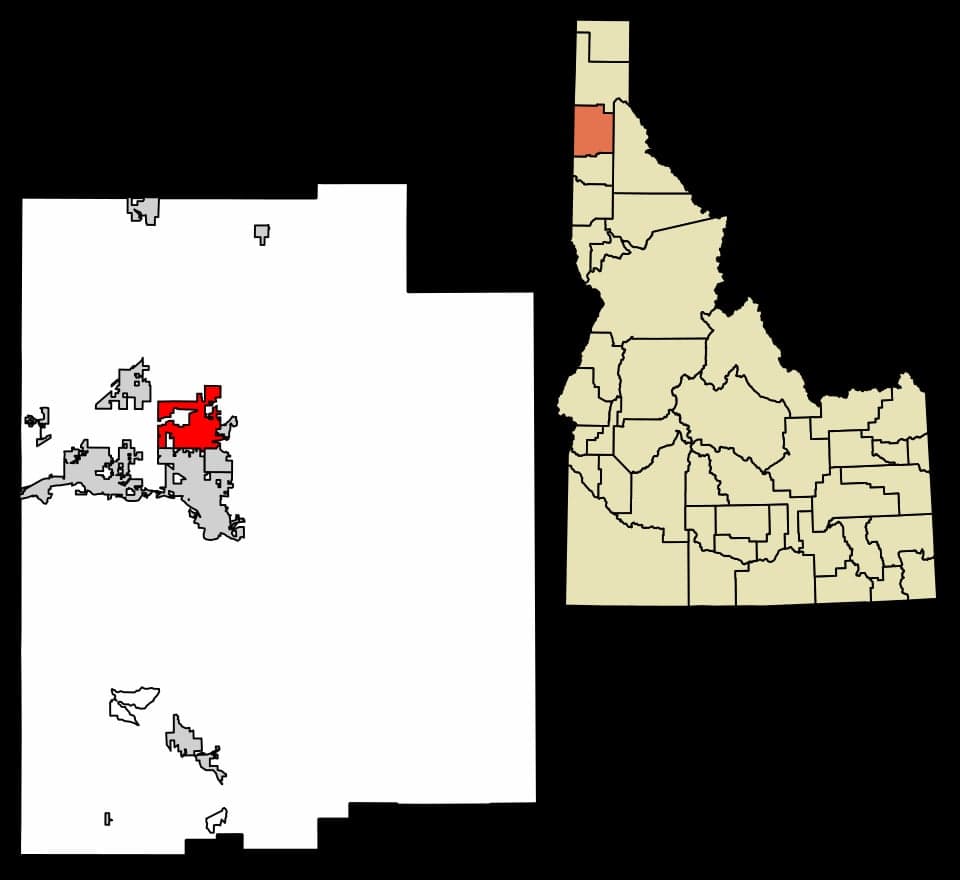
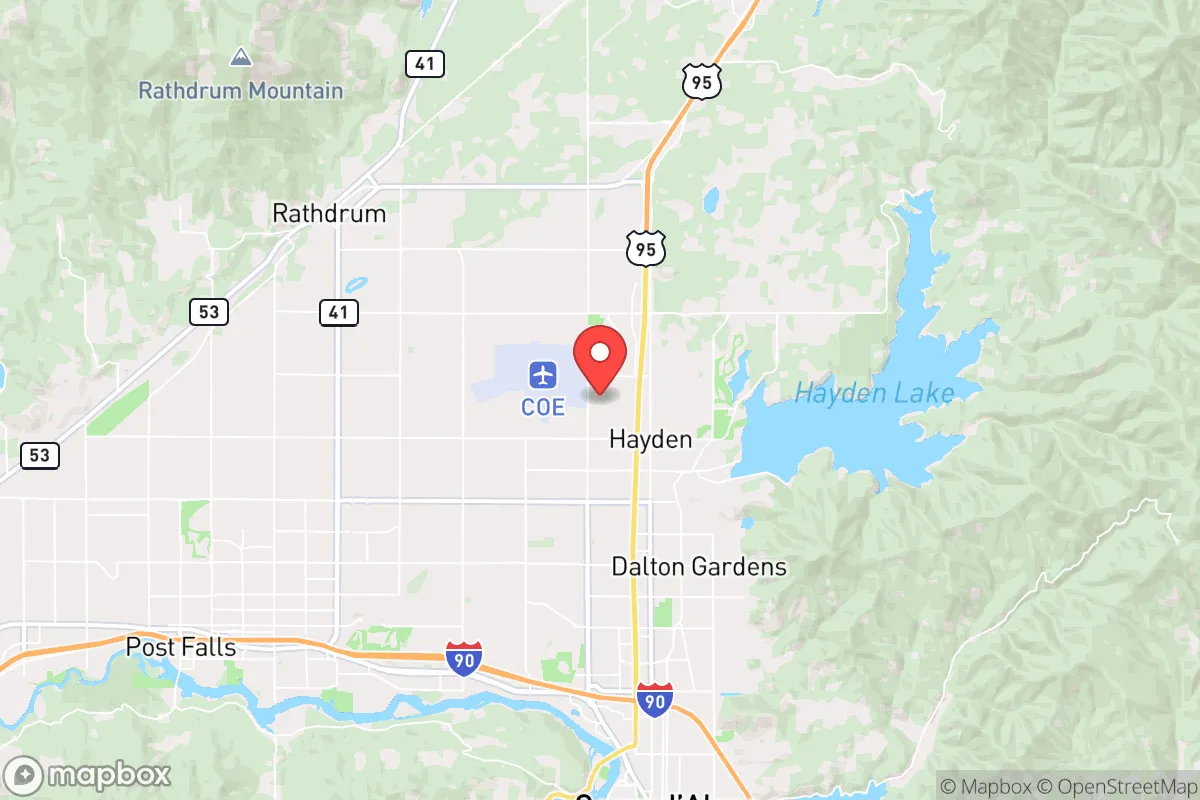
Photo: Wikipedia
Demographics of Hayden, ID
Affluence Level in Hayden, ID
An upper-middle-class area. Household wealth, education levels, and homeownership run ahead of national benchmarks.
People of Hayden, ID
The people of Hayden, Idaho, today form a predominantly white, family-oriented community of 16,021 residents, characterized by a notably low foreign-born population of just 1.0% and a Hispanic share of 5.4%. The city’s identity is shaped by its roots in timber and agriculture, now layered with a suburban, conservative-leaning culture that attracts in-migrants from other Western states seeking lower taxes and a slower pace of life. With 27.6% of adults holding a college degree, the population is moderately educated, and the racial makeup—89.1% white, 0.4% Black, 0.6% East/Southeast Asian, and no measurable Indian subcontinent population—reflects a community that has remained largely homogeneous through its history.
How the city was settled and grew
Hayden’s settlement began in the late 19th century, driven by the Northern Pacific Railroad’s arrival in the 1880s, which opened the region to logging and homesteading. The original population consisted of white homesteaders of Northern European descent—primarily German, Scandinavian, and Irish—who cleared the dense pine forests for timber mills and small farms. The historic Hayden Lake area, with its natural shoreline, became the first concentrated settlement, where mill workers and their families built modest homes and a tight-knit community centered on the lake’s resources. By the early 1900s, the Government Way corridor emerged as a commercial and residential spine, hosting the town’s first general stores and churches. The population remained small—under 500 until the 1950s—as the economy relied on seasonal logging and agriculture, with no significant immigrant waves beyond the initial European homesteaders.
Modern era (post-1965)
After the 1965 Immigration and Nationality Act, Hayden saw virtually no new foreign-born influx; instead, its modern growth came from domestic in-migration, particularly from California, Washington, and Oregon, starting in the 1970s. The construction of U.S. Highway 95 and the expansion of Coeur d’Alene as a regional hub turned Hayden into a bedroom community. The Prairie Avenue area and Honeysuckle neighborhood were developed in the 1980s and 1990s, attracting white middle-class families seeking affordable housing and good schools. The Hispanic population, now 5.4%, grew slowly through agricultural labor in nearby Kootenai County, but Hayden’s lack of industrial or service-sector jobs limited this growth. The East/Southeast Asian population (0.6%) is tiny and largely tied to professional roles in healthcare or tech in Coeur d’Alene, with no distinct ethnic enclave forming. The Black population (0.4%) remains negligible. Post-2000, the Avondale neighborhood and Lakeside subdivisions filled with retirees and remote workers, reinforcing the city’s white, conservative character. The foreign-born share of 1.0% is among the lowest in Idaho, indicating that Hayden has not been a destination for international migration.
The future
Hayden’s population is projected to continue growing, driven by domestic in-migration from high-cost Western states, but the demographic profile is likely to remain stable. The city is homogenizing rather than tribalizing, as new arrivals—predominantly white, conservative, and family-oriented—blend into existing neighborhoods like Meadow Creek and West Hayden. The Hispanic share may rise modestly as service-sector jobs expand, but the foreign-born population is unlikely to exceed 2-3% given the area’s limited economic diversity. The East/Southeast Asian and Black populations will likely remain below 1% each, as no major employers or cultural institutions attract these groups. The next 10-20 years will see Hayden become denser, with more subdivisions and commercial development along the Highway 95 corridor, but its racial and ethnic composition will stay overwhelmingly white. The city’s appeal to conservative-leaning families and remote workers will sustain this trend, with little pressure for significant diversification.
For someone moving in now, Hayden is becoming a more suburban, family-centric version of its former self—a place where the population is growing but not changing in character. The low foreign-born share and high white homogeneity mean newcomers will find a community with strong social cohesion but limited ethnic diversity. The future points to continued domestic in-migration, reinforcing the city’s conservative, outdoor-oriented lifestyle, rather than any major demographic shift.

* Values derived from national, state, county, city and local statistics and may differ in a specific area. Last updated: 2026-04-21T10:25:52.000Z
Narrative content on this page is AI-generated and may contain mistakes. Verify any details that matter before acting on them.
ReloMaps may earn a commission from affiliate links at no extra cost to you.

