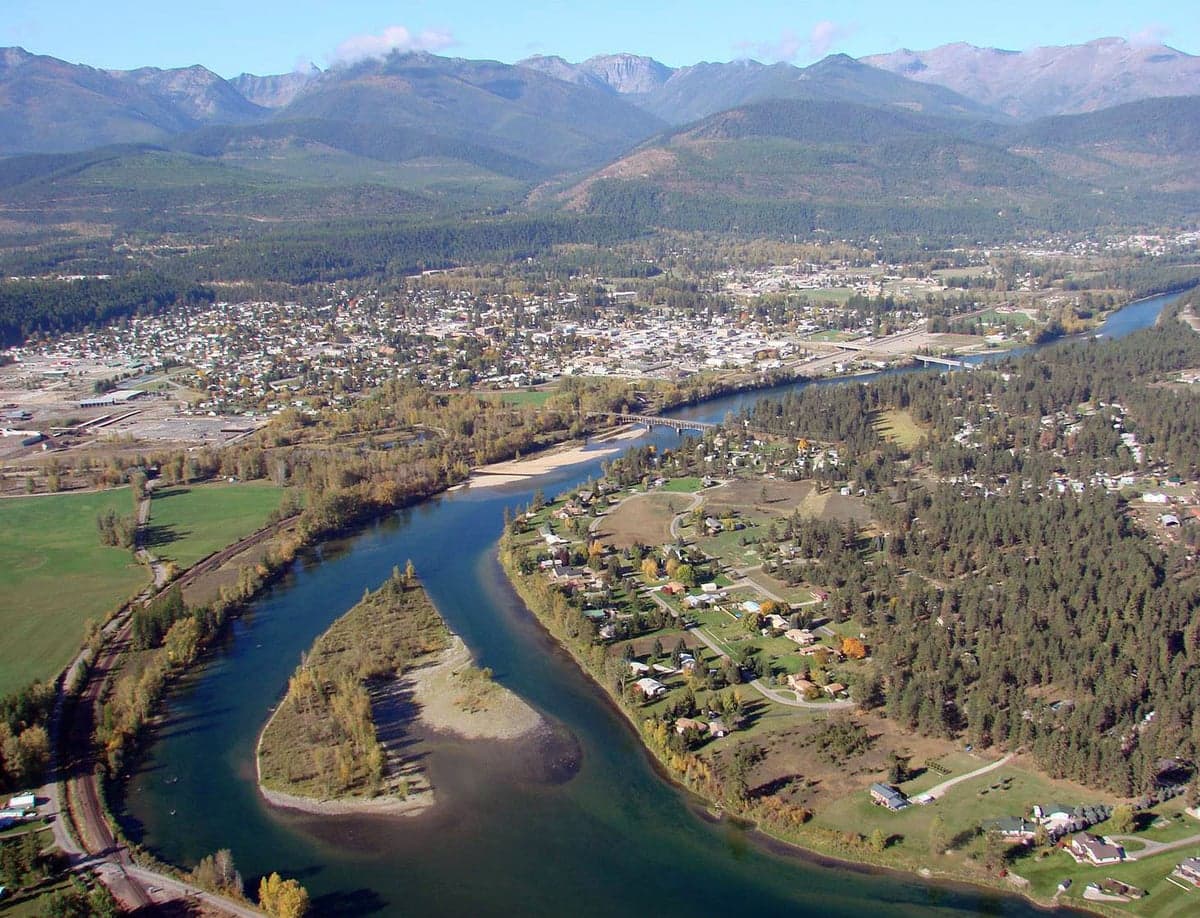
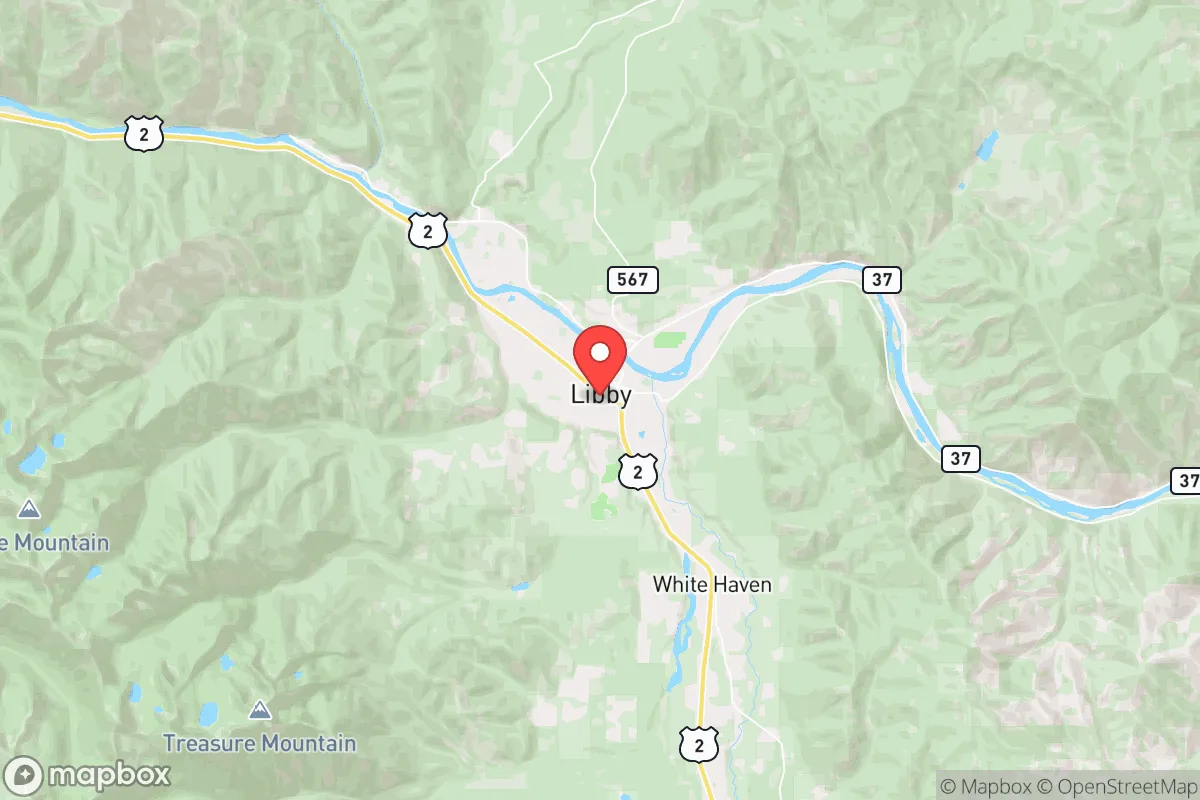
Photo: Wikipedia
Demographics of Libby, MT
Affluence Level in Libby, MT
A middle-class area roughly in line with national averages across income, home values, education, and employment.
People of Libby, MT
The people of Libby, Montana, today number 2,948, forming a predominantly white (86.6%) community with a distinctly rural, working-class character rooted in extractive industry. The city’s identity is shaped by a near-total absence of foreign-born residents (0.0%) and a low college attainment rate (17.2%), reflecting a population that has historically stayed put or been replaced by domestic in-migrants rather than international arrivals. Libby is a place where family ties run deep, and the local culture is defined by self-reliance, outdoor recreation, and a wariness of outside influence.
How the city was settled and grew
Libby’s human history begins with the Kootenai and Salish peoples, who used the Kootenai River valley as seasonal hunting and fishing grounds. Permanent non-Native settlement began in the 1880s with the arrival of the Great Northern Railway, which established a depot here in 1892. The railroad drew a first wave of workers—mostly Irish, German, and Scandinavian immigrants—who built homes in what is now Railroad Addition, the neighborhood just south of the tracks where original boarding houses and small cottages still stand. The discovery of gold, silver, and lead in the surrounding Cabinet Mountains triggered a mining boom, and by 1900, Libby had a population of roughly 1,500. The second major wave came with the opening of the Zonolite mine in the 1920s, which produced vermiculite—later found to be contaminated with asbestos. This mine drew a new influx of laborers, many from the Upper Midwest and the Plains, who settled in West Libby, a district of modest frame houses along the river. The mine’s workforce peaked at around 200 men in the 1950s, and the town’s population hit 2,500 by 1960. A smaller but notable group of Italian and Slavic families arrived during this period, clustering in East Libby, near the lumber mill that operated along the riverbank.
Modern era (post-1965)
The post-1965 era in Libby is defined not by immigration but by domestic in-migration and a slow, painful economic transition. The Zonolite mine closed in 1990 after the asbestos contamination was exposed, triggering a public health crisis and a federal Superfund designation. This event drove out a significant portion of the workforce—many families left for Kalispell or Spokane—while attracting a new cohort: retirees and second-home buyers drawn by cheap land and the Cabinet Mountains’ scenery. These newcomers, often from California and the Pacific Northwest, settled in Lake Koccanusa Estates, a subdivision of newer homes built around the reservoir north of town, and in Fisher River Estates, a rural enclave along the Fisher River. The Hispanic population, at 1.3%, is negligible and largely composed of seasonal agricultural workers who pass through for haying and logging, with no permanent neighborhood concentration. The East/Southeast Asian share (0.6%) is tiny and mostly tied to a handful of Hmong families who arrived in the 1980s as refugees, settling quietly in West Libby. The Black population (0.3%) and Indian subcontinent population (0.0%) are statistically nonexistent. The city’s racial homogeneity has actually increased since 2000, as the small non-white populations that did exist have either aged out or moved away.
The future
Libby’s population is heading toward further homogenization and slow decline. The city lost roughly 10% of its population between 2010 and 2020, and the trend is likely to continue as the remaining mining and timber jobs mechanize or disappear. The foreign-born share is zero and is unlikely to rise, given the lack of economic opportunity and the remote location. The small Hispanic and Asian populations are plateauing, with no new immigration streams to sustain them. The most dynamic demographic shift is the arrival of out-of-state retirees and remote workers, who are buying up older homes in Railroad Addition and West Libby, gradually raising property values and pushing out younger, lower-income locals. This is creating a subtle class divide between the newer, wealthier residents and the established working-class families. The next 10-20 years will likely see Libby become an older, more affluent, and even whiter community, with a shrinking tax base and a growing reliance on tourism and second-home development.
For someone moving in now, Libby offers a quiet, insular, and deeply conservative environment where community ties are strong but outsiders are viewed with some skepticism. The population is stable in its homogeneity, and the city is not becoming more diverse or cosmopolitan. It is a place for those seeking solitude, low cost of living, and proximity to wilderness—not for those looking for a dynamic, multicultural, or growing community.

* Values derived from national, state, county, city and local statistics and may differ in a specific area. Last updated: 2026-04-24T20:03:30.000Z
Narrative content on this page is AI-generated and may contain mistakes. Verify any details that matter before acting on them.
ReloMaps may earn a commission from affiliate links at no extra cost to you.

