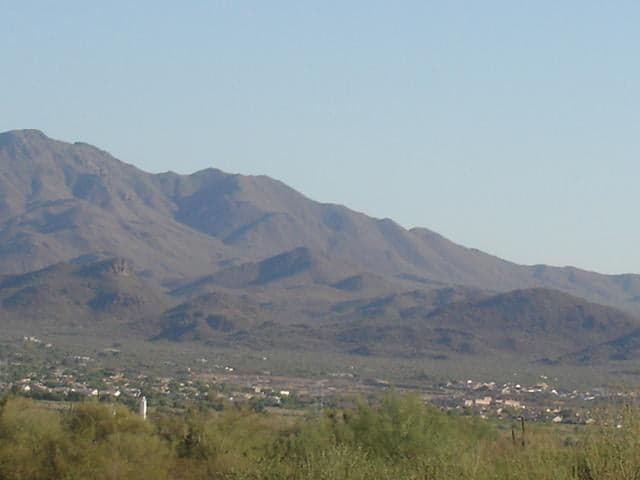
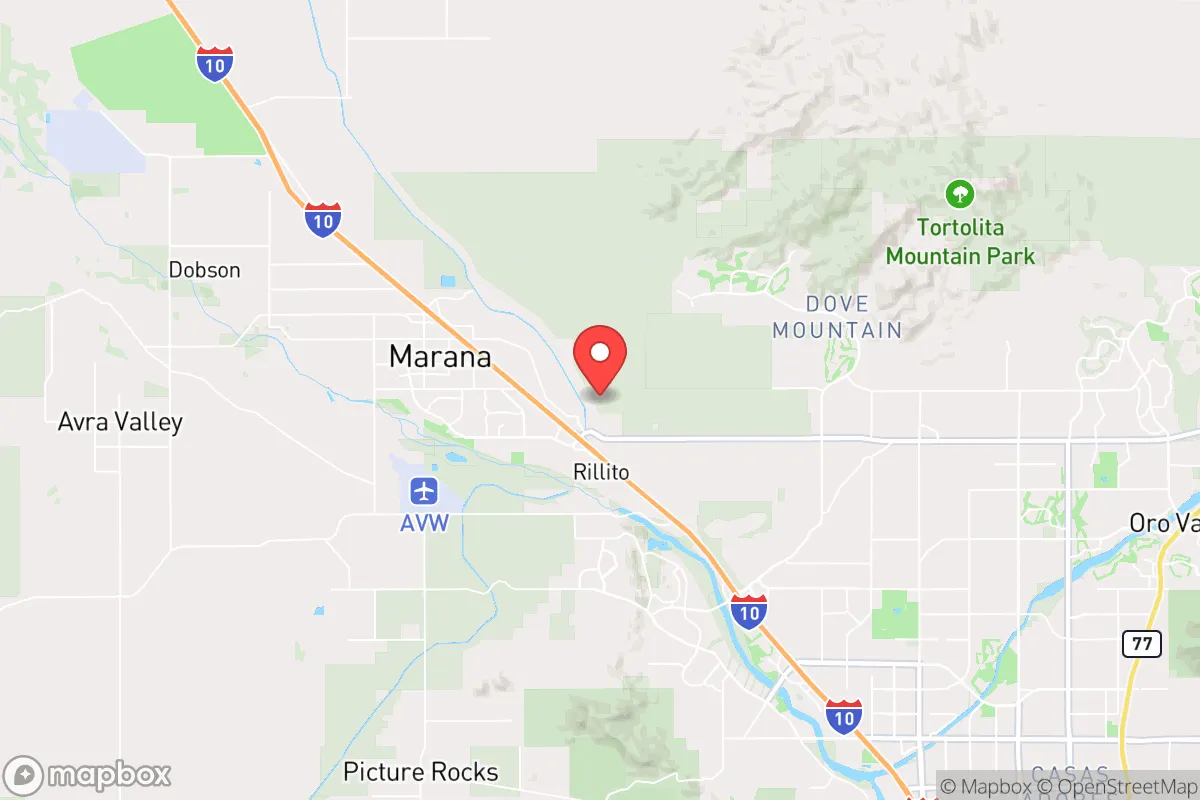
Photo: Wikipedia
Demographics of Marana, AZ
Affluence Level in Marana, AZ
An upper-middle-class area. Household wealth, education levels, and homeownership run ahead of national benchmarks.
People of Marana, AZ
The people of Marana, Arizona, today form a predominantly white, family-oriented suburban community of 54,487 residents, with a notable Hispanic minority of 26.2% and small but growing East/Southeast Asian (3.4%) and Black (3.0%) populations. The city is characterized by a low foreign-born share of just 3.3%, reflecting a population built largely through domestic in-migration rather than international immigration. Nearly half of adults (47.0%) hold a college degree, giving Marana a distinctly professional-class, educated character that sets it apart from many other Sun Belt suburbs. The city's identity is one of planned growth, master-planned communities, and a strong sense of being a deliberate relocation destination for families seeking space, safety, and good schools.
How the city was settled and grew
Marana's human history is almost entirely a 20th- and 21st-century story. Unlike many Arizona towns with Spanish or Mormon pioneer roots, Marana was founded in 1917 as a railroad siding on the Southern Pacific line, named for the Spanish word for "thicket." The original population was a small mix of Anglo railroad workers and Mexican laborers who built the tracks and worked the surrounding cotton and alfalfa fields. These early residents clustered in what is now Old Town Marana, the historic core along Marana Road, where modest worker cottages and a few original commercial buildings remain. The town remained tiny—fewer than 500 people—through the 1950s, sustained by agriculture and the nearby Pima County Fairgrounds. A second early node was the Avra Valley area to the west, settled by a handful of ranching families and homesteaders who took advantage of the 1862 Homestead Act's later extensions. These were overwhelmingly white, native-born, and Protestant, with a small Mexican-American community providing seasonal farm labor.
Modern era (post-1965)
The post-1965 transformation of Marana began in earnest in the 1980s and accelerated through the 2000s, driven by the expansion of Tucson's metropolitan area and the construction of Interstate 10. The 1965 Immigration and Nationality Act had little direct effect on Marana—its foreign-born share remains very low—but the broader Sun Belt migration of white, college-educated Americans from the Midwest and California reshaped the town entirely. The key development was the creation of master-planned communities that attracted relocating professionals and families. Continental Reserve, a large golf-course community built in the 1990s, drew upper-middle-class white families from California and the Northeast, many of whom worked in Tucson's growing healthcare and defense sectors. Dove Mountain, a high-end planned community at the base of the Tortolita Mountains, became the preferred destination for executives and retirees, again overwhelmingly white and native-born. Meanwhile, the Hispanic population, which had been present since the railroad era, grew through natural increase and some domestic migration from other parts of Arizona and the Southwest. These families concentrated in the area around Marana Road and Sandario Road, in older subdivisions and mobile home parks that offered more affordable housing. The Black population, though small at 3.0%, began to appear in the 2000s, primarily in newer subdivisions like Glenn Heights and parts of Continental Reserve, drawn by Marana's reputation for safe schools and newer housing stock. East/Southeast Asian residents—largely Chinese, Filipino, and Vietnamese—arrived in the 2010s, often as professionals in Tucson's aerospace and optics industries, settling in Dove Mountain and the newer Glenn Heights area. The Indian-subcontinent population (0.7%) is tiny but growing, concentrated in Dove Mountain and the tech-oriented professional class.
The future
The demographic trajectory of Marana points toward continued homogenization by class, with some modest diversification by race. The city is not tribalizing into distinct ethnic enclaves—rather, it is becoming a largely white, college-educated, family-oriented suburb with a significant Hispanic minority that is increasingly assimilated and middle-class. The Hispanic share (26.2%) is stable and growing slowly through natural increase, not immigration, and these families are dispersing across newer subdivisions rather than clustering in a single barrio. The East/Southeast Asian and Indian populations are likely to grow slowly as Tucson's tech and defense sectors expand, but they will remain small and integrated into the broader professional class. The foreign-born share (3.3%) is unlikely to rise dramatically, as Marana lacks the rental housing stock and transit connections that attract new immigrants to central Tucson. The biggest demographic shift will be generational: as the large cohort of white retirees in Dove Mountain ages out, younger families—still predominantly white but more diverse than their parents—will fill the new developments planned along the I-10 corridor and in the Glenn Heights expansion areas.
For someone moving to Marana now, the city is becoming a stable, prosperous, and increasingly homogeneous suburb by income and education, even as it slowly diversifies by race. The population is overwhelmingly native-born, family-oriented, and politically moderate-to-conservative, with a strong preference for master-planned living and good schools. New arrivals will find a community that is welcoming to professionals of any background but offers little of the immigrant-driven diversity or urban energy found in central Tucson. It is a place where the people are there by deliberate choice, not by accident of history.

* Values derived from national, state, county, city and local statistics and may differ in a specific area. Last updated: 2026-05-01T09:49:50.000Z
Narrative content on this page is AI-generated and may contain mistakes. Verify any details that matter before acting on them.
ReloMaps may earn a commission from affiliate links at no extra cost to you.

