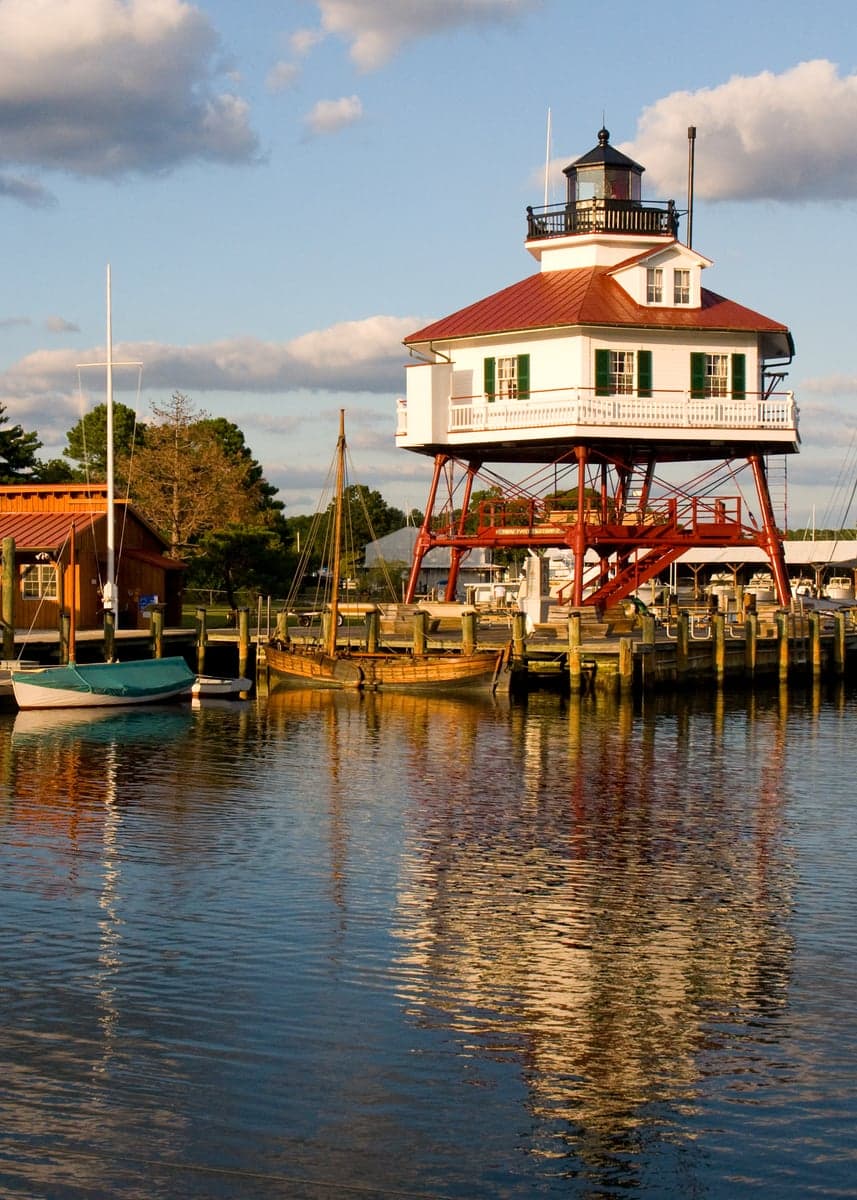
Photo: Wikipedia
Demographics of Calvert County
Affluence Level in Calvert County
An upper-middle-class area. Household wealth, education levels, and homeownership run ahead of national benchmarks.
People of Calvert County
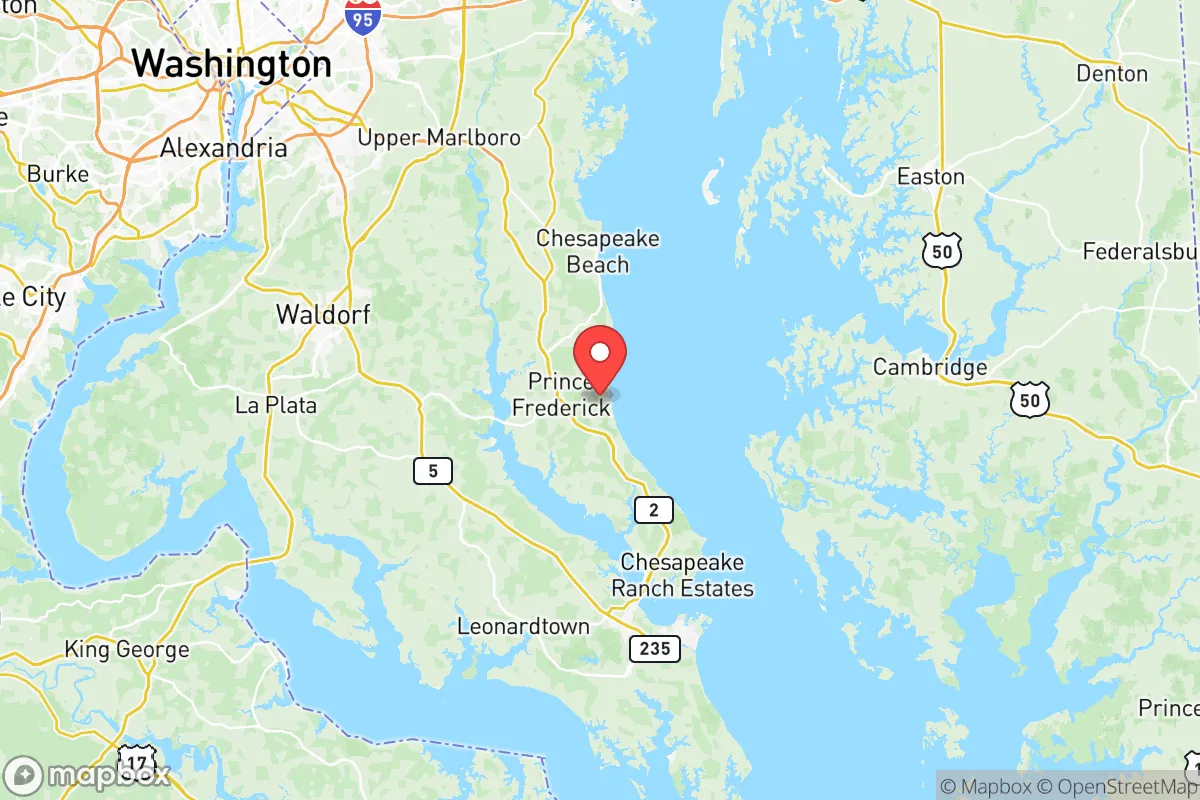
Calvert County, Maryland, is a predominantly white, suburban-rural county of 93,791 residents, known for its Chesapeake Bay shoreline, historic tobacco port towns, and a growing commuter population drawn to Washington, D.C., and Annapolis. The county’s population is 74.3% white, 12.2% Black, 4.9% Hispanic, and 1.3% East/Southeast Asian, with a very low foreign-born share of just 1.0%. Its identity is shaped by deep-rooted Southern Maryland traditions, a strong military and defense-sector presence, and a gradual shift toward greater diversity driven by domestic migration rather than international immigration.
Settlement & growth (pre-1960)
Before European colonization, the region was home to the Piscataway people, an Algonquian-speaking nation who lived in villages along the Patuxent River and Chesapeake Bay. The Piscataway’s main settlement, Piscataway Creek, lay just north of modern Calvert County, but their hunting and fishing grounds covered the entire western shore. By the late 1600s, disease and conflict with English settlers had drastically reduced their population, and most survivors relocated to reservations or merged with other tribes.
English colonists arrived in the 1630s under the Calvert family’s proprietary charter, establishing Maryland as a Catholic haven. The first permanent English settlement in Calvert County was St. Leonard, founded around 1650 as a tobacco plantation center. Tobacco drove the economy for two centuries, and the county’s early population was overwhelmingly English, with a small number of indentured servants and enslaved Africans. By 1700, enslaved Black people made up roughly 30% of the county’s population, concentrated on large plantations along the Patuxent River near Port Republic and Huntingtown.
After the American Revolution, Calvert County remained a rural, slaveholding society. The 1790 census recorded about 8,000 residents, half of them enslaved. The county’s population stagnated through the 1800s as tobacco exhausted the soil and many white families moved west. The Civil War brought division: Calvert County was part of a slave state that stayed in the Union, but many residents sympathized with the Confederacy. Emancipation in 1864 freed about 4,000 enslaved people, and the Black population concentrated in small communities like Dares Beach and Lusby, where they worked as sharecroppers and watermen.
From 1870 to 1950, Calvert County’s population actually declined, falling from about 10,000 to 8,000, as young people left for Baltimore and Washington. The economy shifted from tobacco to seafood—oysters, crabs, and fish—with watermen working out of Solomons, a fishing village at the county’s southern tip. No major immigrant waves arrived during this period; the county remained nearly entirely native-born white and Black, with a tiny number of German and Irish families who had settled in the 1800s.
Modern era (post-1965)
The 1965 Hart-Cellar Act had minimal direct impact on Calvert County because its foreign-born population remains just 1.0% today—one of the lowest rates in Maryland. Instead, the county’s modern demographic transformation came from domestic migration and suburbanization. The key catalyst was the construction of the Thomas Johnson Bridge in 1977, which connected Solomons to St. Mary’s County and opened Calvert to commuters. At the same time, the Calvert Cliffs Nuclear Power Plant (completed 1975) and the Patuxent River Naval Air Station in adjacent St. Mary’s County brought thousands of well-paid engineers, technicians, and military personnel to the region.
Between 1970 and 2000, Calvert County’s population more than tripled, from 20,000 to 74,000. The new arrivals were overwhelmingly white, middle-class families from the Washington-Baltimore corridor, drawn by affordable housing, good schools, and rural character. Subdivisions sprouted around Prince Frederick, the county seat, and along the Route 4 corridor. Prince Frederick transformed from a crossroads hamlet into a commercial hub with strip malls, a hospital, and county government offices. Chesapeake Beach, a historic resort town, saw new waterfront homes and a growing retirement community.
The Black population, which had been roughly 30% in 1970, declined to 12.2% by 2024 as white in-migration outpaced Black growth. Many Black families remained in historic enclaves like Lusby and St. Leonard, but younger generations often left for larger cities. The Hispanic share rose from negligible to 4.9%, driven by construction and service-sector workers, with small clusters in Prince Frederick and Huntingtown. East/Southeast Asian residents (1.3%) and Indian-subcontinent residents (0.5%) are mostly professionals in defense and tech, scattered rather than concentrated in any single neighborhood.
The county’s college-educated share of 35.3% reflects the influx of white-collar commuters. Many residents work at the Naval Air Station, the nuclear plant, or in federal agencies in Washington, D.C., a 60-90 minute drive. The county’s political character has shifted from reliably Democratic to a swing county that leans Republican in national elections, reflecting its suburban, family-oriented, and military-affiliated population.
The future
Calvert County’s population is projected to grow slowly, reaching roughly 100,000 by 2035, as developable land along the Patuxent River and Bay fills in. The county’s 2020 comprehensive plan emphasizes preserving rural areas and concentrating growth in Prince Frederick, Solomons, and Lusby. The foreign-born share is expected to remain low, below 3%, because the county lacks the job diversity and urban amenities that attract immigrants. Instead, future growth will come from domestic migration—primarily white families from the Washington suburbs seeking larger lots and lower taxes, and a modest number of Black and Hispanic families moving from Prince George’s County and Baltimore.
The county is becoming slightly more diverse, but slowly. The Hispanic share could reach 8-10% by 2040, concentrated in service-sector jobs in Prince Frederick and Solomons. The Black share may stabilize or rise slightly as younger Black families return from cities for lower housing costs. East/Southeast Asian and Indian communities will likely remain small, tied to the naval base and defense contractors. The county’s cultural identity—rooted in watermen traditions, Southern Maryland hospitality, and conservative-leaning politics—will persist, but with a growing suburban veneer of chain restaurants, soccer fields, and commuter traffic.
For someone moving in now, Calvert County offers a stable, safe, and family-oriented environment with strong schools and low crime, but limited ethnic diversity and a very small immigrant presence. It is a place where the population is shaped more by American-born families seeking space and community than by global migration flows. The county’s future is one of gradual, managed growth that preserves its rural character while accommodating a modestly more diverse, but still predominantly white, population.

* Values derived from national, state, county, city and local statistics and may differ in a specific area. Last updated: 2026-06-12T16:56:14.000Z
Narrative content on this page is AI-generated and may contain mistakes. Verify any details that matter before acting on them.
ReloMaps may earn a commission from affiliate links at no extra cost to you.

