
Photo: Wikipedia
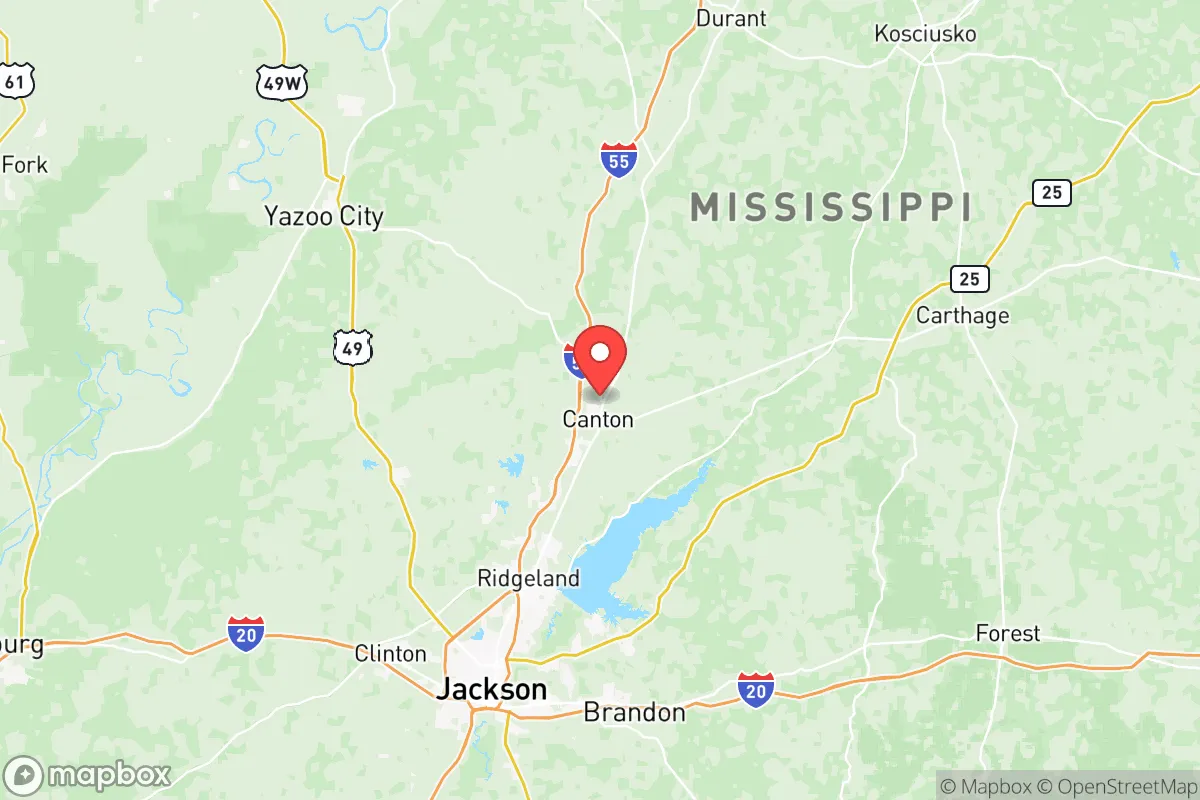
Strategic Assessment of Madison County
Workable tactical position. Some exposure to population density or targets, but generally defensible in a crisis.
What does the Strategic Assessment tell us?
Our Strategic Assessment grades tactical survivability of an area. Major population centers, military targets, fallout zones, natural disasters, and border exposure all drive risk — lower exposure means a more defensible position in a crisis.
This is heavily inspired by Joel Skousen's Strategic Relocation book. Highly recommended you checkout the book ($)What does this tell us?
Our Strategic Assessment grades tactical survivability of an area. Major population centers, military targets, fallout zones, natural disasters, and border exposure all drive risk — lower exposure means a more defensible position in a crisis.
This is heavily inspired by Joel Skousen's Strategic Relocation book. Highly recommended you checkout the book ($)Strategic Pillars

Key Distances
Strategic Assessment Analysis
Madison County, Mississippi, sits in a sweet spot that’s hard to beat for a relocator thinking long-term about resilience and stability. It’s far enough from the chaos of Jackson to breathe easy, but close enough to tap into the region’s economic and logistical muscle when needed. The county’s growth has been steady and deliberate, not frantic, which means infrastructure and community have kept pace—a rare thing in the modern South. For someone looking to plant roots where the grid won’t wobble at the first sign of trouble, this area deserves a hard look.
Geographic position and natural advantages for long-term stability
Madison County sits squarely in central Mississippi, about 15 miles north of Jackson, but it feels a world apart. The terrain is rolling hills and hardwood forests, with the Pearl River forming its eastern border—a reliable water source that’s not prone to the flash flooding you see in flatter delta country. The county’s elevation averages around 300-400 feet, which puts it well above storm surge risk from the Gulf, about 150 miles south. You’ve got the Natchez Trace Parkway cutting through the western edge, a federally protected corridor that doubles as a quiet evacuation route if I-55 gets jammed. The soil is decent for small-scale food production, and the climate supports a 200-day growing season. For a prepper, that means you can realistically supplement your stores with a garden or a few fruit trees without fighting desert conditions or swamp rot. The area’s natural cover—mixed pine and hardwood stands—offers good concealment for a rural homestead without being so dense that it’s a fire hazard. Towns like Madison and Ridgeland are the population centers, but the county’s 100,000 residents are spread out enough that you can find a 5- or 10-acre parcel with privacy and decent road access. That’s the kind of layout that makes a place defensible without being isolated.
Risks, exposures, and proximity to fallout-relevant landmarks
No place is perfect, and Madison County has its share of liabilities that a strategic relocator needs to weigh. The biggest elephant in the room is Jackson, 15 miles south—a city that’s been struggling with water system failures, crime spikes, and political dysfunction for years. If civil unrest hits the capital, you’re close enough to feel the ripple effects: refugees on the highways, supply chain disruptions, and potential spillover violence. The county’s own crime rates are low—Madison city consistently ranks among Mississippi’s safest—but the proximity to Jackson’s instability is a real concern. On the industrial front, there’s no major refinery or chemical plant inside Madison County itself, which is a plus. But you’re within 50 miles of the Chevron Pascagoula Refinery (a major H2S and ammonia site) and the Port of Jackson on the Pearl River, which handles bulk chemicals and petroleum products. A worst-case event at either could send a plume your way depending on wind direction. The Ross Barnett Reservoir, just east of Ridgeland, is a 33,000-acre man-made lake that’s a drinking water source for Jackson—but it’s also a dam structure. A failure or sabotage event would flood low-lying areas along the Pearl, though Madison County’s higher ground keeps most of it safe. The Mississippi National Guard’s Camp Shelby is about 100 miles south, not a direct threat but a reminder that military assets in the region could become movement corridors during a crisis. For a prepper, the calculus is: you’re far enough from the worst fallout zones to have time to react, but close enough to Jackson that you need a solid plan for filtering inbound traffic and securing your perimeter.
Practical resilience for a relocator: food, water, energy, and defensibility
Let’s get down to brass tacks on what daily life looks like for someone serious about self-reliance here. Water is the first concern, and Madison County has options. The Pearl River and the reservoir are surface sources, but they’re also the most likely to be contaminated or contested in a breakdown. A better bet is the Citizens Water Association or a private well—many rural properties already have them, and the aquifer in this part of Mississippi is reliable at 100-200 feet. You’ll want to test for iron and sulfur, which are common, but a basic filtration setup handles that. Food-wise, the county has a strong agricultural base—you’re within 30 miles of Kosciusko and Canton, both with active farmers’ markets and bulk suppliers. The Madison County Farmers Market in Ridgeland runs year-round and is a good place to build relationships with local growers before any crisis hits. For energy, the grid is served by Entergy Mississippi, which has a mixed record on storm hardening—hurricanes have caused multi-day outages in the past. Solar is viable here; you get about 5 peak sun hours per day, and the county’s zoning is generally friendly to panels and small wind turbines. Propane is widely available, and several dealers in the area offer bulk delivery. Defensibility comes down to terrain and community. The rolling hills and tree lines give you natural chokepoints, and the county’s conservative culture means a lot of neighbors already own firearms and are inclined to look out for each other. The Madison County Sheriff’s Office is well-regarded and responsive, but in a prolonged event, you’re on your own for the first 72 hours—standard for rural America. The key is to pick a property with a good well, a southern slope for solar, and at least one alternate route out that doesn’t go through Jackson.
The overall strategic picture for Madison County is one of calculated advantage. You’re not in a bunker in the middle of nowhere, but you’re also not living on top of a refinery or a major military target. The county’s growth has been driven by people fleeing Jackson’s decline, which means the local economy and infrastructure are actually improving—new hospitals, better roads, more retail options. That’s a trend that works in your favor. The downsides—proximity to a struggling capital, some industrial exposure downriver—are manageable with good planning and a bit of distance from the county’s southern edge. For a conservative-leaning relocator who values community, self-sufficiency, and a lower profile, Madison County offers a rare combination: it’s close enough to civilization to be practical, but far enough from the epicenters of chaos to give you a fighting chance. If you’re serious about resilience, this is a place to put on your short list.

* Values derived from national, state, county, city and local statistics and may differ in a specific area. Last updated: 2026-05-12T12:07:51.000Z
Narrative content on this page is AI-generated and may contain mistakes. Verify any details that matter before acting on them.
ReloMaps may earn a commission from affiliate links at no extra cost to you.

