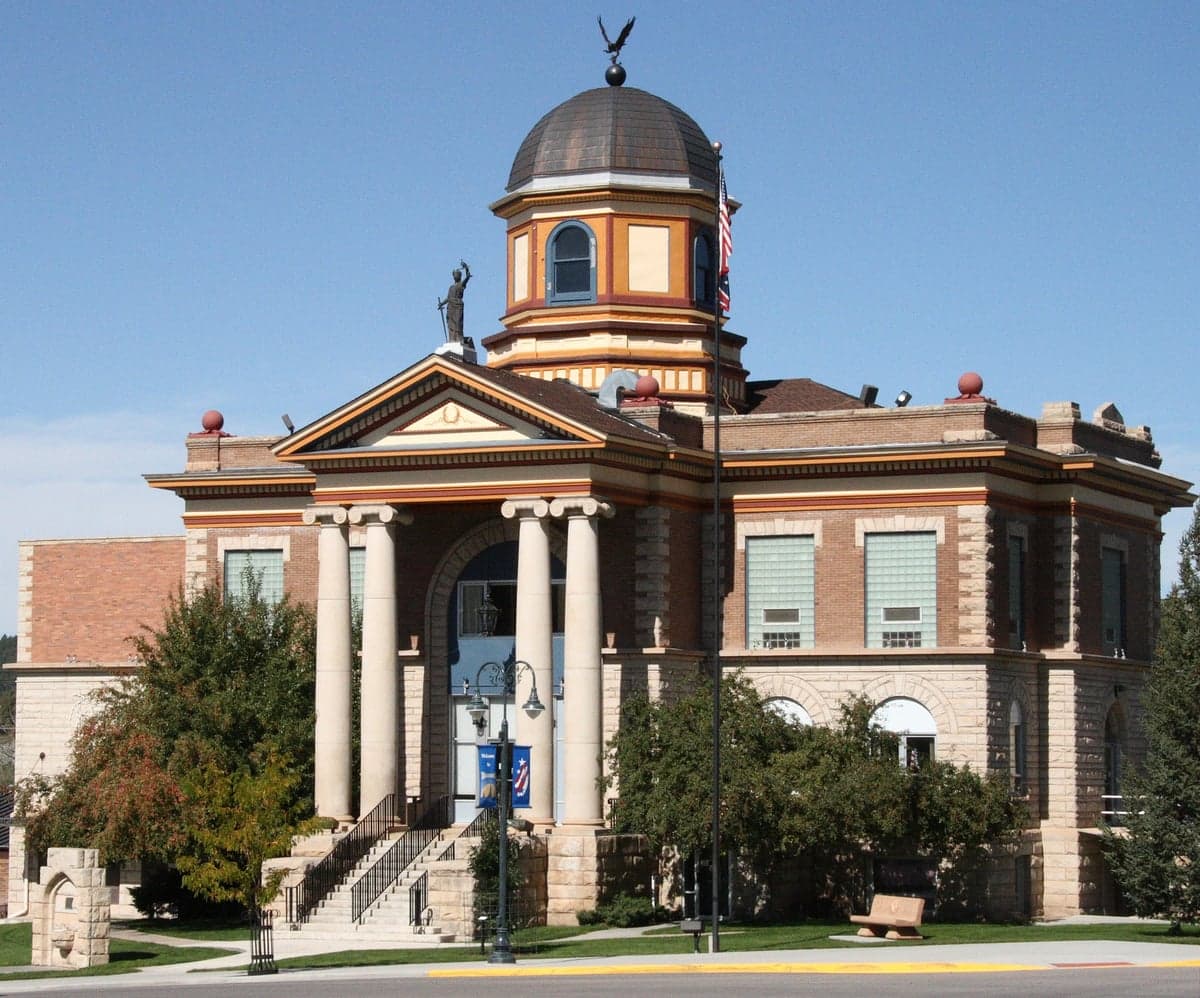
Photo: Wikipedia
Political ClimatePolitical Climate in Newcastle, WY
District shown is the primary district for this city’s centroid. Cities may span multiple districts.
Inherited from parent state — no local data available.
Local Political AnalysisPolitical Analysis of Newcastle, WY
Newcastle, Wyoming, sits deep in conservative territory, and that’s not changing anytime soon. The Cook PVI clocks Weston County at R+23, which means Republicans hold a massive 23-point advantage over the national average. In practical terms, that translates to a place where local elections are decided in primaries, not general elections, and where the political conversation is overwhelmingly about limited government, resource extraction, and personal responsibility. If you’re looking for a place where the old-school Western ethos of self-reliance still holds strong, this is it. The trajectory here is steady—there’s no real push toward the progressive policies you see creeping into places like Laramie or Jackson Hole, and most folks intend to keep it that way.
How it compares
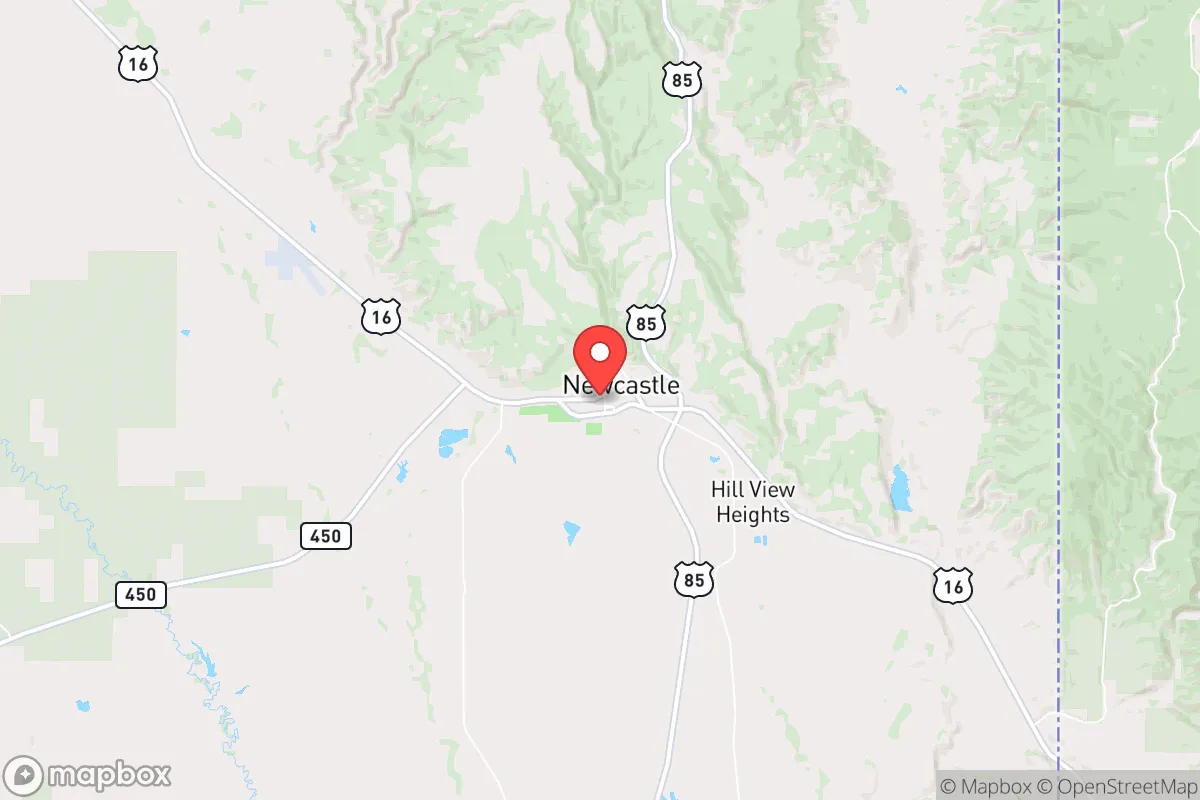
Drive an hour south to Lusk or an hour north to Lead, South Dakota, and you’ll find similar conservative leanings, but the contrast really shows when you head west. Gillette, about 90 minutes away, is still red but has a more transient, energy-boom feel that can shift voting patterns with the economy. The real eye-opener is comparing Newcastle to places like Rapid City, which has a growing progressive activist scene, or even Spearfish, which has seen an influx of out-of-state retirees bringing more moderate views. Newcastle, by contrast, remains a stronghold. The county commission, school board, and city council are all reliably conservative, and there’s a palpable skepticism toward any government overreach—whether it’s federal land management, state-level mandates on local businesses, or school curriculum changes that push ideological agendas. The surrounding towns of Upton and Osage are even smaller and more insular, reinforcing the area’s resistance to outside influence.
What this means for residents
For someone moving here, the political climate means a few concrete things. First, you can expect low taxes and minimal regulation—Weston County doesn’t have a county sales tax, and property taxes are among the lowest in the state. Second, the Second Amendment is treated as a given, not a debate. You’ll see open carry without a second glance, and there’s no local appetite for red-flag laws or waiting periods. Third, the school system reflects the community’s values: parents have a strong voice, and there’s no tolerance for critical race theory or gender ideology being pushed in classrooms. That said, the downside is that if you lean left, you’ll feel isolated. There’s no local Democratic party infrastructure to speak of, and social circles can be tight-knit. The community is welcoming to newcomers who respect the local way of life, but it’s not a place where progressive activism will find fertile ground.
One cultural distinction worth noting is Newcastle’s relationship with the federal government. The area is surrounded by national forest and Bureau of Land Management land, and there’s a long memory of federal overreach—especially during the Clinton-era roadless rule debates and more recent sage-grouse habitat restrictions. Locals see these as direct threats to ranching, mining, and personal property rights. There’s also a strong strain of libertarian thinking here, not just standard Republicanism. You’ll hear people argue that the government should stay out of both your wallet and your personal life. That independence is the real bedrock of Newcastle’s political identity, and it’s why the area has resisted the cultural shifts that have reshaped so many other small towns in the West. If you value that kind of freedom and are willing to live with fewer services and longer drives, you’ll fit right in.

State Political ClimatePolitical Climate in Wyoming
State Political AnalysisPolitical Environment in the State
Wyoming is one of the most reliably conservative states in the Union, with a Republican Party registration advantage of roughly 3-to-1 and a statewide voting pattern that has not backed a Democrat for president since 1964. The dominant coalition is a blend of traditional Western libertarians, evangelical Christians, and resource-industry workers, all united by a deep skepticism of federal overreach. Over the past 10-20 years, the state has actually moved further right, driven by an influx of conservative refugees from blue states and a steady exodus of younger, more moderate residents. The 2024 presidential election saw Donald Trump win Wyoming by nearly 45 points, with every single county voting Republican — a stark contrast to the 1990s when a few counties like Teton (Jackson Hole) and Albany (Laramie) were competitive.
Urban vs. rural divide
The political map of Wyoming is not a simple urban-rural split; it’s more of a resort-versus-everything-else divide. The two population centers — Cheyenne in the southeast and Casper in the central region — are solidly red, with Cheyenne’s Laramie County voting +24 R in 2024 and Casper’s Natrona County going +32 R. The real outlier is Teton County, home to Jackson Hole, which is the only county in the state that consistently votes Democratic — it went +18 for Kamala Harris in 2024. This is driven by wealthy out-of-state transplants, second-home owners, and a tourism economy that attracts a left-leaning workforce. Albany County, anchored by the University of Wyoming in Laramie, is a distant second in Democratic strength, but even there the GOP holds a registration edge. Every other county — from the coal-rich Powder River Basin around Gillette to the agricultural ranchlands of Sublette and Fremont counties — votes Republican by 30 to 60 points. The rural areas are not just conservative; they are deeply libertarian, with a strong "leave us alone" ethos that resists both federal mandates and state-level nanny-state policies.
Policy environment
Wyoming’s policy environment is a dream for conservatives who value low taxes and minimal regulation. There is no state income tax, no corporate income tax, and a sales tax capped at 4% (local options can push it to 6%). Property taxes are among the lowest in the nation, with a median effective rate of 0.56%. The state legislature is dominated by the Wyoming Freedom Caucus, which has pushed through a series of bills that would make a Texan blush. In 2023, the legislature passed a near-total abortion ban (the "Life is a Human Right Act") with no exceptions for rape or incest, though it was temporarily blocked by a court challenge. Education policy is strongly pro-school choice: Wyoming has a robust charter school law, and in 2024 the legislature created a $7,000 per-student education savings account program for families who opt out of public schools. Election laws are among the most secure in the nation: voter ID is required, same-day registration is not allowed, and the state uses paper ballots with mandatory post-election audits. There is no mail-in voting unless you have a valid excuse, and ballot drop boxes are prohibited. The regulatory posture is aggressively pro-business, especially for energy extraction — oil, gas, coal, and uranium all enjoy streamlined permitting and minimal environmental hurdles.
Trajectory & freedom
Wyoming is becoming more free in the areas that matter most to conservatives, but there are warning signs. On the positive side, the 2024 session saw the passage of the "Wyoming Firearms Freedom Act," which explicitly nullifies any federal gun control measure that contradicts state law, and the "Second Amendment Protection Act" prohibits state enforcement of federal red-flag laws. Parental rights were strengthened with the "Parents’ Bill of Rights," which requires schools to notify parents of any curriculum changes involving sexuality or gender identity and prohibits school employees from hiding a child’s gender expression from parents. Medical autonomy was expanded with the "Wyoming Right to Try Act," allowing terminally ill patients to access experimental treatments without FDA approval. On the concerning side, the state has seen a creeping expansion of property rights restrictions in the name of conservation — the "Greater Sage-Grouse Protection Act" of 2023 imposed new land-use restrictions on private ranchland, drawing sharp criticism from the Wyoming Stock Growers Association. Additionally, the state’s reliance on federal mineral royalties (roughly 40% of the state budget) creates a vulnerability: if the federal government tightens energy extraction rules, Wyoming’s fiscal freedom could be compromised. The 2024 "Energy Independence Act" was a direct response, creating a state-level trust fund to wean off federal dollars, but it remains underfunded.
Civil unrest & political movements
Wyoming is not a hotbed of street protests, but there are organized movements on both sides that a new resident would notice. The most visible conservative force is the Wyoming Liberty Group, a free-market think tank that has successfully pushed for tax cuts and school choice. The Wyoming Freedom Caucus, led by state Representative John Bear, has become the dominant faction in the legislature, often clashing with the more establishment "Cowboy Caucus" over spending and federal overreach. On the left, the Jackson Hole-based "Wyoming Equality" group organizes annual Pride events and has fought against the state’s anti-LGBTQ+ legislation, but their influence is limited to Teton County. Immigration politics are relatively quiet — Wyoming has a tiny foreign-born population (about 3%), and the state passed a law in 2023 requiring all employers to use E-Verify, which has been popular across party lines. Election integrity controversies are minimal; the state’s paper ballot system and strict voter ID laws have kept fraud allegations at bay. The most visible flashpoint for a new resident would be the "Bureau of Land Management (BLM) conflict" — in 2024, the BLM proposed new restrictions on grazing and drilling in the Red Desert, sparking a massive backlash that included a "Cowboy Up" rally in Rock Springs with over 2,000 attendees. This is the kind of issue that defines Wyoming politics: a perceived federal land grab uniting ranchers, miners, and hunters against Washington.
Projection
Over the next 5-10 years, Wyoming will likely become even more conservative, but with a growing tension between the traditional libertarian wing and the newer social conservative wing. The in-migration pattern is telling: people are moving to Wyoming from California, Colorado, and Washington specifically to escape high taxes, lockdowns, and progressive policies. These newcomers tend to be even more conservative than the native population, often pushing for further deregulation and school choice. However, the demographic math is challenging — Wyoming is the least populous state, with a median age of 41, and the youth exodus to Denver, Salt Lake City, and Boise continues. The state’s economy is slowly diversifying, with tech and remote work growing in towns like Laramie and Sheridan, but the energy sector still dominates. A new resident moving in now should expect to find, in a decade, a state that is: (1) even more Republican, possibly with a supermajority in the legislature that could override any gubernatorial veto; (2) more fiscally independent, with a growing state trust fund that reduces reliance on federal dollars; (3) more culturally homogeneous, as the progressive enclaves in Teton and Albany counties shrink relative to the rest of the state; and (4) more assertive in nullifying federal laws, particularly on guns, energy, and land use.
Bottom line for a new resident: Wyoming is about as close to a conservative utopia as you’ll find in the Lower 48 — no income tax, strong gun rights, school choice, and a government that mostly stays out of your life. But it’s not perfect: the property rights battles over federal land are real, the winters are brutal, and the economy is still tied to boom-and-bust energy cycles. If you’re moving here for freedom, you’ll find it — just be prepared to fight to keep it.
* Values derived from national, state, county, city and local statistics and may differ in a specific area. Last updated: 2026-04-21T10:55:21.000Z
Narrative content on this page is AI-generated and may contain mistakes. Verify any details that matter before acting on them.
ReloMaps may earn a commission from affiliate links at no extra cost to you.

