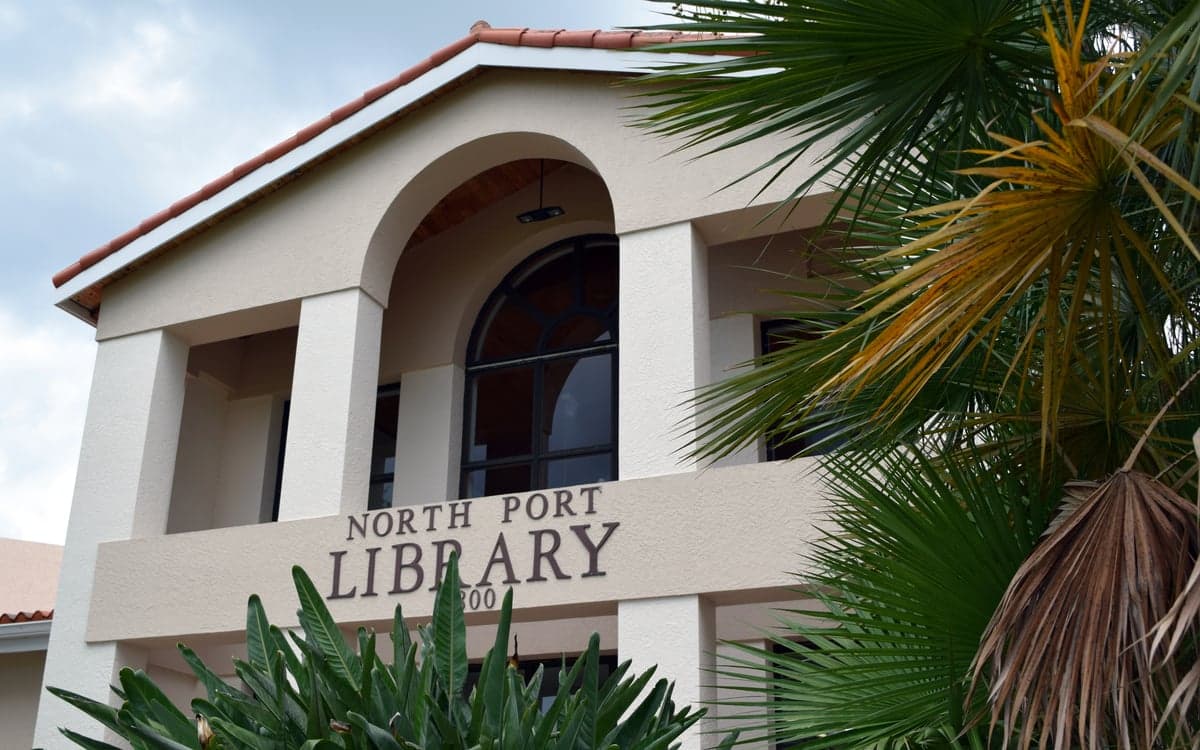
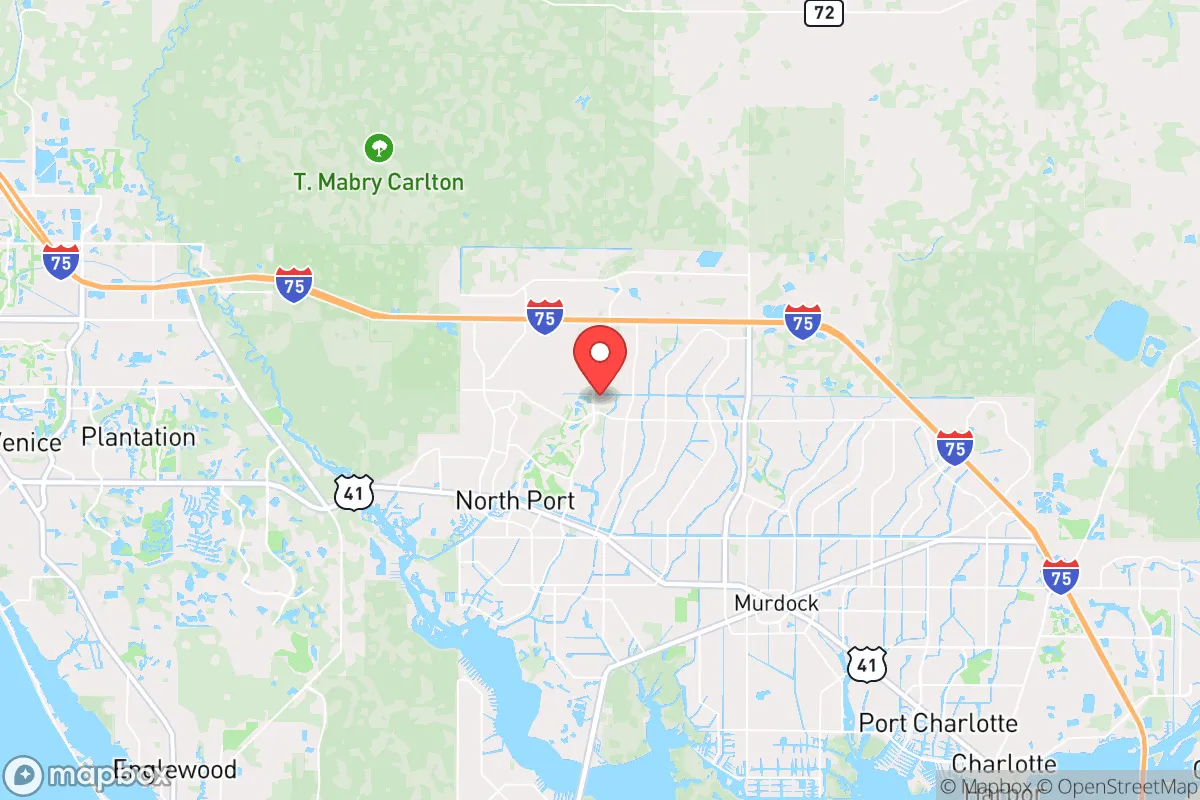
Photo: Wikipedia
Personal Sovereignty in North Port, FL
Viable for self-reliance. Generally workable, though some barriers may limit total independence.
What does Personal Sovereignty tell us?
Personal Sovereignty measures your capacity for self-reliance and independence with minimal government friction. Higher scores mean fewer barriers between you and the way you want to live... but it assumes you have the space you need and good neighbors.
What does this tell us?
Personal Sovereignty measures your capacity for self-reliance and independence with minimal government friction. Higher scores mean fewer barriers between you and the way you want to live... but it assumes you have the space you need and good neighbors.
State Policy
Energy independence: Importer (10% of energy produced in-state)
Personal Liberty
Homesteading

Personal Liberty Analysis
For the liberty-minded individual or family evaluating North Port, Florida, the personal sovereignty environment is a study in contrasts: you get the structural advantages of a red state with strong preemption laws and no state income tax, but you are also entering a rapidly growing city where municipal codes and HOA restrictions can chip away at the autonomy you moved here to secure. The key is knowing which battles are already won at the state level and which ones you will have to fight—or avoid—at the local level. North Port offers a solid foundation for self-reliance, but it is not the Wild West; the city’s zoning and development patterns create both opportunities and friction points for those who want maximum control over their property and daily life.
Tax burden and regulatory posture: what Florida’s lack of income tax means for your autonomy
Florida’s absence of a state income tax is the single biggest structural win for personal sovereignty here. Every dollar you earn stays in your pocket, free from state-level confiscation, which directly funds your own preparedness goals—whether that’s buying land, stocking supplies, or investing in off-grid infrastructure. The state’s regulatory posture is generally light-touch compared to the Northeast or West Coast, but North Port itself operates under a city code that can feel surprisingly restrictive for a place that still has large undeveloped tracts. Property taxes in Sarasota County hover around 0.8% of assessed value, which is reasonable, but be aware that the city imposes a 1% local option sales tax on top of the state’s 6%, bringing the total to 7% in most transactions. There is no inheritance tax and no estate tax, so your property passes to your heirs without the state taking a cut. The regulatory environment for small businesses is favorable—no corporate income tax and minimal licensing hurdles—but if you plan to run a home-based business, check the city’s zoning for your specific lot, as some residential zones restrict commercial activity more than you might expect.
Self-defense and gun law specifics: what you can and cannot do in North Port
Florida is a shall-issue state for concealed carry, and as of 2023, permitless carry (constitutional carry) is the law for anyone 21 or older who can legally possess a firearm. That means you can carry a concealed handgun without a permit, though a permit still offers reciprocity with other states and exempts you from the three-day waiting period on handgun purchases. North Port itself has no local gun ordinances that exceed state law—Florida preempts firearm regulation entirely, so the city cannot ban guns in parks or impose its own waiting periods. Stand-your-ground law is fully in effect, with no duty to retreat in any place you have a legal right to be. Castle doctrine applies to your home, vehicle, and occupied structure. Magazine capacity is unrestricted, and there is no state-level assault weapon ban. For the survivalist mindset, this is a strong legal framework: you can defend your family and property without worrying about a prosecutor second-guessing your actions, as long as the threat is reasonable and imminent. The only notable restriction is that open carry is generally prohibited except in specific circumstances like hunting or fishing. If you are moving from a blue state, the shift in legal posture is dramatic—you are not treated as a potential criminal for exercising your Second Amendment rights.
Self-reliance and homesteading viability: lot sizes, zoning, and off-grid feasibility
North Port’s defining feature for the self-reliant is its unusual lot sizes. The city was originally platted with 10,000-square-foot lots as the standard, and many areas still have parcels that size or larger, including some that are half an acre or more. This is not typical for a Florida city of 80,000 people, and it gives you room for gardens, workshops, and even small livestock if you navigate the zoning correctly. The city allows chickens on residential lots (hens only, no roosters) and permits beekeeping with registration. However, the city’s code enforcement is active, and complaints from neighbors can trigger inspections for things like unkempt vegetation, inoperable vehicles, or structures built without permits. Off-grid feasibility is mixed: the city requires connection to municipal water and sewer where available, so true off-grid living with a well and septic is only possible on lots that are not yet served by utilities—and those are becoming rarer as development spreads. Solar panels are allowed but must meet building code and HOA approval if you are in a covenanted community. Rainwater collection is legal, but the state has restrictions on how much you can capture (generally 500 gallons per property without a permit). For the serious prepper, the best strategy is to buy a lot in the unincorporated areas just outside city limits, where county zoning is looser and you can keep larger livestock, build a shop, and operate with fewer restrictions. The Myakka River area and the eastern edge of North Port near I-75 offer the best balance of acreage and autonomy.
Personal liberties: parental rights, medical autonomy, speech, and property
Florida has been a battleground for parental rights in education, and the state now has some of the strongest laws in the country protecting a parent’s authority over their child’s medical decisions, curriculum access, and school records. The Parental Rights in Education Act (often called the “Don’t Say Gay” law by critics) ensures that classroom instruction on sexual orientation and gender identity is restricted in early grades, and parents have the right to opt their children out of any health-related instruction. Medical autonomy is more complicated: Florida has no state-level vaccine mandate for adults, but employers and private businesses can still require them. The state did pass a law prohibiting mask mandates in schools and government buildings, which signals a pro-choice stance on medical decisions. For the survivalist, the ability to refuse medical treatment, use alternative therapies, and make decisions for your children without state interference is stronger here than in most of the country. Speech is protected by the First Amendment, and Florida has a state-level anti-SLAPP law that protects you from frivolous lawsuits intended to silence criticism. Property rights are generally respected, but the city’s code enforcement and HOA covenants can feel like a slow erosion of control. If you buy in a deed-restricted community, you are signing away a significant chunk of your autonomy—things like parking a boat in your driveway, painting your house a non-approved color, or running a generator for extended periods can get you fined. The workaround is to buy in an unincorporated area or a neighborhood without an HOA, which is entirely possible in North Port given the variety of subdivisions and rural pockets.
Overall, North Port offers a higher degree of personal sovereignty than most of the country, but it is not a libertarian paradise. The state-level wins—no income tax, constitutional carry, strong parental rights, and preemption of local gun laws—create a solid baseline that protects you from the worst forms of government overreach. The local friction comes from municipal codes, HOA restrictions, and the slow creep of suburbanization that values conformity over self-reliance. If you are willing to do the homework on zoning, avoid HOAs, and choose your lot carefully, you can carve out a life here that gives you room to breathe, defend yourself, and raise your family on your own terms. Compared to the regulatory chokeholds of California, New York, or Illinois, North Port is a breath of fresh air—but compared to the truly rural counties of north Florida or the panhandle, it is a compromise. For the strategic relocator who wants proximity to jobs and services without surrendering their autonomy, it is one of the better bets in the state.

* Values derived from national, state, county, city and local statistics and may differ in a specific area. Last updated: 2026-04-19T07:30:57.000Z
Narrative content on this page is AI-generated and may contain mistakes. Verify any details that matter before acting on them.
ReloMaps may earn a commission from affiliate links at no extra cost to you.

