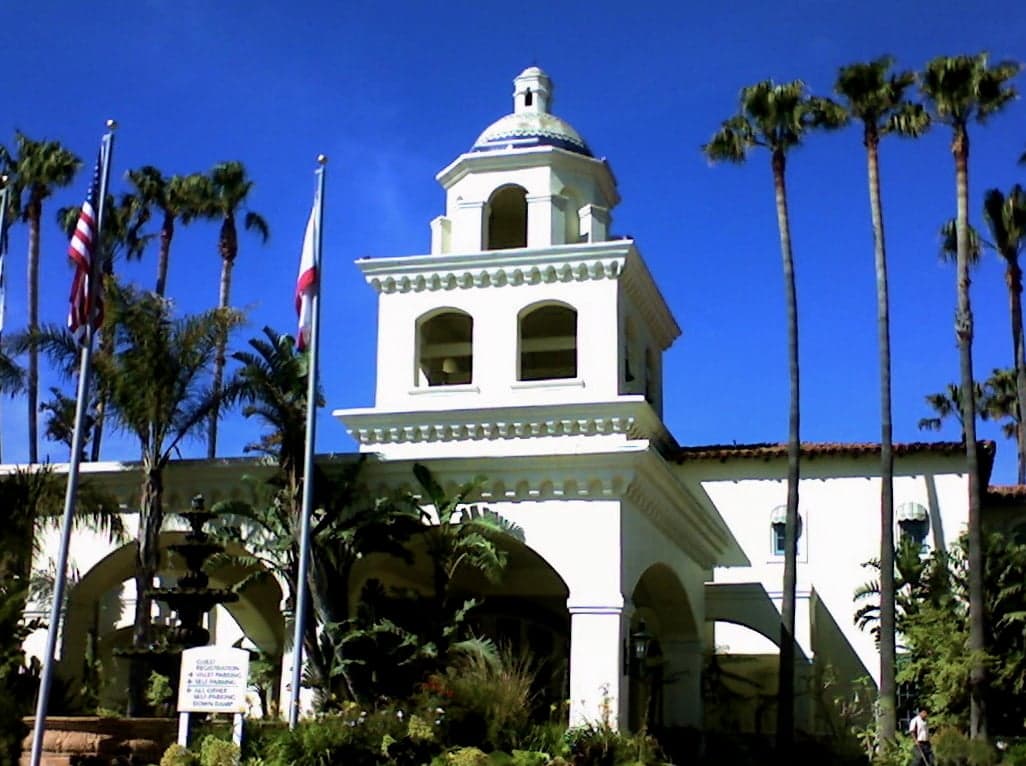
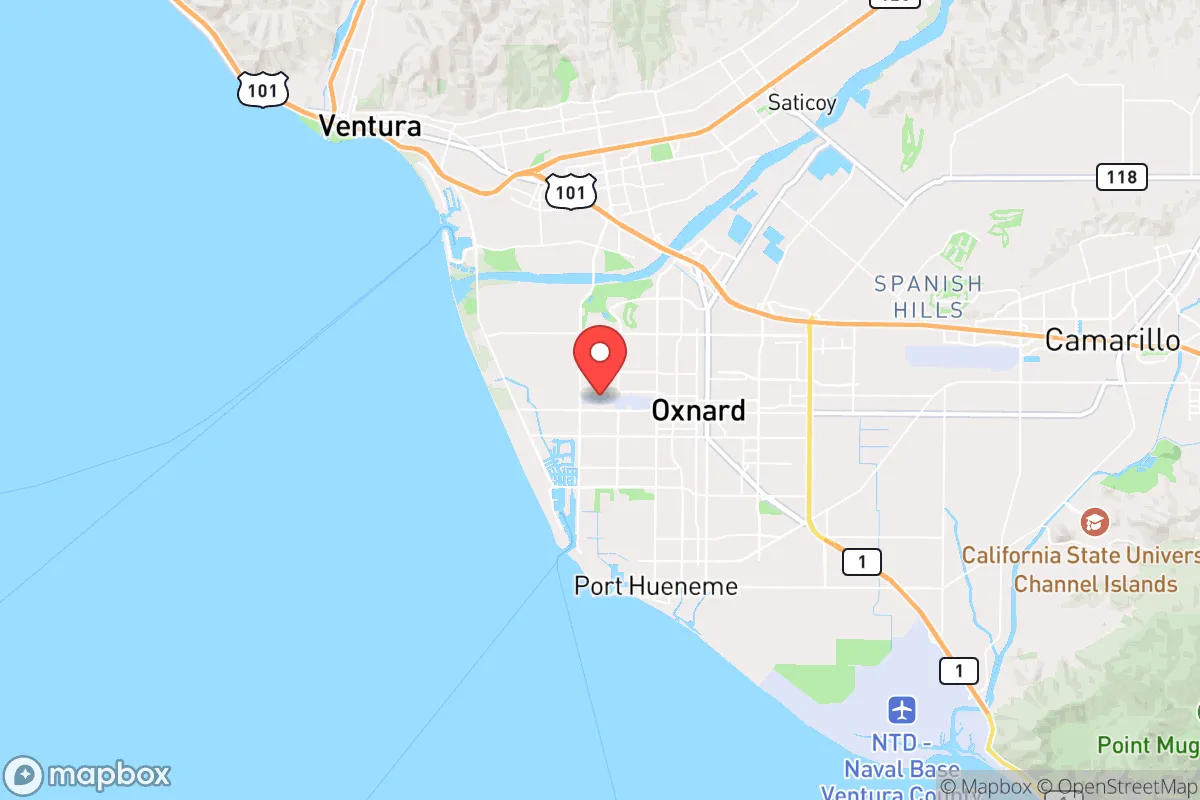
Photo: Wikipedia
Demographics of Oxnard, CA
Affluence Level in Oxnard, CA
A middle-class area roughly in line with national averages across income, home values, education, and employment.
People of Oxnard, CA
Oxnard, California, is a majority-Hispanic city of 201,014 residents where 77.0% of the population identifies as Hispanic or Latino, giving it a distinctly Mexican-American cultural character. The city’s foreign-born share stands at 18.8%, and its racial makeup is 12.5% White, 6.2% East/Southeast Asian, 1.5% Black, and 0.2% Indian (subcontinent). With only 19.6% of adults holding a college degree, Oxnard remains a working-class coastal city whose identity is rooted in agriculture, labor, and successive waves of immigration.
How the city was settled and grew
Oxnard’s human history begins not with Spanish missions or Mexican ranchos, but with a late-19th-century agricultural boom. The city was formally founded in 1903 as a company town for the American Beet Sugar Company, which built a massive refinery on the Oxnard Plain. The original workforce was a mix of Japanese, Chinese, Filipino, and Mexican laborers, along with European immigrants from Portugal and Italy. These groups settled in distinct neighborhoods: La Colonia, a historic barrio south of the railroad tracks, became the heart of the Mexican and Mexican-American community; South Oxnard absorbed later waves of farmworkers; and the Oxnard Historic District, centered around A Street and B Street, housed the Anglo managers and business owners. By 1920, Oxnard was already a majority-immigrant city, with Japanese farmers leasing land and Mexican families working the sugar beet and lima bean fields. The city’s population grew steadily through the 1940s and 1950s as the Oxnard Air Force Base (now the Naval Base Ventura County) brought military families and defense workers, many of whom settled in the RiverPark area and the newer subdivisions north of the 101 freeway.
Modern era (post-1965)
The 1965 Hart-Cellar Immigration Act dramatically reshaped Oxnard’s demographics. Family reunification provisions allowed Mexican and Filipino immigrants to sponsor relatives, accelerating the Hispanic share from roughly 30% in 1970 to over 70% by 2000. The La Colonia neighborhood expanded south and east, while South Oxnard became a dense, predominantly Hispanic working-class corridor. Meanwhile, the East/Southeast Asian population—primarily Filipino and Vietnamese—grew to 6.2% of the city, concentrated in the Oxnard Shores area and the newer housing tracts near Channel Islands Harbor. White flight to neighboring Camarillo and Ventura accelerated after the 1994 Northridge earthquake, when many older Anglo residents sold their homes and moved inland. By 2020, the White share had fallen to 12.5%, and the Black population remained small at 1.5%, largely concentrated in the West Oxnard neighborhoods near the naval base. The Indian (subcontinent) population is negligible at 0.2%, reflecting the city’s lack of tech-sector employment. Today, Oxnard is a city where Spanish is heard as often as English in public spaces, and the Catholic Church—particularly Our Lady of Guadalupe in La Colonia—remains a central institution.
The future
Oxnard’s population is likely to continue its Hispanic-majority trajectory, with the White share declining further as older residents age out and younger families move to cheaper inland suburbs. The foreign-born share (18.8%) is plateauing, as second- and third-generation Mexican-Americans now dominate the city’s demographic profile. The East/Southeast Asian community is stable but not growing rapidly, as younger Filipino and Vietnamese families tend to move to Ventura or Thousand Oaks for better schools. The city is not tribalizing into starkly separate enclaves—rather, Hispanic culture is becoming the baseline, with other groups assimilating into it or leaving. The college education rate (19.6%) is low by California standards, which means Oxnard will likely remain a blue-collar, service-economy city rather than attracting tech or professional migrants. Gentrification pressure is minimal, as the city’s distance from Los Angeles (60 miles) and lack of a commuter rail station limit in-migration from higher-income groups.
For someone moving to Oxnard now, the city offers a stable, family-oriented, working-class environment with a strong Mexican-American identity. It is not a place of rapid demographic change or cultural friction—rather, it is a city where the population has largely settled into its current composition. New residents should expect a community where Spanish-language fluency is an asset, where Catholic and evangelical churches anchor social life, and where the economy remains tied to agriculture, the port, and the naval base. The city’s future is one of slow, organic growth within its existing demographic framework, not a dramatic transformation.

* Values derived from national, state, county, city and local statistics and may differ in a specific area. Last updated: 2026-04-29T18:50:17.000Z
Narrative content on this page is AI-generated and may contain mistakes. Verify any details that matter before acting on them.
ReloMaps may earn a commission from affiliate links at no extra cost to you.

