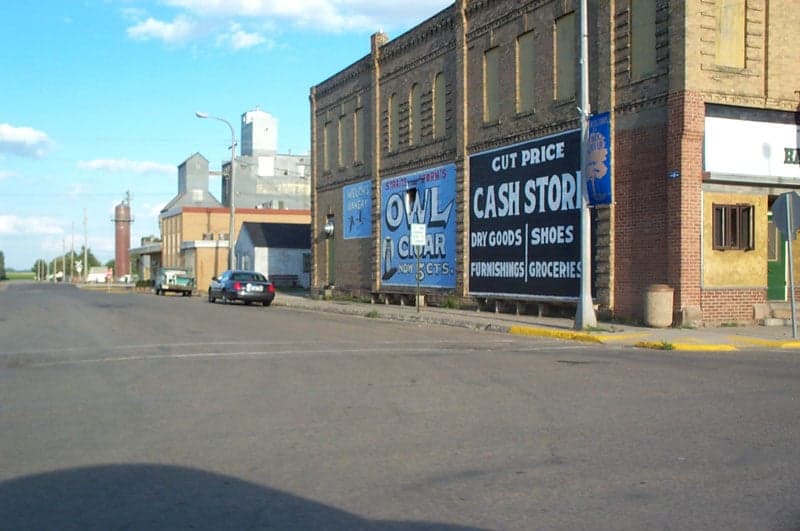
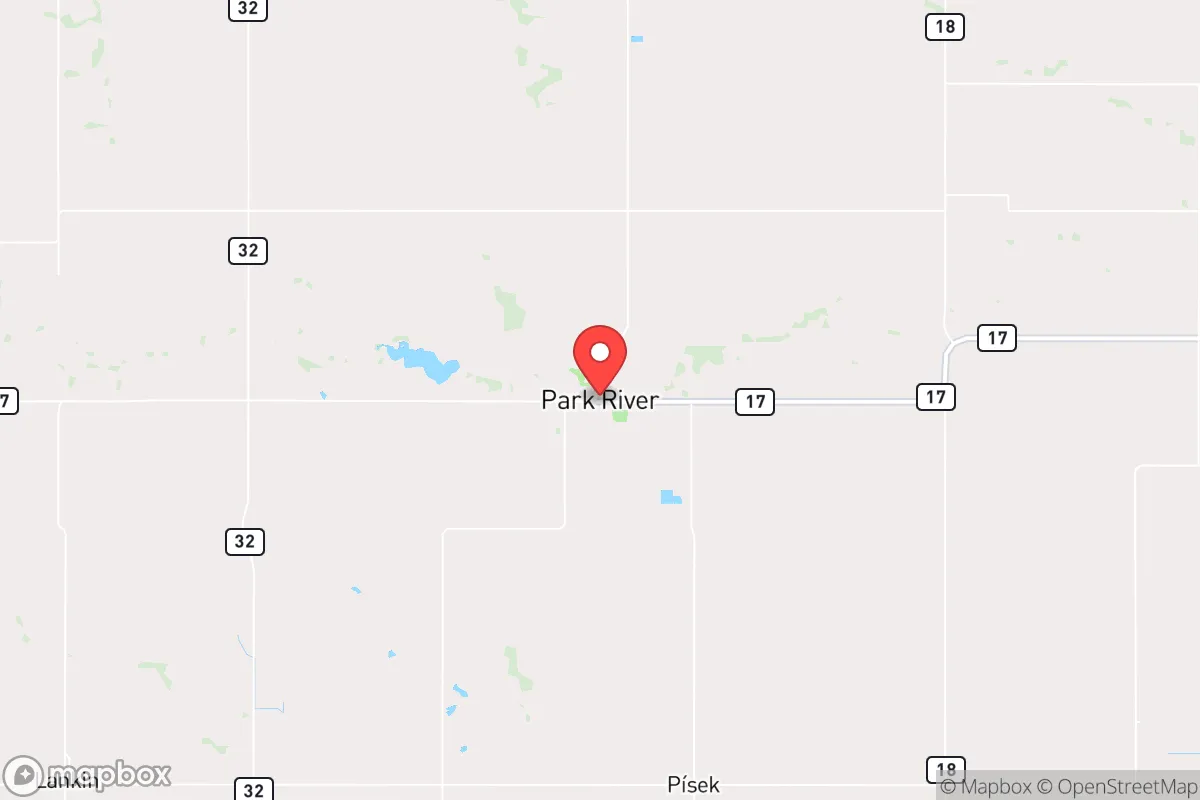
Photo: Wikipedia
Demographics of Park River, ND
Affluence Level in Park River, ND
A middle-class area roughly in line with national averages across income, home values, education, and employment.
People of Park River, ND
Park River, North Dakota, is a small, tightly-knit community of 1,483 residents that remains overwhelmingly white (91.8%) and native-born, with a foreign-born population of just 0.7%. The city’s identity is rooted in its agricultural heritage and Scandinavian and German pioneer stock, giving it a quiet, family-oriented character with a low college attainment rate (20.9%) reflecting a workforce centered on farming, agribusiness, and local trades. Today, Park River feels like a place where generational roots run deep, and newcomers are often those seeking a slower, rural lifestyle rather than a diverse urban mix.
How the city was settled and grew
Park River’s settlement began in the 1870s and 1880s, when the Great Northern Railroad pushed through the Red River Valley, drawing homesteaders to the fertile, flat prairie. The original wave was almost entirely Northern European — primarily Norwegian and German immigrants — who claimed land under the Homestead Act and established farms around the Park River and Forest River waterways. The town itself was platted in 1881 and quickly became a service hub for surrounding grain and livestock operations. The earliest residents clustered in what is now Old Town Park River, the original grid along the railroad tracks, where wood-frame houses and grain elevators still mark the historic core. A second wave of settlers, mostly second-generation Scandinavian farmers, expanded the town southward into the Southside Addition in the early 1900s, building modest homes near the creamery and the lumberyard. By 1910, the population had reached roughly 600, and the town’s ethnic character was firmly set: Lutheran, agrarian, and insular. No significant non-European immigration occurred during this period, as North Dakota’s harsh winters and remote location discouraged the industrial labor migration seen in larger cities.
Modern era (post-1965)
After the 1965 Immigration and Nationality Act, Park River saw virtually no demographic change. The foreign-born share has never risen above 1%, and the 0.7% figure today reflects a handful of individuals — likely spouses or professionals in agriculture-related fields. The city’s white population has remained above 90% throughout the modern era, with the only notable shift being a slow, steady out-migration of younger residents to larger cities like Grand Forks or Fargo for education and employment. The West Park River neighborhood, developed in the 1970s and 1980s along Highway 17, absorbed most of the limited new construction, attracting a mix of retiring farmers and a few families moving in from nearby Walsh County. The East End, near the Park River Golf Course, saw some infill housing in the 1990s but remains predominantly older, established households. Hispanic and Black populations are statistically zero, and East/Southeast Asian and Indian subcontinent residents are absent from the data — a reflection of the city’s lack of industrial or service-sector jobs that might draw immigrant labor. The college-educated share (20.9%) is well below the national average, consistent with a community where high school graduates often enter farming, trucking, or local manufacturing rather than pursuing four-year degrees.
The future
Park River’s population trajectory is one of slow decline, mirroring much of rural North Dakota. The 2020 census recorded 1,483 residents, down from 1,535 in 2010 and 1,688 in 2000. This loss is driven by out-migration of young adults and a low birth rate among the aging base. The city is not homogenizing or tribalizing into distinct enclaves — it is simply shrinking and aging. The North Park River area, near the school and the medical clinic, retains the highest concentration of families, but even there, home sales are infrequent. No immigrant community is growing or plateauing; the foreign-born share is negligible and unlikely to rise without a major economic catalyst, such as a new meatpacking plant or energy project, neither of which is on the horizon. Over the next 10–20 years, Park River will likely continue its gradual population contraction, with the remaining residents becoming older and more dependent on regional healthcare and retail hubs in Grafton (12 miles east) or Grand Forks (45 miles south).
For someone moving in now, Park River offers a stable, predictable, and culturally homogeneous environment — a place where neighbors know each other, crime is minimal, and the pace of life is dictated by the growing season. It is not a community that is diversifying or reinventing itself; it is a community that is preserving its character through demographic inertia. The trade-off is clear: deep social cohesion and low cost of living, but limited economic opportunity, few newcomers, and a shrinking tax base that strains local services. A move here is a bet on tradition and simplicity, not on growth or change.

* Values derived from national, state, county, city and local statistics and may differ in a specific area. Last updated: 2026-04-19T09:03:11.000Z
Narrative content on this page is AI-generated and may contain mistakes. Verify any details that matter before acting on them.
ReloMaps may earn a commission from affiliate links at no extra cost to you.

