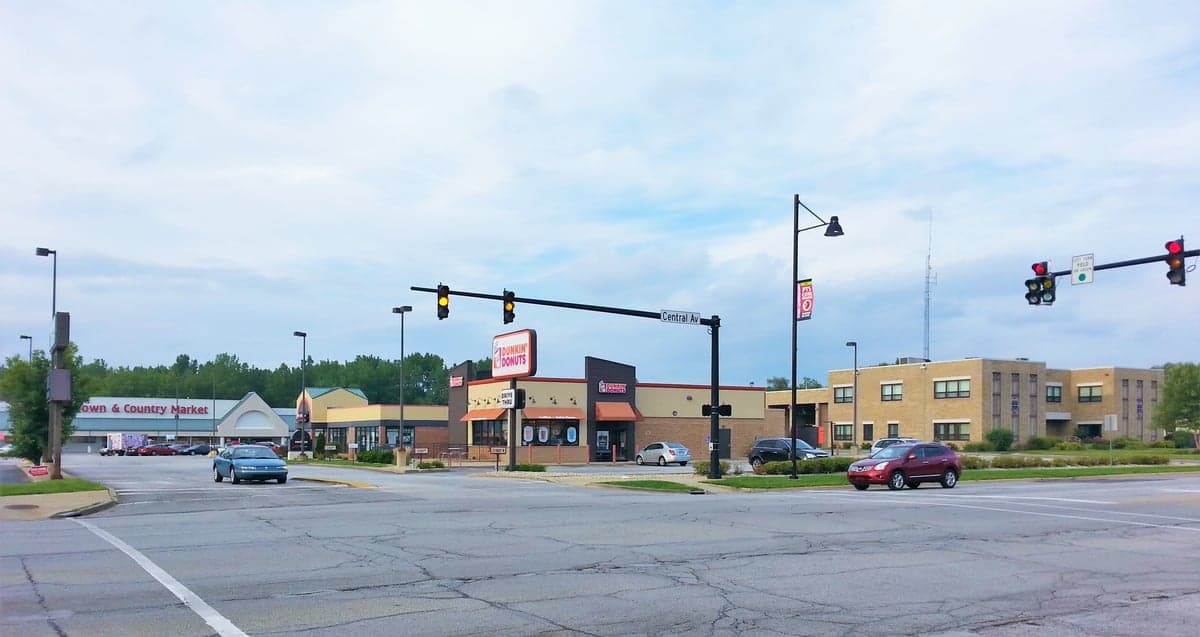
Photo: Wikipedia
Quality of Life in Portage, IN
A high quality of life with strong walkability, manageable living costs, healthy neighborhood signals, and solid amenity access.
What does Quality of Life tell us?
Quality of Life blends cost of living, nearby amenities, socioeconomic signals, and neighborhood character. City-level scores represent the whole municipality; individual neighborhoods can differ.
What does this tell us?
Quality of Life blends cost of living, nearby amenities, socioeconomic signals, and neighborhood character. City-level scores represent the whole municipality; individual neighborhoods can differ.
Cost of Living
11% below national average
The Real Cost of Living in Portage, IN for 2026
| Tier | Individual | Family (4) |
|---|---|---|
| Survival | $18k | $34k |
| Comfortable | $41k | $60k |
| Luxury | $106k+ | $164k+ |
| Elite (Top 5%) | $124k+ | $192k+ |
121%
The Area Signal
A metric tracking the socioeconomic signals of the area.
Hobbies
Explore the areaGroceries
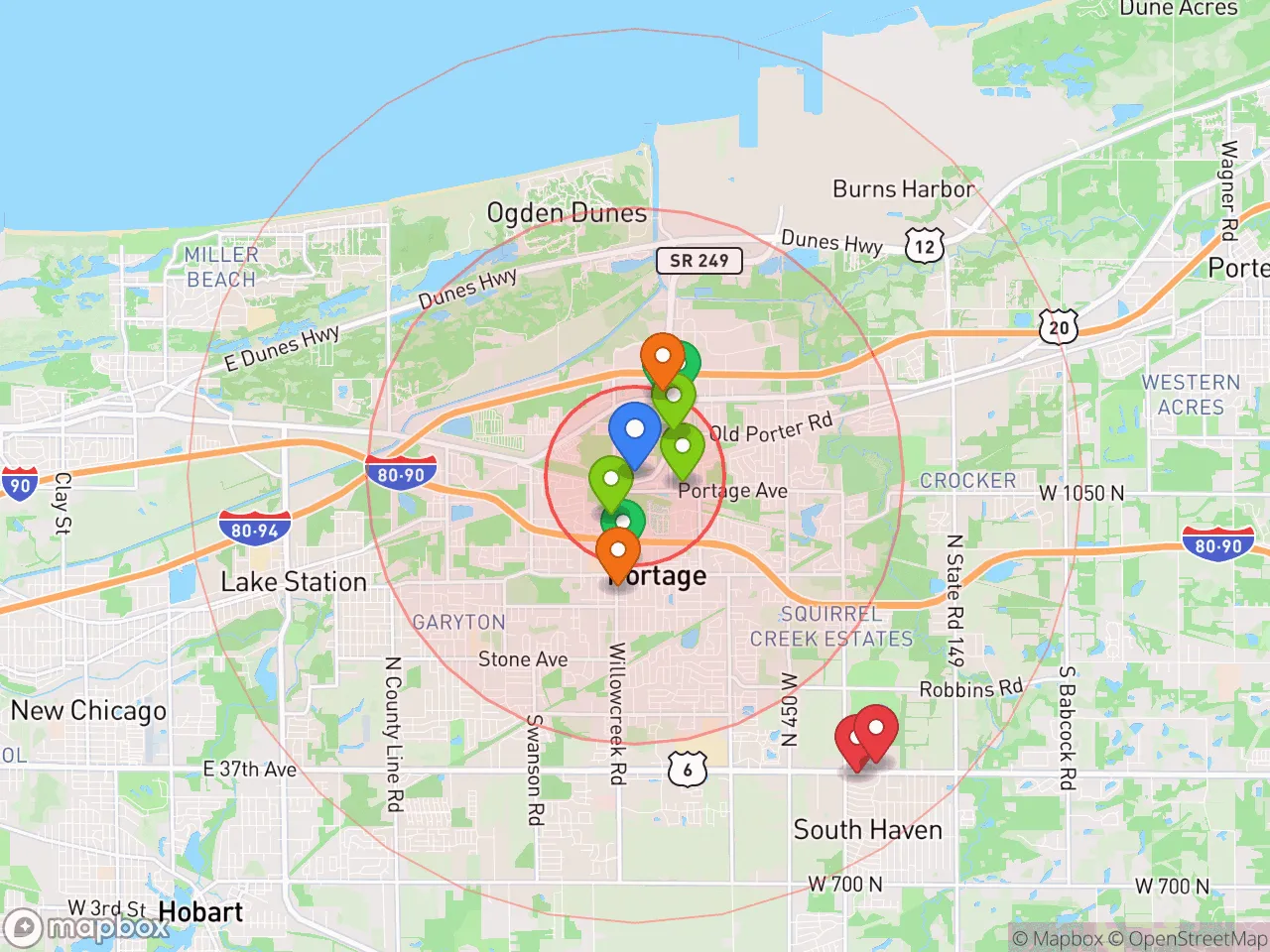
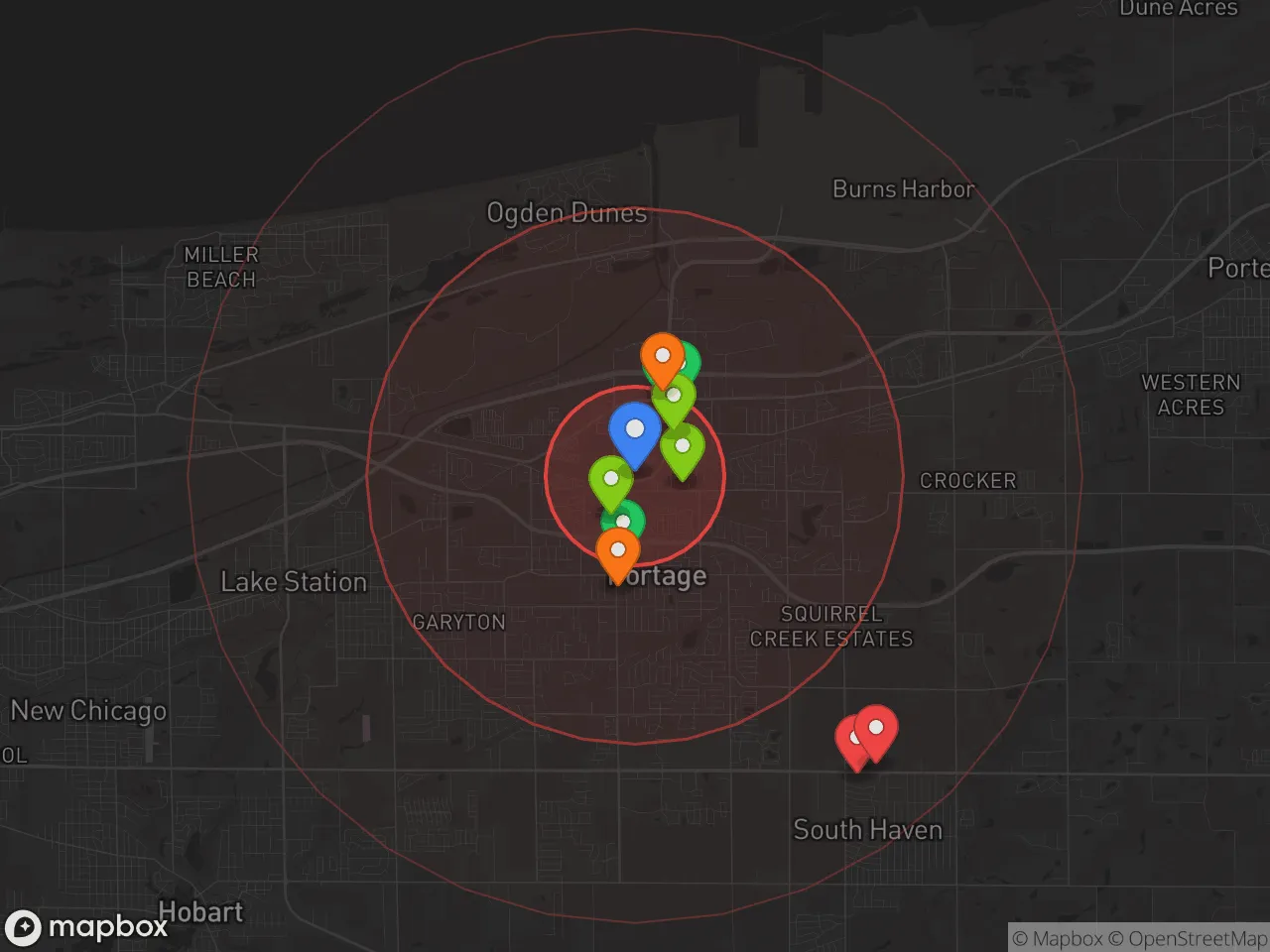
6 within 10 miles
Gas
20 within 10 miles
Hospital
20 within 20 miles
Airport
MDW — Midway International
Post Office
USPS — Lake Station, IN
Critical Amenities
Quality-of-Life Analysis
Portage, Indiana, offers a notably affordable quality of life relative to the broader Chicago metro area, with a cost of living index of 89 (100 is the U.S. average) that attracts a mix of working families, long-term residents, and commuters seeking more space for their money. The city’s population of roughly 37,000 is predominantly middle-income, with a median household income around $60,000, and leans toward a blue-collar and service-oriented demographic, including many who work in nearby manufacturing hubs like Gary and Michigan City. While not affluent by national standards, Portage provides a stable, practical lifestyle where housing costs remain well below regional averages, drawing people who prioritize affordability over urban amenities.
Cost of living, housing affordability, and how Portage compares to nearby cities
Portage’s cost of living index of 89 is significantly lower than the national average and dramatically cheaper than Chicago (index ~110) or even nearby Valparaiso (index ~95). The median home value of $210,800 is roughly half the Chicago metro median of $320,000, making homeownership attainable for first-time buyers and families. Median rent sits at $1,138, compared to $1,600+ in Chicago proper or $1,300 in Hobart, offering clear savings for renters. However, property taxes in Porter County are relatively high—averaging about 1.8% of assessed value—which can offset some of the housing cost advantage. The average commute time of 28.2 minutes is slightly above the national average of 26 minutes, reflecting the many residents who drive to jobs in Gary, Merrillville, or even Chicago (via the South Shore Line train from nearby Dune Park station). Utility costs and grocery prices are near the national average, keeping overall monthly expenses manageable.
What daily life is like: amenities, schools, and local rhythm
Daily life in Portage centers on a suburban, car-dependent routine with access to Lake Michigan beaches, the Indiana Dunes National Park, and several local parks like Imagination Glen. The Portage Township Schools system serves around 7,000 students, with Portage High School offering a range of vocational and Advanced Placement programs, though test scores lag behind those in Valparaiso or Chesterton. Retail and dining are concentrated along U.S. Route 6 and the Southlake Mall area in nearby Merrillville, with a mix of national chains and local spots like Octave Grill. The city lacks a vibrant downtown core—most commercial activity is strip-mall style—but the nearby Marquette Park and lakefront provide recreational outlets. The rhythm is quiet and family-oriented, with community events like the Portage Summer Festival and a strong presence of churches and youth sports leagues. Healthcare access is adequate, with the Portage Hospital (part of the Northwest Health system) handling routine needs, while specialized care requires a 20-minute drive to Valparaiso or Gary.
Portage is best suited for budget-conscious families, commuters who work in the Chicago or Gary corridor, and retirees seeking a lower-cost, slower-paced alternative to the urban core. It is less ideal for young professionals seeking nightlife, walkability, or high-end cultural amenities, as those are limited. The city’s affordability and proximity to the lake and dunes make it a practical choice for those who value outdoor recreation and a stable, middle-class lifestyle over urban excitement. Residents who thrive here tend to be self-reliant, car-owning, and comfortable with a suburban routine that prioritizes space and savings over convenience and cachet.

Crime in Portage, IN
Generally safer than 67% of comparable U.S. locations.
Violent CrimeViolent Crime Analysis
Property CrimeProperty Crime Analysis
Crime Analysis
Portage, Indiana, reports a violent crime rate of 250.4 incidents per 100,000 residents and a property crime rate of 1,123.1 per 100,000, placing it in a moderate risk category for a city of its size within the Chicago metropolitan area. While these figures are not the highest in the region, the city's proximity to a large, progressive metro area introduces systemic risks that residents should weigh carefully. The overall safety picture is one of manageable but persistent crime, heavily influenced by regional justice policies that can undermine public safety.
Crime in context
Portage's violent crime rate of 250.4 per 100,000 is roughly 30% lower than the national average of about 380 per 100,000, but its property crime rate of 1,123.1 per 100,000 sits above the national average of approximately 1,000 per 100,000. Compared to the state of Indiana, which reports a violent crime rate near 350 per 100,000 and a property crime rate around 1,050 per 100,000, Portage fares slightly better on violent offenses but worse on property crimes. However, these comparisons can be misleading. As a small city adjacent to the Chicago metro area—a region known for liberal prosecutors and progressive criminal justice reforms—Portage is exposed to spillover effects. Progressive district attorneys in nearby Lake County and Cook County often prioritize diversion programs and reduced sentencing, which, while sympathetic to offenders, can result in more repeat offenders returning to the streets and committing crimes in surrounding communities like Portage.
What residents experience
Residents of Portage most commonly encounter property crimes such as theft, burglary, and vehicle break-ins, which account for the bulk of the city's elevated property crime rate. The violent crime that does occur is largely concentrated in specific areas, with assaults and robberies being the most reported offenses. The presence of a progressive judicial philosophy in the broader region means that even when arrests are made, offenders often face lenient consequences. This creates a cycle where criminals are released quickly back into the community, diminishing the deterrent effect of law enforcement and increasing the likelihood of repeat victimization for Portage residents. Daily life for many involves taking standard precautions—locking vehicles, avoiding poorly lit areas at night, and staying informed about local crime alerts—but the underlying risk is shaped by policies made in nearby urban centers.
Neighborhood-level variation in Portage is notable. Areas near the U.S. 20 corridor and the Portage Lakefront Park tend to see higher foot traffic and associated property crime, while residential neighborhoods in the southern and eastern parts of the city, such as those near Willowcreek Middle School, generally report lower incident rates. The city's own police department is proactive, but its efforts are often undercut by the broader regional justice environment. For those considering relocation, the data suggests that Portage offers a moderate baseline of safety, but the influence of progressive policies in the surrounding metro area is a persistent concern that elevates risk beyond what the raw numbers alone indicate.
* Values derived from national, state, county, city and local statistics and may differ in a specific area. Last updated: 2026-04-24T08:37:28.000Z
Narrative content on this page is AI-generated and may contain mistakes. Verify any details that matter before acting on them.
ReloMaps may earn a commission from affiliate links at no extra cost to you.

