
Photo: Wikipedia
Political ClimatePolitical Climate in Ridgeland, MS
District shown is the primary district for this city’s centroid. Cities may span multiple districts.
Local Political AnalysisPolitical Analysis of Ridgeland, MS
Ridgeland, Mississippi, has long been a solidly conservative community, and that hasn't changed much. The Cook Partisan Voting Index (PVI) of R+14 tells you the story right off the bat — this area leans Republican by a comfortable margin, and it’s been that way for as long as I can remember. You don’t see wild swings in election results here; folks tend to vote their values, and those values are pretty consistent. If you’re looking at the political trajectory, it’s been stable, but I’d be lying if I said there weren’t a few ripples on the surface lately.
How it compares
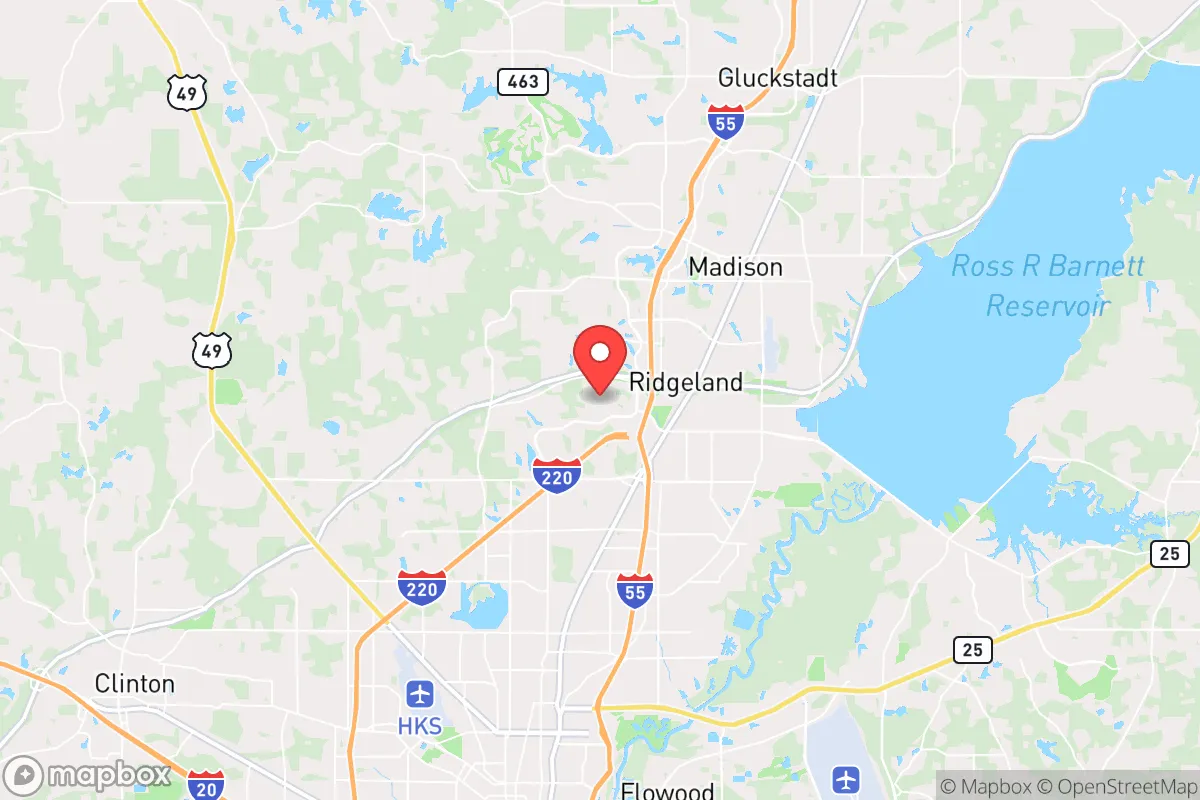
Compared to some of the surrounding towns, Ridgeland is actually a bit more moderate than you might expect. Drive north to Madison, and you’ll find an even deeper shade of red — that’s where the old-school, rock-ribbed conservative base really digs in. Head south toward Jackson, and the political landscape shifts dramatically; that’s a whole different world, with a much more progressive tilt. Ridgeland sits right in the middle, geographically and politically. It’s not as hardline as some of the rural areas, but it’s a far cry from the urban liberalism you see in the capital. That said, I’ve noticed a few more yard signs for candidates who talk about “equity” and “systemic change” popping up in the newer subdivisions. It’s still a small minority, but it’s a shift that gives me pause. When you see local government starting to dabble in things like diversity training mandates or zoning changes that prioritize “inclusive” housing over property rights, it’s a red flag. That kind of government overreach into personal freedoms is exactly what we’ve been pushing back against for decades.
What this means for residents
For the average person living here, the political climate means you can generally expect a light touch from local government. Taxes stay relatively low, and there’s not a lot of fuss about telling you how to run your business or what you can do on your own property. That’s the good part. The concerning part is that the pressure is mounting. You see it in school board meetings, where parents are having to fight harder to keep curriculum focused on basics rather than social agendas. You see it in city council discussions about “affordable housing” mandates that could infringe on what you can do with your land. The conservative majority is still in charge, but it’s not a given that it stays that way. If you’re a family moving here, you’ll find a community that largely respects individual liberty and traditional values, but you’ll also need to stay engaged. The quiet, hands-off approach we’ve enjoyed is being tested by outside influences and a growing push for progressive policies that sound nice on paper but often mean more rules and less freedom.
One thing that sets Ridgeland apart culturally is its strong sense of local identity and a general distrust of federal overreach. People here remember when the government tried to tell them how to run their churches or schools, and they haven’t forgotten. There’s a real pride in being able to handle things at the local level, without a bunch of bureaucrats butting in. That said, I’ve seen a few policy shifts that worry me — like the city quietly adopting more “sustainability” goals that could lead to energy regulations down the line. It’s subtle, but it’s there. My honest take? If you value your personal freedoms and want a place where the government stays out of your business, Ridgeland is still a good bet. But keep your eyes open. The fight to keep it that way is far from over, and the next few election cycles will tell us a lot about whether this community stays true to its roots or starts drifting toward the kind of top-down control we’ve always resisted.

State Political ClimatePolitical Climate in Mississippi
State Political AnalysisPolitical Environment in the State
Mississippi is one of the most reliably Republican states in the country, with a deep-red partisan lean that has only solidified over the past two decades. The state has not voted for a Democratic presidential candidate since 1976, and in 2024, Donald Trump carried it by roughly 17 points. The dominant coalition is a mix of rural conservatives, evangelical Christians, and a growing number of suburban families fleeing the chaos of larger metros. Over the last 10-20 years, the shift has been toward even more conservative governance, as Democrats have lost nearly all statewide offices and legislative seats, leaving the GOP with a supermajority in both chambers. This isn’t a purple state flirting with change—it’s a place where conservative values are baked into the culture and policy.
Urban vs. rural divide
The political map of Mississippi is starkly divided between a handful of urban centers and the vast rural countryside. Jackson, the capital and largest city, is a Democratic stronghold, driven by a majority-Black population and a progressive city council that has clashed repeatedly with the state legislature over issues like Confederate monuments and policing. Hinds County, which contains most of Jackson, voted over 80% for Joe Biden in 2020. But outside of Jackson, the story flips. The Gulf Coast cities of Biloxi and Gulfport lean Republican, though they have a moderate streak due to tourism and military presence. The DeSoto County suburbs near Memphis—places like Southaven and Olive Branch—are some of the fastest-growing and most conservative areas in the state, with voters who are fed up with Tennessee’s blue drift. The Mississippi Delta, once a Democratic bastion, has seen white voters flee to the GOP, while rural counties like Tishomingo and Itawamba in the northeast routinely deliver 80%+ Republican margins. The urban-rural split here isn’t just about party—it’s about worldview, with rural areas prioritizing gun rights, school choice, and low taxes, while Jackson’s leadership pushes for higher spending and progressive social policies.
Policy environment
Mississippi’s policy environment is a textbook example of small-government conservatism in action. The state has no individual income tax on most wages—a flat 4% rate was phased down from 5% in 2022, with a path to elimination by 2026. Sales tax is 7%, but groceries are exempt. Property taxes are among the lowest in the nation, thanks to a homestead exemption that caps assessments. On education, Mississippi passed the Mississippi School Choice Act in 2023, expanding charter schools and education savings accounts for special-needs students. The state also has a parental rights law that requires schools to notify parents before any medical or mental health services are provided to minors. Healthcare is a mixed bag: Mississippi rejected Medicaid expansion under Obamacare, keeping the system lean, but rural hospital closures remain a concern. Election laws are strict—voter ID is required, and the state has no early voting or no-excuse absentee voting, which conservatives argue protects ballot integrity. The legislature also passed a heartbeat abortion ban in 2019, which took full effect after Dobbs, making Mississippi one of the most pro-life states in the country. For a conservative moving in, the policy environment is a breath of fresh air—government stays out of your wallet, your kids, and your health decisions.
Trajectory & freedom
Mississippi is trending toward more freedom, not less, especially when you look at recent legislation. In 2023, the state passed a constitutional carry law, allowing any law-abiding adult to carry a concealed firearm without a permit—a major win for Second Amendment advocates. The same year, the legislature enacted the Mississippi Parental Bill of Rights, which codifies parents’ authority over their children’s education, medical care, and religious upbringing. On the economic front, the state has been cutting taxes aggressively: the 2022 tax reform bill reduced the income tax rate and set a course for full elimination, which would make Mississippi one of the few states with no income tax. Property rights were strengthened with a 2021 law limiting eminent domain for private economic development. However, there are areas of concern. The state’s medical marijuana program, passed in 2022 after a voter initiative, is heavily regulated and limited to a small number of dispensaries—some conservatives see this as government overreach into personal medical choices. Also, the state’s alcohol laws remain restrictive, with dry counties still on the books in places like Tippah and Union counties. Overall, the trajectory is toward more personal liberty, but there’s still room to roll back outdated regulations.
Civil unrest & political movements
Mississippi has seen its share of civil unrest, but it’s not the kind of chaos you’d find in Portland or Seattle. The most visible flashpoints have been around Confederate monuments and police reform. In 2020, protests in Jackson turned violent, with some property damage, but they were small compared to national trends. The state legislature responded by passing a law protecting historical monuments from removal, which has kept most statues in place. On the right, the Mississippi Freedom Caucus has emerged as a powerful force in the legislature, pushing for school choice, gun rights, and anti-abortion measures. Immigration politics are relatively quiet—Mississippi has a small foreign-born population, and the state passed a law in 2023 requiring all businesses to use E-Verify, which conservatives see as a way to protect jobs for legal residents. There’s no sanctuary city movement here; in fact, the state has a law banning sanctuary policies. Election integrity remains a hot topic, with the legislature tightening absentee ballot rules in 2021 after the pandemic-era expansions. A new resident won’t see daily protests or political violence—just a steady, low-key conservative activism that keeps the state moving right.
Projection
Over the next 5-10 years, Mississippi is likely to become even more conservative, driven by two trends: suburban growth and rural retention. The DeSoto County suburbs will continue to attract families from Memphis and other blue areas, bringing with them a strong Republican voting base. The Gulf Coast, particularly around Ocean Springs and Long Beach, is seeing an influx of retirees and remote workers from higher-tax states like California and Illinois, who are drawn to Mississippi’s low cost of living and pro-business climate. Meanwhile, Jackson’s population is shrinking, which will reduce the Democratic vote share in statewide elections. The state’s demographic makeup is shifting slowly—the white population is aging, while the Black population is growing younger—but political polarization means that even a slight increase in Black turnout won’t flip the state blue, as rural white voters remain overwhelmingly Republican. Expect more tax cuts, more school choice expansion, and continued resistance to Medicaid expansion. The biggest wildcard is whether the state can attract enough high-skilled workers to diversify its economy beyond agriculture and manufacturing. If it does, the political culture will remain conservative but may become more libertarian on social issues like marijuana and alcohol.
For a new resident, the bottom line is this: Mississippi offers a stable, predictable political environment where your rights to keep and bear arms, direct your children’s education, and keep more of your paycheck are protected by law. You won’t find the political chaos of a swing state or the overreach of a blue state. The trade-offs are a slower pace of life, limited urban amenities, and a healthcare system that’s still catching up. But if you value freedom from government intrusion and want to live in a place where your vote actually counts for something, Mississippi is a solid bet. Just know that the politics here are as deep-rooted as the magnolia trees—steady, conservative, and unlikely to change anytime soon.
* Values derived from national, state, county, city and local statistics and may differ in a specific area. Last updated: 2026-05-01T12:35:32.000Z
Narrative content on this page is AI-generated and may contain mistakes. Verify any details that matter before acting on them.
ReloMaps may earn a commission from affiliate links at no extra cost to you.

