Photo: Wikipedia
Demographics of Meade County
Affluence Level in Meade County
A middle-class area roughly in line with national averages across income, home values, education, and employment.
People of Meade County
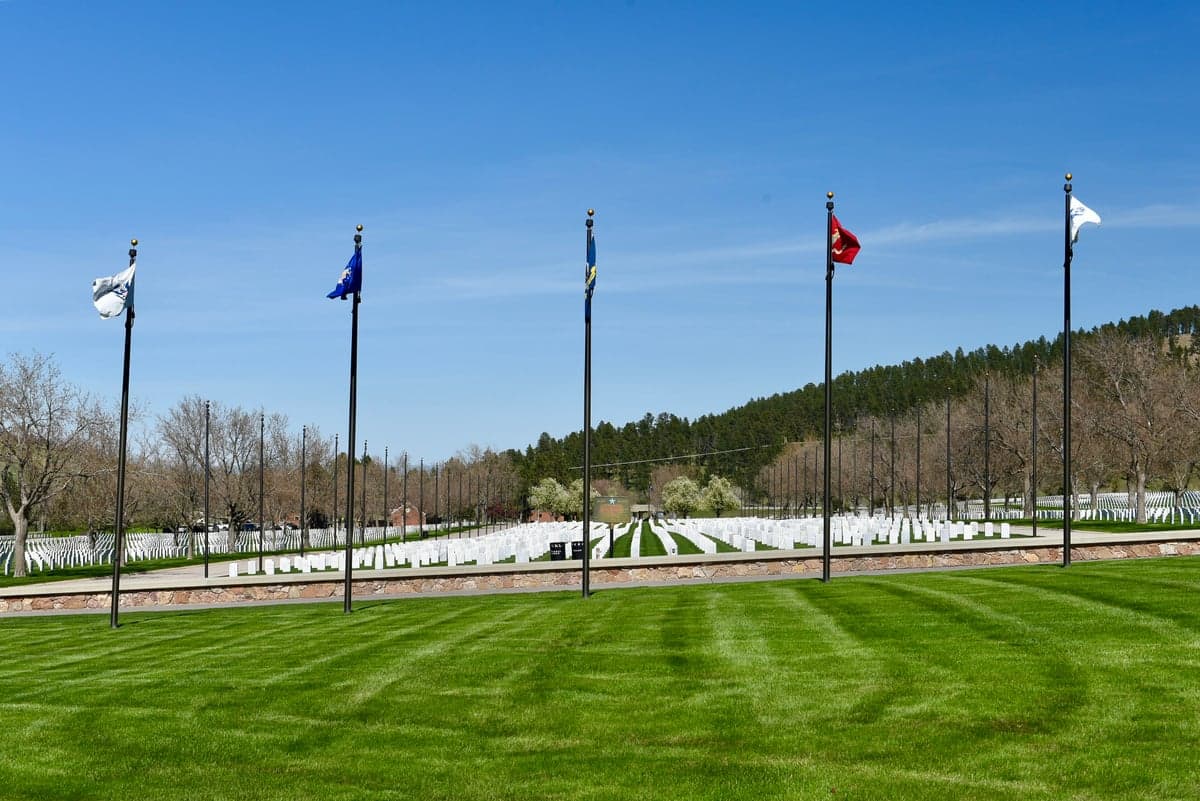
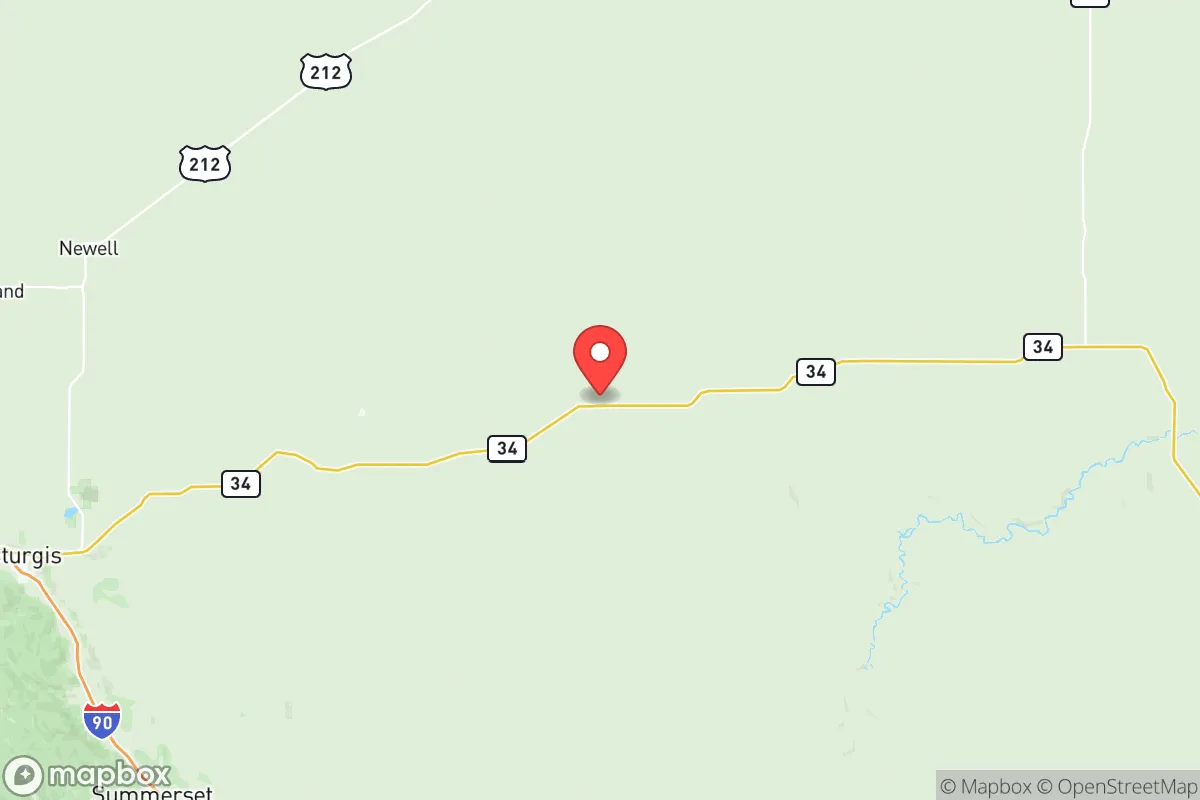
Meade County, home to roughly 30,300 residents, is a predominantly rural county in western South Dakota shaped by its Lakota heritage, homesteading waves, and the modern presence of Ellsworth Air Force Base. The county is anchored by Sturgis, best known for its annual motorcycle rally, and populated largely by white families of European descent—85.7% white, with small Hispanic (4.7%) and Black (1.7%) communities tied to military and agricultural work. With a foreign-born rate under 1% and a college education rate of 26.9%, the population is culturally homogenous, self-reliant, and rooted in generations of ranching and small-town life.
Settlement & growth (pre-1960)
Long before European arrival, the area that is now Meade County was part of the vast hunting grounds of the Lakota Sioux, particularly the Oglala and Sicangu bands. The Black Hills to the south were sacred, and the rolling prairies of the county supported bison herds that sustained nomadic lifeways. No permanent European settlements existed until the U.S. government’s 1868 Fort Laramie Treaty recognized the region as Lakota territory, a status shattered by the 1874 Custer Expedition that discovered gold and triggered a rush of miners.
The first lasting American settlement came with the 1877 establishment of Sturgis as a military post—Fort Meade—named for General George Meade. The fort was built to protect miners and railroad workers flooding into the Black Hills. Homesteaders soon followed, drawn by the 1862 Homestead Act and later the 1904 Kinkaid Act, which offered 640-acre parcels in western South Dakota. The Chicago, Milwaukee, St. Paul and Pacific Railroad extended lines through the county in the early 1900s, sprouting towns along the tracks. Faith, incorporated in 1910, became a rail hub for cattle shipments. New Underwood (established 1907) and Piedmont (1910) served as shipping points for grain and livestock. Smaller settlements like White Owl, Enning, and Tilford dotted the plains as farmsteads.
The immigrant groups that populated Meade County in its early decades were overwhelmingly of northern European stock: Germans from Russia who had first settled in the Dakotas in the 1870s, Norwegian and Swedish families, and Czech and Polish homesteaders. Many came directly from the Midwest or from the Great Plains states further east. The 1910 census showed 94% of Meade County’s population born in the U.S., with foreign-born residents mainly German, Russian (Volga Germans), and Scandinavian. These groups shared a strong work ethic, religious conservatism (Lutheran and Catholic predominated), and a tendency to cluster in ethnic blocs—Germans around Union Center and Elm Springs, Norwegians near Belle Fourche on the county’s northern edge. The Dust Bowl of the 1930s hit the county hard, driving many families off marginal land, but those who stayed diversified into ranching and dryland farming. World War II and the 1942 construction of the Rapid City Army Air Base (later Ellsworth AFB) brought a new wave: service members and civilian contractors, many of whom remained after the war, settling in Sturgis and the southeastern part of the county near Box Elder.
Modern era (post-1965)
The 1965 Hart-Cellar Act had negligible direct effect on Meade County, as the foreign-born population never exceeded 2%. Instead, the county’s post-1965 demographic story is one of domestic migration and military influence. The Vietnam War era expanded Ellsworth AFB, which now hosts the 28th Bomb Wing, bringing in personnel from across the United States. This introduced modest racial diversity: Black and Asian (East/Southeast Asian) residents, each around 1% of the population today, are disproportionately active-duty families stationed at the base. The county’s Hispanic population grew from 1.2% in 1990 to 4.7% by 2020, partly through natural increase and partly through workers in the regional service and agricultural sectors—meatpacking plants in nearby Rapid City and feedyards in surrounding counties draw some Hispanic laborers.
Suburbanization from Rapid City, the state’s second-largest city 30 miles west, has reshaped the eastern edge of Meade County. Piedmont, Sturgis, and rural subdivisions along I-90 absorbed commuting families seeking lower taxes and larger lots. The Sturgis Motorcycle Rally, begun in 1938, exploded after 1965 as a world-famous event, drawing hundreds of thousands annually and fueling a local tourism economy that attracts seasonal workers but does little to permanently alter the county’s ethnic makeup. Meanwhile, the western half of the county—Faith and the vast ranchlands—has seen population stagnation or decline, as younger residents leave for urban jobs and consolidation reduces the number of family ranches.
Politically and culturally, Meade County remains one of South Dakota’s most conservative enclaves. The county voted +30 Republican in the 2024 presidential election. Gun ownership, outdoor recreation, and church attendance are higher than national averages. The Sturgis rally reinforces an individualistic, libertarian bent among many residents.
The future
Demographic projections suggest Meade County will remain predominantly white and non-college-educated, but the margin is narrowing slowly. The Hispanic share is projected to rise to roughly 6–7% by 2040 through both births and domestic relocation from other states. The Asian and Black shares will fluctuate with Ellsworth AFB deployments but are not expected to exceed 2% each. The population is increasing modestly—about 0.5% annually since 2010—driven entirely by in-migration to the eastern corridor near Rapid City. Western parts of the county (Faith, rural areas) continue to lose residents as agricultural employment declines and services consolidate in Sturgis. The county’s overall age is rising: the median age of 42 is two years above the state average, as younger adults move to urban areas and retirees arrive for the low cost of living and outdoor lifestyle.
Culturally, Meade County is not tribalizing into distinct ethnic enclaves; the small Hispanic and military communities are dispersed and integrated. The county’s identity—rooted in ranching, the rally, and military service—is strong enough to absorb newcomers who share its values. For a conservative-leaning individual or family considering relocation, Meade County offers a stable, low-crime, family-oriented environment where neighborliness is expected and government footprint is minimal. The key trade-off: limited job diversity outside of agriculture, the military, and tourism, and a cultural homogeneity that may feel insular but provides a secure, predictable community.
Meade County is becoming what it has always been: a modestly growing, white-majority rural county where military and ranching traditions anchor a population that prizes self-reliance, local control, and small-town familiarity. New arrivals—whether from coastal states or nearby cities—will find a place that welcomes those who adapt to its rhythms and resists those who seek to change them.

* Values derived from national, state, county, city and local statistics and may differ in a specific area. Last updated: 2026-05-19T19:12:15.000Z
Narrative content on this page is AI-generated and may contain mistakes. Verify any details that matter before acting on them.
ReloMaps may earn a commission from affiliate links at no extra cost to you.

