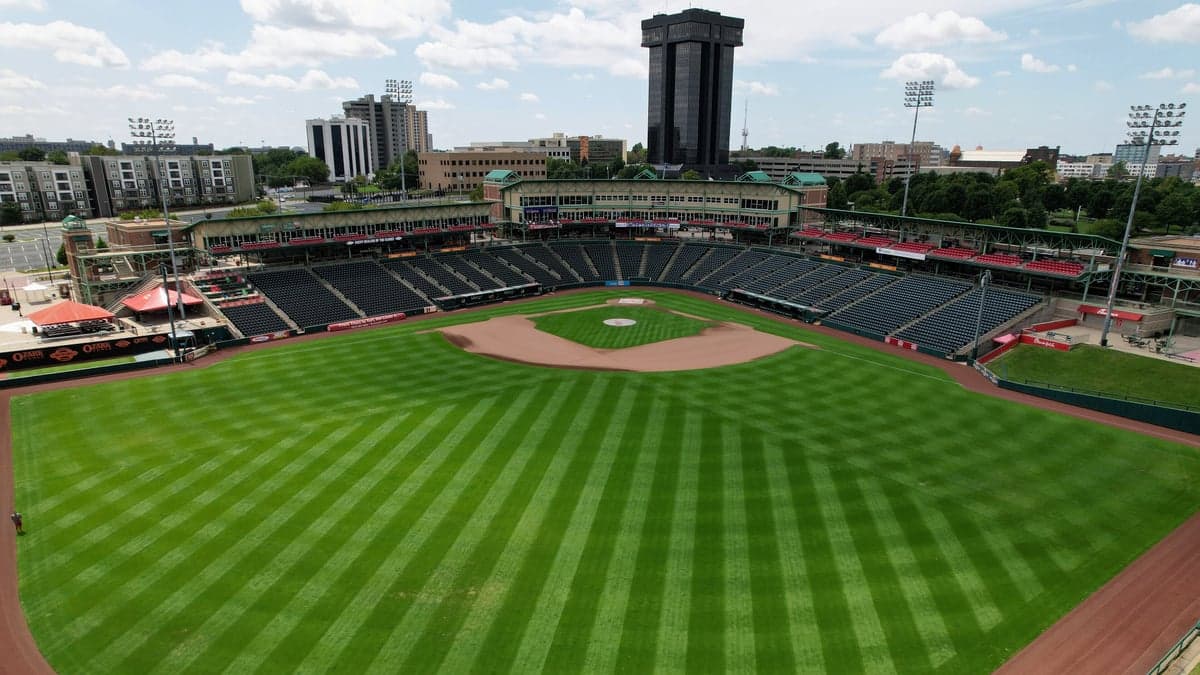
Photo: Wikipedia
Personal Sovereignty in Springfield, MO
Strong independent fundamentals that actively favor personal liberty and low regulation.
What does Personal Sovereignty tell us?
Personal Sovereignty measures your capacity for self-reliance and independence with minimal government friction. Higher scores mean fewer barriers between you and the way you want to live... but it assumes you have the space you need and good neighbors.
What does this tell us?
Personal Sovereignty measures your capacity for self-reliance and independence with minimal government friction. Higher scores mean fewer barriers between you and the way you want to live... but it assumes you have the space you need and good neighbors.
State Policy
Energy independence: Importer (15% of energy produced in-state)
Personal Liberty
Homesteading

Personal Liberty Analysis
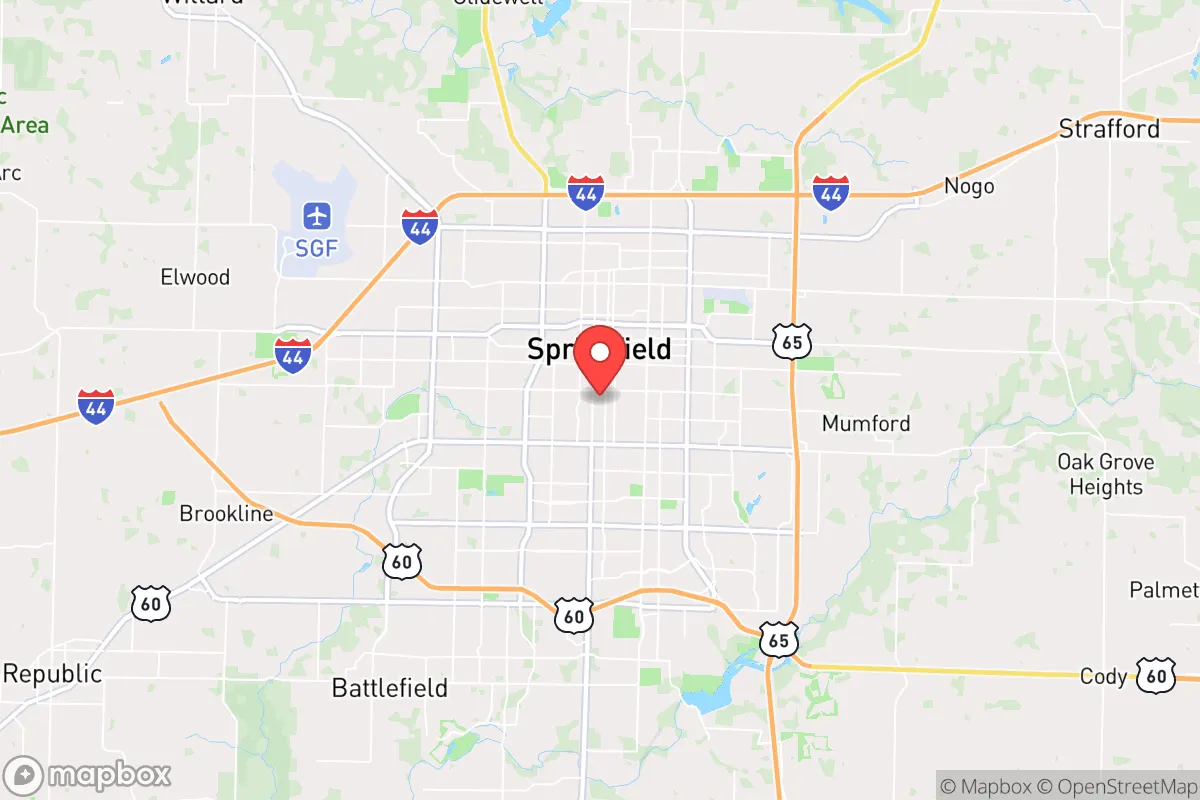
Springfield, Missouri, offers a notably high degree of personal sovereignty relative to much of the country, particularly for those who prioritize minimal government interference in daily life, self-defense, and family autonomy. The city sits in a state that has consistently pushed back against federal overreach, and the local culture in the Springfield metro area—home to roughly 475,000 people—reinforces a live-and-let-live ethos that appeals to survivalists, preppers, and anyone wary of creeping government control. While no place is a perfect libertarian utopia, Springfield’s combination of low taxes, strong gun rights, and a regulatory environment that still allows for significant self-reliance makes it a serious contender for relocation if personal freedom is your top priority.
Tax burden and regulatory posture: how much of your money and time does the government take?
Missouri’s overall tax burden is among the lowest in the nation, ranking 47th in combined state and local tax collections as a percentage of income. For a single individual or family in Springfield, that translates to a state income tax rate that is a flat 4.95% (as of 2026), with no local income tax on top of it. Property taxes are also low—Greene County’s effective rate hovers around 0.8% of assessed value, meaning a $250,000 home costs roughly $2,000 annually in property tax. Sales tax in Springfield is a combined 8.1% (state + local), which is noticeable but manageable, especially since groceries and prescription drugs are exempt. From a regulatory standpoint, Missouri is a right-to-work state (though that law was repealed by ballot initiative in 2018, the practical effect on business climate remains pro-employer), and Springfield’s city government is generally hands-off compared to coastal metros. Building permits are straightforward for most residential projects, and there are no city-level rent control or burdensome business licensing schemes that would choke a side hustle or small homestead operation. The state’s regulatory freedom index consistently ranks in the top 20, meaning fewer bureaucratic hurdles for things like starting a home-based food business or installing alternative energy systems.
Self-defense and gun law specifics: what can you legally do to protect yourself?
This is where Springfield truly shines for the sovereignty-minded. Missouri is a constitutional carry state—no permit required to carry a concealed firearm for anyone 19 or older (18 with military service). There is no state-level firearm registration, no "assault weapon" ban, no magazine capacity limits, and no red flag law as of 2026. The state preempts all local gun ordinances, so Springfield city council cannot pass its own restrictions; what you can do in the rural outskirts, you can do downtown. Stand-your-ground laws are fully in effect, with no duty to retreat in any place you are lawfully present. For preppers, this means you can legally stockpile firearms and ammunition without fear of future confiscation orders, and you can carry openly or concealed without jumping through bureaucratic hoops. The only significant limitation is that felons and those with certain domestic violence convictions are prohibited, but for law-abiding citizens, the legal framework is about as permissive as it gets in the contiguous United States. The local sheriff’s office in Greene County is also known for being pro-2A, and concealed carry permits (still useful for reciprocity when traveling) are issued on a shall-issue basis with minimal delay.
Self-reliance and homesteading viability: can you actually live off your own land?
Springfield’s zoning and land-use policies are surprisingly accommodating for a mid-sized city. Within the city limits, standard residential lots range from 6,000 to 10,000 square feet, and many older neighborhoods have larger parcels that allow for substantial gardens, small orchards, and even backyard chickens (hens only, no roosters, and up to six birds without a permit). If you move to the unincorporated areas of Greene County or neighboring Christian County, lot sizes jump to 1 to 5 acres commonly, with no county-level zoning in many rural pockets—meaning you can build a shop, keep livestock, and install rainwater catchment systems without a parade of inspectors. Off-grid feasibility is real: Missouri has no state-level ban on rainwater collection, and solar panel installation is straightforward with net metering available from Springfield’s municipal utility (City Utilities) up to 100 kW. Wells and septic systems are permitted by the county health department, and the process is routine for rural properties. The growing season is about 190 days, and the soil in the Ozarks is rocky but workable for raised beds. For the serious prepper, the area within a 30-minute drive of Springfield offers dozens of properties with timber, water sources, and seclusion—all at prices that are still reasonable (undeveloped land runs $3,000–$8,000 per acre as of 2026). The main limitation is that city water and sewer are required within the Springfield city limits, so true off-grid living requires going outside the municipal boundary.
Personal liberties: parental rights, medical autonomy, speech, and property
Missouri has been a battleground on several fronts, but the trend is favorable for those prioritizing personal sovereignty. Parental rights are explicitly protected under state law (Missouri Revised Statutes 452.375), and the state passed a Parents’ Bill of Rights in 2022 that gives parents the final say on their children’s education, medical decisions, and religious upbringing. Springfield Public Schools, the largest district in the area, has not been aggressive in pushing controversial curricula, and several private and religious schools offer alternatives. On medical autonomy, Missouri does not have a state-level vaccine mandate for adults, and while COVID-era restrictions were imposed, they have been largely repealed. The state does have a prescription drug monitoring program, but there is no forced treatment order for mental health outside of emergency committal. Free speech is robust—Missouri has no hate speech law that criminalizes expression, and the state’s courts have generally upheld First Amendment protections even for unpopular viewpoints. Property rights are strong, with Missouri being a "measure of damages" state that compensates landowners fairly in eminent domain cases, and there is no statewide ban on short-term rentals (though Springfield does regulate them within city limits). The biggest ongoing concern for the sovereignty-minded is the state’s participation in federal programs like REAL ID (though a standard driver’s license is still available) and the potential for federal overreach on environmental regulations affecting land use. But compared to states like California, New York, or Illinois, the day-to-day reality in Springfield is that you can speak your mind, raise your kids your way, and use your property largely as you see fit.
Overall, Springfield, Missouri, ranks as a strong contender for anyone seeking a high degree of personal sovereignty in a region that still values individual liberty over collective conformity. The tax burden is low, gun laws are among the most permissive in the nation, homesteading is viable within a short drive of urban amenities, and the legal framework supports parental rights and free expression. It is not a completely ungoverned frontier—there are still building codes, sales tax, and the occasional local ordinance that can chafe—but for a conservative-leaning individual or family looking to escape the tightening grip of blue-state governance, Springfield offers a realistic balance of freedom, affordability, and community. If you are serious about self-reliance and want a base where the government is more ally than adversary, this area deserves a hard look.

* Values derived from national, state, county, city and local statistics and may differ in a specific area. Last updated: 2026-04-29T19:11:01.000Z
Narrative content on this page is AI-generated and may contain mistakes. Verify any details that matter before acting on them.
ReloMaps may earn a commission from affiliate links at no extra cost to you.

