
Photo: Wikipedia
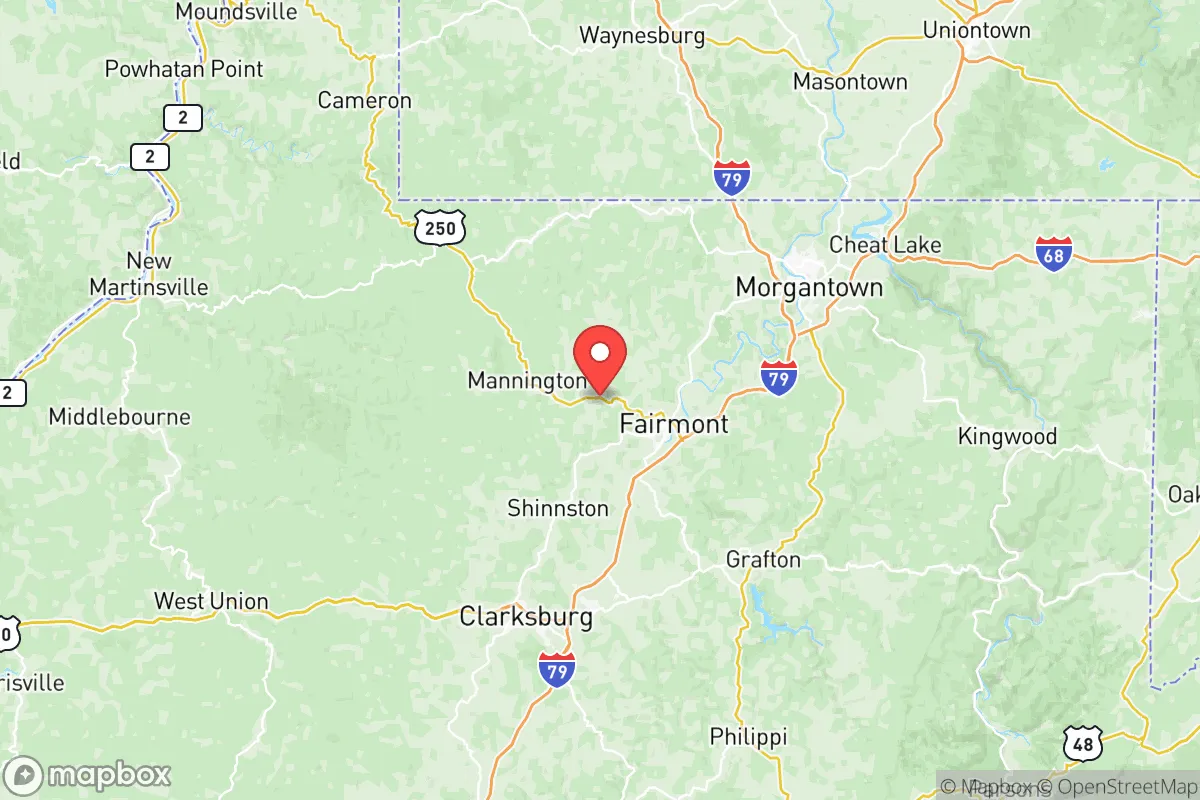
Strategic Assessment of Marion County
Meaningful friction. Expect exposure to either population pressure, blast zones, or natural disaster risk. Consider buying a retreat property.
What does the Strategic Assessment tell us?
Our Strategic Assessment grades tactical survivability of an area. Major population centers, military targets, fallout zones, natural disasters, and border exposure all drive risk — lower exposure means a more defensible position in a crisis.
This is heavily inspired by Joel Skousen's Strategic Relocation book. Highly recommended you checkout the book ($)What does this tell us?
Our Strategic Assessment grades tactical survivability of an area. Major population centers, military targets, fallout zones, natural disasters, and border exposure all drive risk — lower exposure means a more defensible position in a crisis.
This is heavily inspired by Joel Skousen's Strategic Relocation book. Highly recommended you checkout the book ($)Strategic Pillars

Key Distances
Strategic Assessment Analysis
Marion County, West Virginia, offers a surprisingly resilient relocation option for those looking to put distance between themselves and the chaos of the coastal megacities. Anchored by the county seat of Fairmont and strung along the I-79 corridor, this Appalachian region sits roughly 90 miles south of Pittsburgh and 200 miles west of Washington, D.C. — close enough to reach if needed, but far enough that the daily grind of urban collapse won't wash over your front porch. The area’s rolling hills, abundant water, and low population density (just over 56,000 people spread across 310 square miles) give it a natural buffer that’s hard to find in the flatlands or along the interstate spine. For a conservative-leaning individual or family thinking long-term, Marion County checks a lot of boxes before you even start digging into the details.
Geographic position and natural advantages for long-term security
Marion County sits in the heart of north-central West Virginia, a region defined by the Appalachian Plateau’s steep ridges and narrow valleys. The Tygart Valley River cuts through the county, joining the Monongahela near Fairmont, providing a reliable surface water source that doesn’t depend on municipal infrastructure. The terrain itself is a defensive asset: most of the county is forested hills with limited road access beyond I-79 and a handful of state routes. Towns like Mannington, Farmington, and Rivesville are tucked into hollows where a single road in and out makes unwanted visitors easy to spot. The climate is temperate — hot summers, cold winters, with about 40 inches of rain annually — which supports mixed hardwood forests and decent garden soil in the bottomlands. Unlike the open plains or coastal zones, this landscape offers natural cover, ample firewood, and enough elevation to avoid the worst of floodplain risks (though the Tygart Valley itself can flood in heavy rain). The lack of any major military base, refinery, or nuclear plant within the county boundaries is a deliberate advantage: there’s nothing here that would make a strategic target list for a first-strike scenario.
Risks, exposures, and proximity to potential fallout-relevant landmarks
No place is a fortress, and Marion County has its own set of vulnerabilities that a relocator needs to weigh. The biggest industrial risk comes from the Marcellus Shale natural gas infrastructure that crisscrosses the region. Pipelines, compressor stations, and well pads are scattered throughout the county — particularly around Barrackville and Fairview — and a major rupture or intentional sabotage could release toxic clouds or ignite fires. The Fort Martin Power Station, a coal-fired plant just across the Monongalia County line south of Point Marion, is a potential target for grid disruption, though it’s not a nuclear facility. Closer to home, the Fairmont Federal Correctional Institution sits on the eastern edge of the city — a prison that could become a flashpoint during civil unrest or a mass-casualty event if order breaks down. Flooding along the Tygart Valley River is a recurring hazard; Fairmont’s downtown has seen damaging floods in 1985 and 2012, and any relocator should avoid building in the 100-year floodplain. On the plus side, there are no major ports, refineries, or nuclear reactors within 50 miles. The nearest strategic target of any significance is the Pittsburgh metro area, but prevailing winds from the west mean fallout from a strike there would likely blow east, not south into the mountains. Still, if a major exchange hit Washington, D.C., or the Ohio River chemical corridor, secondary effects like refugees or supply chain collapse would reach Marion County within days.
Practical resilience for a relocator: food, water, energy, and defensibility
For someone serious about self-sufficiency, Marion County offers a workable baseline. Water is the easiest win: the Tygart Valley River, Monongahela River, and dozens of named creeks (Buffalo Creek, Paw Paw Creek, Bingamon Creek) provide year-round flow. Most rural properties have access to well water, and the water table is generally high in the valleys. Food production is limited by a short growing season (last frost mid-May, first frost early October) and acidic clay soils, but raised beds, greenhouses, and livestock can overcome that. The county has a strong hunting culture — deer, turkey, and small game are abundant in the Monongahela National Forest just south of the county line — and fishing in the rivers is decent. For energy, the region sits on top of the Pittsburgh coal seam, and while commercial mining has declined, there are still small operations and plenty of firewood. Solar works, but the hilly terrain and frequent cloud cover reduce efficiency; a backup generator running on propane or natural gas (pipelines are everywhere) is a smarter bet. Defensibility is where the terrain shines: the narrow valleys and ridgelines create natural chokepoints. A small group could secure a hollow like those around Rivesville or Grant Town with minimal effort. The local population is predominantly conservative, church-going, and armed — the county has a high rate of gun ownership and a strong tradition of volunteer fire departments and community mutual aid. That social fabric is a resilience asset that can’t be bought.
Overall, Marion County presents a realistic middle-ground option for the relocator who wants to be out of the blast zone but not off the grid entirely. It’s not the remote wilderness of Idaho or the high desert of Nevada — you’ll still have neighbors, and you’ll still be within a day’s drive of Pittsburgh and D.C. But that proximity cuts both ways: it means access to medical care (Fairmont Regional Medical Center), hardware stores, and supply runs, while the terrain and culture keep the worst of urban chaos at arm’s length. The biggest trade-offs are the industrial gas infrastructure and the flood risk in the valleys, both of which can be managed with smart site selection. For a conservative family or individual looking to plant roots in a place that values self-reliance and community, Marion County is worth a serious look — just don’t buy bottomland, and keep a good water filter handy.

* Values derived from national, state, county, city and local statistics and may differ in a specific area. Last updated: 2026-05-14T17:18:39.000Z
Narrative content on this page is AI-generated and may contain mistakes. Verify any details that matter before acting on them.
ReloMaps may earn a commission from affiliate links at no extra cost to you.

