 Popular
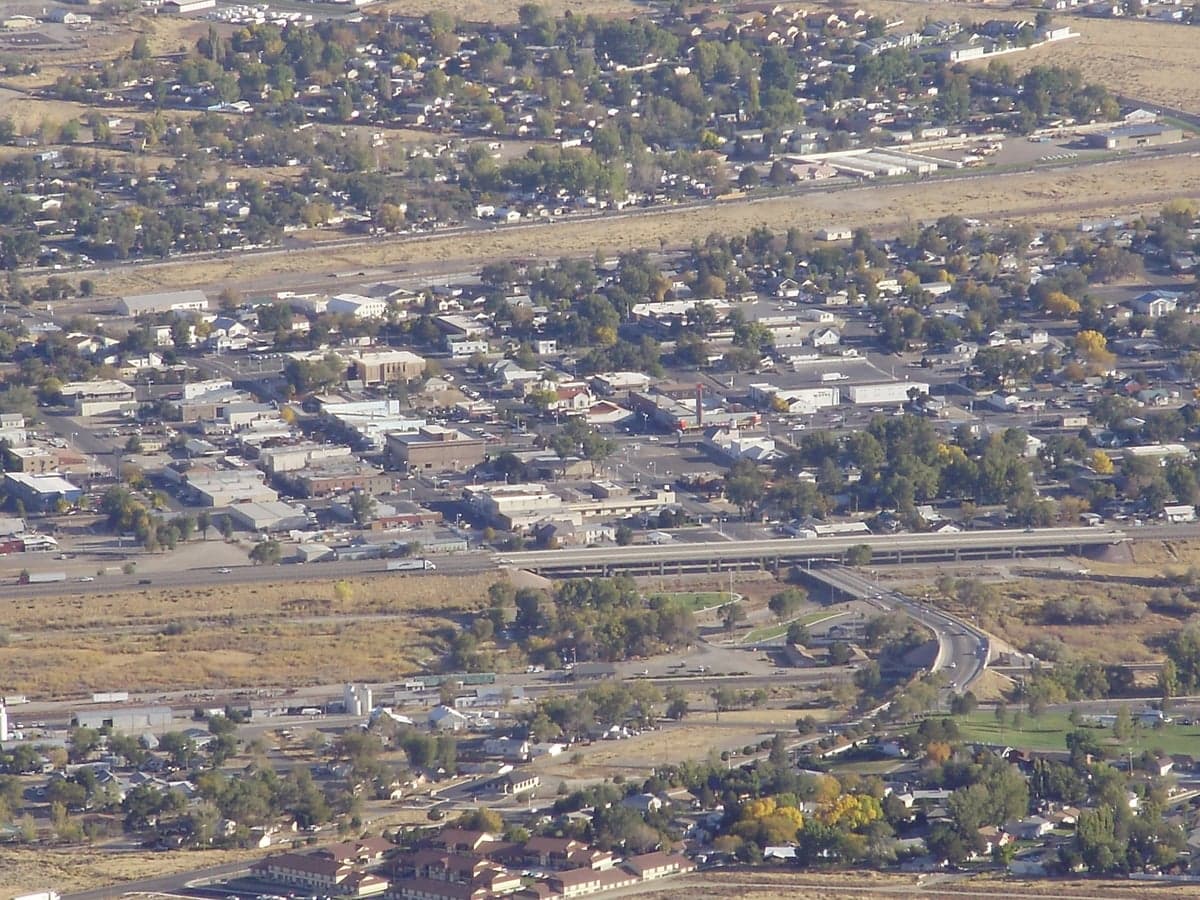
Photo: Wikipedia
Personal Sovereignty in Winnemucca, NV
Viable for self-reliance. Generally workable, though some barriers may limit total independence.
What does Personal Sovereignty tell us?
Personal Sovereignty measures your capacity for self-reliance and independence with minimal government friction. Higher scores mean fewer barriers between you and the way you want to live... but it assumes you have the space you need and good neighbors.
What does this tell us?
Personal Sovereignty measures your capacity for self-reliance and independence with minimal government friction. Higher scores mean fewer barriers between you and the way you want to live... but it assumes you have the space you need and good neighbors.
State Policy
Energy independence: Importer (15% of energy produced in-state)
Personal Liberty
Homesteading

Personal Liberty Analysis
Winnemucca, Nevada, offers a notably high degree of personal sovereignty relative to much of the United States, largely due to the state’s constitutional protections and a culture of self-reliance that predates the modern administrative state. For individuals and parents concerned with preserving autonomy in the face of federal and state overreach, this small city in Humboldt County presents a strategic environment where the default posture of government is less intrusive. The absence of a state income tax, limited business regulation, and a strong Second Amendment culture create a baseline of freedom that many conservative-leaning relocators find increasingly rare. However, the specific local conditions—from zoning codes to law enforcement posture—determine whether this sovereignty is genuinely actionable for a survivalist or prepper mindset.
Tax burden and regulatory posture: what you keep and what you can do
Nevada’s lack of a state income tax is the single most impactful factor for personal financial sovereignty in Winnemucca. Residents keep 100% of their earned income, retirement distributions, and investment gains at the state level, which directly translates to more capital for land, supplies, and self-sufficiency projects. The state’s sales tax rate in Humboldt County is approximately 7.6%, which is moderate, but there is no state-level property tax on business inventory or intangible assets. Property taxes are capped by the state constitution at a maximum of 3% of assessed value, and actual effective rates in Winnemucca typically run around 0.6% to 0.8% of market value—among the lowest in the nation. This means a $300,000 home might carry an annual tax bill of roughly $1,800 to $2,400, leaving far more money in your pocket for land acquisition, water storage, or solar infrastructure. On the regulatory side, Nevada is a right-to-work state with minimal occupational licensing requirements compared to California or Oregon. There are no state-level building codes in unincorporated Humboldt County, though Winnemucca city limits enforce the 2018 International Building Code. For those seeking to build a workshop, bunker, or off-grid dwelling outside city limits, the regulatory burden is exceptionally light—no county planning department approval is needed for most agricultural or residential structures under 5,000 square feet, provided they meet basic septic and well requirements. This regulatory posture is a direct advantage for anyone wanting to minimize government entanglement in their daily life.
Self-defense and gun law specifics: what you can carry and where
Nevada is a shall-issue state for concealed carry permits, and Winnemucca’s local sheriff’s office processes permits efficiently, typically within 30 days. The state does not require a permit to open carry, and there is no state-level ban on any class of firearm, including standard-capacity magazines or so-called “assault weapons.” This places Winnemucca in a strong position for those who view firearms as a non-negotiable component of personal sovereignty. The state preempts all local firearm ordinances, meaning Winnemucca city council cannot pass its own restrictions—a critical protection against the kind of patchwork regulation seen in states like Colorado or Washington. Stand-your-ground laws are in effect, with no duty to retreat in any place where a person has a legal right to be. Castle doctrine protections extend to occupied vehicles and workplaces, not just homes. For preppers, the ability to legally possess suppressors, short-barreled rifles, and other NFA items is unrestricted at the state level, though federal paperwork still applies. The nearest Bureau of Alcohol, Tobacco, Firearms and Explosives (ATF) field office is in Reno, about 160 miles away, which can delay Form 4 approvals slightly but does not impede ownership. One practical consideration: Humboldt County has a relatively low population density (about 2.5 people per square mile), so law enforcement response times in rural areas can exceed 30 minutes. This reinforces the necessity of being your own first responder, which aligns with the prepper ethos but also means that personal defensive capability is not just a right but a practical requirement.
Self-reliance and homesteading viability: lot sizes, zoning, and off-grid feasibility
Winnemucca’s surrounding area offers some of the most permissive conditions for self-reliant living in the Intermountain West. In unincorporated Humboldt County, minimum lot sizes for rural residential parcels are typically 2.5 acres, but many properties available for purchase range from 5 to 40 acres, with prices averaging $1,500 to $3,000 per acre as of 2026—far cheaper than comparable land in Idaho or Montana. Zoning is minimal: the county’s rural residential zone allows for livestock, gardening, workshops, and accessory dwelling units without special permits. Off-grid living is legally feasible, though not entirely unregulated. Nevada law requires that any habitable dwelling have a source of potable water and a sewage disposal system. A drilled well typically costs $15,000 to $25,000, and a septic system runs $5,000 to $10,000. Solar panels are common, and net metering is available through NV Energy, but many preppers opt for fully off-grid systems to avoid utility entanglement. There are no county-level restrictions on rainwater catchment, and the state does not regulate greywater use for subsurface irrigation. The biggest practical constraint is water availability: Humboldt County receives only about 8 inches of annual precipitation, so well depth and yield are critical. Most domestic wells in the area produce 5 to 15 gallons per minute, sufficient for a household but not for large-scale irrigation. For those serious about food sovereignty, a 10-acre parcel with a good well can support a substantial garden, a few head of cattle, and poultry, but dryland farming is not viable without irrigation. The county’s planning department is small and generally hands-off, but they do enforce setback requirements (typically 50 feet from property lines for structures) and require building permits for any structure over 200 square feet in the floodplain. Overall, the feasibility of a self-sufficient homestead is high, provided you have the capital for well drilling and solar infrastructure.
Personal liberties: parental rights, medical autonomy, speech, and property
Nevada’s legal framework provides strong protections for parental rights, though not as absolute as some conservative relocators might prefer. The state does not have a specific “parental bill of rights” statute, but case law generally upholds the fundamental right of parents to direct the upbringing, education, and healthcare of their children. Homeschooling is legal with minimal regulation: parents must file a notice of intent with the county school district and provide instruction in the required subjects, but there are no standardized testing requirements, no curriculum approval, and no home visits. This makes Winnemucca attractive for families seeking to opt out of public school curricula they view as ideologically driven. Medical autonomy is more mixed. Nevada has legalized recreational marijuana, which some conservatives view as a negative signal for community standards, but the state does not have a vaccine mandate for adults and allows religious and medical exemptions for school-required immunizations. There is no state-level mask or lockdown authority that can be imposed without legislative approval, a protection that became relevant during the COVID-19 pandemic. Free speech is robustly protected under the Nevada Constitution, which explicitly states that “every citizen may freely speak, write, and publish on all subjects.” The state has no hate speech laws that criminalize protected speech, and local government in Winnemucca is generally hands-off regarding political expression. Property rights are strong: Nevada is a “Dillon’s Rule” state, meaning local governments have only the powers explicitly granted by the state legislature, which limits the ability of Winnemucca city council to impose rent control, inclusionary zoning, or other property-use restrictions. Eminent domain is limited to public uses, and the state constitution requires “just compensation” be paid before any taking. For preppers concerned about government seizure of supplies or land, Nevada’s property protections are among the best in the West.
In the broader national context, Winnemucca ranks as a high-sovereignty location for those prioritizing minimal government interference in personal finances, self-defense, and land use. The combination of no state income tax, permissive gun laws, minimal zoning outside city limits, and strong property rights creates an environment where an individual or family can exercise a degree of autonomy that is increasingly difficult to find in coastal states or even parts of the Mountain West. The trade-offs are real: isolation, harsh climate, limited healthcare infrastructure, and a local economy tied to mining and agriculture. But for the strategic relocator who values sovereignty above convenience, Winnemucca offers a legal and cultural foundation that supports a self-reliant life without constant friction with the state. It is not a libertarian utopia—there are still property taxes, sales taxes, and some regulatory hurdles—but it is a place where the default answer to “can I do this on my land?” is usually yes, and that is increasingly rare in 2026 America.

* Values derived from national, state, county, city and local statistics and may differ in a specific area. Last updated: 2026-04-30T06:40:27.000Z
Narrative content on this page is AI-generated and may contain mistakes. Verify any details that matter before acting on them.
ReloMaps may earn a commission from affiliate links at no extra cost to you.

