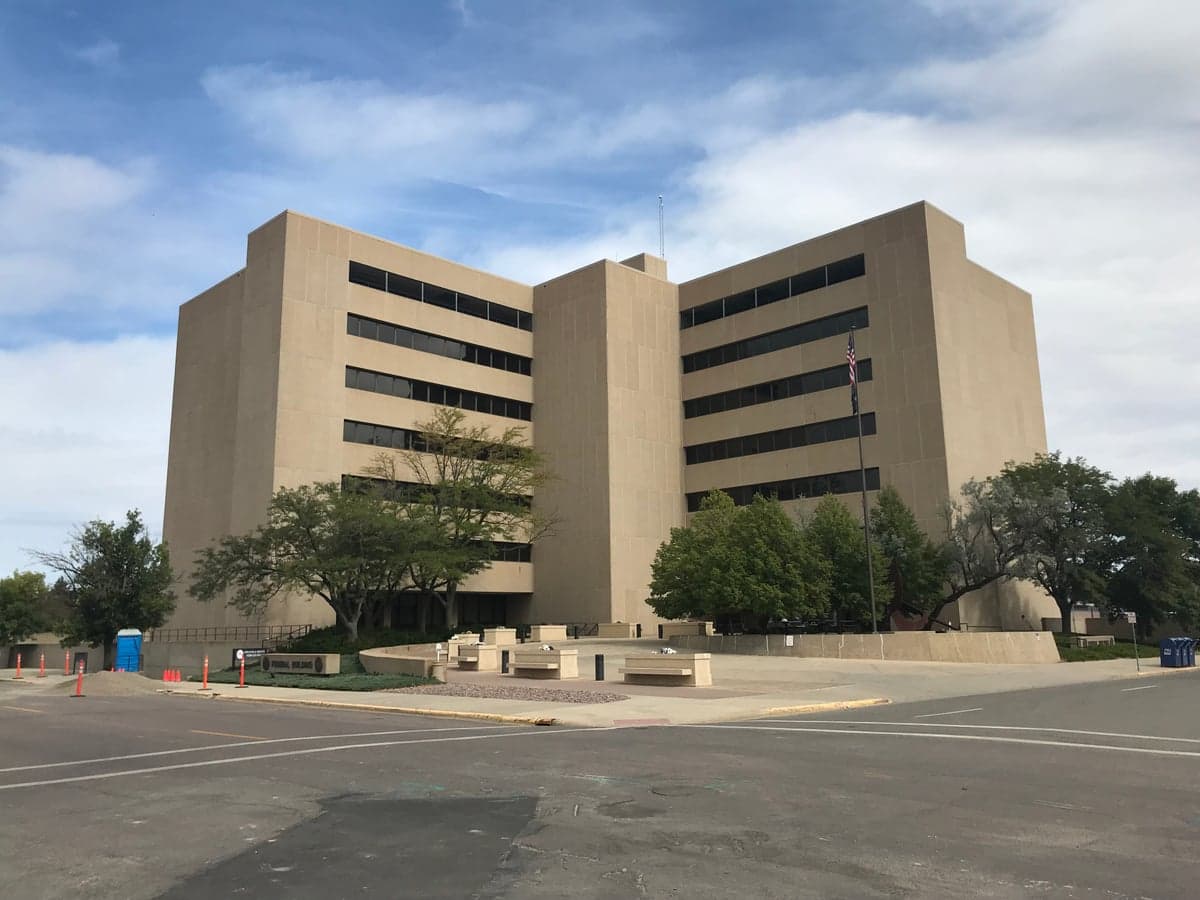
Photo: Wikipedia
Demographics of Aberdeen, SD
Affluence Level in Aberdeen, SD
A middle-class area roughly in line with national averages across income, home values, education, and employment.
People of Aberdeen, SD
The people of Aberdeen, South Dakota, today form a predominantly white, family-oriented community of 28,297, with a notably small foreign-born population of just 2.6%. The city’s character is shaped by its role as a regional hub for healthcare, education, and agriculture, giving it a stable, middle-class identity with a strong sense of local tradition. Distinctive markers include a higher-than-average college-educated share (33.6%) anchored by Northern State University and a modest but growing Hispanic presence (5.2%) that is beginning to diversify the city’s social fabric. Aberdeen remains a place where generational roots run deep, yet it is slowly absorbing new influences through its university and healthcare sectors.
How the city was settled and grew
Aberdeen’s founding population arrived in the 1880s, drawn by the promise of fertile farmland and the arrival of the Chicago, Milwaukee, St. Paul and Pacific Railroad. The city was platted in 1881 and quickly became a commercial and transportation center for the surrounding agricultural region. The original settlers were overwhelmingly of German, Norwegian, and other Northern European stock, many coming directly from Europe or migrating from the Upper Midwest. These groups built the early neighborhoods near the downtown core, such as West Aberdeen (west of Main Street) and the area around the Milwaukee Road depot, where modest frame houses and small businesses clustered. A second wave of German-Russian immigrants, fleeing religious persecution and land scarcity in the Russian Empire, arrived in the 1890s and early 1900s, settling in what became known as the North End near the railroad yards and stockyards. By 1910, Aberdeen’s population had reached 10,753, and the city’s ethnic character was firmly established as a white, Protestant, and Catholic mix of Northern and Central European ancestry. The opening of Northern Normal and Industrial School (now Northern State University) in 1901 added a small but steady stream of faculty and students, though the city remained overwhelmingly agricultural in its economic base through the mid-20th century.
Modern era (post-1965)
After the 1965 Immigration and Nationality Act, Aberdeen saw only modest demographic change compared to larger U.S. cities. The foreign-born share remained below 3% through the 2020s, and the city’s white population stayed above 80%. The most notable post-1965 shift was the growth of a Hispanic community, which rose from negligible levels to 5.2% by the 2020s. This population is concentrated in the South Side neighborhoods near the 3M plant and the ag-processing facilities, where many work in manufacturing and food production. The East/Southeast Asian population (3.5%) is largely tied to Northern State University, with students and faculty from South Korea, Vietnam, and the Philippines living in rental housing near campus in the University District (roughly bounded by 12th Avenue and 6th Street). The Indian-subcontinent population remains tiny at 0.2%, mostly professionals at Avera St. Luke’s Hospital and the university. Suburbanization after 1970 pushed middle-class white families into newer developments like Lakewood Estates (northwest of downtown) and Moccasin Creek Estates (south of the airport), leaving older neighborhoods like the North End and West Aberdeen with a higher share of rental housing and lower homeownership rates. The Black population (0.3%) is negligible, and there is no significant Arab community. Overall, Aberdeen’s modern era has been one of slow, incremental diversification rather than rapid change, with most growth coming from domestic migration from rural Brown and Spink counties rather than international immigration.
The future
Aberdeen’s population is projected to remain stable or grow slowly, with the white share likely declining gradually as the Hispanic and Asian populations increase. The Hispanic community is the fastest-growing segment, driven by family reunification and labor demand in meatpacking and manufacturing, and is expected to reach 8-10% by 2040. This growth is likely to remain concentrated in the South Side and near industrial corridors, though some assimilation into middle-class neighborhoods like Lakewood Estates is possible as second-generation families move up the income ladder. The East/Southeast Asian population will likely plateau or grow modestly, tied to university enrollment trends and healthcare recruitment. The city is not tribalizing into distinct ethnic enclaves in the manner of larger metros; instead, it is slowly homogenizing around a white-majority core with a small but visible Hispanic minority. The Indian-subcontinent and Black populations are expected to remain very small. For a conservative-leaning individual or family moving in now, Aberdeen offers a stable, low-crime environment with a strong sense of community, but one where the pace of demographic change is slow enough that newcomers will find a familiar, predominantly white and culturally traditional setting.
In short, Aberdeen is becoming a slightly more diverse version of its historical self — still overwhelmingly white and Midwestern in character, but with a growing Hispanic presence that is gradually reshaping the city’s cultural and economic landscape. For those seeking a place where change is measured and community ties remain strong, Aberdeen represents a safe bet for the next decade.

* Values derived from national, state, county, city and local statistics and may differ in a specific area. Last updated: 2026-04-23T09:18:01.000Z
Narrative content on this page is AI-generated and may contain mistakes. Verify any details that matter before acting on them.
ReloMaps may earn a commission from affiliate links at no extra cost to you.

