Photo: Wikipedia
Demographics of Autauga County
Affluence Level in Autauga County
A middle-class area roughly in line with national averages across income, home values, education, and employment.
People of Autauga County
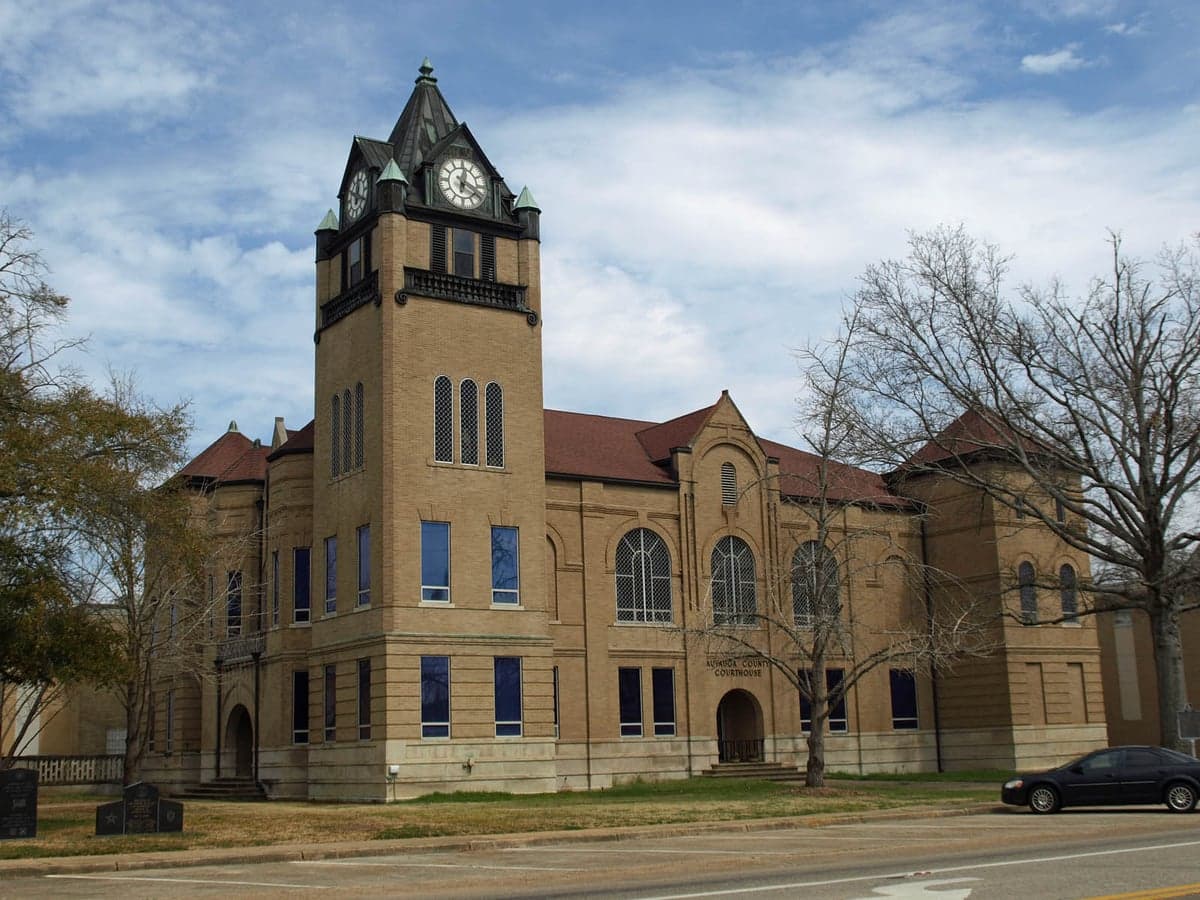
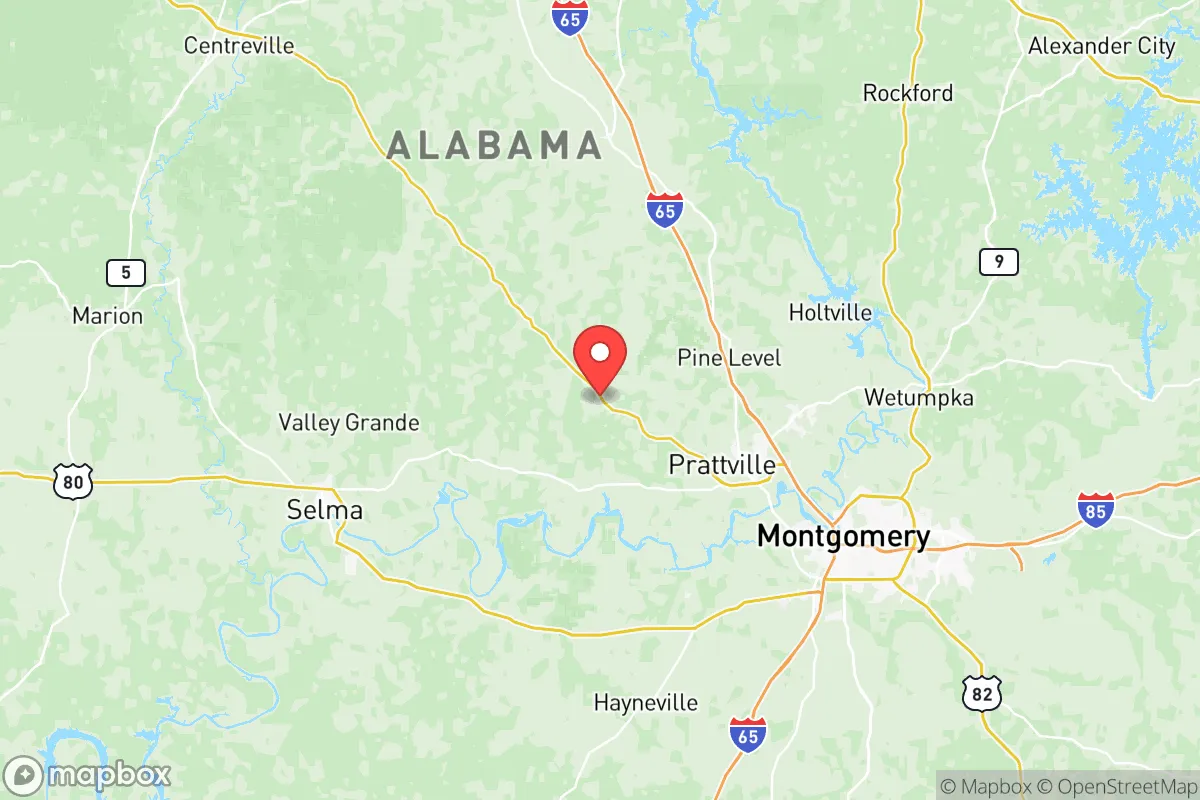
The people of Autauga County, Alabama, today number roughly 59,285, forming a community that is predominantly white (71.7%) with a significant Black minority (20.0%) and a very small foreign-born population (1.2%). The county’s identity is rooted in its rural and small-town character, anchored by the county seat of Prattville, with a population density of about 68 people per square mile. Distinctive markers include a strong manufacturing and agricultural heritage, a politically conservative tilt, and a population that is less diverse than the national average, with low rates of immigration shaping a relatively stable demographic profile.
Settlement & growth (pre-1960)
Before American settlement, the area now known as Autauga County was inhabited by the Alibamu (Alabama) and Creek (Muskogee) peoples, who lived in villages along the Alabama River and its tributaries. The name "Autauga" itself is derived from the Creek word for "town" or "village," reflecting the region’s indigenous roots. European contact began with Spanish explorers in the 16th century, but no permanent European settlements were established until the early 19th century, following the Creek War (1813–1814) and the subsequent forced removal of Native Americans under the Treaty of Fort Jackson (1814).
The first major wave of American settlers arrived in the 1810s and 1820s, primarily Scots-Irish and English migrants from the Upper South (Virginia, North Carolina, and Tennessee). These pioneers were drawn by the promise of fertile, cheap land for cotton cultivation, which became the backbone of the county’s economy. The town of Washington (now a ghost town near the Alabama River) served as an early settlement and the first county seat from 1818 until 1830, when the seat moved to Prattville. Prattville itself was founded in 1839 by Daniel Pratt, a New England industrialist who established the Prattville Cotton Gin Manufactory, which became the world’s largest cotton gin factory and attracted skilled workers from the North and Europe.
During the antebellum period, the county’s population grew rapidly, fueled by enslaved African Americans who were forced to work on cotton plantations. By 1860, Black residents made up roughly 40% of the county’s population, concentrated in rural areas like Autaugaville and along the Alabama River bottoms. After the Civil War and Emancipation, many freedmen remained in the county as sharecroppers and tenant farmers, establishing small communities such as Booth and Marbury. The post-Reconstruction era saw the rise of Jim Crow laws, which enforced racial segregation and disenfranchisement, shaping the county’s social structure for decades.
The early 20th century brought modest industrial growth, with Prattville’s textile mills and lumber yards attracting white workers from surrounding rural areas. The Great Depression hit the county hard, but World War II spurred a recovery, with nearby Maxwell Air Force Base (in Montgomery) and the construction of the Autauga County Training School (a segregated Black high school) providing some economic stability. By 1960, the county’s population stood at about 18,000, still overwhelmingly rural and agricultural, with Prattville as the only incorporated town of note.
Modern era (post-1965)
The 1965 Hart-Cellar Act had minimal direct impact on Autauga County, as the foreign-born population remains just 1.2% today—far below the national average of 13.7%. Instead, the county’s modern demographic shifts have been driven by domestic migration and suburbanization. The most significant change began in the 1970s and 1980s, as Prattville transformed from a small mill town into a bedroom community for Montgomery, located just 12 miles to the south. The construction of Interstate 65 in the 1960s and the expansion of the Hyundai Motor Manufacturing Alabama plant (opened in 2005) in nearby Montgomery accelerated this trend, drawing white-collar workers and professionals to new subdivisions in Prattville’s northern and western edges.
Domestic in-migration from the Rust Belt (particularly Ohio, Michigan, and Illinois) increased after 2000, as retirees and job-seekers were attracted by lower taxes, lower housing costs, and a slower pace of life. These newcomers have concentrated in newer developments like Prattville’s Fairview area and the unincorporated community of Pine Level, which has seen suburban-style growth. The Black population, which declined from 40% in 1860 to about 20% today, has become more urbanized, with many Black residents moving to Prattville’s historic core or to the rural community of Billingsley. The Hispanic population, at 3.7%, has grown modestly since 2000, largely due to labor demand in construction and agriculture, with small clusters forming in Prattville and Marbury.
The county’s Asian population (East/Southeast Asian) stands at 0.8%, and the Indian subcontinent population at 0.2%, both tiny and primarily concentrated in Prattville, often tied to professional roles at Hyundai or Maxwell Air Force Base. The college-educated share is 28.3%, below the national average of 33.7%, reflecting the county’s blue-collar and service-oriented economy. Overall, Autauga County remains less diverse than Alabama as a whole (which is 64% white, 26% Black, 5% Hispanic), and its foreign-born population is among the lowest in the state.
The future
Looking ahead, Autauga County’s population is projected to grow slowly, reaching roughly 65,000 by 2040, driven primarily by continued suburban spillover from Montgomery and modest domestic in-migration from other Southern states. The county is likely to remain predominantly white and native-born, with the Hispanic and Asian populations growing only incrementally as they assimilate into existing communities rather than forming distinct enclaves. The Black population is expected to hold steady at around 20%, with younger Black residents increasingly moving to Prattville for jobs and services, while older Black populations in rural areas like Autaugaville and Booth may decline due to out-migration.
The cultural identity of the county is being shaped by a tension between long-time residents—who value the county’s rural traditions, low taxes, and conservative politics—and newer arrivals from the North and Midwest, who bring different expectations for schools, amenities, and governance. This dynamic is most visible in Prattville, where debates over zoning, school funding, and development have become more frequent. The county is not tribalizing into distinct ethnic enclaves; rather, it is slowly homogenizing as suburban growth blurs the lines between Prattville and its unincorporated neighbors. For a conservative-leaning individual or family moving in now, Autauga County offers a stable, low-density environment with a strong sense of local identity, but with limited diversity and a pace of change that is gradual rather than disruptive.
In sum, Autauga County is becoming a more suburban, slightly more diverse version of its historical self, shaped by domestic migration and Montgomery’s economic pull rather than by international immigration. For someone moving in now, the county offers a predictable, family-oriented lifestyle with low crime, good schools in Prattville, and a conservative political culture, but with few of the cosmopolitan amenities found in larger cities. The people here are rooted in a shared history of cotton, industry, and community, and the future points toward steady, incremental growth rather than dramatic transformation.

* Values derived from national, state, county, city and local statistics and may differ in a specific area. Last updated: 2026-05-08T23:16:19.000Z
Narrative content on this page is AI-generated and may contain mistakes. Verify any details that matter before acting on them.
ReloMaps may earn a commission from affiliate links at no extra cost to you.

