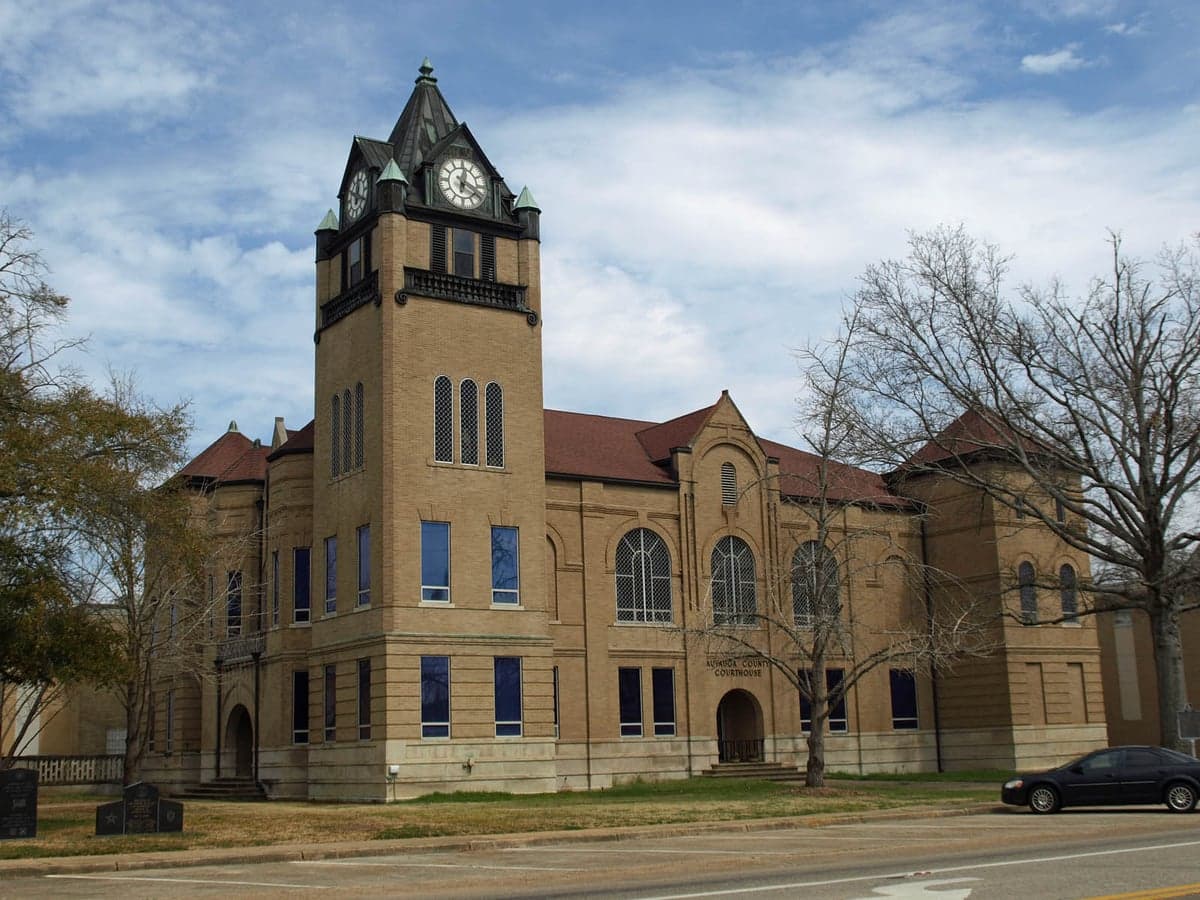
Photo: Wikipedia
Political ClimatePolitical Climate in Autauga County
Showing state-level results — no local-only data available.
Local Political AnalysisPolitical Analysis of Autauga County
Look, I’ve lived in Autauga County my whole life, and I can tell you straight up: this place is deep red, and it’s been that way as long as anyone can remember. The whole county votes reliably Republican, with the rural precincts—places like Pine Level, Billingsley, and the unincorporated areas around Autaugaville—turning out margins that would make a Democrat weep. The county’s Cook PVI is R+14, same as the state of Alabama, but that number actually undersells how conservative the day-to-day politics feel here. In the 2024 presidential race, Autauga County gave Donald Trump over 70% of the vote, with some precincts hitting 80% or more. The only real exception is a sliver of Prattville’s downtown and the newer subdivisions near the Interstate 65 corridor, where you’ll see a few more split-ticket voters—but even those areas lean red by double digits.
How it compares
Compared to Alabama as a whole, Autauga County is a mirror image of the state’s conservative core, but with a few wrinkles. The state’s R+14 rating comes from a mix of deep-red rural counties and a handful of blue-leaning urban centers like Birmingham, Montgomery, and Huntsville. Autauga doesn’t have any of those liberal strongholds. Prattville, the county seat and biggest town, is solidly conservative—think church potlucks, gun racks in pickup trucks, and a city council that hasn’t seen a Democrat in decades. The only real variation is between the older, more established neighborhoods in Prattville (which are reliably red) and the newer subdivisions near the interstate (which are still red, but with a few more folks who might vote for a moderate Republican over a firebrand). The rural precincts—Marbury, Booth, and the unincorporated areas—are as conservative as any place in Alabama. If you drive out to Autaugaville, you’ll find precincts that vote 85% Republican, with a strong libertarian streak that distrusts any government overreach, whether it’s from Montgomery or Washington.
What this means for residents
For folks living here, the political climate means a lot of things stay the way they’ve always been—and that’s exactly how most people want it. You won’t see any progressive school board members pushing critical race theory or gender ideology in the classroom; the local board is stacked with conservatives who keep the curriculum focused on the basics. The county commission is all Republican, and they’re stingy with tax dollars, which keeps property taxes low and regulations minimal. But there’s a growing concern among long-time residents about the new folks moving in from Birmingham and Montgomery, looking for cheaper land and quieter streets. Some of those newcomers bring big-city ideas with them—like supporting bike lanes, zoning restrictions, or even a local sales tax increase. So far, those efforts have been voted down every time, but the demographic shift is real. The county’s population grew by about 10% between 2020 and 2025, and if that trend continues, the political culture could start to shift in a decade or two. For now, though, Autauga County remains a place where the Second Amendment is sacred, the churches are full on Sunday, and the government stays out of your business.
One thing that sets Autauga apart from the rest of Alabama is its strong sense of local identity. People here don’t just vote Republican—they actively participate in local politics, showing up for school board meetings and county commission hearings in numbers that would surprise outsiders. There’s a deep distrust of federal mandates, whether it’s EPA water regulations or CDC health guidance, and the county has a history of pushing back against state-level overreach too. For example, when the state tried to mandate mask mandates in 2020, the Autauga County Commission passed a resolution opposing it, and most businesses ignored the order. That kind of independent streak is what keeps this place feeling like a refuge from the chaos in bigger cities. If you’re looking for a place where your rights are respected and your voice matters, Autauga County is still that place—but keep an eye on the newcomers, because change is coming, even if it’s slow.

State Political ClimatePolitical Climate in Alabama
State Political AnalysisPolitical Environment in the State
Alabama is a deeply conservative state, with a Cook PVI of R+14 that has only grown more Republican over the past two decades as the old “Yellow Dog Democrat” tradition has all but vanished. The state’s political center of gravity is solidly in the rural and suburban counties, where cultural conservatism and limited-government values dominate, though the fast-growing metro areas of Huntsville and Baldwin County (Gulf Shores) are pulling the state even further right. If you’re looking for a place where the government generally stays out of your business and the culture war is being fought on your side, Alabama is about as safe a bet as you’ll find in the Deep South.
Urban vs. rural divide
The political map of Alabama is a study in contrasts, but the rural areas overwhelmingly control the state’s direction. The state’s largest city, Birmingham (Jefferson County), is a Democratic stronghold, voting about 70% for Joe Biden in 2020, but it’s surrounded by deep-red suburbs like Hoover and Vestavia Hills that keep the county competitive. Montgomery and Mobile are more moderate but still lean left locally, while Huntsville—the state’s fastest-growing metro—is a fascinating exception: a high-education, high-income city that votes Republican thanks to its massive defense and aerospace sector. The real engine of Alabama’s conservatism is the rural Black Belt (named for its rich soil, not its politics) and the Wiregrass region—places like Cullman, Auburn, and Baldwin County, where Republicans routinely win 75-80% of the vote. The coastal counties, especially Baldwin (Gulf Shores/Orange Beach), have seen explosive growth from conservative retirees and remote workers, flipping what was once a swing area into a GOP fortress. The only real blue pockets are the core of Birmingham, Tuscaloosa’s university precincts, and a few majority-Black rural counties in the Black Belt, but they lack the population to shift statewide results.
Policy environment
Alabama’s policy environment is a textbook example of conservative governance, with low taxes, light regulation, and a strong emphasis on individual liberty in most areas. The state has no state-level property tax (it’s all local, averaging about 0.4% of home value), a flat income tax of 5%, and a sales tax that can hit 10% in some cities but is generally manageable. The regulatory climate is business-friendly, with right-to-work laws and minimal zoning in most rural areas. Education policy is a mixed bag: the state passed the Alabama Accountability Act in 2013, which created tax credits for private school scholarships and expanded school choice, and in 2024 it launched a universal school choice program (the CHOOSE Act) that lets parents use state funds for private school or homeschooling. Healthcare is a sore spot—Alabama did not expand Medicaid under Obamacare, which keeps taxes low but leaves rural hospitals struggling. Election laws are strict: voter ID is required, early voting is limited, and absentee ballots require a notary or two witnesses. The state also passed a 2021 law making it a felony to solicit absentee ballot applications, which critics call voter suppression but supporters say protects election integrity. On social issues, Alabama is a national leader in protecting life, with a near-total abortion ban (the Human Life Protection Act of 2019) and a 2022 law protecting in vitro fertilization after a court ruling threatened it. For a conservative, the policy environment is largely a win—government stays small, taxes stay low, and cultural values are defended by law.
Trajectory & freedom
Alabama is on a trajectory of expanding personal freedom in most areas, especially when it comes to gun rights, parental rights, and economic liberty. In 2022, the state passed constitutional carry (permitless carry of a concealed firearm), joining the majority of states that recognize the Second Amendment as a right, not a privilege. The same year, the legislature passed the “Don’t Say Gay” style bill (HB 322) banning classroom instruction on sexual orientation and gender identity in K-5, and in 2024 it expanded that to all grades. Parental rights were further strengthened with the “Parents’ Bill of Rights” (SB 129), which gives parents the right to review curriculum and opt their kids out of any instruction they find objectionable. On medical freedom, Alabama was one of the first states to ban COVID-19 vaccine mandates for government employees and contractors (2021), and it passed a law in 2023 prohibiting mask mandates in schools. Property rights are strong, with no statewide zoning and a “right to farm” law that protects agricultural operations from nuisance lawsuits. The only area where freedom has contracted is on the medical marijuana front—Alabama legalized a limited medical cannabis program in 2021, but it’s so heavily regulated that few patients can actually access it, and the state still has some of the strictest drug laws in the country. Overall, the trend is toward more liberty, not less, and the legislature is actively looking for ways to reduce government overreach.
Civil unrest & political movements
Alabama has seen relatively little civil unrest compared to other states, but there are active political movements on both sides that a new resident should be aware of. The most visible flashpoint in recent years has been the battle over Confederate monuments, particularly in Birmingham and Mobile, where local governments removed statues in 2020 despite a state law (the Alabama Memorial Preservation Act of 2017) that prohibits such removals. The state attorney general sued Birmingham, and the city paid a $25,000 fine—a symbolic victory for both sides. On the right, the “Alabama Freedom Caucus” in the legislature has pushed hard on election integrity, school choice, and anti-woke policies, often clashing with more moderate Republicans. Immigration politics are relatively quiet, but the state passed a strict anti-sanctuary city law in 2024 (HB 123) that threatens to withhold state funds from any locality that refuses to cooperate with federal immigration enforcement. There have been no major sanctuary cities, but the law was a preemptive strike. Election integrity remains a hot topic: the 2020 election saw no major fraud in Alabama, but the legislature passed a 2021 law banning curbside voting and limiting absentee ballot drop boxes, which Democrats challenged in court (the law was upheld). The most visible protest movement in recent years was the 2023 “Save Our Schools” rally in Montgomery, where thousands of parents protested a proposed critical race theory curriculum—the state board of education ultimately rejected it. For a conservative, the political climate is stable, with the right clearly in control and the left mostly confined to Birmingham and a few college towns.
Projection
Over the next 5-10 years, Alabama is likely to become even more conservative, driven by two key demographic trends: the continued growth of Baldwin County and Huntsville, and the out-migration of liberals from Birmingham to more progressive states. Baldwin County is one of the fastest-growing counties in the country, attracting conservative retirees and remote workers from California and the Northeast who are fleeing high taxes and progressive policies. Huntsville is booming with defense and tech jobs, and its Republican lean is only getting stronger as the city grows. Meanwhile, the Black Belt is losing population, which reduces the Democratic base. The state’s PVI could shift from R+14 to R+16 or R+17 by 2032. On policy, expect further expansion of school choice, a possible repeal of the state income tax (a goal of Governor Kay Ivey and many legislators), and more preemption of local governments on issues like zoning and mask mandates. The only wild card is the potential for a federal court to strike down the state’s abortion ban or election laws, but the current Supreme Court makes that unlikely. For someone moving in now, the Alabama of 2035 will look very similar to today—just more conservative, more prosperous, and more crowded along the coast.
Bottom line for a new resident: If you’re a conservative looking for a state where your values are the law of the land, your taxes are low, and your freedoms are expanding, Alabama is a strong choice. You’ll find a welcoming culture in the suburbs and rural areas, but be prepared for hot summers, limited public transit, and a healthcare system that’s thin in rural areas. The politics are stable and predictable—no one is going to surprise you with a new tax or a mask mandate. Just pick a spot in Baldwin County or Huntsville, and you’ll be right at home.
* Values derived from national, state, county, city and local statistics and may differ in a specific area. Last updated: 2026-05-08T23:16:19.000Z
Narrative content on this page is AI-generated and may contain mistakes. Verify any details that matter before acting on them.
ReloMaps may earn a commission from affiliate links at no extra cost to you.

