Demographics of Aledo, TX
Affluence Level in Aledo, TX
An upper-middle-class area. Household wealth, education levels, and homeownership run ahead of national benchmarks.
People of Aledo, TX
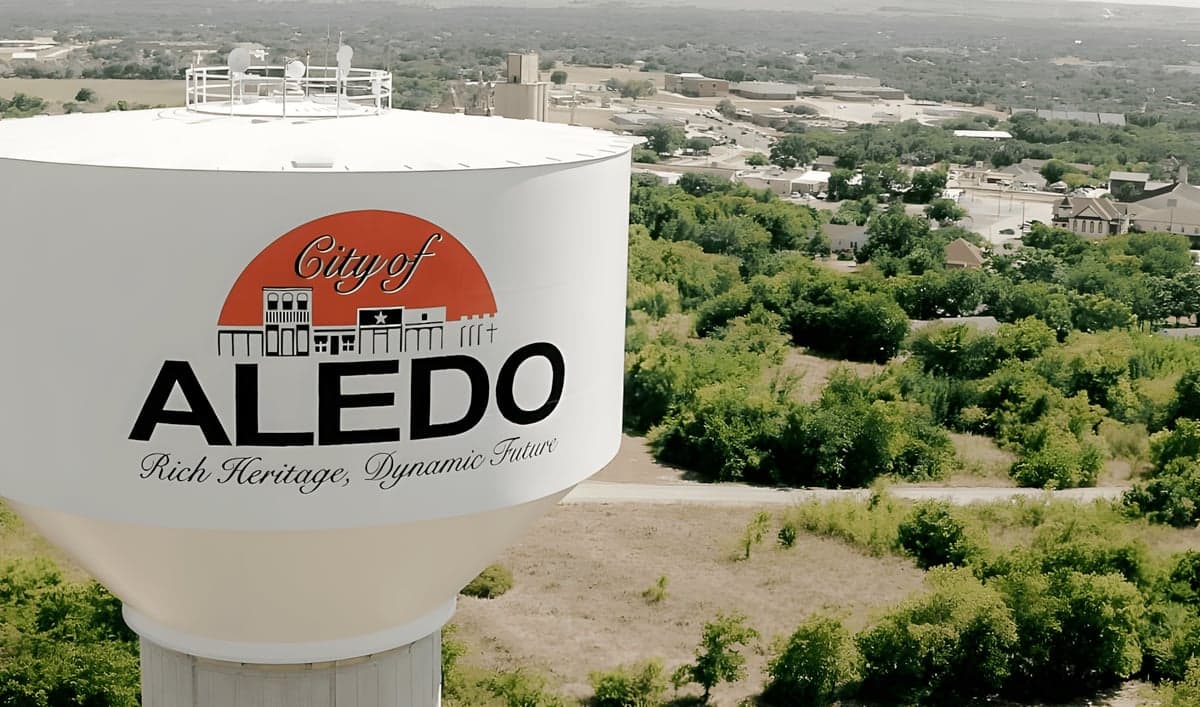
The people of Aledo, Texas, today number roughly 5,400, forming a tight-knit, predominantly white community with a strong conservative character and a notably high education level—over 60% hold a college degree. The city is defined by its rapid recent growth, having doubled in population since 2010, while maintaining a distinctly suburban-rural feel with large-lot homes and a family-oriented atmosphere. The Hispanic share has risen to 15.7%, marking the most significant demographic shift in a city where foreign-born residents make up just 0.5% of the population. Aledo’s identity is rooted in its history as a small farming and railroad town that has transformed into an affluent exurb of Fort Worth.
How the city was settled and grew
Aledo’s original population was drawn by the Texas & Pacific Railway in the 1880s, with the town platted in 1883 as a stop for shipping cotton, grain, and livestock. The earliest settlers were Anglo-American farmers and ranchers from the U.S. South and Midwest, attracted by cheap land grants and the promise of rail access to markets. The historic downtown Aledo district, centered around the railroad depot on Front Street, became the commercial and social hub for these families. By the early 1900s, a small but stable community of roughly 300 people had formed, with many families living on farms that stretched into what is now the Annetta area to the south. The population remained overwhelmingly white and rural through the mid-20th century, with little in-migration beyond the children of original settlers and a handful of merchants. The city’s growth was essentially flat from 1920 to 1970, hovering around 500 residents, as the railroad economy declined and young people moved to nearby Fort Worth for work.
Modern era (post-1965)
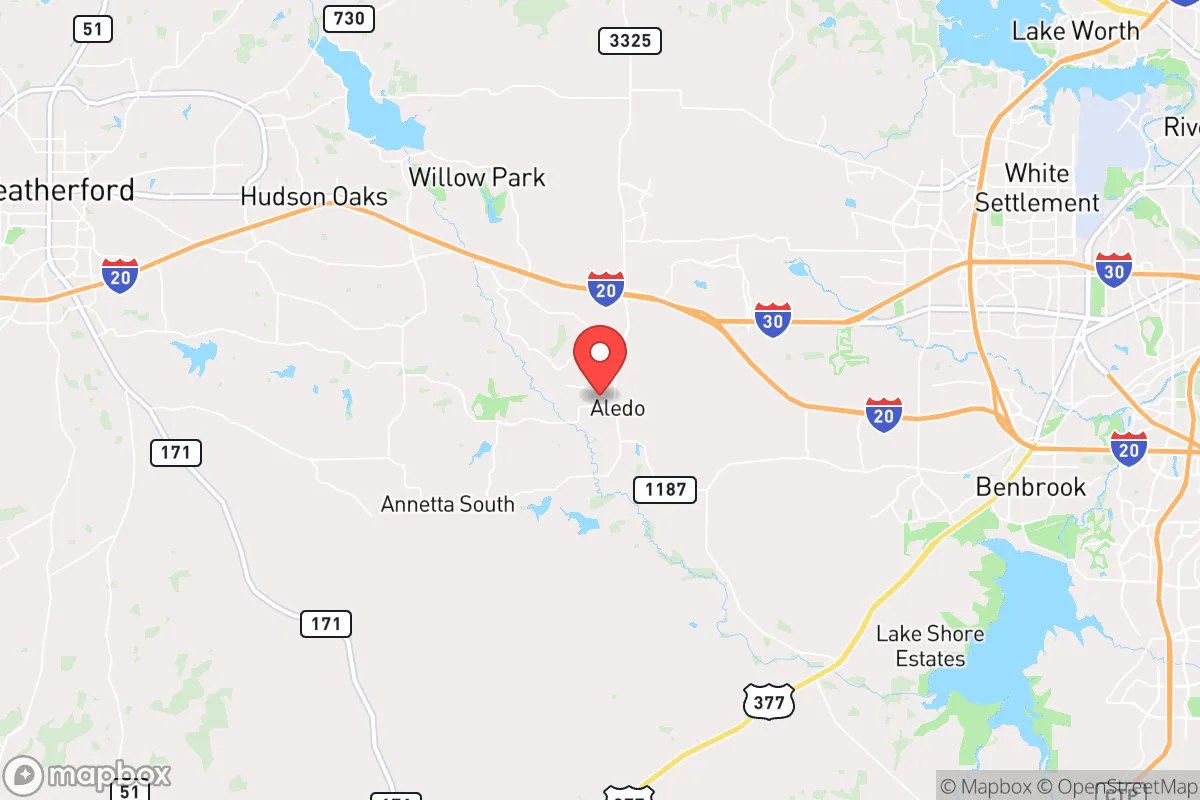
The modern transformation of Aledo began in earnest after the 1965 Hart-Cellar Act, though its effects were indirect—Aledo saw almost no foreign-born immigration. Instead, the city’s population boom was driven by domestic in-migration of white families from the Dallas-Fort Worth metroplex seeking larger lots, better schools, and lower taxes. The opening of Interstate 20 in the 1970s made Aledo a viable commuter suburb, and development accelerated sharply after 2000. The Walsh Ranch master-planned community, launched in the 2010s, became the primary landing zone for these new arrivals, offering new-construction homes on acreage and drawing families from Tarrant County. The Pecan Plantation area (though technically just outside city limits) and the Thousand Oaks subdivision also absorbed much of the growth. The white share dropped from 88.8% in 2010 to 79.3% in the latest data, while the Hispanic share rose from 8.5% to 15.7%, driven largely by Hispanic families moving into the Annetta South and Willow Park fringe areas for affordable housing and construction jobs. The Black and East/Southeast Asian shares remain minimal at 0.6% and 0.3%, respectively, with no measurable Indian-subcontinent population.
The future
Aledo’s population trajectory points toward continued rapid growth, with the city likely to exceed 8,000 residents by 2035 if current annexation and development patterns hold. The population is not homogenizing but rather tribalizing into distinct enclaves: the older, established Anglo families remain concentrated in the historic downtown and Annetta areas, while newer white arrivals cluster in Walsh Ranch and other master-planned communities. The Hispanic population is growing steadily but remains largely confined to the southern and eastern fringes, with little integration into the city’s core neighborhoods. The foreign-born share is expected to remain very low, as Aledo lacks the rental housing stock and industrial jobs that typically attract immigrant populations. The next decade will likely see the Hispanic share approach 20%, while the white share continues its gradual decline, though the city will remain overwhelmingly white and conservative. The college-educated share may dip slightly as new construction brings in some working-class families, but the overall character of Aledo as a high-education, family-oriented exurb is unlikely to change.
For someone moving in now, Aledo is becoming a more diverse but still deeply homogeneous place—a fast-growing, affluent exurb where the dominant culture is white, conservative, and family-centric, with a growing but geographically separate Hispanic community. The city offers excellent schools and large lots

* Values derived from national, state, county, city and local statistics and may differ in a specific area. Last updated: 2026-09-11T16:58:10.000Z
Narrative content on this page is AI-generated and may contain mistakes. Verify any details that matter before acting on them.
ReloMaps may earn a commission from affiliate links at no extra cost to you.

