 Popular
Photo: Wikipedia
Find The Best Places To Live
in Fort Worth
PRO TIP! You can paste a Zillow or Redfin link to get info on that property.
What It's Like Living in Fort Worth, TX
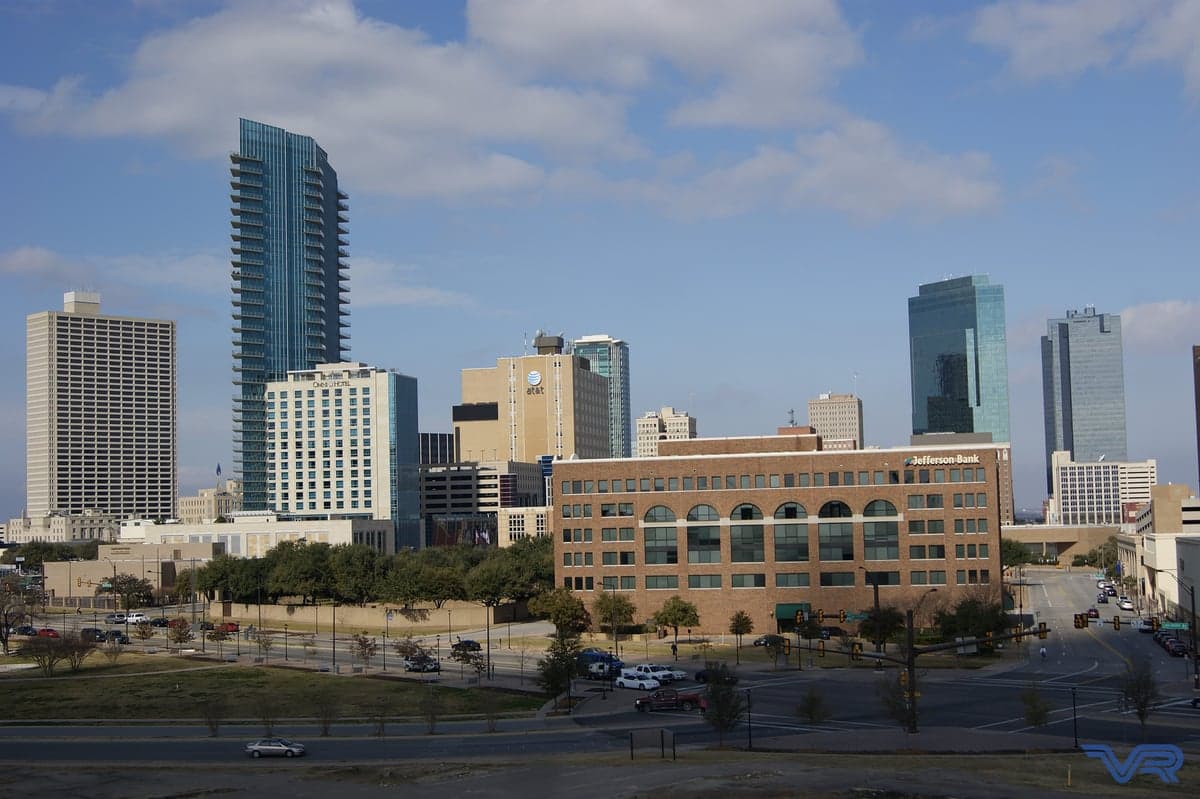
Fort Worth has always felt like the part of Texas that still remembers what Texas used to be — cowboy boots and brisket, stockyards and honky-tonks — but it’s also quietly become a place where young families and single professionals can actually afford to put down roots. With a population just shy of a million, it’s big enough to have real city amenities but spread out enough that you don’t feel like you’re living in a concrete canyon. The vibe here is less “polished urbanite” and more “hardworking neighbor who owns a truck and a grill.”
Daily Rhythm: What People Actually Do
A typical weekday in Fort Worth starts early. The average commute clocks in at about 27 minutes, which is manageable by Texas standards — you’re not sitting in Houston-style gridlock, but you’ll still hit slowdowns on I-30 or 820 during rush hour. Most people work in logistics, healthcare, aviation (Lockheed Martin is a massive employer), or energy. The median household income is $76,602, which goes further here than in Dallas because housing is noticeably cheaper — the median home value sits at $277,300, and the cost of living index of 112 means you’re paying about 12% more than the national average, not the 30-40% premium you’d see on the West Coast.
After work, you’ll find folks at a neighborhood spot like Rodeo Goat for a burger and a local craft beer, or at Heim Barbecue for brisket that draws lines out the door. Weekends are for the Fort Worth Stockyards — the daily cattle drive is a genuine tourist draw, but locals still go for the honky-tonk dancing at Billy Bob’s Texas or a steak at the legendary Lonesome Dove. Families spend Saturday mornings at the Fort Worth Botanic Garden or the Fort Worth Zoo, which is consistently ranked among the best in the country. The Trinity River trails are packed with runners and cyclists, especially in the spring and fall when the weather actually cooperates.
Sports, Community, and the Kind of Person Who Fits In
Fort Worth is a sports town, but not in the glossy, corporate way Dallas is. The Texas Rangers play in Arlington, 20 minutes east, and their 2023 World Series win was a genuinely big deal here — watch parties spilled out of every sports bar in the Cultural District. High school football is a religion: Aledo High School and Southlake Carroll (just north of the city) produce state championship teams that pack 10,000-seat stadiums on Friday nights. College sports lean heavily toward TCU — Horned Frogs games at Amon G. Carter Stadium are a social event, especially when they’re playing Baylor or Texas. The Fort Worth Rodeo at the Stockyards is the real deal, not a tourist trap, and it runs from January through April.
The person who fits in here is someone who values space, affordability, and a slower pace over the constant buzz of a hyper-urban core. The median age is 33.4, and about 31.7% of adults hold a bachelor’s degree or higher — that’s lower than Austin or Dallas, which means the workforce skews more toward trades, logistics, and blue-collar professions. You’ll meet plenty of single people in their 20s and 30s, especially in neighborhoods like Near Southside or the 7th Street corridor, where apartments and townhomes mix with breweries and coffee shops. Parents tend to cluster in the suburbs — Keller, Southlake, and Colleyville are known for top-rated public schools and massive HOA neighborhoods with pools and soccer fields.
What’s There to Do: Festivals, Music, and Outdoor Life
Fort Worth punches above its weight for entertainment. The Fort Worth Stock Show & Rodeo runs for three weeks every January and February, drawing over a million visitors. Main Street Arts Festival in April turns downtown into an open-air gallery with live music and food vendors. Dickies Arena hosts concerts (everything from George Strait to Post Malone) and the annual Fort Worth Rodeo Finals. The Kimbell Art Museum and Modern Art Museum of Fort Worth are genuinely world-class — the Kimbell’s building alone, designed by Louis Kahn, is worth the visit.
Outdoorsy types head to the Trinity River Trails, a 40-mile network of paved paths that connect the Cultural District to the Stockyards. Eagle Mountain Lake and Lake Worth are 20 minutes northwest for fishing, kayaking, and pontoon boats. The Fort Worth Nature Center & Refuge offers 3,600 acres of hiking through prairie and forest — you can see bison and alligators in the same afternoon.
Pros and Cons of Living Here
Longtime residents will tell you the biggest upside is value. You get a real city with a major airport (DFW is 25 minutes east), pro sports, and a thriving food scene, but your dollar buys a house with a yard and a two-car garage — something that’s become a fantasy in Austin or Denver. The violent crime rate is 371.4 per 100,000, which is higher than the national average (about 380) but lower than Dallas or Houston. Most of that is concentrated in specific neighborhoods east of I-35W; the western suburbs are very safe.
The downsides are real. Summer heat is brutal — June through September, highs regularly hit 100°F, and the humidity makes it feel worse. Traffic is getting worse as the city grows; the 26-minute average commute hides the fact that I-35W is a parking lot during peak hours. Public transit is minimal — the Trinity Railway Express connects to Dallas, but you’ll need a car for almost everything else. And while the schools in the suburbs are excellent, Fort Worth ISD has struggled with funding and performance, which pushes many parents toward private or charter options. The cultural quirk that surprises newcomers: Fort Worth is proudly independent from Dallas. Locals will correct you if you call it “Dallas-Fort Worth” — it’s Fort Worth, and it has its own identity, thank you very much.

Similar mid-size cities to Fort Worth

* Values derived from national, state, county, city and local statistics and may differ in a specific area. Last updated: 2026-04-20T03:53:02.000Z
Narrative content on this page is AI-generated and may contain mistakes. Verify any details that matter before acting on them.
ReloMaps may earn a commission from affiliate links at no extra cost to you.

