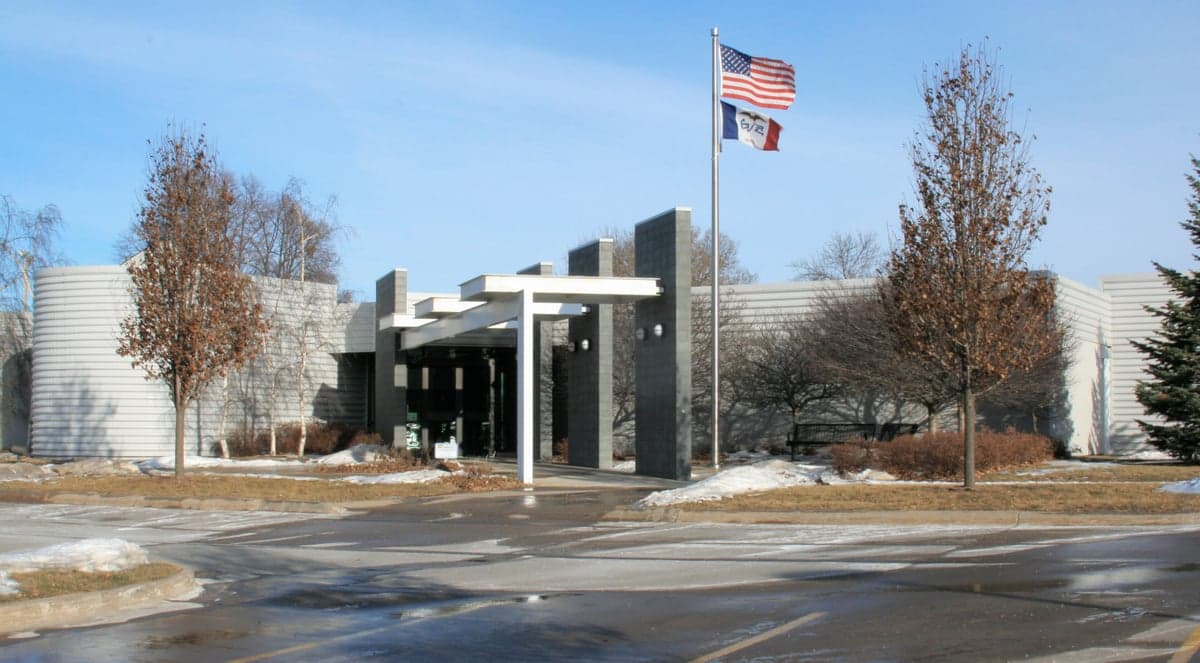
Photo: Wikipedia
Political ClimatePolitical Climate in Ankeny, IA
District shown is the primary district for this city’s centroid. Cities may span multiple districts.
Local Political AnalysisPolitical Analysis of Ankeny, IA
Ankeny, Iowa, has long been a reliably conservative community, but like much of the Des Moines metro, it's starting to show some cracks in that foundation. The Cook PVI of R+2 tells you the district still leans Republican, but it’s a far cry from the solid red it was even a decade ago. You can feel the shift in local elections and in the conversations at the coffee shop—there's a growing tension between the old-guard, freedom-minded folks and a newer wave of residents who seem more comfortable with bigger government and progressive social policies.
How it compares
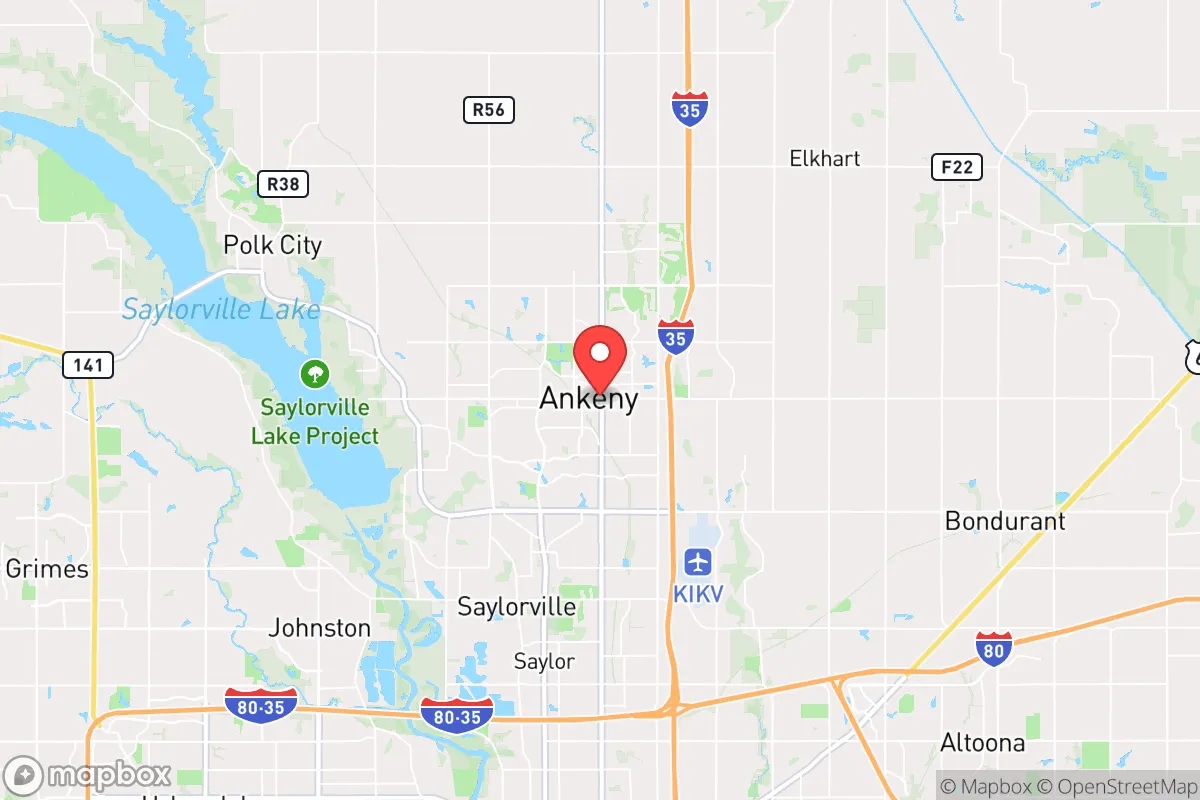
To really understand Ankeny’s political climate, you have to look at the neighbors. Drive ten minutes south into Des Moines proper, and you’re in a deep blue stronghold where the city council and county government are openly pushing progressive agendas on everything from zoning to policing. That’s the contrast that worries a lot of us. Ankeny used to be a clear alternative—a place where you could raise a family without the same level of government overreach. But now, you’ll see some city council candidates running on platforms that sound an awful lot like what you’d hear in Des Moines or even Ames. The difference is stark when you head north or west to places like Polk City or Grimes, which have held the line much more firmly on keeping taxes low and government small. Ankeny is becoming the battleground suburb, and that’s a red flag for anyone who values local control and personal freedoms.
What this means for residents
For a long-time resident, the biggest concern is the slow creep of government into everyday life. We’re seeing more zoning restrictions that make it harder to run a small business out of your home, and there’s been chatter about adopting “equity” frameworks in the school district that prioritize group outcomes over individual merit and parental rights. The school board elections have become a proxy war for these larger cultural battles. If you value the right to make decisions for your own family without a bureaucrat’s approval, you need to pay close attention to who’s running for local office. The tax burden is another issue—Ankeny’s rapid growth has led to more bond measures and levies, and while the services are nice, the cost is starting to feel like a slow-motion tax hike that chips away at your freedom to keep what you earn.
Culturally, Ankeny still has a strong sense of community and a lot of good, hardworking people who just want to be left alone. The Fourth of July parade and the high school football games are still the heart of the town. But there’s a definite shift in the air. You’ll see more “In This House We Believe” signs than you did five years ago, and the local library board has had some heated debates about what books belong on the shelves. The long-term trajectory depends on whether the conservative majority wakes up and stays engaged. If the progressive-leaning transplants continue to dominate the local conversation, Ankeny could easily slide into a place where personal freedoms are secondary to government-mandated “inclusivity.” For now, it’s still a good place to live if you value your rights, but you can’t afford to be complacent.

State Political ClimatePolitical Climate in Iowa
State Political AnalysisPolitical Environment in the State
Iowa has long been a reliably Republican state in presidential elections, voting for the GOP candidate in every cycle since 2000 except for the narrow 2020 loss of Donald Trump to Joe Biden (by about 53% to 45%). The state’s political lean is driven by a coalition of rural conservatives, evangelical Christians, and a growing number of exurban and suburban voters who have shifted rightward over the past decade. However, the state’s two largest metros—Des Moines and Iowa City—act as blue islands, with the rest of the state trending increasingly red. Over the last 10-20 years, Iowa has moved from a competitive purple state to a solidly red one, with Republicans now holding all four U.S. House seats, a trifecta in state government, and a supermajority in the state legislature.
Urban vs. rural divide
The political map of Iowa is a classic tale of urban vs. rural. The Des Moines metro area, including Polk County and its suburbs like Ankeny and West Des Moines, is the state’s Democratic stronghold. Polk County voted for Biden by about 10 points in 2020, but even here, the suburbs are shifting right. Ankeny, once a reliably blue suburb, has become a battleground, with local school board races and city council elections increasingly competitive. Iowa City, home to the University of Iowa, is the state’s most liberal enclave, consistently voting Democratic by 30+ points. In contrast, the rural counties of northwest and north-central Iowa—places like Sioux County, Lyon County, and Osceola County—are among the most Republican in the nation, often voting 80%+ for GOP candidates. The shift is most visible in the once-Democratic “Little Dixie” counties of southern Iowa, like Appanoose and Davis, which have flipped hard red over the past two decades. The state’s second-largest city, Cedar Rapids, is a microcosm of the divide: Linn County leans blue, but the surrounding rural areas are deeply red.
Policy environment
Iowa’s policy environment is aggressively conservative under the current Republican trifecta. The state has a flat income tax rate of 3.8%, down from a top rate of 8.98% in 2018, with a plan to phase down to 3.65% by 2026. Property taxes are relatively low, with a median effective rate of 1.4%, but local levies vary widely. The state’s regulatory posture is business-friendly, with no state-level minimum wage above the federal $7.25 and a right-to-work law that remains intact. Education policy has been a flashpoint: Governor Kim Reynolds signed a school choice law in 2023 creating Education Savings Accounts (ESAs) worth about $7,600 per student, allowing families to use public funds for private or homeschool expenses. This has been a major win for parental rights advocates. On healthcare, Iowa expanded Medicaid under the Affordable Care Act in 2014, but the state has since moved to a managed-care model and has not pursued a state-based exchange. Election laws tightened in 2021 with a law requiring absentee ballot requests to be made earlier, shortening the voting window, and banning private funding for elections. The state also passed a voter ID law in 2017. On social issues, Iowa banned abortion at roughly six weeks in 2023 (the “fetal heartbeat” law), which is currently blocked by court order but remains a top priority for the GOP.
Trajectory & freedom
Iowa is becoming more free in several key areas, particularly fiscal and educational freedom. The 2023 school choice law is a landmark expansion of parental rights, allowing families to opt out of failing public schools without financial penalty. The state also passed a “Stand Your Ground” law in 2021, eliminating the duty to retreat before using deadly force in self-defense. In 2022, Iowa became a permitless carry state, allowing any legal gun owner to carry a concealed firearm without a permit. On the other hand, the state has seen some concerning expansions of government overreach. In 2023, the legislature passed a law banning gender-affirming care for minors, which conservatives view as protecting children from irreversible medical decisions. However, the state also passed a law in 2022 that allows the attorney general to prosecute doctors who perform abortions, which some see as an overreach into medical privacy. The state’s tax cuts are a clear win for economic freedom, but the flat tax structure means the state is less progressive, which could impact future revenue. Overall, the trajectory is toward more personal liberty on guns, education, and taxes, but with tighter restrictions on medical and social issues.
Civil unrest & political movements
Iowa has seen relatively little civil unrest compared to coastal states, but there have been notable flashpoints. In 2020, Des Moines and Iowa City saw Black Lives Matter protests, with some property damage and clashes with police, but they were smaller than in larger cities. The state’s immigration politics are relatively quiet, as Iowa has a small foreign-born population (about 5%), but there have been tensions in towns like Storm Lake and Denison, which have seen an influx of meatpacking plant workers from Latin America. Sanctuary city policies are nonexistent; in fact, the state passed a law in 2018 requiring local law enforcement to cooperate with federal immigration authorities. Election integrity has been a hot topic since 2020, with the GOP-led legislature passing the aforementioned voting restrictions. There have been no major secession or nullification movements, but some rural counties have passed symbolic resolutions supporting the Second Amendment and opposing federal overreach. The most visible political movement in recent years has been the rise of the “Moms for Liberty” chapter in suburban Des Moines, which has been active in school board races and library book challenges. Overall, the political climate is stable but polarized, with the rural-urban divide being the main source of tension.
Projection
Over the next 5-10 years, Iowa is likely to become more Republican and more conservative. The state’s population is aging and becoming more rural, with younger, more liberal residents moving to Des Moines or out of state. In-migration from blue states like Illinois and California is happening, but these newcomers tend to be conservative-leaning retirees or remote workers seeking lower taxes and a slower pace of life. The suburbs of Des Moines, like Ankeny and Waukee, are growing fast and could become more competitive, but the overall trend is red. The state’s tax cuts will continue to attract businesses and individuals, but the flat tax could strain funding for rural schools and infrastructure. The school choice law will likely expand, potentially leading to a decline in public school enrollment in rural areas. On social issues, expect further restrictions on abortion and transgender rights, as the GOP supermajority has little incentive to moderate. The biggest wildcard is the 2026 gubernatorial election: if Reynolds leaves office, the GOP primary could shift the party further right. For a new resident, the bottom line is that Iowa will remain a safe haven for conservative values, with low taxes, strong gun rights, and parental control over education, but with a growing urban-rural cultural divide that will shape local politics.
For a conservative-leaning individual or family considering a move to Iowa, the practical takeaways are clear: you’ll find a state that respects your right to keep and bear arms, allows you to choose your child’s education, and keeps taxes low. The political climate is stable and increasingly aligned with traditional values, but you’ll need to be aware of the blue pockets in Des Moines and Iowa City, where local policies may differ. If you’re looking for a place where your voice matters and your freedoms are protected, Iowa is a solid bet—just be prepared for cold winters and a slower pace of life.
* Values derived from national, state, county, city and local statistics and may differ in a specific area. Last updated: 2026-04-24T12:23:09.000Z
Narrative content on this page is AI-generated and may contain mistakes. Verify any details that matter before acting on them.
ReloMaps may earn a commission from affiliate links at no extra cost to you.

