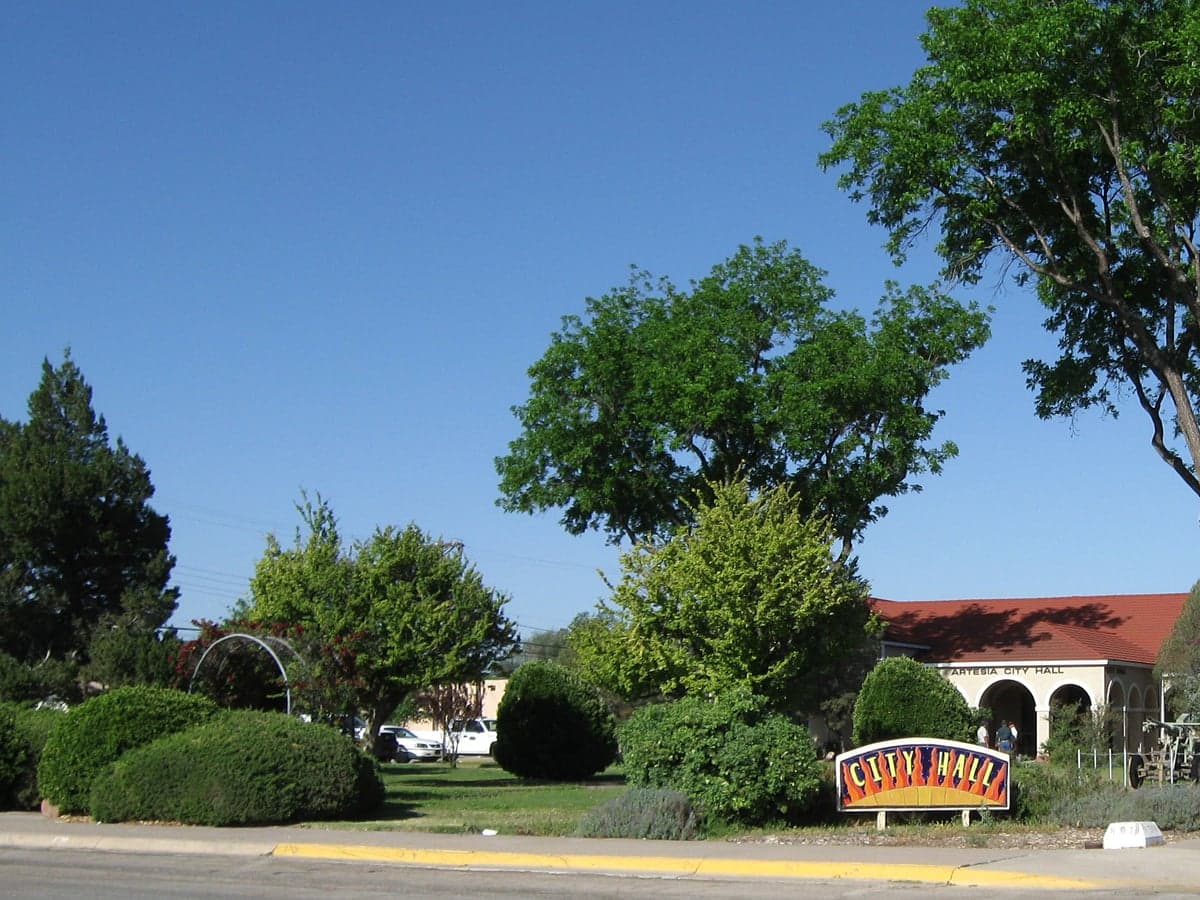
Photo: Wikipedia
Political ClimatePolitical Climate in Artesia, NM
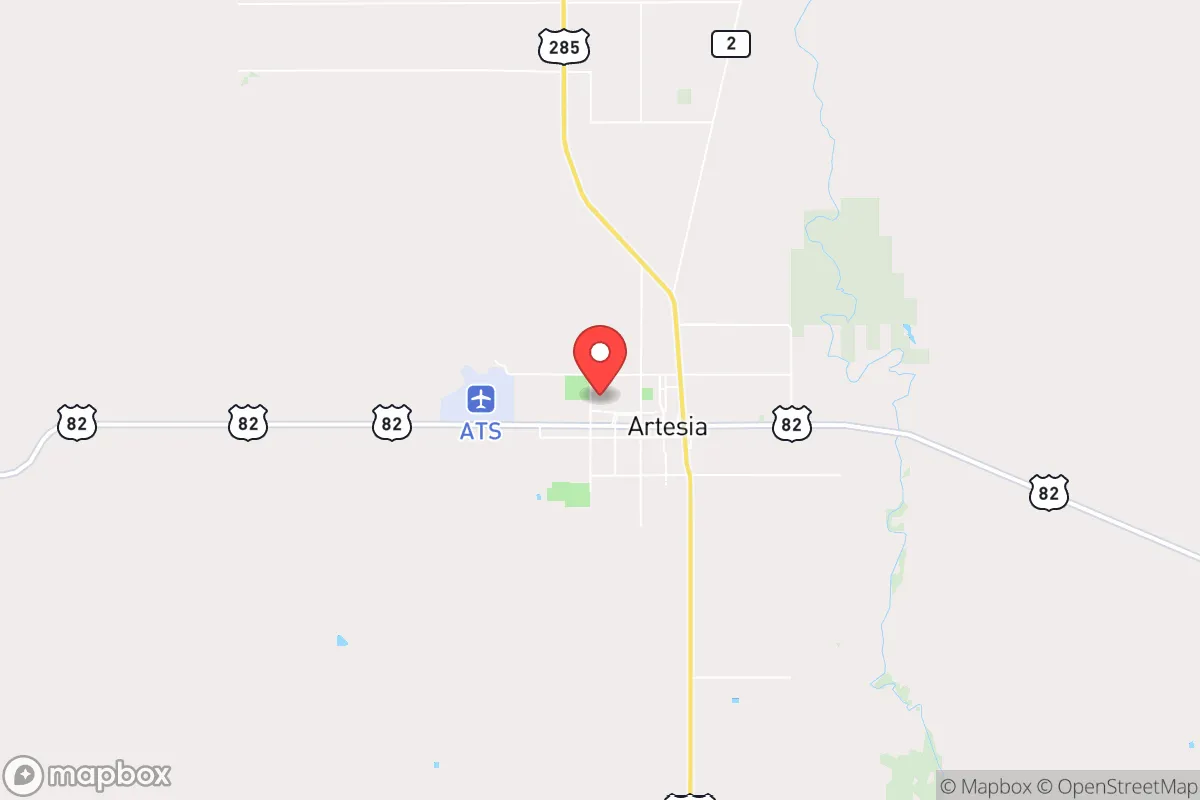
District shown is the primary district for this city’s centroid. Cities may span multiple districts.
Local Political AnalysisPolitical Analysis of Artesia, NM
Artesia, New Mexico, has long been a place where folks value their independence and don't take kindly to being told how to live their lives. While the Cook PVI rating of D+3 might suggest a slight Democratic lean for the area as a whole, that number doesn't tell the full story of a community that has historically voted more conservatively than the rest of Eddy County, especially when you look at local races and school board elections. The real political climate here is a quiet but persistent resistance to the progressive tide that's been washing over much of the state, with many long-time residents feeling like they're fighting to keep their way of life from being steamrolled by policies coming out of Santa Fe.
How it compares
To really understand Artesia, you have to look at its neighbors. Drive 30 minutes north to Roswell, and you'll find a more mixed political scene, with a noticeable progressive presence, especially around the city government and local non-profits. Head south to Carlsbad, and while it's also conservative, it's a more "establishment" kind of conservatism tied to the oil and gas industry. Artesia feels different—it's more blue-collar, more family-owned business, and more suspicious of government overreach. The contrast is stark when you compare it to places like Las Cruces or Albuquerque, where you see aggressive pushes for things like sanctuary city policies and heavy-handed zoning regulations. Here in Artesia, those ideas are met with a hard "no thanks," and people are quick to point out that they don't need a bureaucrat in Santa Fe deciding what's best for their kids' school or their family's property.
What this means for residents
For the people who live here, the political climate means you can generally expect local government to stay out of your business. The city council and county commission are dominated by folks who believe in low taxes, minimal regulations, and protecting the Second Amendment. You won't see mask mandates or business shutdowns being enforced with the same zeal you'd find in more progressive areas. However, there's a growing concern about the long-term direction. The state legislature in Santa Fe keeps passing laws that feel like they're chipping away at local control—things like stricter environmental rules that could hurt the local oil patch, or education mandates that don't align with what parents want. Many residents feel like they're living in a bubble of common sense that's slowly being surrounded by a state government that doesn't share their values. The biggest worry is that if the progressive agenda keeps gaining ground at the state level, it'll eventually override the local culture that makes Artesia a great place to raise a family.
One of the biggest cultural distinctions here is the strong sense of personal responsibility and community self-reliance. You won't find a lot of hand-wringing over national politics; instead, people focus on what they can control—their jobs, their families, and their neighbors. The local churches, the FFA program at the high school, and the volunteer fire department are the real pillars of the community, not any political party. That said, there's a palpable wariness about the future, especially with the push for "equity" policies and critical race theory in schools. Parents here are paying close attention, and they're not afraid to show up at school board meetings to voice their concerns. The bottom line is that Artesia is a place where people still believe in the American Dream—work hard, keep your nose clean, and the government should leave you alone. As long as that spirit holds, the political climate here will remain a stubborn outlier in a state that's moving in a different direction.

State Political ClimatePolitical Climate in New Mexico
State Political AnalysisPolitical Environment in the State
New Mexico has been a reliably blue state in presidential elections since 2004, but don’t let that fool you—it’s a deeply divided place politically, and the leftward drift has accelerated in the last decade. The dominant coalition is a mix of urban progressives in Albuquerque and Santa Fe, tribal governments, and a growing Hispanic electorate that leans left on social issues but is more conservative on fiscal matters. The state’s overall partisan lean is about D+6, but that masks a rural-urban chasm that’s gotten wider with every election cycle. If you’re a conservative looking at relocation, you need to understand that the state’s political center of gravity is shifting away from the old-school, pro-business Democrats who once ran things and toward a younger, more activist progressive wing.
Urban vs. rural divide
The political map of New Mexico is a tale of two worlds. Bernalillo County (Albuquerque) and Santa Fe County are the Democratic strongholds, delivering 60-70% of their votes to Democratic candidates. Albuquerque’s sprawling suburbs—like Rio Rancho and Los Lunas—are more competitive, often flipping between parties depending on the race. The rural counties tell a different story: Lea County (Hobbs) and Eddy County (Carlsbad) in the southeast are deep red, voting 75-80% Republican, driven by the oil and gas industry. The northern counties, like Taos and Mora, are solidly blue, but they’re more libertarian-leaning than the urban centers. The real battleground is the Las Cruces area (Doña Ana County), which has been trending left but still has a significant conservative Hispanic population. If you’re looking for a conservative enclave, the eastern plains and the oil patch are your best bet, but you’ll be driving hours to get to a major city.
Policy environment
New Mexico’s policy environment has shifted hard left in the last five years. The state has a progressive income tax (top rate 5.9%) and a gross receipts tax that can hit 8-9% in some cities—effectively a sales tax on services and goods. Property taxes are low, which is a plus, but the state’s regulatory posture is increasingly hostile to business. The 2021 Energy Transition Act pushed utilities toward 100% carbon-free electricity by 2045, which has raised concerns about grid reliability and energy costs. On education, the state has adopted the Common Core and expanded pre-K, but school choice is limited—no vouchers, and charter schools are capped. Healthcare is dominated by the state’s Medicaid expansion, which covers nearly half the population. Election laws are among the most permissive in the country: same-day voter registration, automatic voter registration, and no voter ID requirement. For a conservative, the lack of election integrity measures is a major red flag.
Trajectory & freedom
New Mexico is becoming less free by any measure of personal liberty. The 2021 repeal of the state’s concealed carry permit requirement (constitutional carry) was a win for gun rights, but it was immediately followed by a 2023 law banning firearms in polling places and government buildings. The state has also expanded background checks to private sales. On parental rights, the 2023 law requiring schools to provide “medically accurate” sex education—without an opt-out for parents—has sparked backlash. The 2021 Reproductive and Gender Affirming Health Care Act removed nearly all restrictions on abortion and gender transition procedures for minors, overriding parental consent in some cases. Property rights are under threat from the state’s aggressive water rights management and the 2023 “Good Neighbor” rule that restricts development near federal lands. The tax burden has increased, with the 2023 tax reform package raising the top income tax rate. If you value low taxes, parental control, and limited government, the trajectory here is concerning.
Civil unrest & political movements
New Mexico has seen its share of political flashpoints. The 2020 protests in Albuquerque over the death of George Floyd turned violent, with businesses looted and a statue of Juan de Oñate torn down. The state’s sanctuary policies are among the strongest in the nation—the 2019 law prohibits state and local law enforcement from cooperating with federal immigration authorities, which has led to tensions with border communities like Sunland Park and Deming. The 2021 “Abolish the Police” movement gained traction in Albuquerque, though it didn’t result in defunding. On the right, the 2022 “New Mexico Stands Up” rally in Roswell drew thousands protesting vaccine mandates and election integrity concerns. The state’s election integrity has been a hot-button issue: the 2020 election saw a close race in the 2nd Congressional District that was decided by just 1,300 votes, leading to ongoing litigation and distrust. A new resident will notice the political signs and bumper stickers are more polarized than in neighboring Texas or Arizona.
Projection
Over the next 5-10 years, New Mexico is likely to continue its leftward drift, driven by in-migration from California and Colorado and a growing young, progressive population in Albuquerque and Santa Fe. The oil and gas counties in the southeast will remain red, but their political influence is shrinking as the state’s economy diversifies. The 2023 redistricting map, which carved up the conservative 2nd Congressional District, is a sign of things to come. Demographic shifts favor the Democrats: the state’s Hispanic population is growing, and while older Hispanics lean conservative, younger ones are trending left. The state’s budget is heavily dependent on oil and gas revenue, so a downturn in energy prices could trigger a fiscal crisis and force tax hikes. If you move here now, expect to see more progressive policies on education, healthcare, and energy, and a continued erosion of local control. The rural-urban divide will only get sharper, and your vote will matter less in state-level races.
For a conservative considering New Mexico, the bottom line is this: you can find like-minded communities in the eastern plains and the oil patch, but you’ll be living in a state where the political culture is increasingly hostile to your values. The low property taxes and constitutional carry are positives, but they’re outweighed by the high gross receipts taxes, weak election security, and progressive social policies. If you’re a single individual or a parent, you’ll need to be proactive about your children’s education and your own healthcare choices. New Mexico is a beautiful state with a rich history, but it’s not a place where you can expect the government to stay out of your life. If you’re looking for a state that respects personal freedom and limited government, you’d be better off looking at Texas or Arizona.
* Values derived from national, state, county, city and local statistics and may differ in a specific area. Last updated: 2026-05-01T04:43:34.000Z
Narrative content on this page is AI-generated and may contain mistakes. Verify any details that matter before acting on them.
ReloMaps may earn a commission from affiliate links at no extra cost to you.

