Photo: Wikipedia
Demographics of Avondale Estates, GA
Affluence Level in Avondale Estates, GA
An upper-middle-class area. Household wealth, education levels, and homeownership run ahead of national benchmarks.
People of Avondale Estates, GA
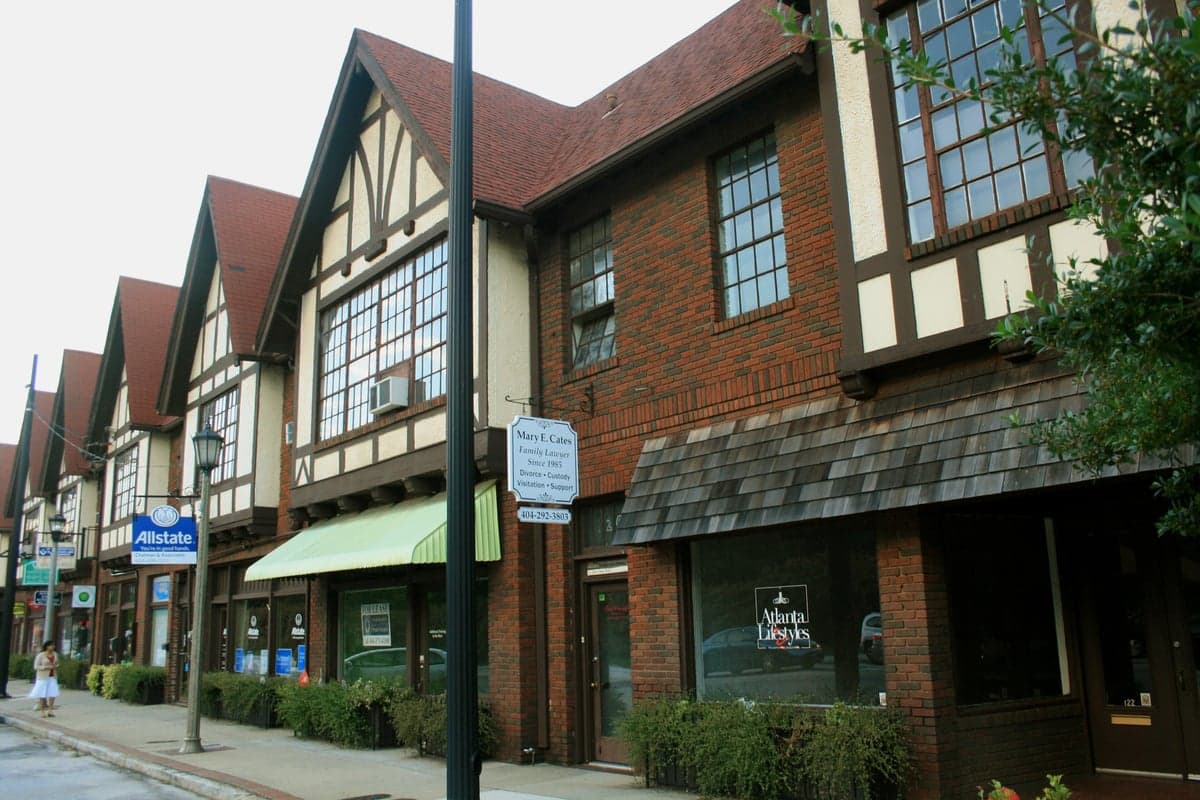
The people of Avondale Estates, Georgia, today form a small, highly educated, and predominantly white community of 3,525 residents, with a notable Black minority of 11.9% and a very small foreign-born population of just 3.6%. The city’s identity is shaped by its planned, early-20th-century origins as a Tudor-style enclave, creating a tight-knit, historic character that attracts professionals and families seeking a walkable, architecturally distinct suburb inside the I-285 perimeter. With 74.9% of adults holding a college degree, the population is among the most educated in DeKalb County, and the city’s low ethnic diversity—Hispanic residents make up only 1.6%, East/Southeast Asian 0.5%, and Indian-subcontinent 0.4%—reflects a stable, largely native-born demographic that has changed slowly compared to neighboring Atlanta suburbs.
How the city was settled and grew
Avondale Estates was founded in 1924 as one of the South’s earliest planned communities, developed by George Willis on the site of a former dairy farm. Unlike older Georgia towns, it has no colonial or 19th-century settlement history; the original population was drawn by the promise of a picturesque, English-style suburb with strict architectural covenants, marketed to white, middle-class professionals commuting to Atlanta via the new streetcar line. The first wave of residents built homes in the Old Town neighborhood, centered around the city’s iconic lake and Tudor-style commercial buildings, establishing a pattern of owner-occupied, single-family housing that persists today. By the 1940s and 1950s, the South Avondale area filled with modest ranch homes as post-World War II prosperity brought more families, but the city remained overwhelmingly white and native-born through the mid-20th century, with no significant immigrant or minority settlement until the civil rights era.
Modern era (post-1965)
The 1965 Hart-Cellar Act had minimal direct impact on Avondale Estates, as the city’s restrictive zoning and high property values limited the arrival of new immigrant groups. Instead, the major post-1965 shift was domestic: white flight from Atlanta proper brought new residents to the Wilton Drive and Berkeley Road neighborhoods during the 1970s and 1980s, reinforcing the city’s white majority. However, by the 1990s and 2000s, a gradual influx of Black professionals began, particularly in the East Lake Terrace area near the city’s eastern border, drawn by Avondale’s reputation for good schools and historic charm. Today, the Black population of 11.9% is concentrated in these eastern and southern sections, while the white population of 77.7% remains dominant across the city. The foreign-born share of 3.6% is notably low—far below DeKalb County’s average—and consists mostly of small numbers of European and Canadian expatriates, with negligible Hispanic (1.6%), East/Southeast Asian (0.5%), and Indian-subcontinent (0.4%) communities. The city has not experienced the rapid ethnic diversification seen in nearby Clarkston or Chamblee, remaining a relatively homogeneous, upper-middle-class enclave.
The future
Avondale Estates’ population is likely to remain stable and slowly homogenizing, with little change in its racial or ethnic composition over the next 10-20 years. The city’s small land area (just over one square mile), high home prices (median over $600,000), and lack of new multifamily development limit in-migration, while the aging white population is gradually being replaced by younger white and Black professionals rather than immigrant groups. The Hispanic and Asian communities are not growing; the 1.6% Hispanic share and 0.5% East/Southeast Asian share have plateaued, and the Indian-subcontinent population of 0.4% is negligible. The city is not tribalizing into distinct ethnic enclaves—its small size and historic housing stock encourage integration across the Old Town, South Avondale, and East Lake Terrace neighborhoods. The main demographic trend is a slight increase in Black residents, who may reach 15-18% by 2040, but the city will remain overwhelmingly white and native-born.
For someone moving in now, Avondale Estates is becoming a stable, high-cost, low-diversity suburb where the population is defined by education and income rather than ethnic change. The city offers a historic, walkable environment with strong schools and low crime, but those seeking a rapidly diversifying or immigrant-rich community should look to nearby Clarkston or Doraville. The population’s future is one of continuity, not transformation—a deliberate choice that preserves the city’s planned character at the cost of demographic dynamism.

* Values derived from national, state, county, city and local statistics and may differ in a specific area. Last updated: 2026-04-23T05:26:15.000Z
Narrative content on this page is AI-generated and may contain mistakes. Verify any details that matter before acting on them.
ReloMaps may earn a commission from affiliate links at no extra cost to you.

