Photo: Wikipedia
Political ClimatePolitical Climate in Avondale Estates, GA
District shown is the primary district for this city’s centroid. Cities may span multiple districts.
Local Political AnalysisPolitical Analysis of Avondale Estates, GA
Look, if you're thinking about Avondale Estates, you need to understand the political climate here, and it's not subtle. This town has a Cook PVI of D+36, meaning it's one of the most heavily Democratic-leaning areas in the entire state of Georgia. That's not just blue; that's deep blue, and it's been getting bluer. Ten years ago, you'd see a few more conservative signs in yards, but now it's almost entirely progressive, with a local government that's fully on board with the national Democratic agenda. The trajectory is clear: this place is moving further left every election cycle, and there's no sign of it slowing down.
How it compares
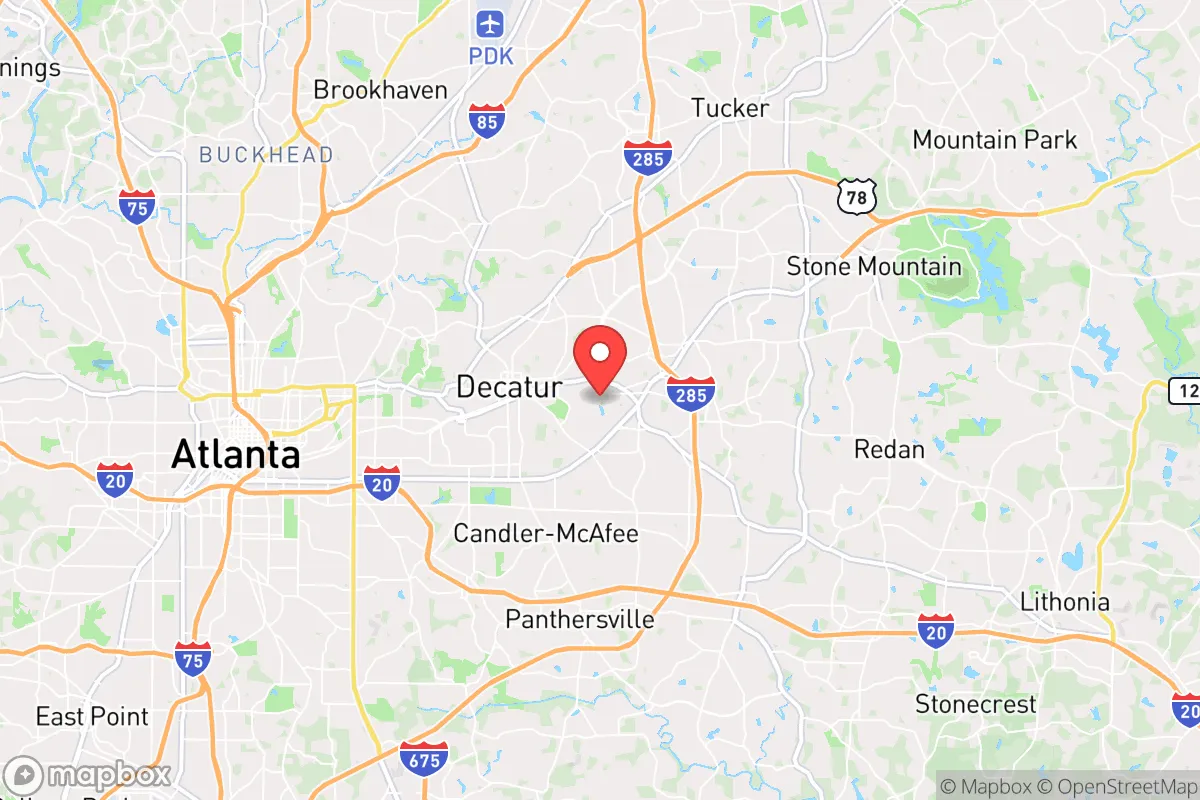
To really get the picture, you have to look at what's around Avondale Estates. Drive five minutes north to Decatur, and you'll find a similar vibe—very liberal, very activist. But head south or west, into areas like Clarkston or parts of unincorporated DeKalb County, and you'll see a more mixed, working-class population that doesn't always vote the same way. The real contrast is if you go east, towards Stone Mountain or Snellville. Those areas still have a strong conservative base, with folks who value low taxes and less government interference. Avondale Estates, though, is an island of intense progressivism in a sea of more moderate DeKalb. It's like living in a small, self-contained version of Portland, Oregon, right here in Georgia.
What this means for residents
For a conservative or even a moderate, living here means you're constantly swimming against the current. The city council and local boards are almost entirely progressive, and they've been pushing policies that feel like government overreach. We've seen aggressive zoning changes that prioritize high-density housing over single-family homes, which directly impacts property rights and neighborhood character. There's also a heavy push for "equity" initiatives in local spending, which often means higher taxes for things you might not agree with. You'll find yourself paying for programs and policies that you didn't vote for, and speaking up at city meetings can feel like shouting into a void. The local schools are good, but the curriculum and administration lean heavily into progressive social ideology, which is a real concern if you want your kids to get a balanced education.
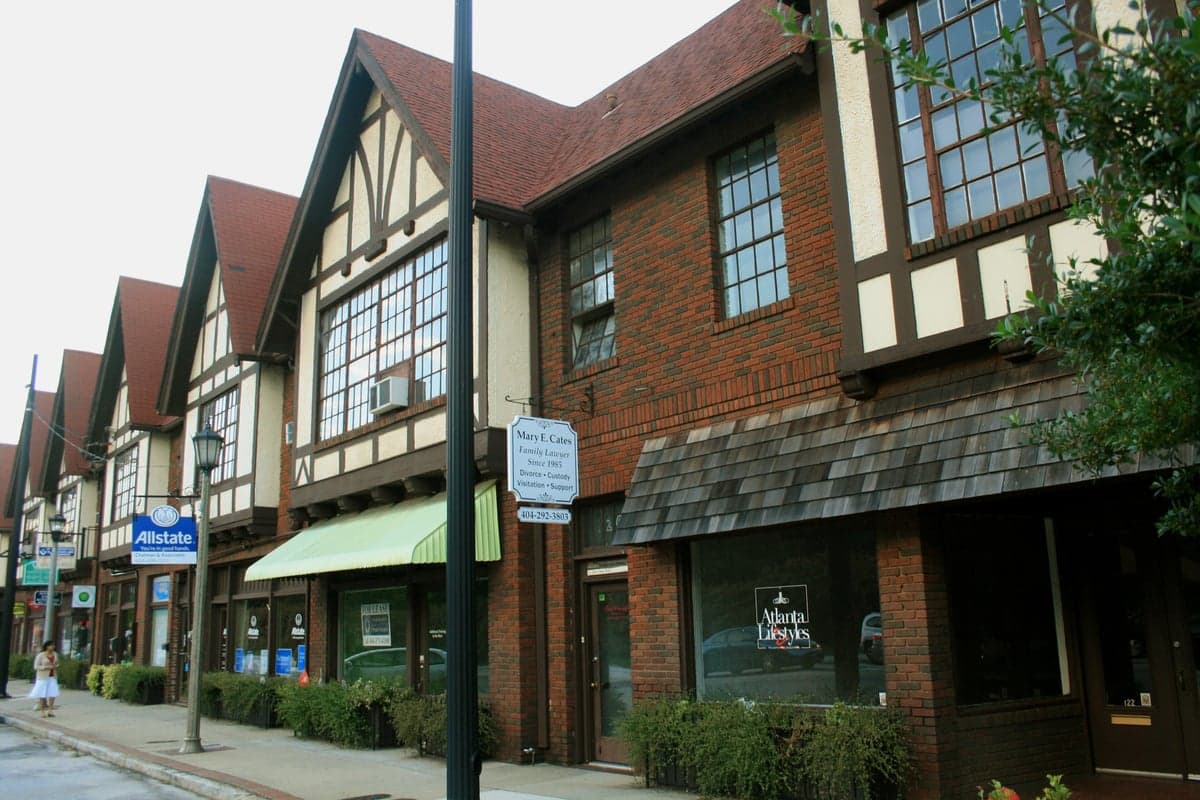
On the cultural side, Avondale Estates has a distinct identity. It was originally planned as a "city beautiful" with a Tudor-style downtown, and that charm is real. But the politics have turned that charm into a kind of bubble. You'll see more "In This House We Believe" signs than American flags. The local businesses are almost all progressive-friendly, and the annual events—like the Avondale Estates Art Walk—are heavily curated towards a left-leaning audience. If you're a conservative who values personal freedom, limited government, and the right to live your life without a city council micromanaging your choices, this town will feel increasingly uncomfortable. The long-term trend is more of the same: more regulation, higher taxes, and a culture that's openly hostile to traditional values. It's a beautiful place to look at, but the political climate is something you need to be ready for.

State Political ClimatePolitical Climate in Georgia
State Political AnalysisPolitical Environment in the State
Georgia has shifted from a reliably red state to a genuine battleground over the past two decades, but its political heart still beats conservative outside of the Atlanta metro core. The state voted for Joe Biden in 2020 by less than 12,000 votes, then re-elected Republican Governor Brian Kemp in 2022 by a comfortable 7-point margin, illustrating the split-ticket reality that defines Georgia today. For a conservative considering relocation, the key takeaway is that Georgia remains a right-leaning state overall, but the margins are razor-thin, and the political culture is increasingly contested between a growing progressive coalition in Atlanta and a deeply conservative exurban, suburban, and rural base.
Urban vs. rural divide
The political map of Georgia is a story of two Georgias. The Atlanta metro area, particularly Fulton, DeKalb, Cobb, and Gwinnett counties, drives the state's Democratic lean. Fulton County alone delivered over 300,000 votes for Biden in 2020, more than the entire Republican margin in the state's rural counties combined. Meanwhile, the rest of the state — from the conservative suburbs of Cherokee County and Forsyth County to the rural strongholds of Rome, Valdosta, and Augusta — votes overwhelmingly Republican. The 2022 governor's race showed this divide starkly: Kemp won Forsyth County by 40 points and Cherokee County by 35 points, while Stacey Abrams won Fulton by 50 points. The critical battlegrounds are the fast-growing exurban counties like Gwinnett, Henry, and Newton, which have flipped from red to purple or blue in the last decade due to in-migration from the Atlanta core. For a conservative, the safest bets are the northern exurbs and smaller cities like Athens (which is a blue island in a red sea) or Macon (still reliably red outside the city limits).
Policy environment
Georgia's state-level policy environment is broadly conservative, but with notable exceptions. The state has a flat income tax rate of 5.39%, which is set to drop to 4.99% by 2026 under legislation signed by Governor Kemp. Property taxes are relatively low, with a median effective rate of 0.87% of home value, though they vary significantly by county — Forsyth County is around 0.75%, while DeKalb County is closer to 1.2%. Georgia is a right-to-work state with a 7.25% minimum wage (tied to the federal floor), and it has no state-level rent control or price controls. Education policy is a mixed bag: the state has a robust charter school system and a school choice program (the Georgia Special Needs Scholarship and the Georgia Promise Scholarship Act of 2024), but public school funding remains a perennial issue. Healthcare policy is largely market-driven, with no state-run insurance exchange and limited Medicaid expansion — Georgia's "Pathways to Coverage" program is a work requirement-based alternative that has enrolled far fewer people than traditional expansion. Election laws have been a flashpoint: the 2021 Election Integrity Act (SB 202) tightened voter ID requirements for absentee ballots, limited drop boxes, and banned mobile voting, which conservatives see as necessary safeguards and progressives call suppression. For a conservative, the policy environment is generally favorable, but the constant legal battles over election laws and education funding create an atmosphere of uncertainty.
Trajectory & freedom
Georgia's trajectory on personal freedom is a mixed picture, with clear wins for conservatives on some fronts and concerning trends on others. On the positive side, Georgia passed constitutional carry (permitless concealed carry) in 2022, making it the 25th state to do so. The state also enacted a parental rights bill (HB 1178) in 2022 that requires schools to notify parents of any changes in a student's mental, emotional, or physical health, and it banned transgender surgeries for minors in 2023 (SB 140). Property rights remain strong, with no state-level rent control and relatively weak eminent domain powers. On the negative side, the state has seen a steady expansion of government surveillance and data collection, including the 2023 passage of a law requiring social media platforms to verify ages for minors. The biggest freedom concern for conservatives is the ongoing erosion of local control: the state legislature has repeatedly preempted local ordinances on everything from short-term rentals to tree ordinances, which some see as protecting property rights and others as overreach. The tax burden is moderate but creeping upward, with the state's budget growing by over 30% since 2020. For a conservative, the freedom picture is net positive, but the trend lines on government size and spending are worth watching.
Civil unrest & political movements
Georgia has been a focal point for political activism on both sides. The 2020 election cycle saw massive protests in Atlanta following the murder of George Floyd, with some turning violent and leading to property damage in the city's downtown and Buckhead neighborhoods. The "Stop Cop City" movement, which opposes the construction of a police training facility in DeKalb County, has generated sustained protests and legal battles, including a 2023 indictment of activists under the state's RICO statute. On the right, the Georgia Republican Party has been fractured between establishment conservatives (Kemp) and more populist, Trump-aligned factions, with the 2022 primary battles between Kemp and David Perdue being a prime example. Immigration politics are a live issue: Georgia has no sanctuary city policies, and the state passed a strict anti-sanctuary law (HB 1105) in 2024 that allows local law enforcement to cooperate with ICE. Election integrity remains a hot-button issue, with ongoing lawsuits over absentee ballot deadlines and voter roll maintenance. For a new resident, the most visible flashpoint is likely the "Cop City" controversy, which has become a national symbol of the left's anti-police activism. The overall atmosphere is one of heightened political tension, but outside of Atlanta, daily life is largely unaffected by these movements.
Projection
Over the next 5-10 years, Georgia is likely to become more competitive at the statewide level, but the conservative base in the exurbs and rural areas is not going anywhere. The key demographic driver is in-migration: Georgia added over 1.2 million residents between 2010 and 2020, with the fastest growth in the northern exurbs like Forsyth County (up 43%) and Cherokee County (up 24%). These new residents are a mix of conservatives fleeing high-tax states like California and New York, and younger, more diverse professionals drawn to Atlanta's job market. The net effect is that the Atlanta metro is becoming more Democratic, while the exurbs are becoming more Republican. The state legislature is likely to remain under Republican control for the foreseeable future, thanks to gerrymandered districts and the concentration of Democratic voters in Atlanta. However, the governor's race and Senate races will be toss-ups in every cycle. For a conservative moving in now, the expectation should be that Georgia will remain a purple state, with conservative policy wins possible but not guaranteed. The biggest wildcard is the ongoing legal battles over election laws and redistricting, which could shift the balance of power in the state legislature.
For a conservative considering a move to Georgia, the bottom line is this: you can find a community that matches your values, especially in the northern exurbs and smaller cities, but you will be living in a state that is politically contested at the highest levels. The tax and regulatory environment is favorable, the gun laws are strong, and the school choice options are expanding. But you will also be living in a state where the dominant media and cultural institutions are increasingly progressive, and where the political future is uncertain. If you value low taxes, strong property rights, and a relatively free market, Georgia is a solid choice. If you want a state where conservative values are deeply entrenched and unlikely to change, you might look further south or west. Georgia is a battleground, and that means both opportunity and risk for a conservative family.
* Values derived from national, state, county, city and local statistics and may differ in a specific area. Last updated: 2026-04-23T05:26:15.000Z
Narrative content on this page is AI-generated and may contain mistakes. Verify any details that matter before acting on them.
ReloMaps may earn a commission from affiliate links at no extra cost to you.

