
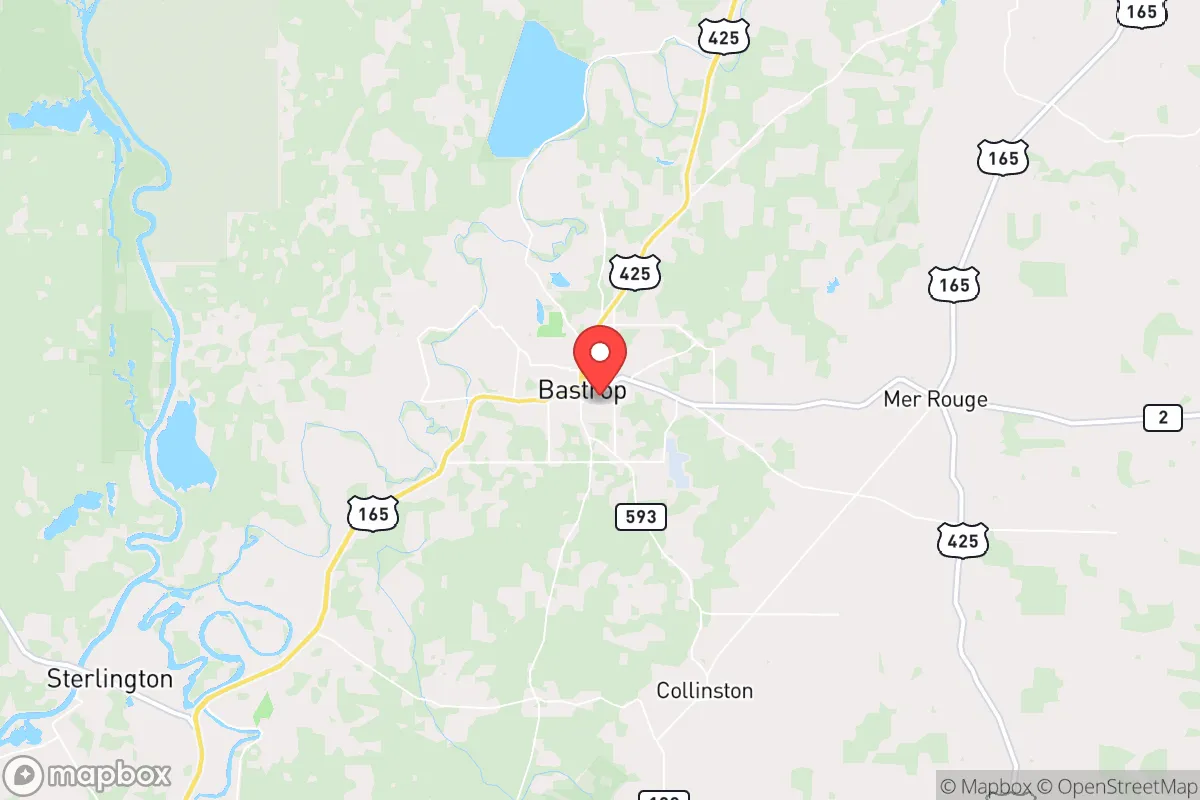
Photo by Galen Crout on Unsplash
Quality of Life in Bastrop, LA
A high quality of life with strong walkability, manageable living costs, healthy neighborhood signals, and solid amenity access.
What does Quality of Life tell us?
Quality of Life blends cost of living, nearby amenities, socioeconomic signals, and neighborhood character. City-level scores represent the whole municipality; individual neighborhoods can differ.
What does this tell us?
Quality of Life blends cost of living, nearby amenities, socioeconomic signals, and neighborhood character. City-level scores represent the whole municipality; individual neighborhoods can differ.
Cost of Living
45% below national average
The Real Cost of Living in Bastrop, LA for 2026
| Tier | Individual | Family (4) |
|---|---|---|
| Survival | $13k | $25k |
| Comfortable | $21k | $30k |
| Luxury | $54k+ | $84k+ |
| Elite (Top 5%) | $71k+ | $110k+ |
99%
The Area Signal
A metric tracking the socioeconomic signals of the area.
Hobbies
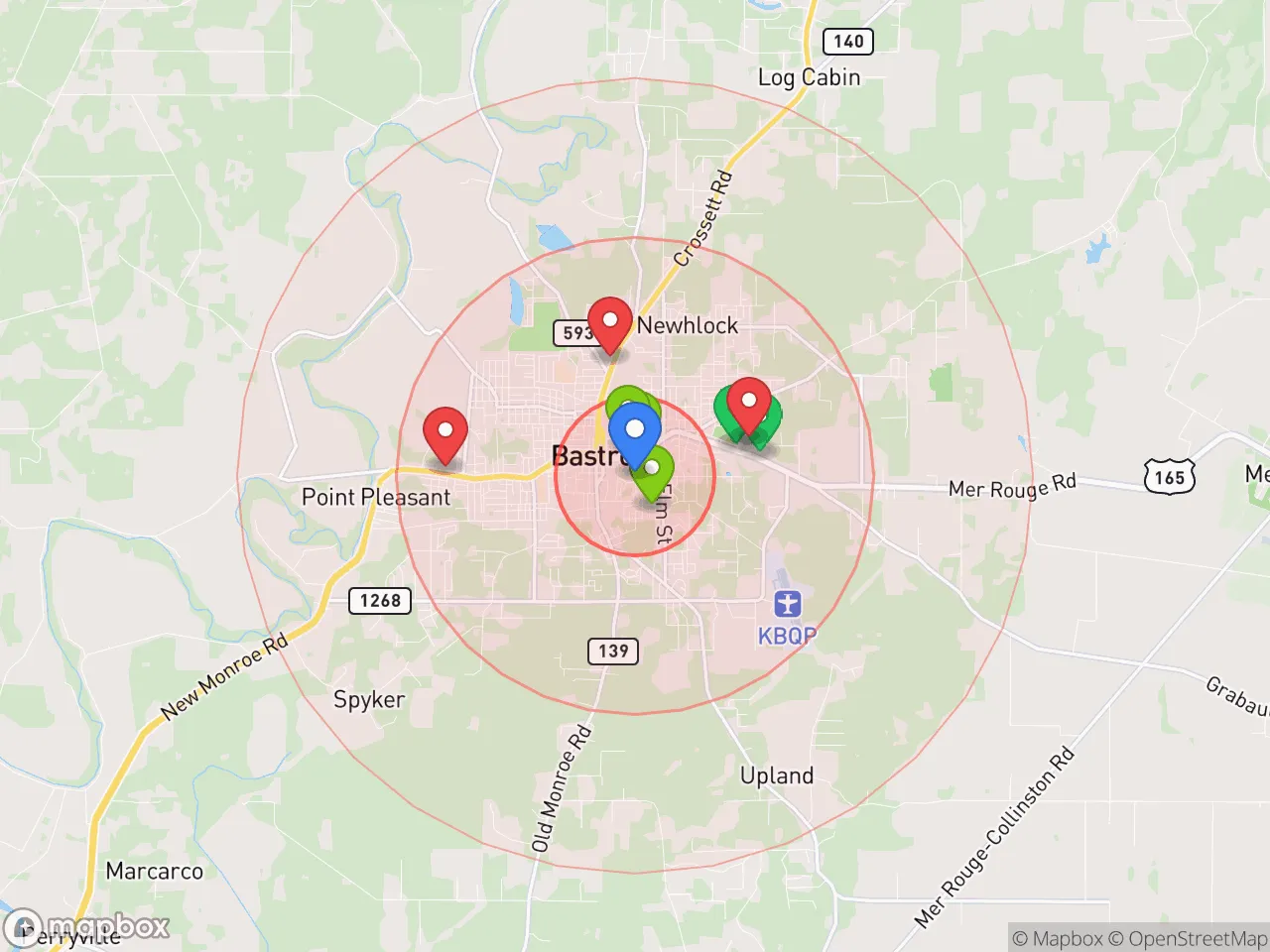
Explore the areaGroceries
2 within 10 miles
Gas
2 within 10 miles
Hospital
3 within 20 miles
Airport
IAH — George Bush Intercontinental
Post Office
USPS — Bastrop, LA
Critical Amenities
Quality-of-Life Analysis
Bastrop, Louisiana, presents a notably affordable quality of life centered on a quiet, family-oriented community in Morehouse Parish. With a cost of living index of 55—well below the national average of 100—the area attracts retirees, young families, and workers in agriculture, manufacturing, and regional healthcare who prioritize low expenses and a slower pace over urban amenities. The population is predominantly long-term residents, creating a tight-knit social fabric where local events and church communities play a central role.
Cost of living, housing, and how Bastrop compares to Monroe
Bastrop’s affordability is its defining economic feature. The median home value sits at $85,400, a fraction of the national median and roughly 40% lower than nearby Monroe’s median of around $140,000. Median rent is $828, making it one of the most budget-friendly rental markets in northeastern Louisiana. For context, a household earning the local median income of approximately $35,000 can comfortably afford a mortgage on a typical home here, whereas in Monroe the same income would require a stricter budget. The average commute of 23.7 minutes is slightly shorter than the national average of 26 minutes, and most residents drive to jobs in Bastrop itself, Monroe (about 25 minutes west), or regional employers like the Georgia-Pacific paper mill in nearby Crossett, Arkansas. Property taxes are low—Louisiana’s effective rate is roughly 0.55% of home value—and no state income tax on Social Security benefits further stretches retirement dollars.
Local amenities, schools, and what daily life feels like
Daily life in Bastrop revolves around a compact downtown with a historic courthouse square, local diners, and a handful of retail stores. For groceries and major shopping, residents drive 20–25 minutes to Monroe, which offers Walmart, Target, and regional malls. The Morehouse Parish School System operates several elementary and middle schools, plus Bastrop High School (enrollment ~600), with an overall student-teacher ratio near 15:1. For higher education, the University of Louisiana at Monroe is a 25-minute commute. Outdoor recreation centers on Chemin-A-Haut State Park (10 miles north), a 503-acre park on Bayou Bartholomew with fishing, hiking, and camping. The Bastrop City Park includes walking trails, sports fields, and a community pool. Healthcare needs are served by Morehouse General Hospital, a 60-bed critical access facility, with more specialized care available at St. Francis Medical Center in Monroe. The rhythm is slow: most businesses close by 6 p.m., and weekend social life centers on church gatherings, high school football games, and family cookouts.
Bastrop is best suited for those who value extreme affordability, a low-stress daily routine, and strong community ties over career diversity or urban nightlife. Retirees on fixed incomes, remote workers with stable internet (fiber is available in parts of town), and families seeking a safe, inexpensive place to raise children will find the most to appreciate. Professionals in specialized fields—tech, finance, advanced manufacturing—may need to commute to Monroe or accept limited local opportunities. For anyone prioritizing a low cost of living and a quiet, neighborly atmosphere, Bastrop delivers reliably.

Crime in Bastrop, LA
Significantly higher crime rates than 81% of comparable U.S. locations.
Violent CrimeViolent Crime Analysis
Property CrimeProperty Crime Analysis
Crime Analysis
Bastrop, Louisiana, faces a serious public safety challenge, with crime rates that significantly exceed both state and national averages. The city's violent crime rate of 1,039.1 incidents per 100,000 residents is roughly three times the national average, while its property crime rate of 4,887 per 100,000 is more than double the U.S. figure. These statistics place Bastrop among the higher-risk small cities in the state, a reality shaped by its proximity to the Monroe metropolitan area and broader regional socioeconomic pressures.
Crime in context
To understand Bastrop's safety profile, it is essential to compare its numbers to benchmarks. The national violent crime rate in 2024 was approximately 380 per 100,000, while Louisiana's statewide rate hovered around 540 per 100,000. Bastrop's 1,039.1 figure is nearly double the state average and nearly triple the national one. Property crime tells a similar story: the national rate is roughly 2,200 per 100,000, and Louisiana's is about 3,000. Bastrop's 4,887 rate is 60% higher than the state average. These disparities are not random; they reflect concentrated disadvantage, limited economic opportunity, and, critically, the influence of the local justice system. As a small city within a larger metro area, Bastrop is subject to the policies of Morehouse Parish's elected officials. When district attorneys and judges adopt progressive, offender-focused ideologies—prioritizing rehabilitation over accountability and reducing sentences—the result is a revolving door that puts more criminals back on the street, directly undermining public safety and victim justice.
What residents experience
For those living in Bastrop, the high crime rates translate into tangible daily concerns. Violent offenses—including aggravated assault, robbery, and homicide—are not abstract statistics; they are events that shape neighborhood routines and business operations. Property crimes like burglary, theft, and motor vehicle theft are pervasive, with residents often reporting stolen tools, vehicles, and home break-ins. The combination of high violent and property crime creates a climate where vigilance is constant. Local law enforcement, while dedicated, is often stretched thin, and the progressive judicial philosophy in the parish means that even when arrests are made, swift and certain consequences are not guaranteed. This erodes trust in the system and leaves residents feeling that the justice system is more concerned with offender outcomes than with protecting the community.
Neighborhood-level variation does exist within Bastrop. Areas closer to the downtown core and along major thoroughfares like US-165 tend to see higher concentrations of reported incidents, while some outlying residential streets may experience lower rates. However, the overall crime density is high enough that no part of the city is insulated from risk. Prospective residents should research specific blocks, speak with local police, and consider that the parish-wide judicial environment means that even lower-crime pockets are affected by the broader failure to keep repeat offenders off the streets.
* Values derived from national, state, county, city and local statistics and may differ in a specific area. Last updated: 2026-05-01T05:15:00.000Z
Narrative content on this page is AI-generated and may contain mistakes. Verify any details that matter before acting on them.
ReloMaps may earn a commission from affiliate links at no extra cost to you.

