
Photo by Galen Crout on Unsplash
Political ClimatePolitical Climate in Bastrop, LA
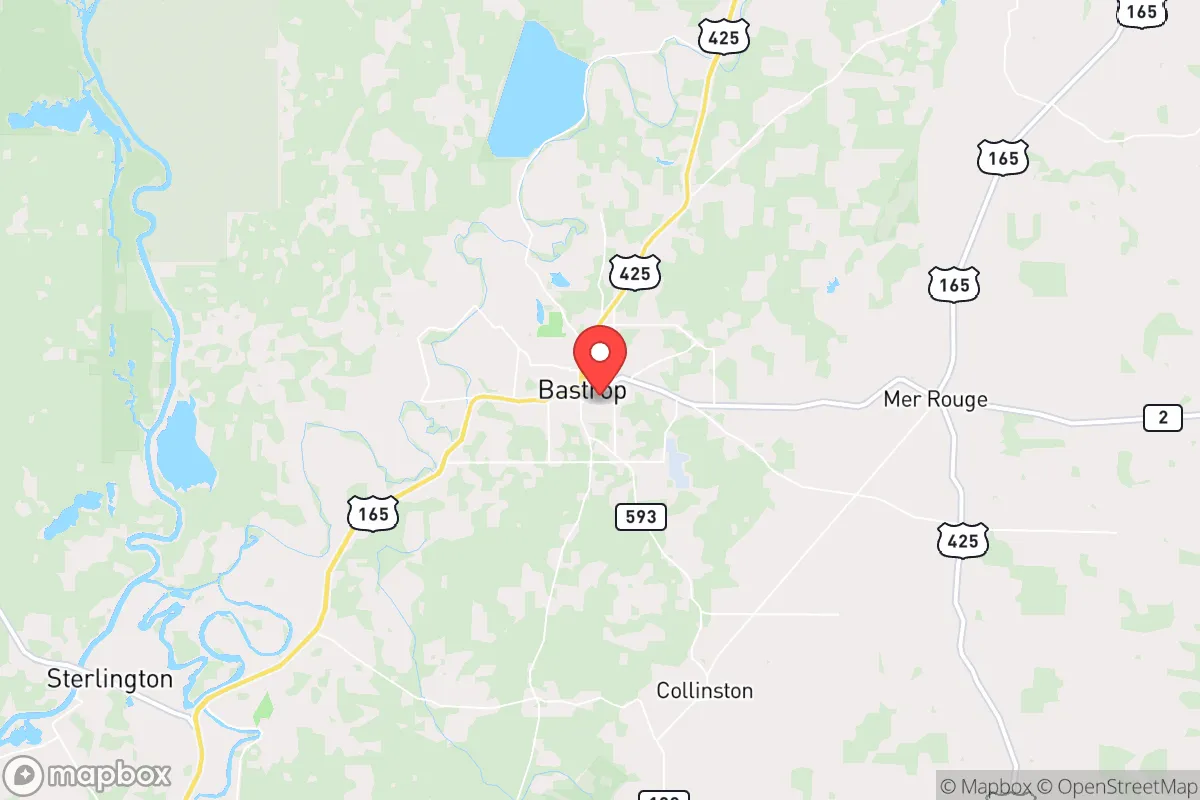
District shown is the primary district for this city’s centroid. Cities may span multiple districts.
Local Political AnalysisPolitical Analysis of Bastrop, LA
Bastrop, Louisiana, sits deep in the heart of the state’s 5th Congressional District, and if you’re looking at the political map, it’s about as reliably conservative as it gets. The Cook PVI clocks in at R+18, meaning this area votes nearly 20 points more Republican than the national average, and that’s not just a number—it’s a way of life. Over the last decade, the shift has been subtle but steady: while the rest of the country has seen some suburbs drift left, Bastrop has held firm, with local elections and presidential races alike consistently favoring candidates who prioritize limited government, gun rights, and local control. If anything, the trajectory here is a slow, deliberate pushback against what many see as federal overreach, with voters increasingly skeptical of mandates and top-down policies that don’t account for rural realities.
How it compares
Drive 20 miles west to Monroe, and you’ll find a slightly more mixed political landscape—Ouachita Parish still leans red, but Monroe itself has pockets of progressive influence, especially around the university and downtown areas. Head south to the Ruston area, and you’ll see a similar dynamic: Lincoln Parish is more purple, with Louisiana Tech bringing in younger, more liberal voters. Bastrop, by contrast, is surrounded by small towns like Mer Rouge and Oak Ridge that share its deep-red lean, creating a kind of conservative bubble. The contrast is starkest when you look at state legislative races: Bastrop’s representatives consistently vote against tax hikes, new gun restrictions, and expansions of government healthcare programs, while Monroe’s delegation sometimes splits on those same issues. For a longtime resident, that difference feels like a lifeline—a reminder that not every corner of Louisiana has bought into the idea that more government is the answer.
What this means for residents
For the people living here, the political climate translates directly into daily life. You won’t see the kind of zoning battles or business regulations that choke small towns in blue states—Bastrop’s local government tends to take a hands-off approach, trusting residents and business owners to make their own decisions. Property taxes stay low, and there’s little appetite for new ordinances that tell you what you can do with your land or your home. That said, the downside is that the area can feel isolated from state and federal resources—some residents grumble that Baton Rouge and Washington forget about rural parishes like Morehouse unless there’s an election coming up. The real concern, though, is the creeping influence of progressive ideology through school curricula and federal funding strings. More and more, locals are watching school board meetings and parish council votes, worried that the next round of state mandates might try to override the values that have held this community together for generations.
Culturally, Bastrop still holds onto a few distinctions that set it apart from even its conservative neighbors. There’s a strong tradition of church involvement in local politics, with pastors often weighing in on issues like abortion and religious freedom. You’ll also find a deep skepticism of national media narratives—people here trust their neighbors and local news far more than cable pundits. The policy fights that matter most are the ones that hit close to home: Second Amendment sanctuary resolutions, opposition to state-level vaccine mandates, and a general resistance to any plan that looks like it came from a D.C. think tank. Looking ahead, the long-term trajectory depends on whether Bastrop can hold the line as Louisiana’s population shifts toward its cities. If the state keeps trending blue in urban centers, rural strongholds like Bastrop will have to fight harder to keep their way of life intact—but for now, the conservative foundation here is as solid as the red clay dirt that surrounds it.

State Political ClimatePolitical Climate in Louisiana
State Political AnalysisPolitical Environment in the State
Louisiana has long been a reliably Republican state at the presidential level, voting for the GOP candidate in every election since 2000, but it’s a deep shade of red with a stubborn blue undercurrent. The state’s partisan lean is driven by a coalition of conservative white voters in the northern and rural parishes, combined with a significant, though shrinking, Democratic base anchored by Black voters in New Orleans and Baton Rouge. Over the last 10-20 years, the trajectory has been a slow but steady rightward shift, as suburban and exurban areas around major cities have flipped from purple to solid red, while the rural parishes have only grown more conservative.
Urban vs. rural divide
The political map of Louisiana is a study in stark contrasts. The state’s two major metros, New Orleans and Baton Rouge, are the primary Democratic strongholds. Orleans Parish (New Orleans) routinely delivers 80%+ of its vote to Democratic candidates, powered by a large Black population and a smaller but vocal progressive white cohort. East Baton Rouge Parish is more competitive but still leans blue, especially in the city proper. In contrast, the rest of the state is overwhelmingly red. The northern half, anchored by Shreveport and Monroe, is deeply conservative, with parishes like Bossier and Ouachita routinely voting +30 to +40 points Republican. The southwestern oil-and-gas hub of Lafayette is a conservative stronghold, though its growing university population has introduced a small but noticeable libertarian-leaning streak. The most dramatic shift has been in the suburban parishes surrounding New Orleans—St. Tammany and Livingston—which have gone from swing areas to deep red, with St. Tammany now voting +25 to +30 points Republican. The rural Cajun parishes like Acadia and Vermilion are reliably red, but they’re also culturally distinct, often prioritizing local autonomy over national party loyalty.
Policy environment
Louisiana’s policy environment is a mixed bag for a conservative. On the plus side, the state has no personal property tax and a relatively low corporate tax rate, recently cut from 8% to 7.5% under Governor Jeff Landry. The regulatory posture is generally business-friendly, especially for the oil and gas industry, which enjoys significant exemptions and a light touch from state agencies. However, the state’s tax burden is still high due to a regressive sales tax structure—the average combined state and local rate is over 9.5%, one of the highest in the nation. Education policy is a bright spot: Louisiana has a robust school choice program, including the Louisiana Scholarship Program and a growing charter school sector, particularly in New Orleans. On the healthcare front, the state expanded Medicaid under the Affordable Care Act in 2016, a decision that many conservatives view as a government overreach that has ballooned the state budget. Election laws are solidly conservative: voter ID is required, and the state has no-excuse absentee voting but has resisted the widespread mail-in voting seen in other states. The recent passage of a constitutional amendment requiring a two-thirds supermajority in the legislature to create new state taxes is a significant win for fiscal conservatives.
Trajectory & freedom
Louisiana is on a clear trajectory toward more personal freedom, particularly in the areas of gun rights, parental rights, and medical autonomy. In 2024, Governor Landry signed a permitless carry law, making Louisiana the 28th state to allow concealed carry without a permit—a major expansion of Second Amendment rights. The same year saw the passage of the “Parents’ Bill of Rights,” which requires schools to notify parents of any curriculum involving sexuality or gender identity and prohibits school employees from withholding information about a child’s mental or physical health. On the medical front, the state has banned gender-affirming care for minors and restricted abortion to the point of near-total prohibition, with no exceptions for rape or incest. Property rights are generally strong, though the state’s notoriously high flood insurance rates and the growing influence of coastal restoration regulations are creating new burdens for landowners. The biggest red flag for freedom-minded residents is the state’s high incarceration rate and the legacy of the “Louisiana Purchase”—the state’s unique civil law system, which can make property and business disputes more complex than in common-law states.
Civil unrest & political movements
Louisiana has a history of political flashpoints, but recent years have been relatively quiet compared to states like Oregon or Texas. The most visible unrest in the last decade was the 2016 Baton Rouge protests following the shooting of Alton Sterling, which saw significant property damage and a heavy police presence. More recently, the 2020 George Floyd protests in New Orleans and Baton Rouge were large but largely peaceful. On the right, the “Cajun Navy” has become a powerful grassroots movement, organizing disaster relief and political activism around property rights and coastal restoration. Immigration politics are less heated here than in border states, but the influx of migrants into New Orleans has sparked local debates about sanctuary policies—the city has a “sanctuary” ordinance limiting cooperation with ICE, which has drawn sharp criticism from state leaders. Election integrity has been a hot topic since 2020, with the state legislature passing a series of laws to tighten ballot security, including banning private funding of elections and requiring signature verification for absentee ballots. The most visible political movement is the growing influence of the Louisiana Family Forum, a conservative Christian group that has successfully pushed for the parental rights and anti-trans legislation.
Projection
Over the next 5-10 years, Louisiana is likely to become more conservative, not less. The demographic trends favor the GOP: the white, rural, and suburban populations that vote Republican are growing faster than the urban Black population, which is slowly declining due to out-migration to Texas and Georgia. The in-migration from other states is small but tilts conservative, with retirees and remote workers from California and New York moving to places like Covington and Mandeville in St. Tammany Parish. The biggest wildcard is the state’s economy: if the oil and gas industry continues to face federal headwinds, the state could see a budget crisis that forces tax increases, which would erode the current pro-freedom momentum. However, the political leadership under Landry is aggressively pushing for further deregulation and tax cuts, and the legislature is firmly in GOP hands. A new resident moving in now should expect to find a state that is culturally conservative, with strong protections for gun rights and parental authority, but with a tax structure that still needs work and a healthcare system that is heavily dependent on federal dollars.
For a conservative individual or family considering a move, Louisiana offers a genuine red-state environment with a unique cultural flavor. You’ll find strong Second Amendment protections, a growing school choice system, and a state government that is actively pushing back against federal overreach. The trade-offs are a high sales tax, a complex legal system, and the constant threat of hurricanes and flooding. If you’re looking for a place where your values are reflected in the law and your neighbors share your worldview, Louisiana is a solid bet—just make sure you’re in a red parish like St. Tammany or Livingston, not in Orleans or East Baton Rouge, where the politics can feel like a different country.
* Values derived from national, state, county, city and local statistics and may differ in a specific area. Last updated: 2026-05-01T05:15:00.000Z
Narrative content on this page is AI-generated and may contain mistakes. Verify any details that matter before acting on them.
ReloMaps may earn a commission from affiliate links at no extra cost to you.

