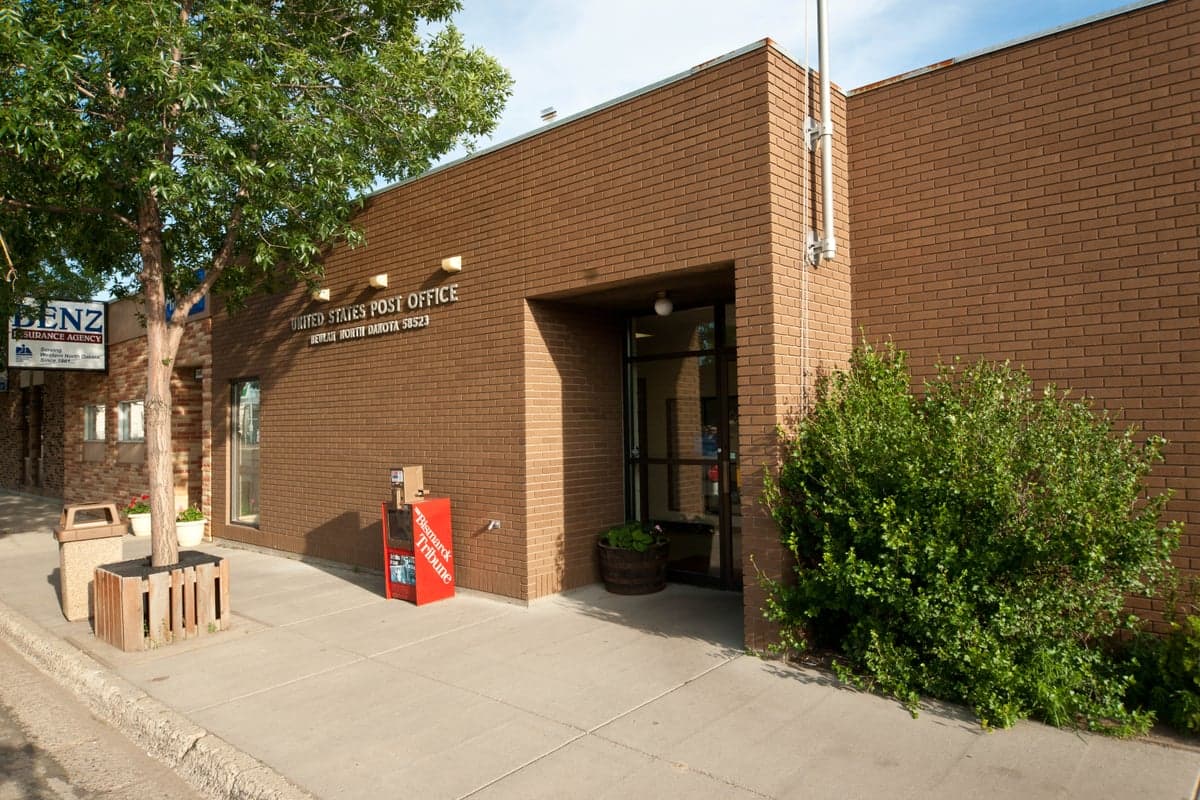
Photo: Wikipedia
Demographics of Beulah, ND
Affluence Level in Beulah, ND
A middle-class area roughly in line with national averages across income, home values, education, and employment.
People of Beulah, ND
Beulah, North Dakota, is a tight-knit community of 3,058 residents, overwhelmingly white (88.3%) and native-born, with a foreign-born population of just 0.7%. The city’s identity is rooted in its role as a service and energy hub for the surrounding agricultural and coal-mining region, giving it a practical, hardworking character. With a low college attainment rate of 19.8%, the population values trades and local industry over professional services, and the small Hispanic community (5.4%) and East/Southeast Asian residents (1.0%) represent the city’s modest diversity. Beulah remains a place where family ties and local employment anchor a stable, slow-changing demographic profile.
How the city was settled and grew
Beulah was founded in 1910 as a railroad town on the Northern Pacific Railway, drawing homesteaders of German, Norwegian, and Russian-German descent who took up farming in the surrounding Mercer County prairie. The original settlement clustered around the railroad depot and Main Street, an area now known as Old Town Beulah, where the first general stores, grain elevators, and churches were built. A second wave arrived during the 1920s and 1930s, spurred by the construction of the Beulah-Zap Dam and irrigation projects that made dryland farming more viable. These families settled in the North Side neighborhood, a grid of modest homes north of the tracks that still retains a strong Scandinavian and German character. The discovery of lignite coal in the 1950s brought a third wave of workers, many from other parts of North Dakota and Minnesota, who built homes in the South Ridge area, a slightly newer subdivision developed near the coal mines. By 1960, Beulah’s population had reached roughly 1,200, almost entirely white and native-born, with no significant immigrant communities.
Modern era (post-1965)
After the 1965 Immigration and Nationality Act, Beulah saw virtually no influx from new immigrant groups, unlike larger U.S. cities. The foreign-born share remains negligible at 0.7%, and the city’s racial composition has shifted only slightly. The Hispanic population, now 5.4%, began arriving in the 1990s, primarily as workers in the coal-fired power plants and the Dakota Gasification Company plant. These families concentrated in the West End neighborhood, a cluster of rental duplexes and mobile homes near the industrial zone. The East/Southeast Asian community (1.0%) is even smaller, consisting mostly of engineers and technicians brought in temporarily for plant maintenance projects; they have no distinct neighborhood and tend to live in the Lakeview Addition, a newer subdivision near Beulah Bay. Domestic in-migration has been minimal, with most new residents coming from within Mercer County or adjacent counties, drawn by stable energy-sector jobs. The city has not suburbanized in the traditional sense—there are no sprawling subdivisions or commuter belts—but the Prairie Heights development, built in the 2000s, attracted a handful of families seeking larger lots and newer homes, reinforcing the city’s white, middle-class core.
The future
Beulah’s population is projected to remain stable or decline slightly over the next decade, as the energy sector automates and younger residents leave for college or urban jobs. The city is not homogenizing further—it is already nearly monolithic—but it is also not tribalizing into distinct enclaves; the small Hispanic and Asian populations are dispersed and assimilating into the broader white community, with no signs of ethnic clustering. The foreign-born share is unlikely to grow, given the lack of refugee resettlement programs or immigrant-attracting industries. The next 10-20 years will likely see a gradual aging of the population, with the median age rising above the current 40.5 years, and a continued reliance on a few large employers—the coal mine, the power plant, and the gasification facility—to sustain the tax base. No new immigrant communities are expected to emerge, and the city’s demographic profile will remain overwhelmingly white and native-born.
For someone moving in now, Beulah offers a stable, predictable environment where community ties are strong and change is slow. The city is becoming an older, more settled place, with little demographic churn and few opportunities for newcomers from outside the region. It is best suited for those seeking a quiet, family-oriented life in a tight-knit, energy-dependent town, rather than for those looking for diversity or rapid growth.

* Values derived from national, state, county, city and local statistics and may differ in a specific area. Last updated: 2026-04-19T05:34:48.000Z
Narrative content on this page is AI-generated and may contain mistakes. Verify any details that matter before acting on them.
ReloMaps may earn a commission from affiliate links at no extra cost to you.

