Photo: Wikipedia
Political ClimatePolitical Climate in Beulah, ND
District shown is the primary district for this city’s centroid. Cities may span multiple districts.
Inherited from parent state — no local data available.
Local Political AnalysisPolitical Analysis of Beulah, ND
Beulah, North Dakota, is about as solidly conservative as it gets, with a Cook PVI of R+18 that puts it deep in the red column. That number isn't just a statistic—it reflects a community where traditional values, personal responsibility, and a healthy skepticism of government overreach have been the norm for generations. The political trajectory here has been remarkably stable; while you see some of the bigger cities out west, like Bismarck or even Mandan, starting to flirt with more progressive ideas, Beulah has held the line. The energy industry—coal and oil—keeps folks grounded in the reality that hard work, not government handouts, builds a life. If anything, the local sentiment has hardened a bit over the last decade, as folks watch the federal government push regulations that threaten the very jobs that keep this town alive.
How it compares
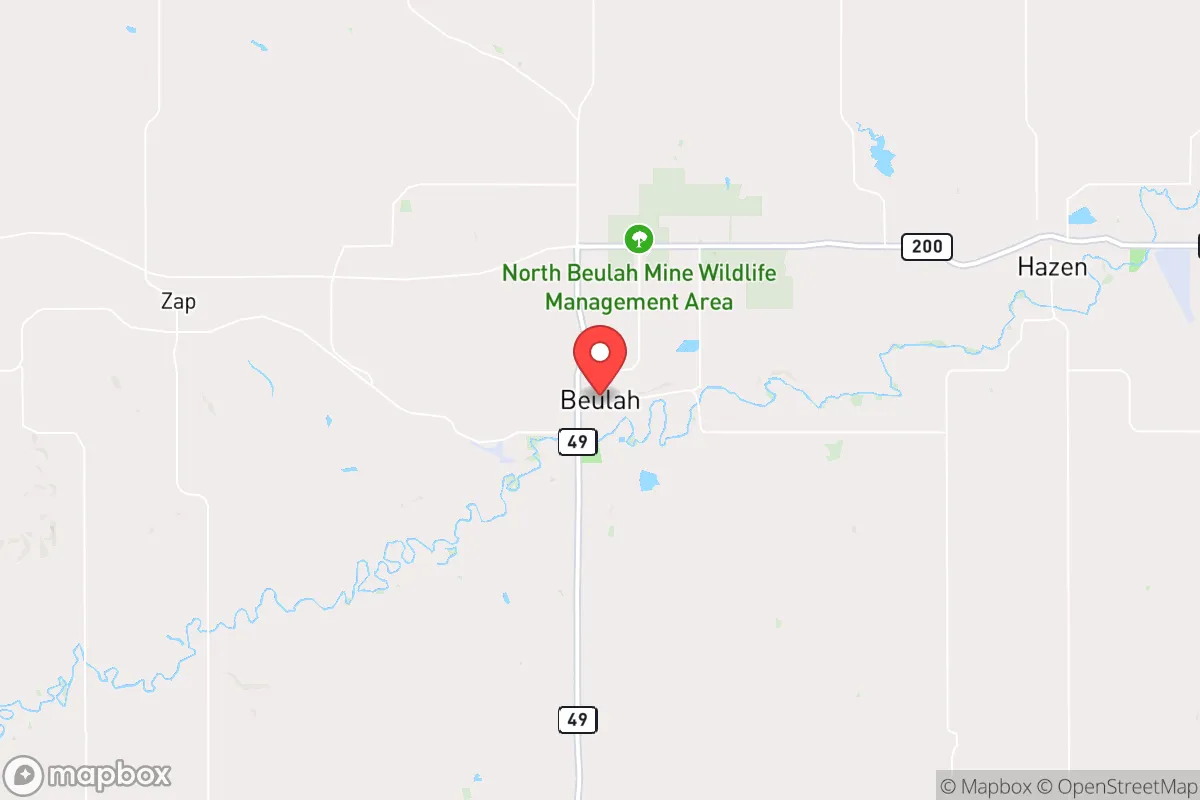
Compared to the rest of Mercer County, Beulah is the conservative anchor. Drive twenty miles east to Hazen, and you'll find a similar vibe, though Hazen has a slightly more mixed bag due to its proximity to the college and some state offices. The real contrast is with places like Fargo or Grand Forks, where the university influence and larger populations have shifted the political center leftward. Even within the western part of the state, Dickinson and Williston are reliably conservative, but they've seen an influx of out-of-state workers that sometimes brings a more libertarian-leaning, pro-business conservatism rather than the deep-rooted, community-first kind you get in Beulah. The surrounding rural areas—places like Zap or Stanton—are even more conservative, but they lack the economic base that gives Beulah its independent streak. In short, Beulah isn't just red; it's a shade of red that hasn't faded with time.
What this means for residents
For someone living here, the political climate means you can generally expect local government to stay out of your business. Zoning is minimal, taxes are low, and there's a strong presumption that you know what's best for your family and your property. The downside? If you're hoping for big government-funded projects or progressive social programs, you'll be disappointed. The school board, city council, and county commission all lean heavily conservative, so debates tend to focus on fiscal restraint and individual liberty rather than expanding public services. The real concern for long-time residents is the creeping influence of state and federal mandates—especially around energy and environmental regulations. There's a quiet worry that if the political winds shift too far left in Washington or even in Bismarck, it could choke off the coal plants and pipelines that are the lifeblood of the local economy. That's why you see strong turnout at local elections; folks here know that the fight for personal freedom starts at home.
Culturally, Beulah stands apart from the more progressive pockets of the state. There's no push for "diversity, equity, and inclusion" initiatives in the schools, and the local churches remain central to community life. The annual Coal Country Fest and the strong support for the Beulah Miners athletics are reminders that this is a place where people look out for each other without needing a government program to do it. The biggest policy distinction is the near-total absence of any kind of "sanctuary city" or pro-immigration measures—this is a community that values legal process and rule of law. Looking ahead, the challenge will be keeping that identity intact as the state's population shifts and outside pressures mount. For now, though, Beulah remains a place where the old-school values of self-reliance and limited government aren't just remembered—they're lived every day.

State Political ClimatePolitical Climate in North Dakota
State Political AnalysisPolitical Environment in the State
North Dakota is about as solidly Republican as a state gets, with a deep-red partisan lean that has only intensified over the past two decades. The state hasn’t voted for a Democratic presidential candidate since Lyndon Johnson in 1964, and in 2024, Donald Trump carried it by a staggering 20 points. The dominant coalition is a mix of rural agricultural interests, energy-sector workers from the Bakken oil patch, and a growing population of conservative-leaning transplants fleeing blue states. Over the last 10-20 years, the state has shifted even further right, driven by an influx of workers to places like Williston and Watford City for oil jobs, and a steady exodus of younger, more moderate residents from the state’s few urban centers. The result is a state where conservative values—limited government, low taxes, and individual liberty—are not just the norm but the baseline expectation.
Urban vs. rural divide
The political map of North Dakota is a textbook case of rural dominance over sparse urban pockets. The only real metro area is the Fargo-Moorhead region, which leans slightly more moderate but still votes Republican in most races—Cass County went for Trump by about 12 points in 2024. Fargo itself has a younger, more college-educated population that occasionally elects a Democrat to the state legislature, but it’s hardly a progressive stronghold. The other notable city, Bismarck, the state capital, is reliably conservative, driven by state government workers and energy industry professionals. Grand Forks, home to the University of North Dakota, is a bit of a mixed bag—the university brings in some liberal faculty and students, but the surrounding county votes heavily Republican. The real engine of the state’s red lean is the vast rural expanse: counties like McKenzie (home to Watford City) and Williams (Williston) vote 80%+ Republican, fueled by oil wealth and a strong libertarian streak. The divide isn’t really urban vs. rural in the way you see in Texas or California—it’s more like a few small blue dots in a sea of red, with no major city large enough to flip a statewide election.
Policy environment
North Dakota’s policy environment is a conservative’s dream, with a tax structure that’s among the most favorable in the nation. There’s no state income tax—a huge draw for high earners and retirees—and property taxes are relatively low, though local levies can vary. The regulatory posture is aggressively pro-business, especially in the energy sector: the state has streamlined permitting for oil and gas drilling, and there’s no state-level environmental review beyond federal requirements. Education policy is dominated by school choice, with a robust voucher program passed in 2023 that allows parents to use state funds for private or homeschool expenses. Healthcare is a mixed bag—the state expanded Medicaid under the Affordable Care Act in 2013, a move that still rankles some conservatives, but there’s no state-run insurance mandate and telehealth is deregulated. Election laws are tight: voter ID is required, same-day registration is not allowed, and mail-in voting is restricted to those with a valid excuse. The state legislature, controlled by a supermajority of Republicans, has consistently passed laws to protect gun rights (constitutional carry since 2017) and limit abortion access (a near-total ban after six weeks, passed in 2023).
Trajectory & freedom
North Dakota is trending toward more freedom, not less, especially when compared to neighboring states like Minnesota or Montana. Recent legislation has expanded personal liberty in several key areas. In 2023, the state passed a parental rights in education law that requires schools to notify parents of any curriculum involving sexuality or gender identity, and it bans classroom instruction on those topics for K-3 students. Gun rights are virtually unrestricted: constitutional carry is law, and there’s no waiting period or permit requirement for purchase. On medical autonomy, the state has resisted COVID-19 vaccine mandates—Governor Doug Burgum signed an executive order in 2021 banning vaccine passports, and the legislature codified that ban in 2023. Property rights are strong, with no statewide zoning authority and a “right to farm” law that protects agricultural operations from nuisance lawsuits. The only area where freedom has contracted is on abortion: the 2023 six-week ban is strict, but it reflects the will of the conservative majority. Taxation is also trending downward—the state cut individual income tax rates in 2023, with plans to phase out the corporate income tax entirely by 2027.
Civil unrest & political movements
Political activism in North Dakota is relatively low-key compared to coastal states, but there have been notable flashpoints. The most significant was the Dakota Access Pipeline protests at the Standing Rock Sioux Reservation in 2016-2017, which drew thousands of activists from across the country. The protests were largely opposed by local residents and law enforcement, and the state government under then-Governor Jack Dalrymple took a hard line, deploying the National Guard and passing laws to criminalize trespassing and riot participation. That episode still resonates, with some rural residents viewing it as an example of outside agitators trying to impose their will. On the right, there’s a growing “constitutional sheriff” movement in counties like Morton and Stark, where sheriffs have publicly stated they won’t enforce federal gun laws they deem unconstitutional. Immigration politics are minimal—the state has a tiny foreign-born population (about 4%), and there’s no sanctuary city policy anywhere. Election integrity is a hot-button issue: the legislature passed a law in 2021 banning ballot drop boxes and requiring all absentee ballots to be notarized, a move that drew lawsuits but was upheld in court. You won’t see large-scale protests in the streets, but the political temperature is steady and conservative.
Projection
Over the next 5-10 years, North Dakota is likely to become even more conservative, driven by demographic shifts and in-migration patterns. The oil boom in the Bakken region has brought in a wave of workers from red states like Texas and Oklahoma, who tend to vote even further right than native North Dakotans. Meanwhile, the state’s small urban centers—Fargo, Bismarck, Grand Forks—are growing slowly, but they’re not attracting the kind of progressive influx seen in places like Boise or Austin. The rural population is aging and shrinking, but the remaining residents are deeply conservative and politically engaged. The biggest wildcard is climate policy: if the federal government pushes aggressively on green energy, it could hurt the state’s oil and coal industries, potentially driving a populist backlash. But for now, the trajectory is clear: expect more tax cuts, more school choice expansion, and continued resistance to federal overreach. A new resident moving in today will find a state that’s politically stable, culturally traditional, and unlikely to shift left in any meaningful way.
For someone choosing North Dakota as a relocation destination, the bottom line is this: you’re getting a state where your tax dollars stay in your pocket, your gun rights are secure, your kids’ education is under your control, and your voice in local government actually matters. The trade-off is a harsh winter climate and limited cultural amenities, but if you value personal freedom and a community that shares your values, North Dakota delivers. Just be prepared for the cold—and for the fact that everyone you meet will probably vote the same way you do.
* Values derived from national, state, county, city and local statistics and may differ in a specific area. Last updated: 2026-04-19T05:34:48.000Z
Narrative content on this page is AI-generated and may contain mistakes. Verify any details that matter before acting on them.
ReloMaps may earn a commission from affiliate links at no extra cost to you.

