Photo: Wikipedia
Demographics of Biddeford, ME
Affluence Level in Biddeford, ME
A middle-class area roughly in line with national averages across income, home values, education, and employment.
People of Biddeford, ME
The people of Biddeford, Maine, today number 22,463, forming a predominantly white (92.3%) and older-than-average community with a distinctly working-class character rooted in its industrial past. The city is notably less diverse than the national average, with a foreign-born population of just 1.2% and a college attainment rate of 30.4%, reflecting a population that has remained largely stable in composition even as the local economy has shifted from mills to healthcare and education. Biddeford’s identity is shaped by a strong sense of local pride, a compact downtown, and a population that is slowly diversifying through small but growing Hispanic and East/Southeast Asian communities.
How the city was settled and grew
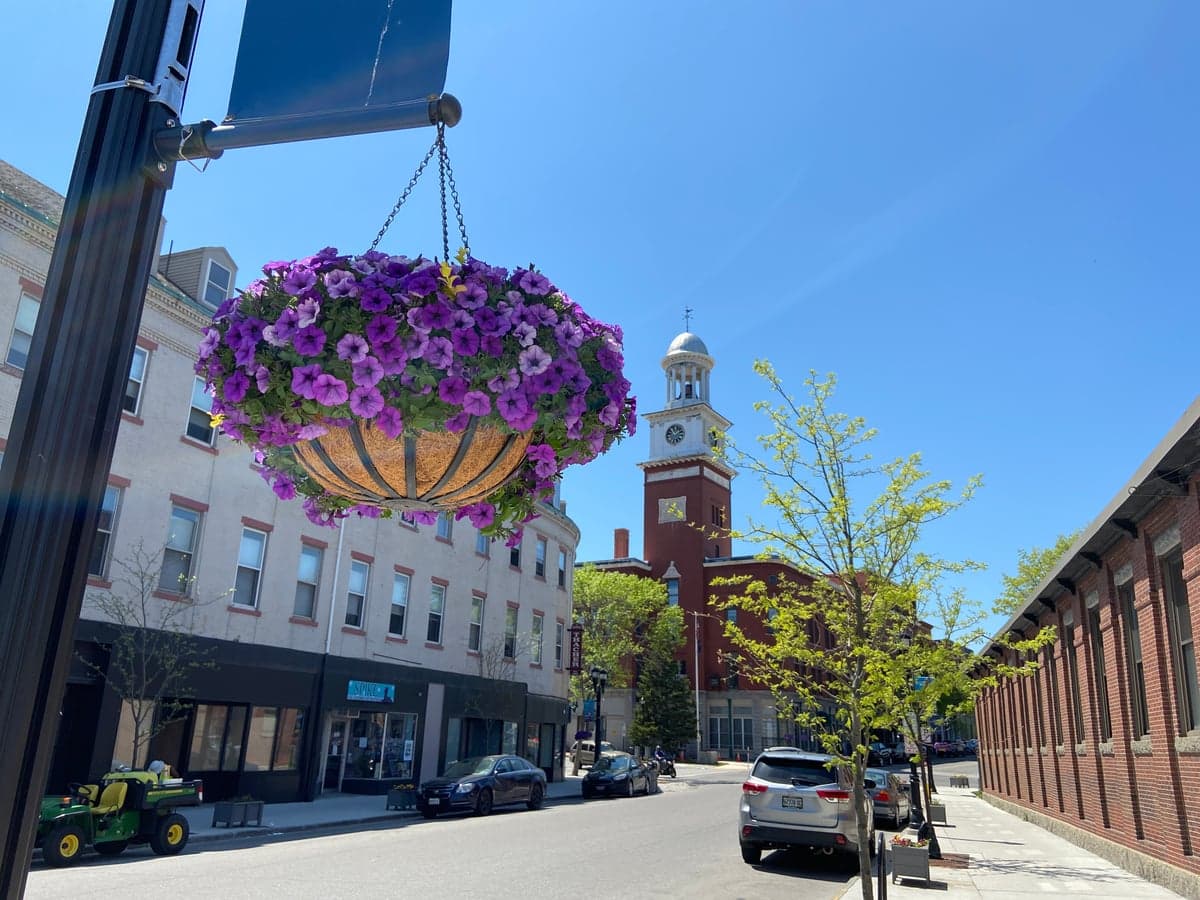
Biddeford’s original European settlers were English colonists who arrived in the 1630s, drawn by the fertile Saco River valley and the promise of land grants under the Massachusetts Bay Colony. The town was incorporated in 1653, but its population remained small and largely agrarian until the 19th century, when the river’s water power fueled a textile boom. The Pepperell Manufacturing Company and other mills along the Saco River drew waves of French-Canadian immigrants from Quebec between 1850 and 1920, who settled in the downtown mill district and the adjacent South Street neighborhood, building the dense, brick-worker housing that still defines those areas. A smaller wave of Irish immigrants arrived during the same period, concentrating in the West End near St. Joseph’s Church. By 1900, Biddeford was a majority-French-Canadian city, a demographic legacy that persists in family names, the local dialect, and the annual La Kermesse festival.
Modern era (post-1965)
After the 1965 Hart-Cellar Act, Biddeford saw virtually no new immigration from outside Europe, as the city’s declining mill economy offered few pull factors. The foreign-born share remained below 2% through the 1990s. Instead, the post-1965 story is one of domestic out-migration: younger residents left for southern Maine’s service economy or out of state, while the city’s population aged. The Lucky Corner area near the University of New England campus saw modest infill of faculty and staff, but the city’s core neighborhoods—the downtown mill district and South Street—experienced population loss and housing vacancy. Since 2000, a small but visible Hispanic community (2.5%) has formed, concentrated in the downtown area near the mills, drawn by low-cost rental housing and entry-level service jobs. The East/Southeast Asian population (1.4%) is newer, largely tied to the University of New England’s graduate programs and the healthcare sector, with households scattered across the West End and near the university. The Indian-subcontinent population (0.2%) remains negligible.
The future
Biddeford’s population is heading toward slow, modest diversification, but it is unlikely to become a majority-minority city within the next 20 years. The Hispanic and East/Southeast Asian communities are growing from a very low base, driven by healthcare and education jobs at the University of New England and Southern Maine Health Care, but the city lacks the industrial or service-sector base that attracts larger immigrant flows. The white population is aging and declining slightly through out-migration of young adults, while the small non-white groups are younger and have higher birth rates, gradually shifting the composition. The downtown mill district is seeing redevelopment into market-rate apartments, which may attract younger, college-educated newcomers but is unlikely to dramatically alter the city’s racial or ethnic makeup. The South Street and West End neighborhoods remain overwhelmingly white and French-Canadian in heritage, with little new immigration.
For someone moving in now, Biddeford offers a stable, predominantly white, working-to-middle-class community with a strong sense of place and a slowly diversifying population. The city is not becoming a melting pot or a tribalized enclave—it is gently evolving from a homogeneous Franco-American mill town into a slightly more varied, but still majority-white, small city anchored by healthcare and education. The key demographic reality is stability: Biddeford’s people are not changing rapidly, and the city remains a place where newcomers will find a familiar, traditional New England character rather than a rapidly shifting cultural landscape.

* Values derived from national, state, county, city and local statistics and may differ in a specific area. Last updated: 2026-04-19T09:22:53.000Z
Narrative content on this page is AI-generated and may contain mistakes. Verify any details that matter before acting on them.
ReloMaps may earn a commission from affiliate links at no extra cost to you.

