Photo: Wikipedia
Quality of Life in Blue Springs, MO
A high quality of life with strong walkability, manageable living costs, healthy neighborhood signals, and solid amenity access.
What does Quality of Life tell us?
Quality of Life blends cost of living, nearby amenities, socioeconomic signals, and neighborhood character. City-level scores represent the whole municipality; individual neighborhoods can differ.
What does this tell us?
Quality of Life blends cost of living, nearby amenities, socioeconomic signals, and neighborhood character. City-level scores represent the whole municipality; individual neighborhoods can differ.
Cost of Living
3% below national average
The Real Cost of Living in Blue Springs, MO for 2026
| Tier | Individual | Family (4) |
|---|---|---|
| Survival | $19k | $36k |
| Comfortable | $47k | $69k |
| Luxury | $134k+ | $207k+ |
| Elite (Top 5%) | $157k+ | $243k+ |
122%
The Area Signal
A metric tracking the socioeconomic signals of the area.
Hobbies
Explore the areaGroceries
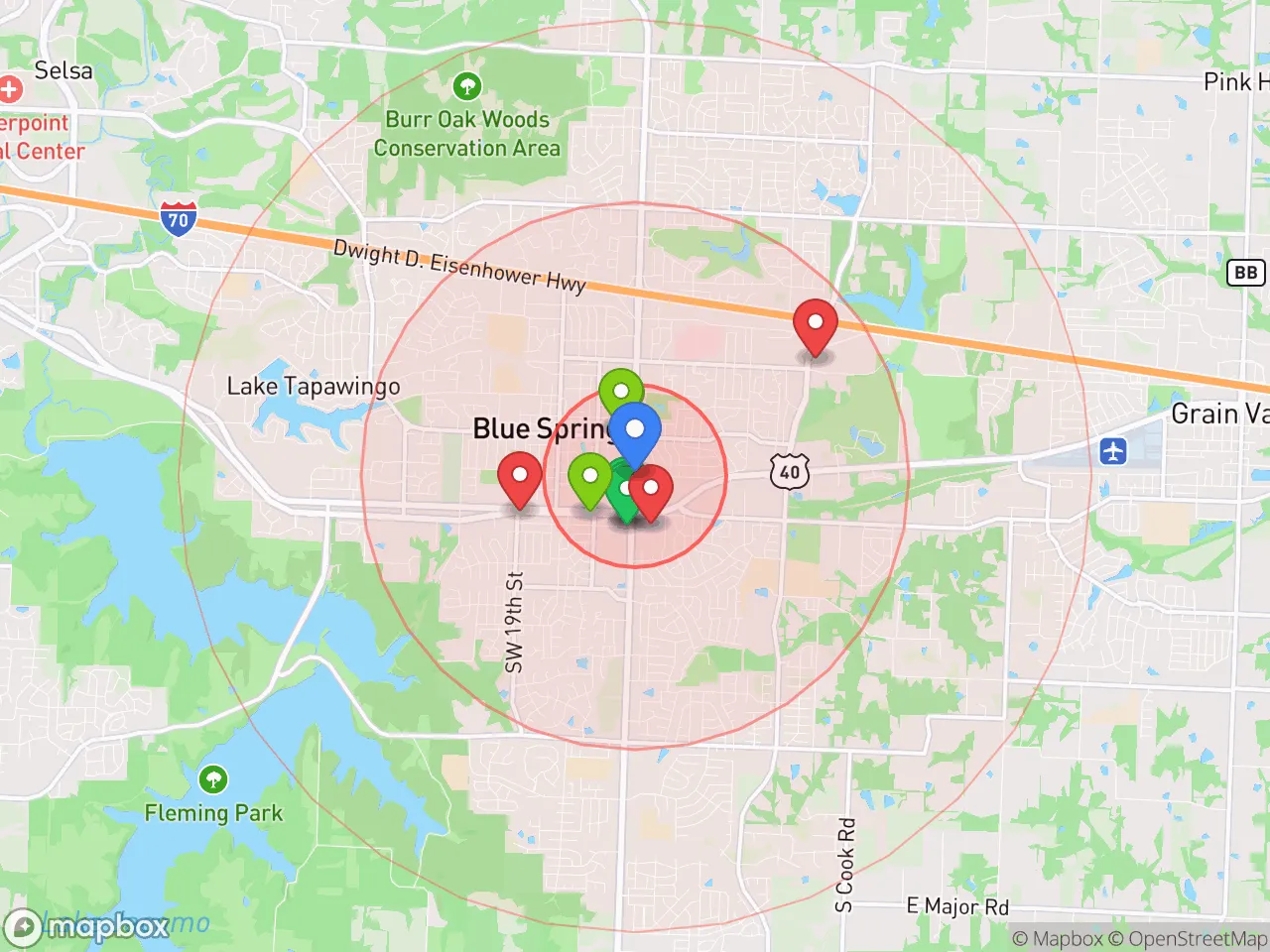
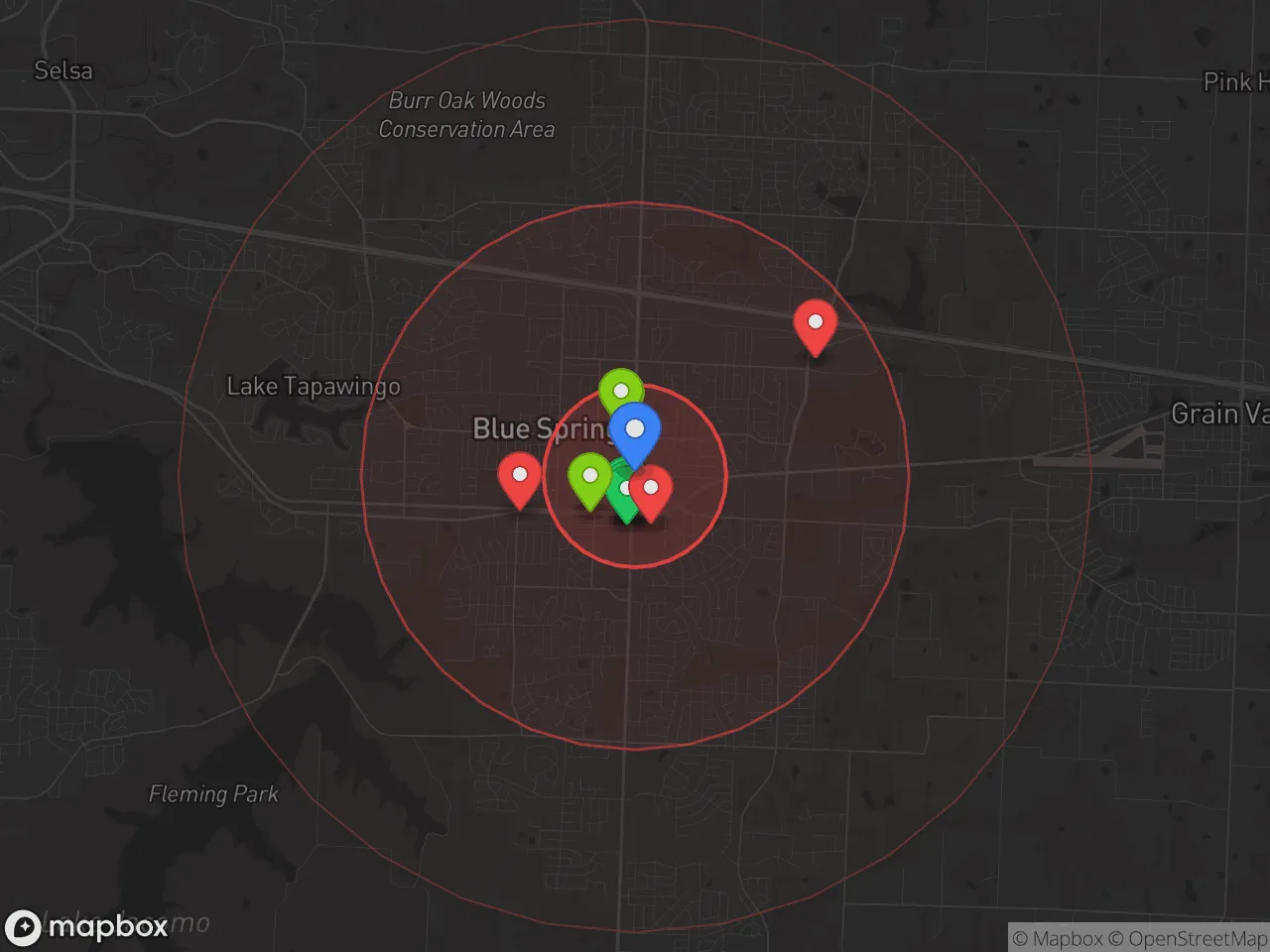
7 within 10 miles
Gas
20 within 10 miles
Hospital
20 within 20 miles
Airport
MCI — Kansas City International
Post Office
USPS — Blue Springs, MO
Critical Amenities
Quality-of-Life Analysis
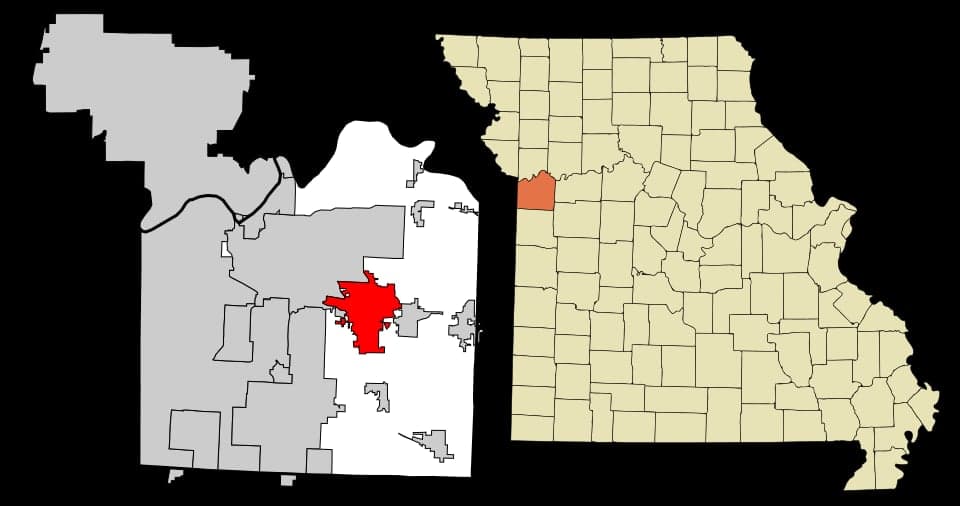
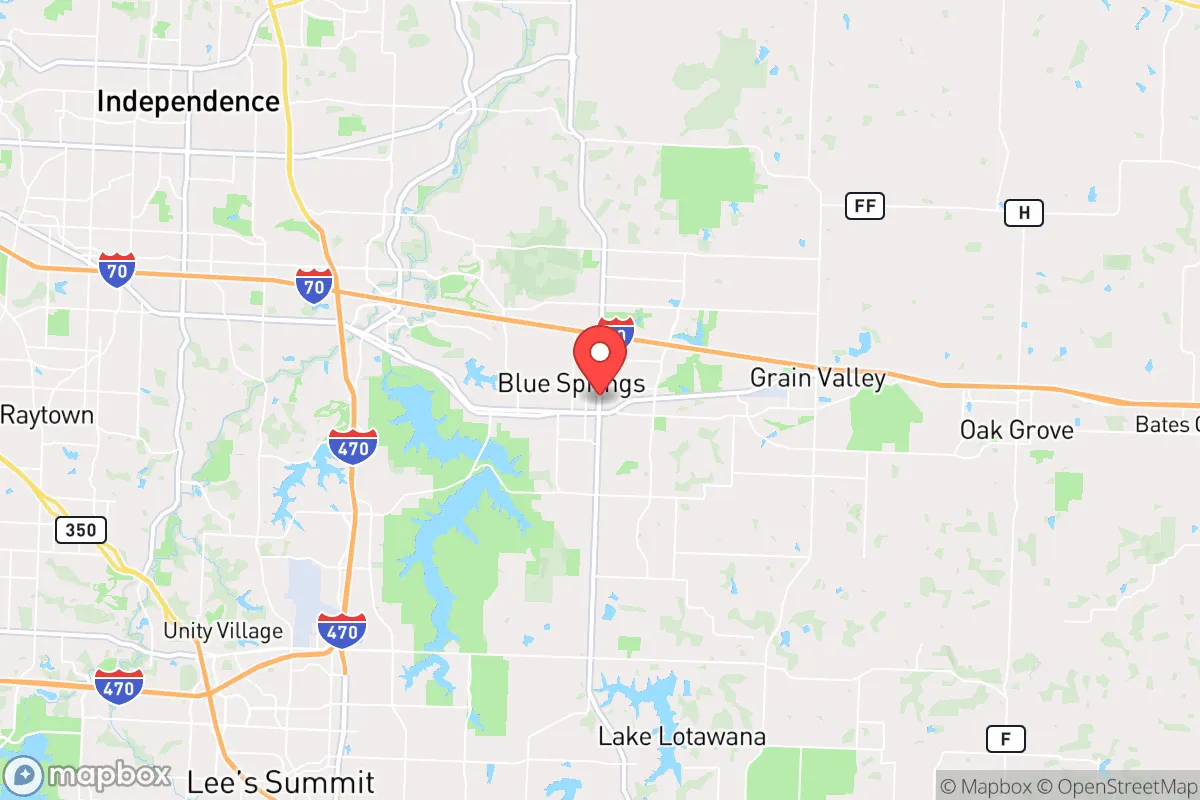
Blue Springs, Missouri, is a prosperous suburban city of roughly 58,000 residents located 20 miles east of downtown Kansas City, known for its strong public schools, low crime rates relative to the metro average, and a predominantly family-oriented population. The city’s median household income hovers around $80,000, well above the national median, attracting a mix of young professionals, mid-career executives, and retirees who value space and safety over urban nightlife. With a cost of living index of 97 (100 = U.S. average), Blue Springs offers a tangible affordability advantage over Johnson County, Kansas, while maintaining comparable suburban amenities.
Cost of living, housing affordability, and how Blue Springs compares to nearby suburbs
Blue Springs’ cost of living sits 3% below the national average, a notable edge in a metro where many eastern Jackson County suburbs have seen rapid price growth since 2020. The median home value is $241,500, roughly $60,000 less than the median in Overland Park, Kansas, and about $30,000 less than in Lee’s Summit, Missouri. Median rent is $1,213, which undercuts the Kansas City metro median of roughly $1,350. Property taxes in Jackson County average about 1.1% of assessed value, slightly higher than in neighboring Clay County but lower than in Johnson County, Kansas. The average one-way commute is 25.7 minutes, aligning closely with the national average and reflecting the city’s position along Interstate 70 and U.S. Highway 40. For renters and first-time buyers, Blue Springs offers a more attainable entry point than western suburbs like Liberty or Parkville, though inventory has tightened since 2023.
What daily life is like for families: schools, parks, and local amenities
Daily life in Blue Springs revolves around the Blue Springs School District, which enrolls about 14,500 students and consistently earns above-average state test scores, particularly at Blue Springs High School and Blue Springs South High School. The city operates 30 parks, including the 300-acre Burr Oak Woods Conservation Area, which offers hiking trails and a nature center. Retail and dining cluster along MO-7 and Adams Dairy Parkway, anchored by Adams Dairy Landing, a mixed-use development with national chains and local spots like The Big Biscuit. The city’s recreation centers, such as the Blue Springs Fieldhouse, host youth sports leagues and fitness classes. Commuters benefit from the city’s proximity to the Truman Sports Complex (home of the Chiefs and Royals) and the Kansas City International Airport, about a 40-minute drive. While nightlife is limited, residents routinely drive 20 minutes west to the Crossroads Arts District or the Country Club Plaza for dining and entertainment. The city’s annual Blue Springs Fall Festival and the Blue Springs Symphony Orchestra provide community-oriented cultural events.
Blue Springs is best suited for families, mid-career professionals, and retirees who prioritize good schools, low crime, and a slower pace over urban density. Singles and young professionals may find the social scene limited, but the city’s affordability and short commute to Kansas City’s job centers—including Cerner, Hallmark, and the federal government—make it a practical base. For those seeking a safe, well-maintained suburb with a strong sense of community and a lower cost of entry than many Kansas City alternatives, Blue Springs delivers a high quality of life at a reasonable price.

Crime in Blue Springs, MO
Generally safer than 71% of comparable U.S. locations.
Violent CrimeViolent Crime Analysis
Property CrimeProperty Crime Analysis
Crime Analysis
Blue Springs, Missouri, reports a violent crime rate of 228 incidents per 100,000 residents and a property crime rate of 1,716.9 per 100,000, placing it in a moderate safety tier for a suburb of the Kansas City metropolitan area. While these figures are below the national average for property crime, the violent crime rate is slightly above the national median, and the city's proximity to a large metro area introduces specific public safety concerns tied to regional criminal justice policies.
Crime in context
Blue Springs' violent crime rate of 228 per 100,000 is roughly 15% higher than the national average of about 200 per 100,000, though it remains significantly lower than Kansas City's rate of over 1,100 per 100,000. Property crime in Blue Springs, at 1,716.9 per 100,000, is below the national average of approximately 1,950 per 100,000 and well under the Missouri state average of 2,400 per 100,000. However, these statistics do not exist in a vacuum. As a suburb of a large, liberal-leaning metro area, Blue Springs is affected by the broader criminal justice environment of Jackson County, where progressive prosecutors and judges have implemented policies such as reduced cash bail, diversion programs for repeat offenders, and sentencing guidelines that prioritize rehabilitation over incarceration. These policies, while well-intentioned, have been linked to higher recidivism rates and a perception that offenders face minimal consequences, which can embolden criminal activity and undermine public confidence in the justice system.
What residents experience
Residents of Blue Springs most commonly encounter property crimes—theft, burglary, and vehicle break-ins—which account for the vast majority of reported incidents. The city's violent crime is concentrated in specific categories: aggravated assault makes up roughly 60% of violent offenses, while robbery and rape occur at lower frequencies. Homicides are rare, with typically 0-2 per year. The practical impact for residents is that car break-ins and package thefts are the most likely safety concerns, particularly in apartment complexes and neighborhoods near major thoroughfares like I-70 and MO-7. Local police emphasize proactive community policing, but the effectiveness of these efforts is hampered by a regional justice system that often releases offenders quickly, creating a cycle of property crime that frustrates victims.
Neighborhood-level variation in Blue Springs is notable. The eastern and southern parts of the city, including areas around Lake Jacomo and newer subdivisions near Adams Dairy Parkway, generally report lower crime rates. In contrast, the older central corridor along U.S. 40 and the area near the Blue Springs Commons shopping center see higher concentrations of property crime and occasional violent incidents. Prospective residents should research specific neighborhoods and consider that the city's overall safety is influenced by the broader metro area's progressive criminal justice policies, which can reduce the deterrent effect of arrests and prosecutions. For those prioritizing a lower-risk environment, the northern and western edges of Blue Springs, closer to rural Jackson County, tend to offer the most secure living conditions.
* Values derived from national, state, county, city and local statistics and may differ in a specific area. Last updated: 2026-04-29T20:20:52.000Z
Narrative content on this page is AI-generated and may contain mistakes. Verify any details that matter before acting on them.
ReloMaps may earn a commission from affiliate links at no extra cost to you.

