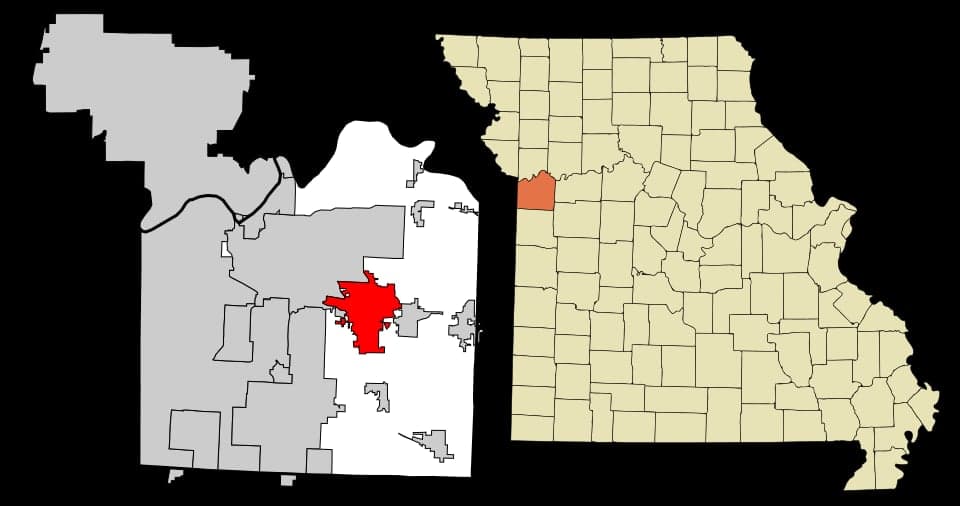
Photo: Wikipedia
Strategic Assessment of Blue Springs, MO
Meaningful friction. Expect exposure to either population pressure, blast zones, or natural disaster risk. Consider buying a retreat property.
What does the Strategic Assessment tell us?
Our Strategic Assessment grades tactical survivability of an area. Major population centers, military targets, fallout zones, natural disasters, and border exposure all drive risk — lower exposure means a more defensible position in a crisis.
This is heavily inspired by Joel Skousen's Strategic Relocation book. Highly recommended you checkout the book ($)What does this tell us?
Our Strategic Assessment grades tactical survivability of an area. Major population centers, military targets, fallout zones, natural disasters, and border exposure all drive risk — lower exposure means a more defensible position in a crisis.
This is heavily inspired by Joel Skousen's Strategic Relocation book. Highly recommended you checkout the book ($)Strategic Pillars

Key Distances
Regional Safe Places
Below is our recommended "safe zones" in Missouri and the surrounding area based on our strategic heuristics. For most people, it's unrealistic to live in a “safe zone” full-time due to work, family or other personal reasons. They tend to be more rural. However, many of these areas are perfect for second homes and retreat properties that double as a vacation home or even a short-term rental.


Important Note: For informational purposes only. This does not mean nothing bad ever happens in the green zones. Please use common sense. This is based on public data and modeled with AI. We tried to take a conservative approach but mistakes happen. We update this regularly as new information becomes available.
Solar Generator Recommendations
Backup power matters more here than in safer locations. We've picked three solar generators across budgets and capacity tiers — start with the budget unit if you only need a few essentials, or step up if you want to run a fridge and HVAC for days at a time.

Jackery Portable Power Station Explorer 300
Budget OptionPower on the Go: Weighing only 11 lbs, it's convenient to set up and store with book-sized foldable solar panels

BLUETTI Portable Power Station AC180
Designed for both indoor and outdoor scenarios, AC180 is highly capable as it has a robost capacity and continuous output power.

EF ECOFLOW DELTA Pro Ultra Power Station
Upgraded PickEcoFlow DELTA Pro Ultra is a whole-home energy system designed to grow with your family. Integrated with the Smart Home Panel 2, it scales to meet your evolving energy needs — keeping your home powered, intelligent, and secure through every stage of life.
We earn a commission, at no additional cost to you.
Strategic Assessment Analysis
Blue Springs, Missouri, sits in a strategic sweet spot that resilience-minded relocators should take seriously: close enough to Kansas City to access its resources, yet far enough to avoid the worst of urban collapse scenarios. The city’s position along Interstate 70 and its proximity to the Missouri River provide both logistical advantages and natural buffers, but the same geography introduces risks that demand careful consideration. For those weighing a move with an eye toward long-term stability, Blue Springs offers a mix of solid infrastructure, community cohesion, and manageable exposure—provided you understand where the vulnerabilities lie.
Geographic position and natural advantages for long-term stability
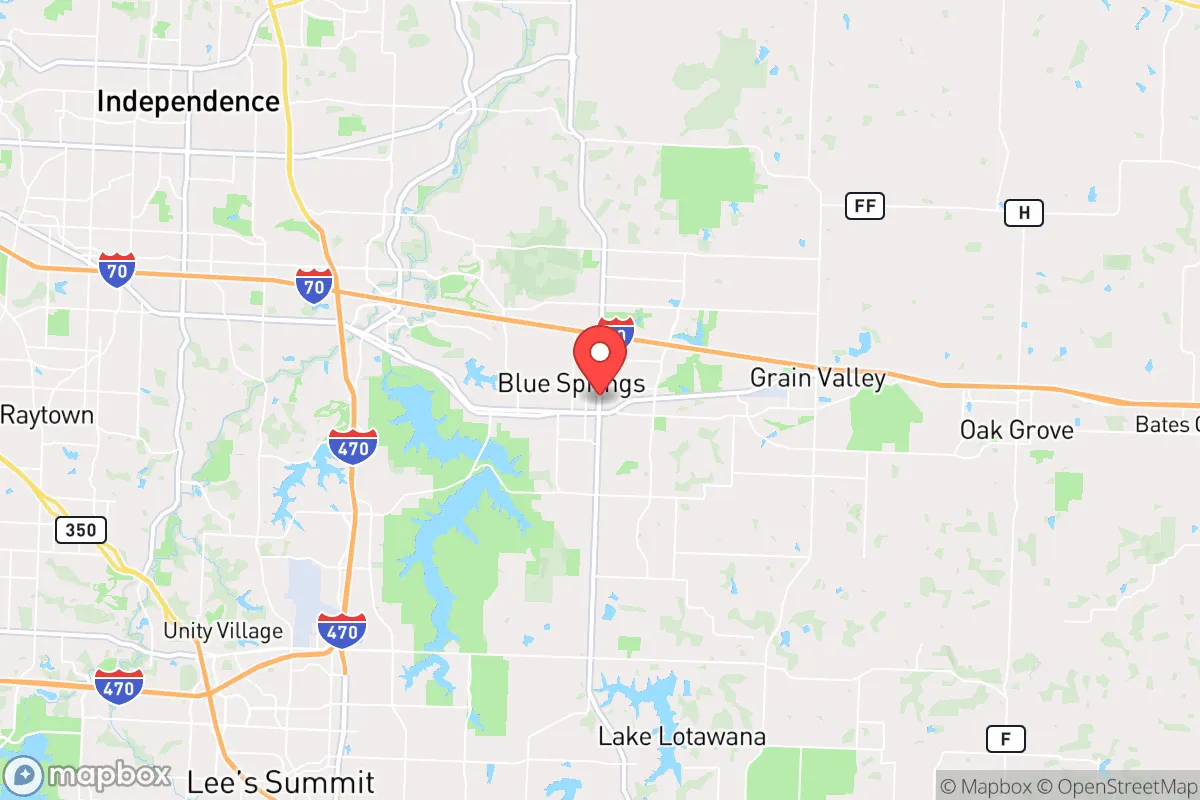
Blue Springs occupies a ridge-top location in eastern Jackson County, roughly 20 miles east of downtown Kansas City. This elevation—averaging 900 feet above sea level—gives it a natural drainage advantage over flood-prone river towns, and the city’s name comes from the numerous springs that historically supplied clean water. The surrounding landscape is a patchwork of rolling hills, oak-hickory forests, and agricultural land, which offers multiple escape routes if needed. The area sits outside the immediate blast radius of any major military or industrial target, yet it’s within a two-hour drive of Whiteman Air Force Base (home to the B-2 bomber fleet) and the Kansas City Federal Reserve Bank—both potential secondary targets in a conflict scenario. For a prepper, the key takeaway is that Blue Springs is not a primary strike zone, but it’s close enough to feel the shockwaves. The city’s water supply comes from the Missouri River via the Independence water treatment plant, a single-point-of-failure vulnerability that should be factored into any long-term plan. On the plus side, the region’s moderate climate and fertile soil make it viable for small-scale agriculture, and the local aquifer (the Ozark Plateau aquifer system) provides backup well potential for those with property outside city limits.
Risks, exposures, and proximity to fallout-relevant landmarks
The most significant risk for Blue Springs relocators is its proximity to Kansas City’s urban core and the associated fallout from civil unrest, infrastructure collapse, or a major disaster. Kansas City is a transportation hub—Interstates 35, 70, and 29 converge there, along with major rail lines and the Kansas City International Airport. In a crisis, this makes the metro area a chokepoint for refugees and supply chain disruptions. Blue Springs sits directly on I-70, which means any mass evacuation from the west will funnel through the city. The 2020 civil unrest in Kansas City, which saw looting and arson in the Plaza and downtown areas, demonstrated how quickly urban chaos can spill into the suburbs. Additionally, the nearby Truman Reservoir and the Missouri River dams present a low-probability but high-consequence flood risk if infrastructure fails. For those concerned with electromagnetic pulse (EMP) threats, the proximity to the B-2 bomber base at Whiteman (about 60 miles southeast) and the nuclear research facilities at the University of Missouri-Columbia (90 miles east) means Blue Springs is within the secondary fallout zone of a targeted strike. The prevailing winds in this region blow from the west-southwest, so fallout from a Kansas City strike would likely drift eastward—away from Blue Springs—but a strike on Whiteman would push contamination northwest, potentially affecting the area. The city’s location in Tornado Alley also means annual severe weather threats, though modern warning systems and basements are common in newer homes.
Practical resilience for a relocator: food, water, energy, and defensibility
For a single individual or family looking to establish a resilient household, Blue Springs offers a mixed bag. The city’s water infrastructure is municipally managed and draws from the Missouri River, which is vulnerable to contamination from upstream industrial sites (including the 2019 flood that damaged levees near Kansas City). A well-installed property outside city limits is a smart hedge, and the local soil is suitable for gardening—many residents already maintain vegetable plots and small orchards. The energy grid is part of the Evergy system, which has experienced rolling blackouts during extreme winter storms (like the 2021 Uri event that left parts of the metro without power for days). Solar panels with battery storage are a viable investment here, as the region averages 200 sunny days per year. Natural gas is widely available for backup heating. Defensibility is a mixed picture: Blue Springs is a suburban grid of cul-de-sacs and arterial roads, which makes it easy to navigate but hard to secure against a determined group. However, the city’s strong homeowners’ associations and active neighborhood watch programs create a social fabric that can deter low-level crime and foster mutual aid. The local police department is well-funded and responsive, with a response time averaging under 5 minutes for emergencies. For those seeking a more defensible setup, the rural areas east of town (toward Grain Valley and Oak Grove) offer larger lots, fewer neighbors, and better sightlines. Food storage is straightforward: the city has multiple big-box stores (Walmart, Sam’s Club, Costco within 15 minutes), but these will be stripped within hours of a crisis. Building relationships with local farmers at the Blue Springs Farmers Market (seasonal) and establishing a network of like-minded neighbors is the real resilience play here.
The overall strategic picture for Blue Springs is one of calculated trade-offs. It’s not a remote bunker location, nor is it a high-risk urban core. For the conservative-minded relocator who wants to stay connected to employment and amenities while maintaining a credible preparedness posture, it’s a solid middle-ground option. The city’s schools are above average (Blue Springs School District ranks in the top 20% of Missouri), its crime rates are below the national average, and its tax burden is moderate (combined state and local sales tax around 9.1%). The biggest vulnerability is the I-70 corridor and the potential for mass migration from Kansas City during a crisis. Mitigating that requires a plan: stockpile supplies for at least 90 days, maintain a vehicle with a full tank and alternate routes, and consider a secondary property or bug-out location in the rural areas east of the city (toward the Lake of the Ozarks or the Mark Twain National Forest). Blue Springs won’t save you from a direct nuclear strike or a complete societal breakdown, but for the 80% of scenarios—economic collapse, localized unrest, natural disasters—it offers a defensible, livable base with enough community infrastructure to ride out the storm. The key is to treat it as a staging ground, not a final redoubt, and to always keep one eye on the horizon.

* Values derived from national, state, county, city and local statistics and may differ in a specific area. Last updated: 2026-04-29T20:20:52.000Z
Narrative content on this page is AI-generated and may contain mistakes. Verify any details that matter before acting on them.
ReloMaps may earn a commission from affiliate links at no extra cost to you.

