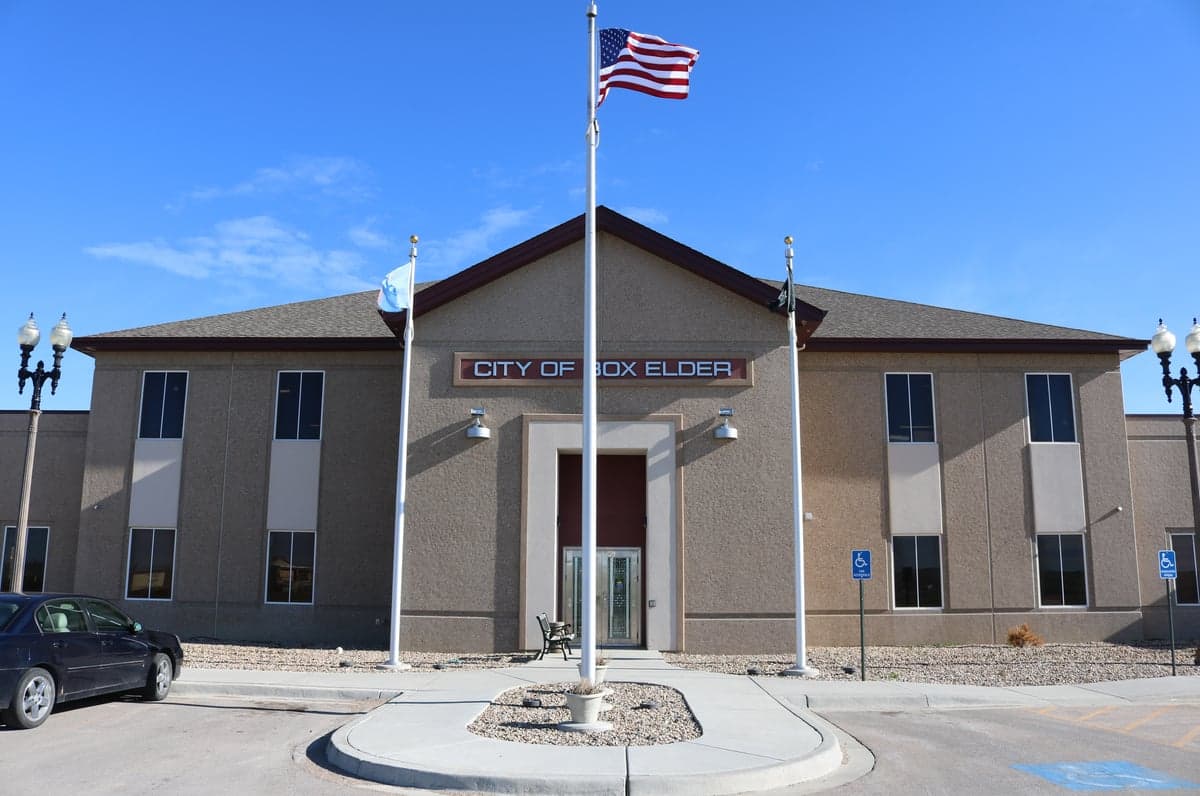
Photo: Wikipedia
Political ClimatePolitical Climate in Box Elder, SD
District shown is the primary district for this city’s centroid. Cities may span multiple districts.
Inherited from parent state — no local data available.
Local Political AnalysisPolitical Analysis of Box Elder, SD
Box Elder, South Dakota, is about as reliably conservative as it gets, with a Cook PVI of R+15 that puts it firmly in the deep-red column. This isn't a recent shift—it's been the way of life here for decades, and the numbers just confirm what folks at the local coffee shop already know. The area leans hard toward traditional values, limited government, and a healthy skepticism of federal overreach, and that's not changing anytime soon. If you're looking for a place where personal freedoms are still respected and the government stays out of your business, Box Elder is a solid bet.
How it compares
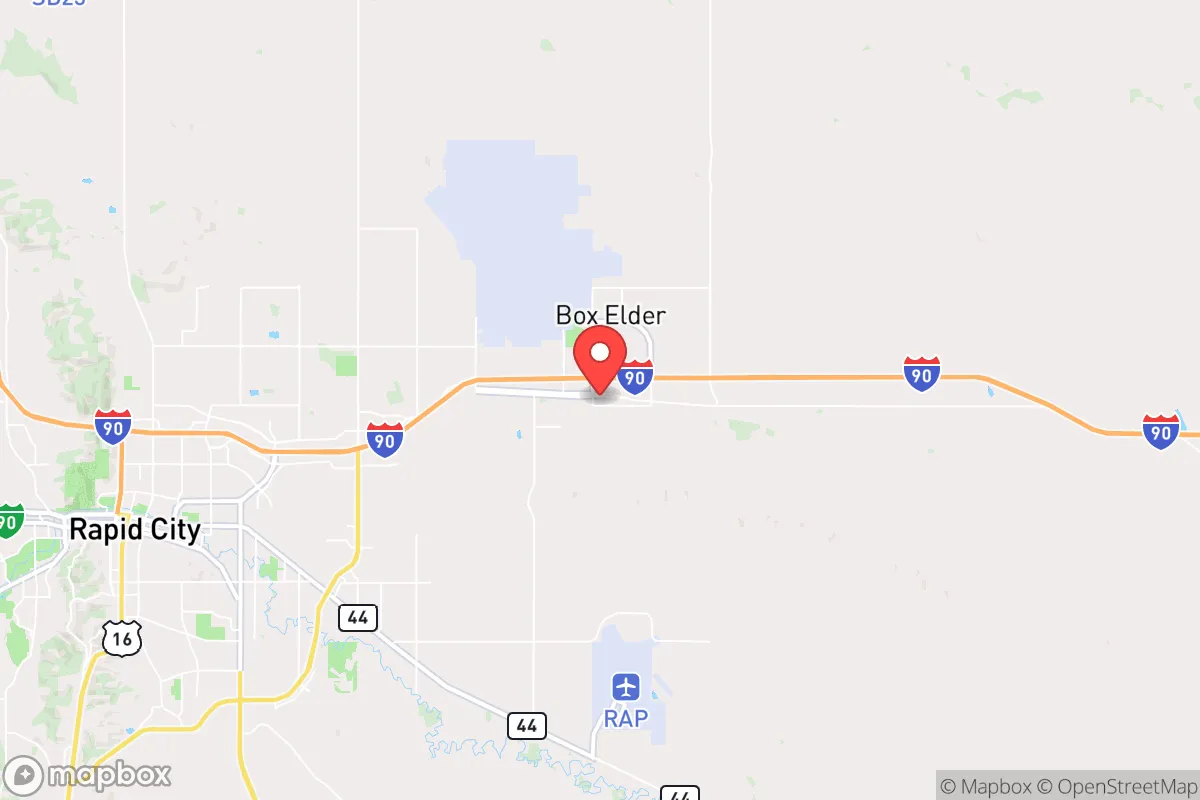
Box Elder sits in a sea of red, but it's worth noting how it stacks up against nearby towns. Rapid City, just a few miles west, is more purple—still conservative overall, but with a noticeable progressive streak, especially among younger transplants and the tourism crowd. You'll see more "Black Lives Matter" signs and electric car chargers there. Meanwhile, towns like Sturgis and Spearfish lean even further right, with Sturgis being a libertarian-leaning haven for bikers and gun rights advocates. Box Elder sits comfortably in the middle: conservative enough to feel safe, but not so isolated that you're cut off from amenities. The contrast with Rapid City is the most telling—Box Elder residents tend to view Rapid City's slow drift toward progressive policies (like bike lanes and diversity initiatives) as a cautionary tale of what happens when government starts meddling in personal choices.
What this means for residents
For the people who live here, the political climate translates into a few concrete realities. First, taxes stay low—there's no state income tax, and property taxes are among the lowest in the nation, which means you keep more of what you earn. Second, gun rights are taken seriously; you can carry concealed without a permit, and there's no waiting period to buy a firearm. Third, local government tends to be hands-off on personal matters, from homeschooling to business regulations. That said, there's a growing concern among longtime residents about outside influence creeping in. The Ellsworth Air Force Base expansion has brought in families from more liberal states, and some worry that could shift the local culture over the next decade. For now, though, Box Elder remains a place where you can live your life without the government breathing down your neck.
Culturally, Box Elder stands out for its no-nonsense approach to policy. You won't find mask mandates or vaccine passports here—the county commission made that clear during the pandemic. The local school board focuses on core academics and parental rights, not social experiments. And while Rapid City debates zoning laws for tiny homes and public art, Box Elder keeps things simple: low taxes, strong Second Amendment protections, and a general distrust of federal overreach. If you value personal liberty and want to raise a family without the government dictating how you live, this is still one of the best spots in the country. Just keep an eye on those Rapid City trends—they have a way of spreading eastward if we're not careful.

State Political ClimatePolitical Climate in South Dakota
State Political AnalysisPolitical Environment in the State
South Dakota is a deeply conservative state, with a Republican trifecta in state government and a voting record that has not gone for a Democratic presidential candidate since 1964. The state’s political lean is driven by a strong rural, agricultural, and libertarian-leaning electorate, with the GOP holding supermajorities in both legislative chambers. Over the last 10-20 years, the trajectory has been one of steady, if not accelerating, conservatism, with the state passing some of the most aggressive pro-life, pro-gun, and tax-cutting legislation in the country. However, a subtle but real urban-rural divide is emerging, particularly around the growing metro areas of Sioux Falls and Rapid City, where a younger, more transient population is beginning to introduce a slight purple tint to an otherwise deep red map.
Urban vs. rural divide
The political map of South Dakota is a classic tale of two landscapes. The vast, sparsely populated western and central regions, including the Black Hills and the Missouri River counties, are overwhelmingly Republican. Counties like Harding and Perkins routinely deliver 80-90% of the vote to GOP candidates. The real action is in the eastern corridor. Minnehaha County, home to Sioux Falls, is the state’s economic engine and its most politically competitive area. While still Republican-leaning, Sioux Falls has seen a noticeable influx of out-of-state professionals and younger workers, making it the only place in the state where Democrats can occasionally win local races. Lincoln County, just south of Sioux Falls, is a different story—it’s one of the fastest-growing and most reliably conservative suburbs in the nation, often voting +40 points Republican. Pennington County, containing Rapid City, is a mixed bag: the city itself is more moderate, but the surrounding exurbs and rural areas keep the county solidly red. The divide isn’t about a liberal vs. conservative clash, but rather a traditional, agrarian conservatism versus a newer, more suburban, business-friendly conservatism.
Policy environment
South Dakota’s policy environment is a dream for those seeking limited government. There is no state income tax, and the state sales tax was recently cut from 4.5% to 4.2% in 2023. Property taxes are moderate, though they can be a burden in rapidly appreciating areas like the Black Hills. The regulatory posture is famously light—permitting for a new business can often be done in days, not months. On education, the state has been a leader in school choice, with a robust voucher program (the “Education Savings Account” program) passed in 2023, allowing parents to use public funds for private or homeschool expenses. Healthcare policy is dominated by the state’s refusal to expand Medicaid under the Affordable Care Act, though voters approved a ballot measure in 2022 to force expansion, which the legislature has since implemented reluctantly. Election laws are among the most secure in the nation: voter ID is required, same-day registration is not allowed, and the state uses paper ballots. There is no mail-in voting unless you have a specific excuse. The state’s abortion ban is one of the strictest, with no exceptions for rape or incest, only to save the life of the mother.
Trajectory & freedom
South Dakota is arguably becoming more free, at least by conservative and libertarian metrics. The state has been a national leader in Second Amendment sanctuary legislation, with a 2021 law prohibiting state enforcement of any future federal gun bans. In 2023, Governor Kristi Noem signed a bill banning transgender athletes from female sports and another restricting gender-affirming care for minors—both seen as expansions of parental rights and biological reality. On the tax front, the state is moving toward eliminating the sales tax on groceries entirely, a proposal that has strong bipartisan support. However, there are concerning trends. The state’s COVID-19 response was a mixed bag: while Noem famously refused to issue a lockdown, she did accept federal funds, and some local health departments imposed mask mandates. More recently, the state has seen a push for eminent domain for the proposed carbon capture pipeline (Summit Carbon Solutions), which has sparked a fierce property rights backlash. This issue—pitting private property rights against corporate interests and state-level climate goals—is the single biggest threat to the state’s libertarian reputation right now.
Civil unrest & political movements
South Dakota is not a place of frequent street protests, but there have been notable flashpoints. The Wounded Knee area and the Pine Ridge Reservation have seen periodic activism around Native American rights, including the 2020 protests over the Mount Rushmore fireworks display and the 2022 controversy over the state’s anti-protest law (HB 1173), which criminalizes certain forms of protest near critical infrastructure. The carbon pipeline issue has generated the most sustained grassroots activism in years, with landowners in counties like Brown and Spink organizing against the use of eminent domain for a private project. There is also a growing election integrity movement, with local GOP groups in Minnehaha and Pennington counties pushing for hand-counting of ballots and stricter chain-of-custody rules. Immigration politics are relatively quiet, as the state has a very small foreign-born population, but there is a visible tension in Sioux Falls, where a growing refugee resettlement program (mostly from Africa and Southeast Asia) has led to some cultural friction in school districts and neighborhoods. No serious secession or nullification rhetoric exists, but the state’s independent streak is strong.
Projection
Over the next 5-10 years, South Dakota will likely remain a deeply conservative state, but the urban-rural divide will widen. Sioux Falls will continue to grow, attracting more out-of-state professionals who may not share the state’s traditional values on social issues. This could lead to a slow, generational shift toward a more moderate Republicanism, similar to what has happened in parts of Texas. The Black Hills region will see continued in-migration from retirees and remote workers, which could push Pennington County into a swing county status by the early 2030s. The biggest wildcard is the carbon pipeline: if the state forces eminent domain for a private project, it could fracture the GOP coalition and energize a property-rights-focused third party or primary challengers. Conversely, if the pipeline is defeated, the state’s libertarian credentials will be strengthened. Expect continued fights over school choice, transgender policies, and the state’s role in healthcare. The state will not turn blue, but the flavor of red may change from “rural populist” to “suburban libertarian.”
For a new resident, the bottom line is this: South Dakota offers a high degree of personal freedom, low taxes, and a government that largely stays out of your life—provided you don’t run afoul of the state’s strong social conservatism. If you’re a conservative or libertarian-leaning individual or family, you’ll find a welcoming environment with a like-minded community, especially in the suburbs of Sioux Falls or the rural counties. If you’re more moderate or progressive, you’ll find the state’s politics stifling, particularly on social issues. The key is to understand that the state’s freedom is not absolute—it is freedom as defined by a traditional, agrarian, and religiously-influenced majority. That’s the trade-off, and it’s one that most residents are happy to make.
* Values derived from national, state, county, city and local statistics and may differ in a specific area. Last updated: 2026-04-19T08:22:07.000Z
Narrative content on this page is AI-generated and may contain mistakes. Verify any details that matter before acting on them.
ReloMaps may earn a commission from affiliate links at no extra cost to you.

