
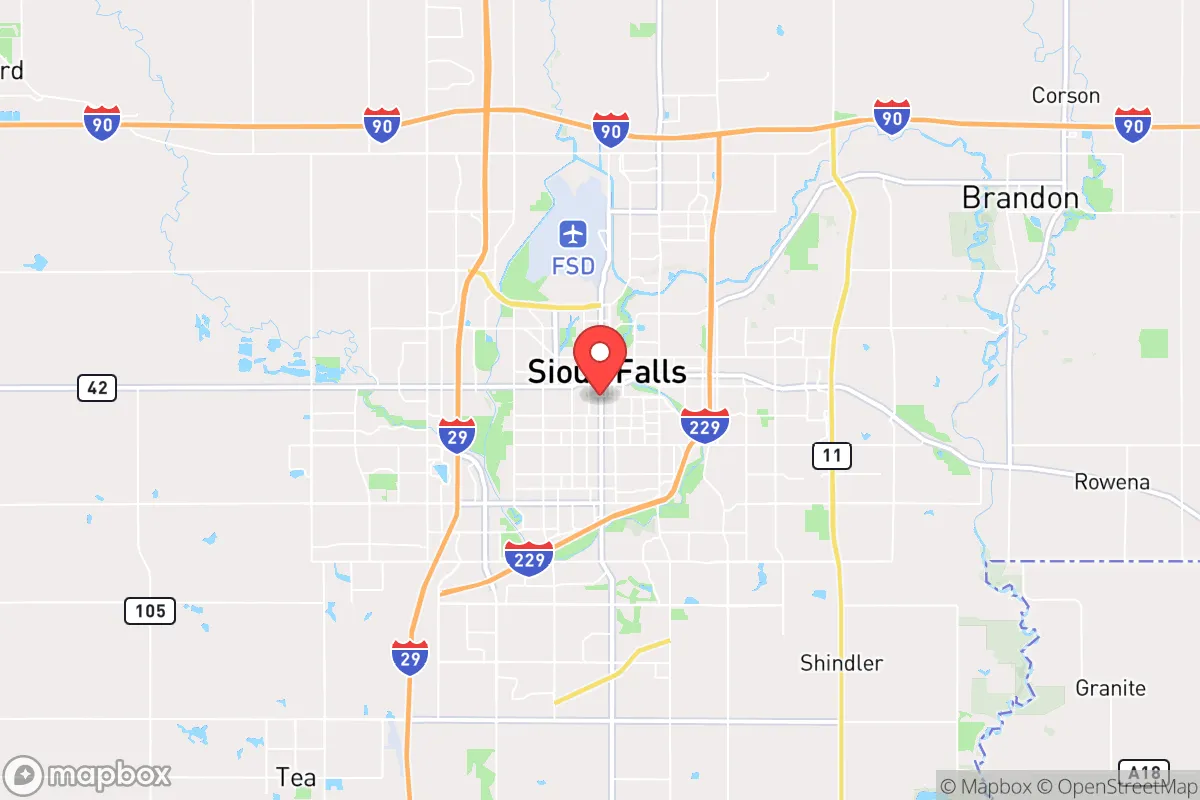
Photo: Wikipedia
Find The Best Places To Live
in Sioux Falls
PRO TIP! You can paste a Zillow or Redfin link to get info on that property.
What It's Like Living in Sioux Falls, SD
Sioux Falls feels like a city that’s still small enough to wave at someone you know in the Hy-Vee parking lot, but big enough that you can grab dinner at a place you’ve never tried every Friday for a year. It’s a Midwestern boomtown that’s grown from a quiet farming hub into a regional powerhouse of finance, healthcare, and manufacturing — all while keeping a pace of life that doesn’t make you feel like you’re being chased. If you’re looking for a place where you can actually raise a family, build a career, and still afford a backyard, this is the kind of town that makes you wonder why you didn’t move sooner.
The Daily Rhythm: Work, Errands, and Weekend Rituals
Most people here commute about 17 minutes one way — short enough that you can run home for lunch or hit the YMCA before the dinner rush. The workday tends to start early, especially for the thousands employed by Sanford Health, Avera Health, or Citibank’s massive operations center. After work, you’ll find folks at the Falls Park walking trails, grabbing a growler at Severance Brewing, or picking up groceries at the local Fareway or Hy-Vee. Weekend mornings are for the Sioux Falls Farmers Market (May through October, right downtown on Phillips Avenue), where you can grab a breakfast burrito and a flat of raspberries while kids chase each other around the bandshell. By afternoon, families head to Great Bear Ski Valley in winter or Palisades State Park (about 25 minutes east) for hiking and kayaking in summer. The city’s median age is 35.1, which explains why you see so many strollers at the coffee shops and so many minivans at the Empire Mall on a rainy Saturday.
Sports, Community, and the Things That Bring People Together
High school sports are a genuinely big deal here. On a Friday night in fall, Lincoln High School or Washington High School football games draw crowds that rival some small college towns. The Sioux Falls Stampede (USHL hockey) pack the Denny Sanford PREMIER Center with 10,000 fans during playoff runs, and the Sioux Falls Canaries (independent baseball) offer cheap tickets and dollar hot dog nights at Birdcage Field that are perfect for families. There’s no major pro team, but locals are passionate about the South Dakota State Jackrabbits (about an hour north in Brookings) and the University of South Dakota Coyotes (an hour south in Vermillion). The biggest cultural event is the Sioux Falls Jazz and Blues Festival in July, which turns downtown into a block party with free concerts and food trucks. For a quieter night, locals hit The District for live music or Monk’s House of Ale Repute for a craft beer in a historic building. The Levitt at the Falls outdoor amphitheater hosts free concerts all summer — bring a blanket and a cooler, and you’ve got a $0 date night.
Pros and Cons of Living Here: The Honest Tradeoffs
The upsides are real. Cost of living is 90% of the national average, and with a median household income of $74,714, most families can afford a median home value of $271,400 — a 3-bedroom starter home in a decent neighborhood like All Saints or McKennan is still within reach for a dual-income couple. There’s no state income tax, which is a huge draw for remote workers and retirees. The violent crime rate is 364 per 100,000 — higher than the national average, but almost entirely concentrated in a few small areas east of downtown; most neighborhoods feel safe, and property crime is the bigger nuisance. The downsides: winter is real. From December through March, you’ll deal with wind chills below zero and snow that sticks around for weeks. Locals cope by layering up and embracing outdoor winter sports, but if you hate shoveling, this isn’t your place. Another frustration is the limited food scene compared to cities of similar size — you’ll find solid steakhouses (Minerva’s) and good Mexican (Taqueria San Francisco), but don’t expect world-class sushi or a 24-hour diner. Traffic is almost never a problem, though the I-29/I-229 interchange can back up during rush hour.
Who Fits In — and Who Might Struggle
Sioux Falls works best for people who value stability, community, and a slower pace. It’s a great fit for young families who want good schools (the Sioux Falls School District is a major community anchor, with strong parent involvement and solid extracurriculars), for healthcare and finance professionals, and for anyone who doesn’t mind driving 30 minutes for a Costco run. 37.4% of adults hold a bachelor’s degree, so you’ll find plenty of educated neighbors, but the culture is more practical than intellectual — people talk about their kids’ hockey games and their garden projects more than politics or art films. The city leans conservative, but not aggressively so; you’ll see both Trump signs and Pride flags in the same neighborhood. Singles in their 20s sometimes find the dating scene limited, and there’s no real nightlife beyond a handful of bars on Phillips Avenue. But if you want a place where you can buy a house, raise kids, and actually know your neighbors, Sioux Falls delivers that without pretending to be something it’s not.

Similar small cities to Sioux Falls


* Values derived from national, state, county, city and local statistics and may differ in a specific area. Last updated: 2026-04-30T00:42:09.000Z
Narrative content on this page is AI-generated and may contain mistakes. Verify any details that matter before acting on them.
ReloMaps may earn a commission from affiliate links at no extra cost to you.

