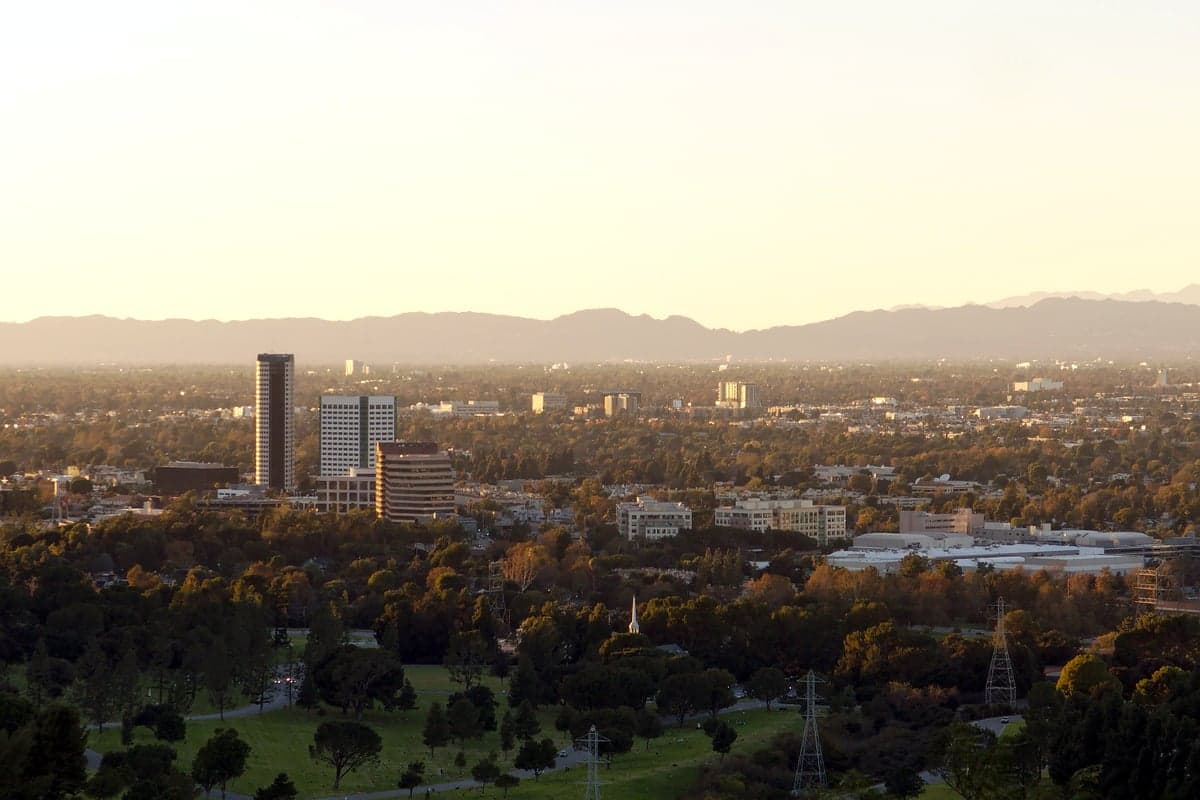
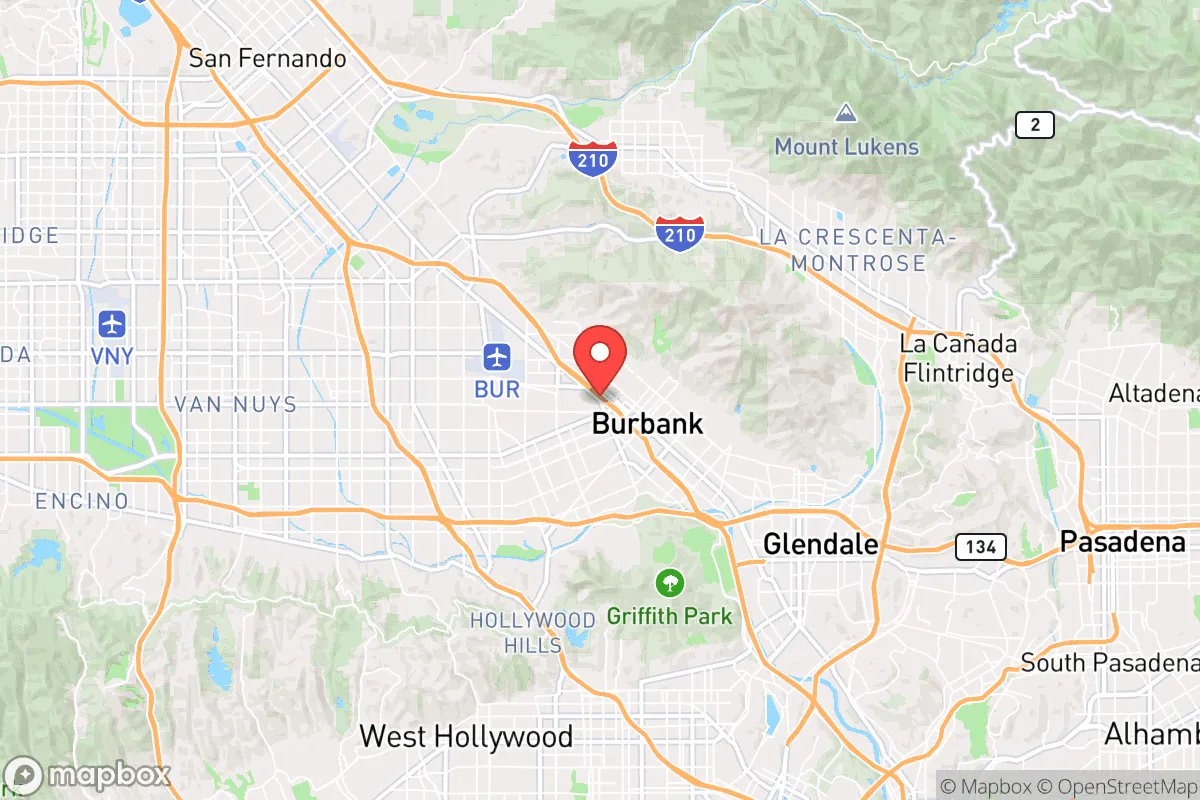
Photo: Wikipedia
Personal Sovereignty in Burbank, CA
Viable for self-reliance. Generally workable, though some barriers may limit total independence.
What does Personal Sovereignty tell us?
Personal Sovereignty measures your capacity for self-reliance and independence with minimal government friction. Higher scores mean fewer barriers between you and the way you want to live... but it assumes you have the space you need and good neighbors.
What does this tell us?
Personal Sovereignty measures your capacity for self-reliance and independence with minimal government friction. Higher scores mean fewer barriers between you and the way you want to live... but it assumes you have the space you need and good neighbors.
State Policy
Energy independence: Importer (33% of energy produced in-state)
Personal Liberty
Homesteading

Personal Liberty Analysis
Burbank, California, presents a complex environment for personal sovereignty, where the state's heavy regulatory and tax framework often clashes with the city's own more moderate, family-oriented character. For a relocation-minded individual or family prioritizing autonomy, the reality is that California's statewide policies—on taxes, self-defense, and medical freedom—create a significant baseline of constraint, while Burbank's local governance offers some breathing room in areas like property rights and community self-reliance. The net effect is a trade-off: you gain access to a stable, amenity-rich urban setting with relatively low crime for the region, but you must navigate one of the nation's highest tax burdens and most restrictive regulatory climates. This analysis breaks down the key sovereignty factors for Burbank, focusing on what actually matters for daily life and long-term independence.
Tax burden and regulatory posture in Burbank
California's tax posture is among the heaviest in the nation, and Burbank residents feel it directly. The state's top marginal income tax rate is 13.3%, the highest in the U.S., and it kicks in at a relatively modest income level (over $1 million for single filers, but the lower brackets are also steep). Sales tax in Burbank is 10.25%, which includes city and county add-ons, making everyday purchases notably more expensive than in most other states. Property taxes are capped at roughly 1% of assessed value under Proposition 13, which provides stability for long-term homeowners but offers less benefit to new buyers purchasing at today's elevated prices. The regulatory environment is similarly heavy: California's California Environmental Quality Act (CEQA) can delay or block even modest home renovations, and the state's strict building codes, energy mandates, and labor laws add layers of cost and complexity to any construction or business venture. Burbank itself operates its own municipal utilities (water, power, and trash), which gives the city direct control over rates and services—a double-edged sword that can mean reliable service but also higher bills compared to private alternatives. For a self-reliant individual, the key takeaway is that California's tax and regulatory system is designed to extract significant resources and compliance, leaving less discretionary income and requiring more patience for any project that involves permits or contractors.
Self-defense and gun law specifics in Burbank
California's gun laws are among the most restrictive in the country, and Burbank residents must comply with all of them. The state requires a 10-day waiting period and a background check for all firearm purchases, including private sales (which must go through a licensed dealer). A Firearm Safety Certificate (FSC) is mandatory to buy any gun. For concealed carry, California is a "may-issue" state, meaning local law enforcement has discretion over permits. In practice, Burbank is part of Los Angeles County, where the sheriff has historically been restrictive; as of 2026, obtaining a CCW permit in LA County remains difficult but not impossible, requiring a demonstrated "good cause" beyond general self-defense. The state also bans "assault weapons" by feature (e.g., pistol grips, flash hiders) and limits magazine capacity to 10 rounds. Self-defense laws are narrow: California has no "Stand Your Ground" statute; instead, it imposes a "duty to retreat" in public spaces if safe to do so, and the Castle Doctrine applies only inside one's home. For a sovereignty-minded individual, this means that carrying a firearm for personal protection is legally cumbersome, and using one in self-defense outside the home carries significant legal risk. Pepper spray and less-lethal options are legal and more accessible, but the overall posture is one of tight state control over personal armament.
Self-reliance and homesteading viability in Burbank
Burbank is a dense, fully built-out city of about 23 square miles, with a population density of roughly 6,000 people per square mile. This makes traditional homesteading—raising livestock, keeping large gardens, or generating off-grid power—largely impractical. Typical single-family lots in Burbank range from 5,000 to 7,000 square feet, with many homes on smaller parcels. Zoning is strictly residential, and the city's municipal code prohibits keeping chickens, goats, or bees on most residential lots (though some limited exceptions exist for backyard chickens with a permit). Off-grid living is effectively illegal: all homes must be connected to the municipal water and power grid, and solar panels require city permits and utility interconnection agreements. Rainwater harvesting is allowed but limited to 200 gallons per property without a more complex permit. For a family seeking self-reliance, the realistic path in Burbank is not land-based homesteading but rather urban resilience: growing a vegetable garden in a raised bed, installing energy-efficient appliances, and building a deep pantry. The city's strong farmers' markets and proximity to wholesale food distributors (e.g., the Los Angeles Produce Market) can support a "buy local" lifestyle, but true independence from the grid or from supply chains is not feasible here.
Personal liberties: parental rights, medical autonomy, speech, and property
California's approach to personal liberties is generally expansive in some areas and restrictive in others. On parental rights, the state has strong laws supporting parental decision-making in education (e.g., parental notification for certain health services is limited, and the state's "Affordable Care Act" for minors allows them to consent to some medical care without parental knowledge). Homeschooling is legal but requires filing a private school affidavit or using a public school independent study program, with moderate oversight. Medical autonomy is a mixed bag: California has legalized medical and recreational cannabis, and offers broad access to reproductive healthcare, but it also mandates vaccines for school attendance (with limited religious exemptions) and has strict prescription drug monitoring. Free speech is robustly protected under the state constitution, and Burbank's local government is generally tolerant of political expression, though the city's noise ordinances and permitting requirements for public gatherings can create friction. Property rights are heavily circumscribed by zoning, rent control (Burbank has a rent stabilization ordinance for apartments built before 1995), and California's strong tenant protections. For a property owner, this means you cannot freely use your land as you wish, and evicting a problematic tenant is a lengthy legal process. The overall liberty environment is one of high social tolerance but low economic and regulatory freedom.
Compared to other areas in the United States, Burbank offers a distinctly low-sovereignty environment for the autonomy-focused individual. The combination of high taxes, restrictive gun laws, limited homesteading potential, and heavy regulation of property and business places it near the bottom of any ranking of personal freedom among U.S. cities. However, for those who value the trade-offs—stable infrastructure, low crime relative to LA County, a strong local economy, and a politically moderate city government—Burbank can be a workable compromise. The key is to enter with eyes open: personal sovereignty here is not about doing what you want with your land or your life, but about navigating a system that prioritizes collective outcomes over individual autonomy. If your top priority is maximum independence, states like Texas, Arizona, or Idaho offer far more latitude. But if you need to be in Southern California for work or family, Burbank's relatively sane local governance makes it one of the more livable options within the state's overarching framework.

* Values derived from national, state, county, city and local statistics and may differ in a specific area. Last updated: 2026-08-20T05:11:06.000Z
Narrative content on this page is AI-generated and may contain mistakes. Verify any details that matter before acting on them.
ReloMaps may earn a commission from affiliate links at no extra cost to you.

