
Photo: Wikipedia
Political ClimatePolitical Climate in Byram, MS
District shown is the primary district for this city’s centroid. Cities may span multiple districts.
Local Political AnalysisPolitical Analysis of Byram, MS
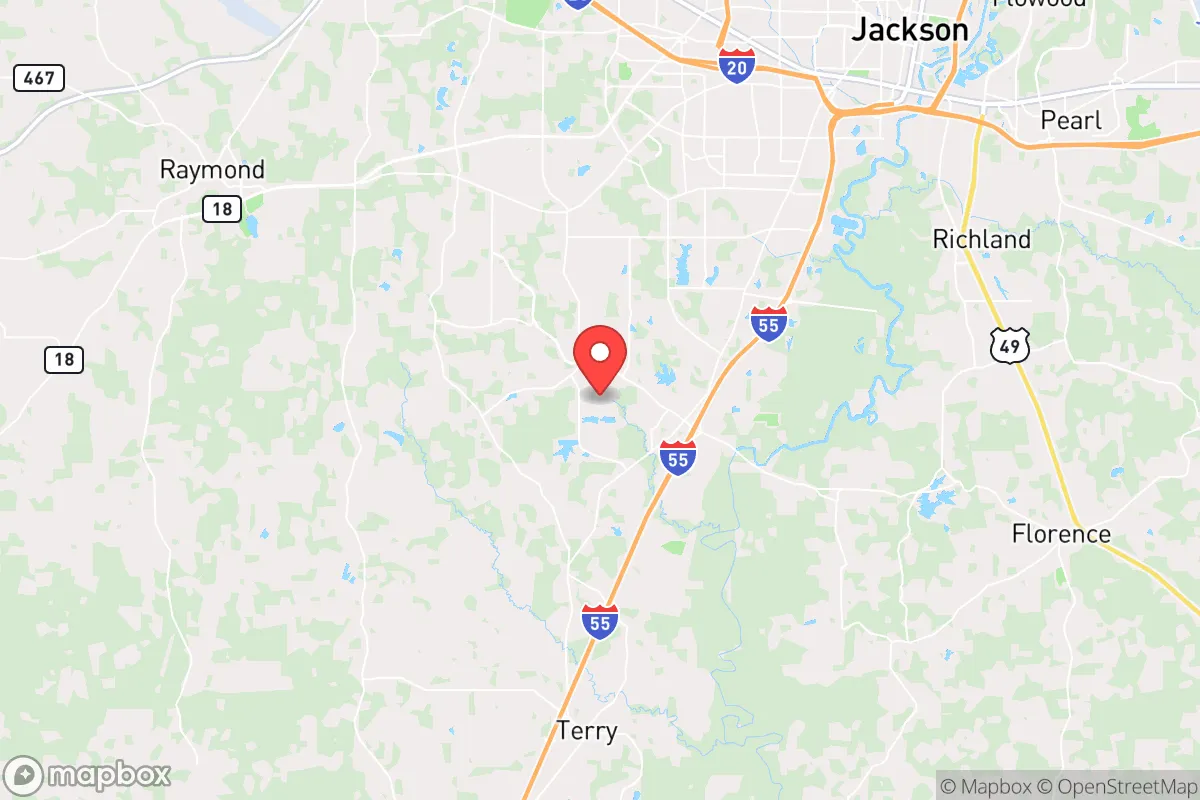
Byram, Mississippi, sits in a political landscape that’s been shifting under our feet for the last decade. With a Cook PVI of D+11, the area leans solidly Democratic, but that number doesn’t tell the whole story of what it’s like to live here. If you’ve been around since the early 2000s, you remember when Byram was a quieter, more conservative-leaning suburb of Jackson—a place where folks minded their own business and local government stayed out of your hair. Over the last ten years or so, the political winds have blown in from the capital, and the progressive influence has crept in with it. The trajectory feels like a slow but steady march toward bigger government, more regulations, and a growing disconnect between what residents want and what the county board decides is best for us.
How it compares
Drive ten miles north into Jackson proper, and you’ll hit a D+30 or worse environment—a place where city council votes often feel like they’re made in a vacuum, with little regard for property rights or local business concerns. Head south toward Terry or Raymond, and you’ll find communities that still vote more red, where the county supervisors are more likely to push back on state overreach. Byram sits right in the middle, politically and geographically. It’s not as deep blue as Jackson, but it’s not the conservative stronghold it used to be. The contrast is stark when you look at school board elections or zoning decisions: in Byram, you’ll see more candidates running on platforms of “equity” and “inclusion” than on fiscal responsibility or keeping taxes low. That’s a red flag for anyone who values local control over their own property and wallet.
What this means for residents
For the average family in Byram, the political shift translates into real-world headaches. Property taxes have crept up faster than inflation, partly because the county has taken on more social programs and administrative bloat. You’ll notice it in the permitting process for a simple fence or shed—more hoops, more fees, more waiting. The school district, which used to be a point of pride for its independence, now faces pressure to adopt state-mandated curricula that prioritize ideological training over basic skills like reading and math. If you’re a small business owner, the regulatory creep is even more obvious: new ordinances on signage, noise, and even what you can sell on Sundays have popped up in the last few years. It’s not a full-blown nanny state yet, but the direction is clear, and it’s concerning for anyone who believes the government’s job is to protect your rights, not manage your choices.
Culturally, Byram still holds onto some of its old-school Southern character—neighbors wave from porches, and the local barbecue joint is still the unofficial town hall. But the policy distinctions are where the rubber meets the road. The city council has flirted with “hate speech” resolutions and diversity training mandates for city employees, moves that feel more like virtue signaling than practical governance. Long-term, if the progressive trend continues, Byram could lose the very things that made it a good place to raise a family: low taxes, minimal bureaucracy, and a sense that your voice actually matters at the ballot box. Keep an eye on the next few election cycles—if the D+11 number starts creeping toward D+15 or higher, it might be time to consider whether this is still the Byram you remember.

State Political ClimatePolitical Climate in Mississippi
State Political AnalysisPolitical Environment in the State
Mississippi is one of the most reliably conservative states in the country, with a deep-rooted Republican lean that has only solidified over the past two decades. The state has voted for the GOP presidential candidate in every election since 1980, and in 2024, Donald Trump carried Mississippi by roughly 16 points. The dominant political coalition is a blend of rural and suburban conservatives, evangelical Christians, and a growing number of fiscally conservative transplants from other states. Over the last 10-20 years, the shift has been away from the old "Blue Dog" Democratic tradition and toward a more uniform, culturally conservative Republicanism, especially as the state's few remaining Democratic strongholds have shrunk.
Urban vs. rural divide
The political map of Mississippi is starkly divided between its handful of urban centers and the vast, conservative countryside. The state's largest metro, Jackson, is a Democratic stronghold, driven by a majority-Black population and a progressive-leaning city government. However, Jackson's influence is limited by its declining population and the fact that the surrounding Madison County suburbs—places like Ridgeland and Madison itself—are among the most reliably Republican areas in the state. The Gulf Coast, anchored by Biloxi and Gulfport, leans Republican but with a libertarian streak, thanks to a strong military and tourism economy. The northeastern corner, around Tupelo and Oxford, is a mix: Tupelo is solidly red, while Oxford (home to the University of Mississippi) is a rare purple dot, with a younger, more educated electorate that sometimes votes Democratic in local races. The Mississippi Delta, including towns like Greenville and Clarksdale, remains heavily Democratic due to its majority-Black population, but these areas have lost population and political clout for decades. The rest of the state—the Pine Belt, the Hill Country, and the southwestern corner—is deeply red, with many counties routinely giving Republicans 70-80% of the vote.
Policy environment
Mississippi's policy environment is a textbook example of a low-tax, low-regulation state. There is no state income tax on Social Security benefits, and the state has been phasing out its individual income tax entirely, with a plan to eliminate it by 2032. The corporate income tax rate is a flat 4%, and the state sales tax is 7%, though groceries are taxed at a reduced rate. Property taxes are among the lowest in the nation, thanks to a homestead exemption that caps the assessed value of owner-occupied homes. Education policy is a hot-button issue: the state has a school choice program that includes charter schools and education savings accounts for students with disabilities, but overall public school funding remains low. In 2024, the legislature passed a universal school choice bill that allows any family to use state funds for private school tuition, a major win for conservatives. Healthcare is a mixed bag—Mississippi has not expanded Medicaid under the Affordable Care Act, which keeps costs down for taxpayers but leaves a coverage gap for low-income adults. Election laws are strict: voter ID is required, and the state has no-excuse absentee voting, but early voting was expanded in 2024 to allow in-person absentee voting without a reason. The state also has a near-total ban on abortion, with no exceptions for rape or incest, which aligns with the dominant cultural conservatism.
Trajectory & freedom
Mississippi is moving in a direction of greater personal freedom, particularly in areas of economic liberty and gun rights. The state has a "constitutional carry" law, meaning no permit is needed to carry a concealed firearm, and it was one of the first to pass a "Second Amendment Sanctuary" resolution in 2021. In 2023, the legislature passed the Mississippi Parental Rights Act, which requires schools to notify parents before any medical or mental health services are provided to a minor, and gives parents the right to opt their children out of any curriculum they find objectionable. On medical autonomy, the state has a broad religious exemption for vaccine mandates and has banned COVID-19 vaccine passports. Property rights are strong, with no state-level rent control and a relatively straightforward eminent domain process. However, there are areas where freedom is constrained: the state's medical marijuana program, passed by ballot initiative in 2020, was heavily regulated by the legislature, limiting the number of dispensaries and the types of products available. The state also has a strict "blue law" that prohibits alcohol sales on Sundays in many counties, though this is gradually being relaxed. Overall, the trajectory is toward more individual liberty, especially in education, guns, and taxation, but with a strong cultural conservatism that limits personal choices in areas like alcohol and cannabis.
Civil unrest & political movements
Mississippi has a relatively low level of visible civil unrest compared to other states, but there are flashpoints. The most notable recent event was the Jackson water crisis in 2022, which led to protests and a federal takeover of the city's water system. This was framed by conservatives as a failure of Democratic city management, while progressives blamed state neglect. The state has seen organized activist movements on both sides: the Mississippi Rising Coalition pushes for progressive policies like Medicaid expansion and criminal justice reform, while the Mississippi Conservative Coalition focuses on school choice and gun rights. Immigration politics are less heated than in border states, but there is a strong undercurrent of concern about illegal immigration, with the state legislature passing a law in 2024 requiring local law enforcement to cooperate with federal immigration authorities. There is no sanctuary city movement in Mississippi; in fact, the state has a law prohibiting sanctuary policies. Election integrity controversies have been minimal, though the state's strict voter ID law has been criticized by progressives as suppressive. A new resident would notice that political activism is mostly channeled through church groups and local civic organizations, rather than street protests.
Projection
Over the next 5-10 years, Mississippi is likely to become even more conservative, driven by two trends: the continued exodus of the state's Democratic-leaning Black population from the Delta and Jackson to other states, and the in-migration of conservative retirees and remote workers from higher-tax states like California and Illinois. The suburbs around Jackson and Gulfport will continue to grow and solidify their Republican lean. The state's income tax elimination will accelerate, making it even more attractive to fiscally conservative movers. However, there is a risk of political stagnation: the state's low education levels and poor health outcomes could create a drag on economic growth, and the lack of Medicaid expansion means rural hospitals will continue to close. A new resident moving in now should expect to find a state that is deeply conservative, with a government that is actively reducing its footprint in taxation and regulation, but also one that is struggling with infrastructure and public health. The political culture will remain stable, with no real threat of a progressive shift, but the state's challenges will persist.
For a new resident, the bottom line is that Mississippi offers a high degree of personal freedom in areas like gun rights, education choice, and low taxes, but with trade-offs in public services and infrastructure. If you value a small-government, culturally conservative environment where your voice is heard at the local level, Mississippi is a solid bet. Just be prepared for a slower pace of life and a state that is still grappling with its past while trying to build a freer future.
* Values derived from national, state, county, city and local statistics and may differ in a specific area. Last updated: 2026-04-21T11:47:23.000Z
Narrative content on this page is AI-generated and may contain mistakes. Verify any details that matter before acting on them.
ReloMaps may earn a commission from affiliate links at no extra cost to you.

