Photo: Wikipedia
Demographics of Canton, SD
Affluence Level in Canton, SD
A middle-class area roughly in line with national averages across income, home values, education, and employment.
People of Canton, SD
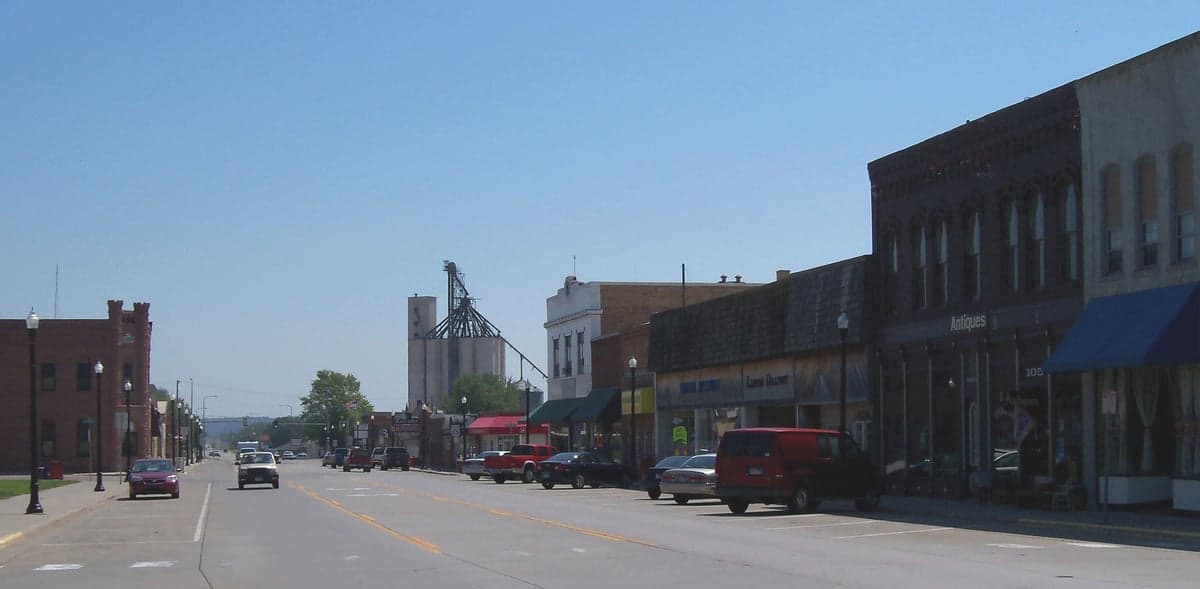
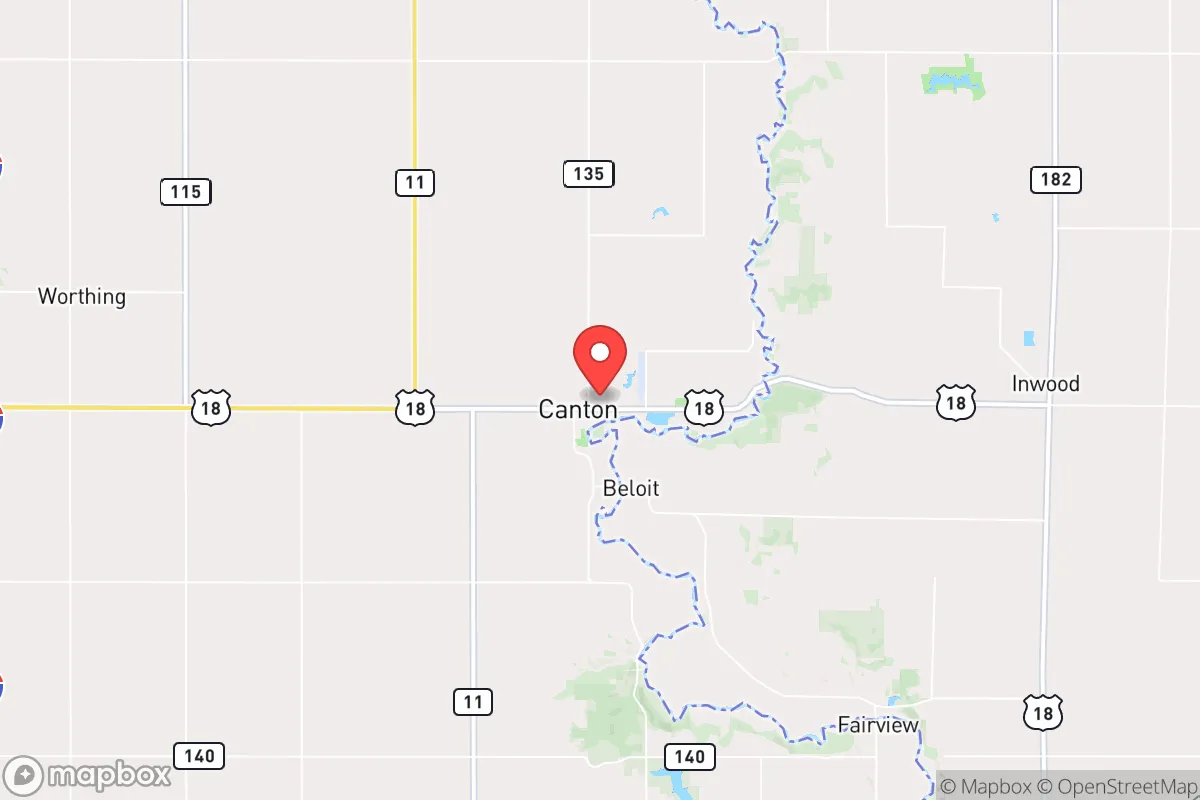
The people of Canton, South Dakota, today form a remarkably homogeneous community of 3,060 residents, characterized by a 93.6% white population and a 0.0% foreign-born rate. This is a tight-knit, family-oriented town where nearly one in five adults holds a college degree, and the population skews older and more rooted than the national average. Distinctive markers include a strong local identity tied to the nearby Big Sioux River and a civic life centered around the historic downtown square, with little of the ethnic or cultural diversity found in larger regional hubs like Sioux Falls, 20 miles to the northwest.
How the city was settled and grew
Canton’s human history begins with the 1867 founding by the Dakota Land Company, which platted the town along the Big Sioux River to attract Yankee settlers from the Midwest. The original wave was overwhelmingly native-born white Protestants from Iowa, Illinois, and Wisconsin, drawn by cheap federal land under the Homestead Act and the promise of fertile river-bottom soil. These early families built the Historic Downtown District around Main Avenue, erecting wood-frame houses and brick storefronts that still define the town’s core. A second wave arrived in the 1880s with the extension of the Chicago, Milwaukee & St. Paul Railway, bringing a smaller influx of German and Norwegian farmers who settled the North Side near the rail depot. By 1900, Canton was a stable agricultural service center, with a population of roughly 1,200 that remained almost entirely native-born white through the mid-20th century. The South Creek Addition, platted in the 1910s, absorbed the children of these original settlers as the town expanded southward along what is now Highway 18.
Modern era (post-1965)
The post-1965 era brought no significant foreign-born influx to Canton, as the town lacked the industrial or service-sector jobs that drew immigrants to larger cities. The 1970s and 1980s saw a modest domestic in-migration of white retirees and commuters from the Sioux Falls metro area, who built ranch-style homes in the Westwood Estates subdivision west of the downtown. The 1990s and 2000s brought a small number of Hispanic workers, primarily employed in local agriculture and meatpacking, but their share peaked at roughly 1% and has since declined to 0.4% as of the latest data. The East River Addition, developed in the 2000s along the river’s eastern bank, attracted younger white families seeking affordable housing within commuting distance of Sioux Falls. Today, Canton’s racial and ethnic composition remains virtually unchanged from 1970: 93.6% white, with no Black residents and only a handful of East/Southeast Asian individuals (0.2%). The town’s neighborhoods remain starkly homogeneous, with no distinct ethnic enclaves or immigrant corridors.
The future
Canton’s population is heading toward slow, steady homogenization rather than diversification. The 0.0% foreign-born rate is unlikely to rise significantly, as the town lacks the rental housing stock, public transit, and entry-level job base that attract new immigrants. The Hispanic share, already tiny at 0.4%, is plateauing or declining as younger Hispanic workers gravitate toward Sioux Falls or larger regional centers. The white population, while dominant, is aging: the median age is likely above 40, and outmigration of young adults to Sioux Falls for college and careers is a persistent drag. The Prairie Hills subdivision, approved in 2020 on the town’s western edge, is attracting a small number of white families from the Sioux Falls exurbs, but these are overwhelmingly native-born and English-speaking. Over the next 10–20 years, Canton will likely remain a predominantly white, older, and culturally conservative community, with no major demographic shift on the horizon.
For someone moving in now, Canton offers a stable, low-diversity environment where neighbors are likely to share a common cultural and ethnic background. The town is becoming a bedroom community for Sioux Falls commuters, but its social fabric remains rooted in the same Yankee and German families who settled it 150 years ago. New residents should expect a quiet, family-oriented lifestyle with little racial or ethnic change ahead.

* Values derived from national, state, county, city and local statistics and may differ in a specific area. Last updated: 2026-04-23T09:18:02.000Z
Narrative content on this page is AI-generated and may contain mistakes. Verify any details that matter before acting on them.
ReloMaps may earn a commission from affiliate links at no extra cost to you.

