Photo: Wikipedia
Strategic Assessment of Central, LA
Meaningful friction. Expect exposure to either population pressure, blast zones, or natural disaster risk. Consider buying a retreat property.
What does the Strategic Assessment tell us?
Our Strategic Assessment grades tactical survivability of an area. Major population centers, military targets, fallout zones, natural disasters, and border exposure all drive risk — lower exposure means a more defensible position in a crisis.
This is heavily inspired by Joel Skousen's Strategic Relocation book. Highly recommended you checkout the book ($)What does this tell us?
Our Strategic Assessment grades tactical survivability of an area. Major population centers, military targets, fallout zones, natural disasters, and border exposure all drive risk — lower exposure means a more defensible position in a crisis.
This is heavily inspired by Joel Skousen's Strategic Relocation book. Highly recommended you checkout the book ($)Strategic Pillars

Key Distances
Regional Safe Places
Below is our recommended "safe zones" in Louisiana and the surrounding area based on our strategic heuristics. For most people, it's unrealistic to live in a “safe zone” full-time due to work, family or other personal reasons. They tend to be more rural. However, many of these areas are perfect for second homes and retreat properties that double as a vacation home or even a short-term rental.

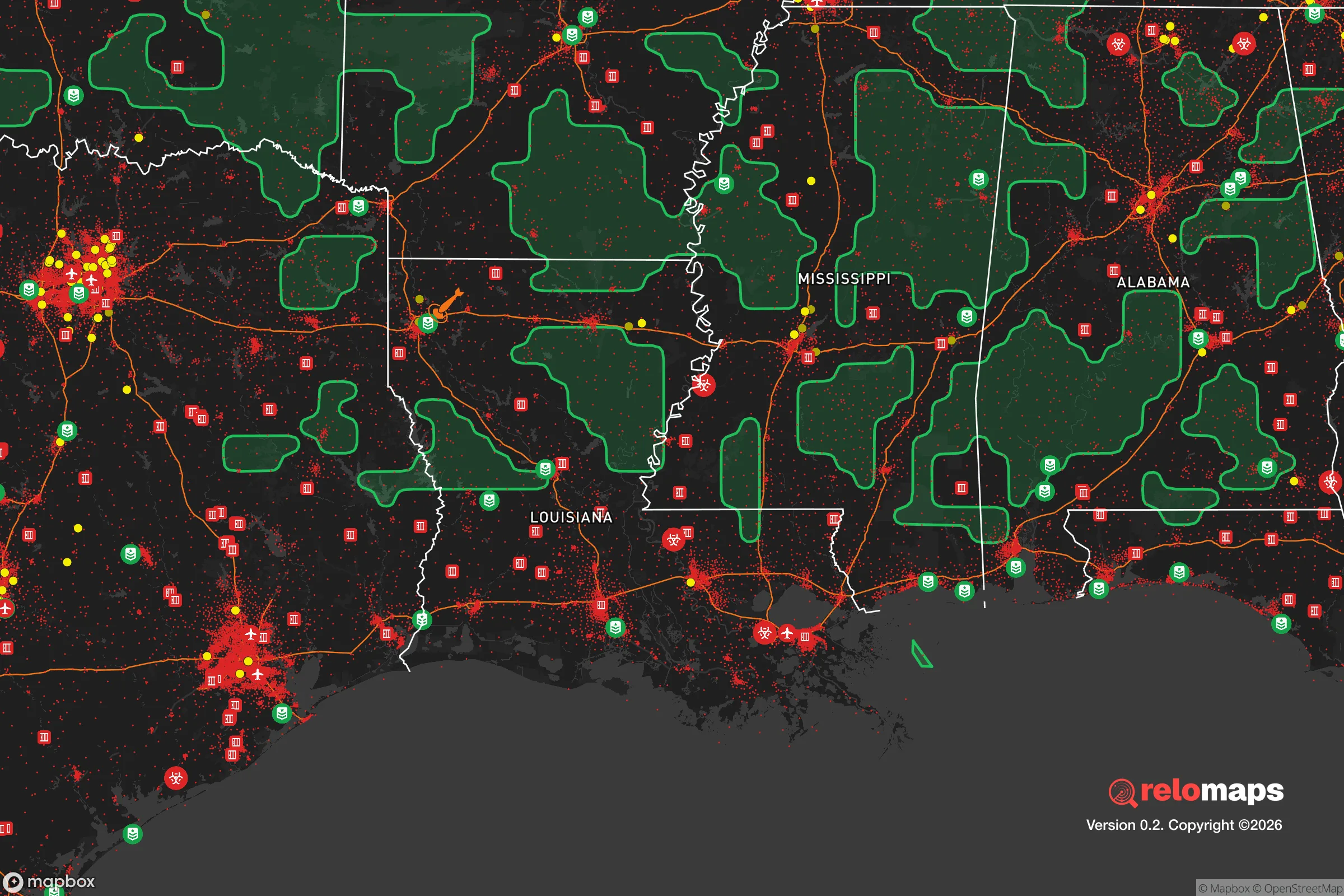


Important Note: For informational purposes only. This does not mean nothing bad ever happens in the green zones. Please use common sense. This is based on public data and modeled with AI. We tried to take a conservative approach but mistakes happen. We update this regularly as new information becomes available.
Solar Generator Recommendations
Backup power matters more here than in safer locations. We've picked three solar generators across budgets and capacity tiers — start with the budget unit if you only need a few essentials, or step up if you want to run a fridge and HVAC for days at a time.

Jackery Portable Power Station Explorer 300
Budget OptionPower on the Go: Weighing only 11 lbs, it's convenient to set up and store with book-sized foldable solar panels

BLUETTI Portable Power Station AC180
Designed for both indoor and outdoor scenarios, AC180 is highly capable as it has a robost capacity and continuous output power.

EF ECOFLOW DELTA Pro Ultra Power Station
Upgraded PickEcoFlow DELTA Pro Ultra is a whole-home energy system designed to grow with your family. Integrated with the Smart Home Panel 2, it scales to meet your evolving energy needs — keeping your home powered, intelligent, and secure through every stage of life.
We earn a commission, at no additional cost to you.
Strategic Assessment Analysis
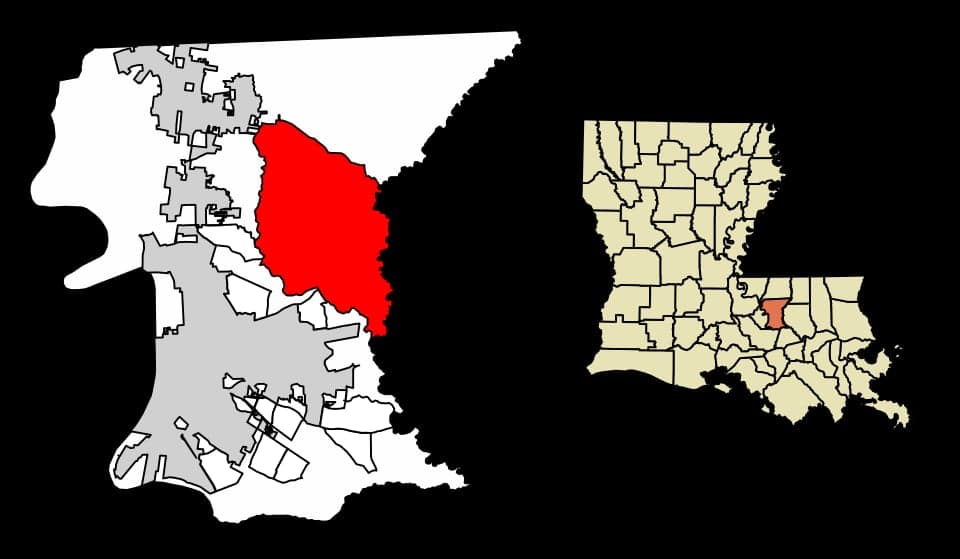
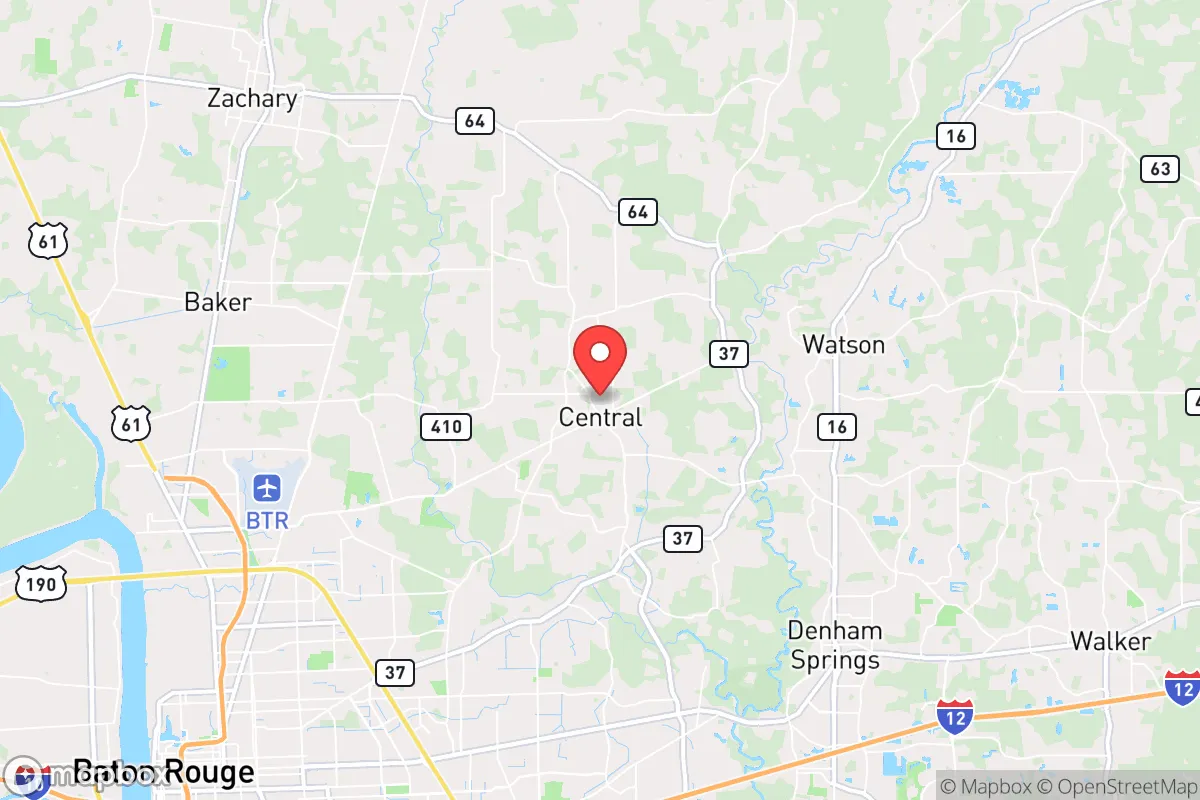
Central, Louisiana, offers a compelling strategic position for those prioritizing resilience and self-sufficiency in an uncertain future. Situated roughly 20 miles east of Baton Rouge and 60 miles northwest of New Orleans, this unincorporated area in East Baton Rouge Parish provides a buffer from the immediate chaos of major urban centers while still granting access to their logistical networks. For a conservative-minded relocator concerned with civic unrest, supply chain disruptions, or mass casualty events, Central’s low population density—around 30,000 residents spread over 65 square miles—and its inland location away from hurricane-prone coastlines make it a defensible base of operations. The area’s recent growth, driven by families seeking safer schools and quieter living, underscores its reputation as a practical haven for those who value order and preparedness.
Geographic position and natural advantages for long-term security
Central’s geography is its first line of defense. Unlike New Orleans or Baton Rouge, which sit on flood-prone delta plains, Central rests on higher ground—elevations range from 30 to 60 feet above sea level—reducing the risk of catastrophic flooding from hurricanes or levee failures. The area is crisscrossed by the Comite River and several smaller creeks, providing natural water sources for off-grid scenarios, though these same waterways can swell during heavy rains. The surrounding landscape is a mix of piney woods, hardwood forests, and agricultural land, offering ample cover and resources for those who know how to use them. Proximity to the Mississippi River, about 15 miles west, is a double-edged sword: it’s a vital transportation artery for trade but also a potential target for sabotage or contamination during a national crisis. For a relocator, the key advantage is Central’s position as a rural pocket within striking distance of urban infrastructure—hospitals, fuel depots, and supply hubs—without being directly in the blast zone of a major city’s collapse.
Risks, exposures, and proximity to fallout-relevant landmarks
No strategic assessment is complete without acknowledging vulnerabilities. Central’s biggest exposure is its proximity to Baton Rouge, home to the Louisiana State Capitol, major petrochemical refineries, and a significant port complex. In a scenario of civil unrest or a mass casualty event, Baton Rouge could become a focal point for violence, looting, or government overreach. The refineries along the Mississippi River—ExxonMobil’s Baton Rouge complex is one of the largest in the country—are high-value targets for sabotage or accidental disaster, with potential for toxic chemical releases that could drift eastward toward Central. Additionally, the Louisiana State Penitentiary at Angola, about 40 miles northwest, houses a large inmate population; during a breakdown of order, this could become a source of instability. On the positive side, Central is far enough from the Gulf Coast to avoid direct hurricane storm surge, and its inland location reduces the risk of a nuclear fallout plume from a coastal strike—though the Port of New Orleans and the Mississippi River corridor remain strategic targets. The area’s lack of major military installations or nuclear power plants within 50 miles is a net positive for fallout concerns.
Practical resilience for a relocator: food, water, energy, and defensibility
For a prepper or survivalist, Central offers a mixed bag of practical assets and challenges. Water is abundant—the Comite River and local aquifers provide reliable sources, but you’ll need filtration or treatment, as agricultural runoff and industrial pollution from upstream are concerns. Food production is viable: the surrounding farmland supports cattle, poultry, and row crops like soybeans and corn, and the long growing season (March to November) allows for year-round gardening. Local farmers’ markets and co-ops in nearby Zachary and Denham Springs offer avenues for building supply networks before a crisis. Energy independence is achievable—rooftop solar is practical given the region’s 215 sunny days per year, and backup generators are common among rural homeowners. The area’s low crime rate (violent crime is about 60% below the national average) means you can stockpile supplies without constant fear of theft, but you should still invest in perimeter security—motion lights, cameras, and a good fence. Defensibility is moderate: the suburban sprawl of Central means most homes are on half-acre to two-acre lots, offering some buffer from neighbors but not the isolation of a remote homestead. The road network—primarily two-lane highways like LA-64 and LA-3034—can become choke points during an evacuation, so having multiple exit routes mapped is critical. The local sheriff’s office and volunteer fire departments are responsive, but in a major event, you’ll be on your own for the first 72 hours.
The overall strategic picture for Central, LA, is one of calculated trade-offs. It’s not a bug-out location for the lone wolf—it’s a community-oriented base for families and individuals who want to maintain a semblance of normal life while preparing for the worst. The area’s conservative tilt—East Baton Rouge Parish voted +12 Republican in the 2024 presidential election—aligns with a culture of self-reliance, church networks, and neighborly mutual aid. The downsides are real: proximity to Baton Rouge’s vulnerabilities, moderate defensibility, and the need to invest in water filtration and energy backup. But for a relocator who values strategic depth over total isolation, Central provides a solid foundation. The key is to act now—secure a property with a well and septic system, build relationships with local farmers and gun clubs, and stay informed about regional industrial risks. In a world where the unthinkable becomes routine, Central offers a place to stand your ground without cutting yourself off from the resources you’ll need to survive.

* Values derived from national, state, county, city and local statistics and may differ in a specific area. Last updated: 2026-05-01T10:43:39.000Z
Narrative content on this page is AI-generated and may contain mistakes. Verify any details that matter before acting on them.
ReloMaps may earn a commission from affiliate links at no extra cost to you.

