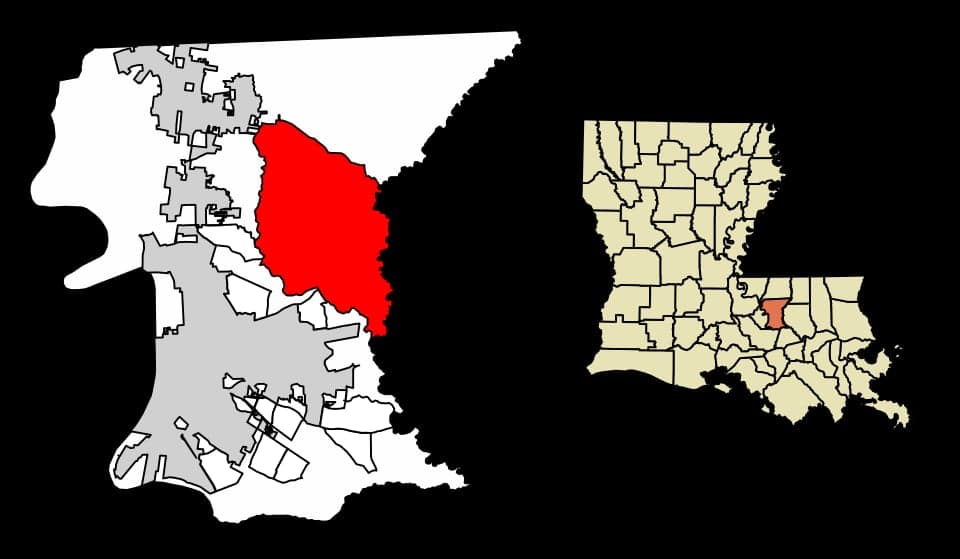
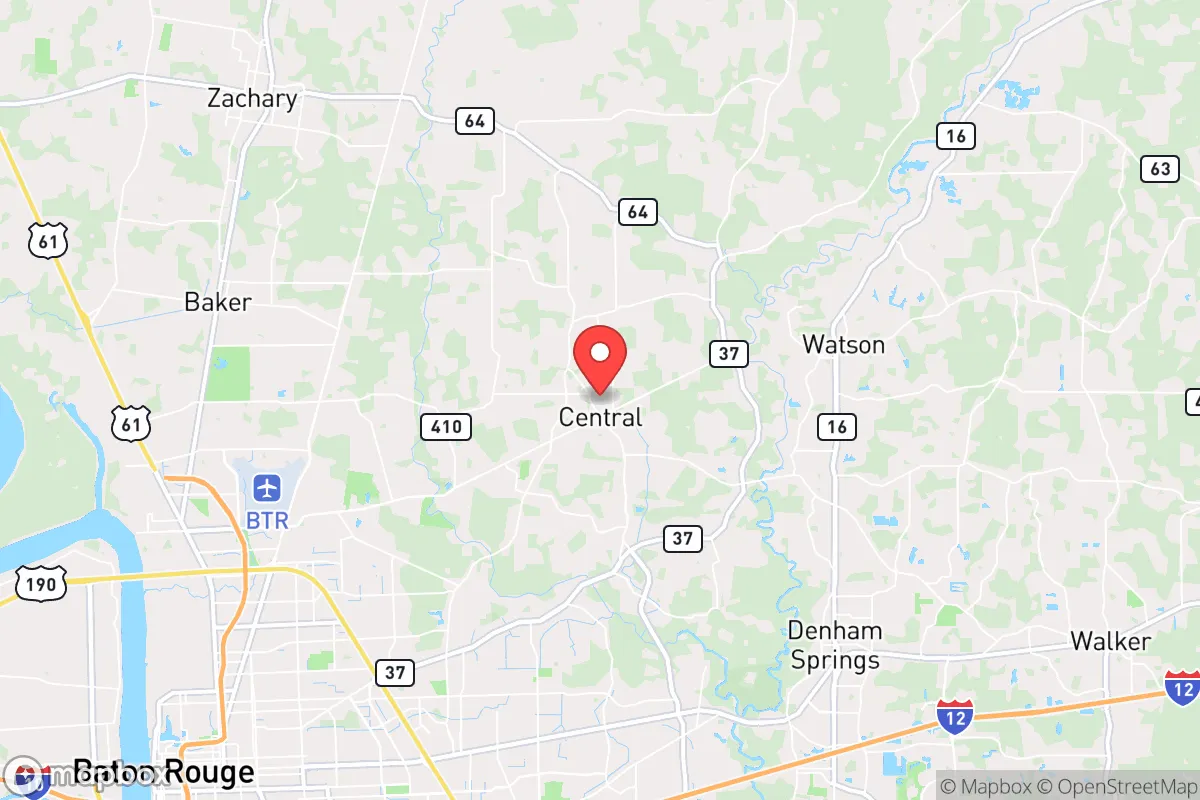
Photo: Wikipedia
Political ClimatePolitical Climate in Central, LA
District shown is the primary district for this city’s centroid. Cities may span multiple districts.
Local Political AnalysisPolitical Analysis of Central, LA
Central, Louisiana, is about as solidly conservative as it gets in the Baton Rouge area, with a Cook PVI of R+18 that tells you exactly where the heart of this community beats. This isn't a purple suburb that's trending blue; it's a place where the values of limited government, personal responsibility, and traditional family structures are still the norm, not the exception. You can feel it in the way folks talk about their schools, their churches, and their property rights—there's a deep-seated belief that the government that governs least governs best, and that's a sentiment that's only gotten stronger over the last decade.
How it compares
Drive ten minutes south into Baton Rouge, and you're in a completely different political universe. East Baton Rouge Parish has been trending more progressive for years, with a mayor-president who's pushed for things like a higher minimum wage and more centralized planning. Central was literally founded as a way for families to escape that kind of overreach—it incorporated in 2005 specifically to have local control over zoning, schools, and law enforcement. Compare that to places like Zachary or even Denham Springs, which are also conservative but have seen more pressure from the expanding Baton Rouge metro area. Central has held the line better than most, and you don't see the same kind of creeping progressive influence in city council meetings or school board elections here. The contrast is stark: while Baton Rouge debates things like defunding police or implementing equity initiatives, Central's leaders are focused on keeping taxes low and making sure the city stays a safe, family-oriented place where your rights aren't up for debate.
What this means for residents
For someone living here, the political climate translates directly into daily life. You're not going to see mask mandates or business shutdowns being enforced by local officials—during the pandemic, Central was one of the few places in the region that told the state government to back off. The city council and mayor have consistently pushed back against any kind of overreach, whether it's from the state or the feds. That means your property rights are respected, your Second Amendment rights aren't under constant attack, and you're not going to have some bureaucrat telling you what you can and can't do on your own land. The school system is a big part of this too—Central has its own school district, separate from the troubled East Baton Rouge Parish system, and it's one of the highest-rated in the state. Parents have real choice and control, not just in theory but in practice. You don't have to worry about critical race theory or gender ideology being pushed in the classroom because the community makes it clear that's not welcome here.
Looking ahead, the long-term trajectory is a mixed bag. The area is growing, and with growth comes pressure from developers and outside interests who don't always share the local values. There's been some talk about annexation and more regional cooperation with Baton Rouge, which is a red flag for anyone who values the independence Central was built on. The good news is that the political culture here is resilient—people moved here specifically to get away from the kind of government overreach you see in bigger cities, and they're not about to give that up easily. As long as the community stays engaged and keeps electing leaders who understand that the government's job is to stay out of the way, Central will remain a stronghold of conservative common sense in a state that's still mostly red, but has some troubling blue spots creeping in. The key is vigilance—once you let the foot in the door, it's hard to get it back out.

State Political ClimatePolitical Climate in Louisiana
State Political AnalysisPolitical Environment in the State
Louisiana has long been a reliably Republican state at the federal level, voting for the GOP presidential candidate by double digits in every election since 2008, but its state-level politics are far more nuanced, with a strong Democratic hold on local offices in New Orleans and Baton Rouge. The state’s overall partisan lean is solidly red, driven by a coalition of white working-class voters, suburban families, and rural conservatives, but the past decade has seen a slow but steady rightward shift as the last conservative Democrats in the legislature either switched parties or were replaced. This trajectory is accelerating, with the GOP now holding supermajorities in both chambers of the state legislature and every statewide elected office, a dramatic change from the 1990s when Democrats controlled nearly everything.
Urban vs. rural divide
The political map of Louisiana is a textbook study in the urban-rural chasm. New Orleans and its surrounding Jefferson Parish are the state’s deep-blue anchor, with Orleans Parish delivering 80%+ of its vote to Democrats in recent presidential cycles. Baton Rouge is a purple battleground, with East Baton Rouge Parish trending blue as the city grows more diverse, but the surrounding suburbs like Livingston Parish and Ascension Parish are among the most reliably red in the nation. The state’s third-largest metro, Lafayette, is a conservative stronghold in Acadiana, while Shreveport in the northwest is a fading blue dot in a sea of red, with Caddo Parish still voting Democratic but losing population fast. The rural parishes—like Winn, Franklin, and Beauregard—routinely vote 75-85% Republican, creating a map where the landmass is overwhelmingly red but the population centers are split.
Policy environment
Louisiana’s policy environment is a mixed bag for conservatives. On the plus side, the state has no personal property tax, a flat income tax rate of 4.25% (down from 6% in 2021), and a strong right-to-work law that keeps unions weak. The legislature passed a major tax reform package in 2024 that eliminated the corporate franchise tax and moved toward a simpler, flatter system. However, the state’s sales tax is among the highest in the nation, averaging over 9.5% in many parishes, which hits low-income families hardest. On education, Louisiana has a robust school choice program—the Louisiana Scholarship Program and a growing charter school sector in New Orleans—but the state’s public school system remains near the bottom nationally in test scores. Governor Jeff Landry, a Republican elected in 2023, has pushed for more parental rights in education, including a 2024 law requiring schools to notify parents of any changes to a student’s mental or physical health services. Healthcare is a sore spot: the state expanded Medicaid under the Affordable Care Act in 2016, a decision many conservatives argue has trapped able-bodied adults in dependency, and the state’s health outcomes are consistently poor. Election laws are moderately secure—voter ID is required, but no-excuse mail-in voting was expanded during COVID and remains in place, a point of contention for election integrity advocates.
Trajectory & freedom
Louisiana is on a clear trajectory toward more personal freedom in several key areas, but the progress is uneven. The most significant recent win for liberty was the 2024 passage of a constitutional carry law, allowing any adult who can legally possess a firearm to carry it concealed without a permit—a major shift from the previous may-issue system that gave sheriffs too much discretion. On parental rights, the 2023 “Don’t Say Gay” style law (Act 466) bans classroom instruction on sexual orientation and gender identity in grades K-12, and a 2024 law requires schools to get parental consent before using a student’s preferred name or pronouns. Medical freedom took a hit during the COVID era, with Governor John Bel Edwards (a Democrat) imposing mask mandates and business closures, but the Landry administration has since banned vaccine mandates for state employees and contractors. Property rights are strong, with no statewide zoning in most rural parishes, though coastal erosion and flood insurance mandates remain a heavy-handed federal imposition. The biggest red flag is the state’s high incarceration rate—the highest in the nation—which reflects a tough-on-crime culture that sometimes overrides individual liberty, though recent reforms like the 2024 “Second Look” law (allowing resentencing for long-term inmates) show a slight softening.
Civil unrest & political movements
Louisiana has a history of political flashpoints, but the last few years have been relatively quiet compared to states like Oregon or Texas. The most visible unrest came in 2020 after the death of George Floyd, when New Orleans and Baton Rouge saw protests that turned into looting and property damage, particularly along Canal Street and in the downtown Baton Rouge corridor. The Black Lives Matter movement has a strong presence in New Orleans, but it has little influence outside the city. On the right, the Louisiana Republican Party has been energized by the rise of the “Gumbo Coalition” of grassroots activists, who successfully pushed for the constitutional carry law and the parental rights bills. Immigration politics are less heated here than in border states, but the influx of migrants into New Orleans and Lafayette through federal relocation programs has sparked local backlash, with several parishes passing resolutions declaring themselves “sanctuary for the unborn” but not for illegal immigration. Election integrity remains a hot-button issue: the 2020 election saw no major scandals, but the 2024 law requiring all ballots to be hand-counted in parishes under 10,000 people was a win for transparency advocates. Secession rhetoric is minimal, but nullification talk surfaces occasionally over federal gun laws or environmental regulations.
Projection
Over the next 5-10 years, Louisiana is likely to become more conservative at the state level, driven by two trends: the continued exodus of Democratic-leaning voters from New Orleans and Baton Rouge to other states, and the in-migration of conservative retirees and remote workers from high-tax states like California and New York. The state’s population is aging and slowly declining, which will amplify the political power of rural and suburban parishes. Expect further tax cuts, a possible move to a zero income tax (following Texas and Florida), and more school choice expansion. The biggest wildcard is climate policy: the Landry administration is pushing back against federal green energy mandates, but the state’s reliance on oil and gas revenue means it will face pressure to diversify. A new resident moving in now should expect a state that is increasingly friendly to traditional values, gun rights, and low taxes, but with persistent challenges in infrastructure, healthcare, and education that won’t be solved overnight.
For a conservative individual or family looking to relocate, Louisiana offers a genuine bargain: low housing costs, a strong sense of community, and a government that is finally moving in the right direction on personal freedoms. The trade-offs are real—the heat, the humidity, the flood insurance, and the occasional frustration with a bureaucracy that still carries a whiff of the old Louisiana way—but the political trajectory is unmistakably toward more liberty. If you’re willing to put down roots in a place that rewards grit and self-reliance, you’ll find a state that respects your right to live your life without a permission slip from the government.
* Values derived from national, state, county, city and local statistics and may differ in a specific area. Last updated: 2026-05-01T10:43:39.000Z
Narrative content on this page is AI-generated and may contain mistakes. Verify any details that matter before acting on them.
ReloMaps may earn a commission from affiliate links at no extra cost to you.

