Photo: Wikipedia
Demographics of Chagrin Falls, OH
Affluence Level in Chagrin Falls, OH
An upper-middle-class area. Household wealth, education levels, and homeownership run ahead of national benchmarks.
People of Chagrin Falls, OH
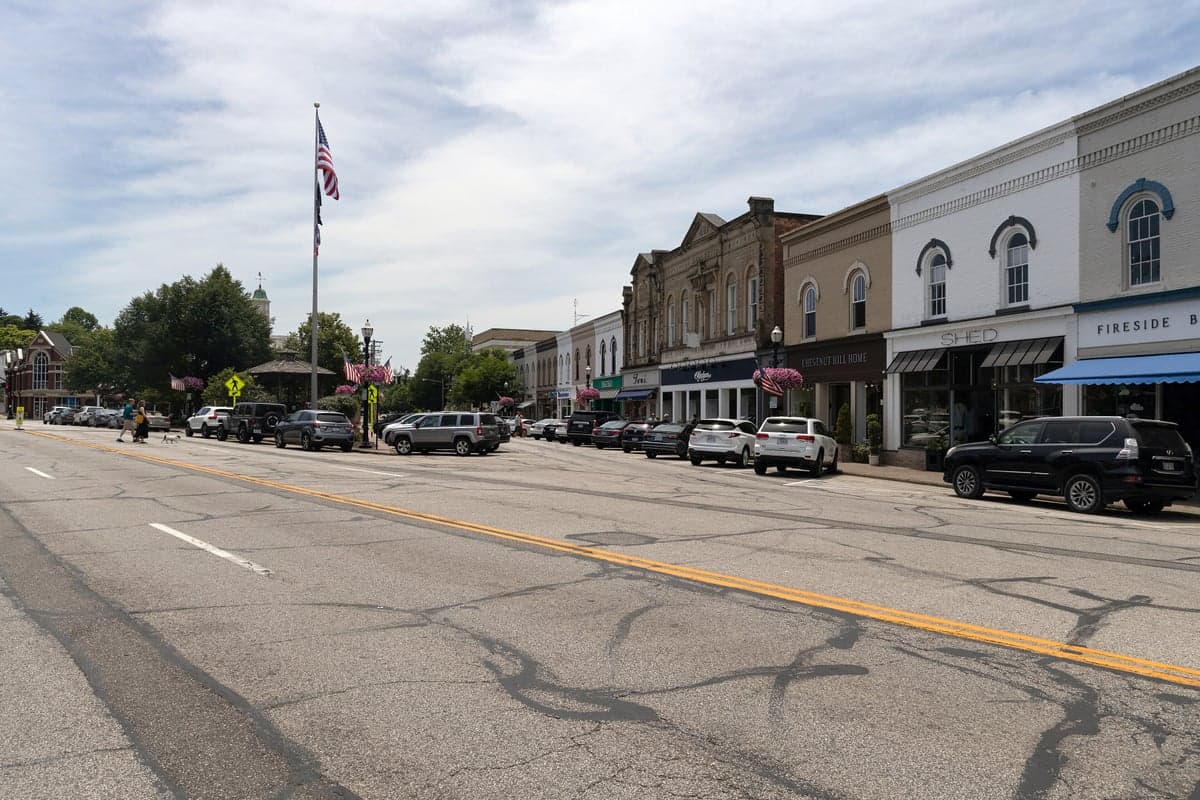
The people of Chagrin Falls, Ohio, today number 4,209 and form one of the most highly educated, stable, and culturally homogeneous communities in Greater Cleveland. With 70.8% of adults holding a college degree and a foreign-born population of just 0.1%, the village is overwhelmingly native-born and white (88.9%), with small but measurable Black (3.3%), Hispanic (2.8%), and East/Southeast Asian (1.4%) communities. The population is notably older and wealthier than the regional average, and the village's identity is defined less by ethnic diversity than by a deep-rooted sense of place, historic preservation, and a walkable downtown centered on the falls of the Chagrin River.
How the city was settled and grew
Chagrin Falls was founded in the early 19th century by settlers from New England, primarily Connecticut and Massachusetts, who were drawn by the water power of the Chagrin River. The falls provided the energy for gristmills, sawmills, and later woolen and paper mills, making the village an early industrial hub in the Western Reserve. The original population was almost entirely white, Protestant, and of English and Scottish ancestry, and they built the village's first homes along Main Street and Franklin Street, where many of the oldest surviving houses still stand. A second wave of European immigrants arrived in the late 19th and early 20th centuries, primarily Irish and German Catholics who worked in the mills and quarries. These families settled in the South Side neighborhood, south of the river, where smaller worker cottages and the village's Catholic church, St. Mary's, were established. A smaller number of Italian and Eastern European families arrived around the same period, settling along Bell Street and Walnut Street, though the village remained overwhelmingly Anglo-American through the mid-20th century. The population peaked at roughly 3,500 in the 1950s before suburbanization began to reshape the area.
Modern era (post-1965)
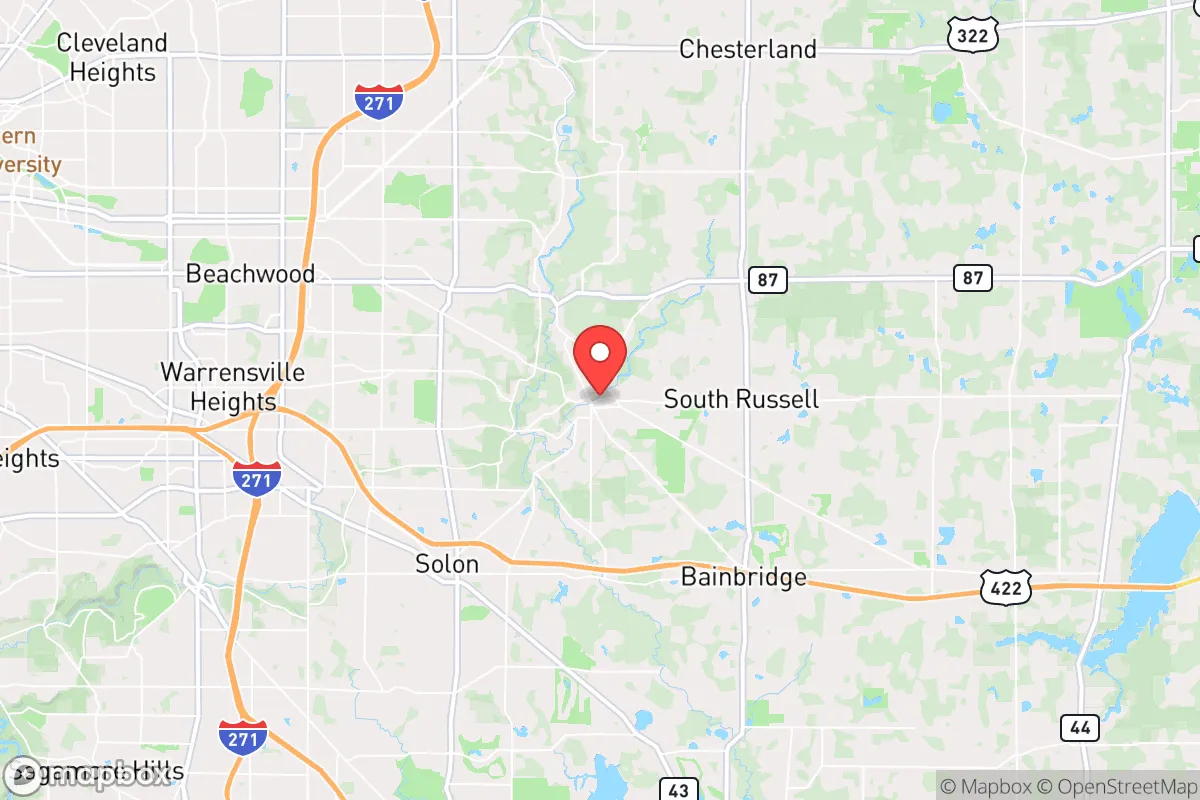
After the 1965 Hart-Cellar Act, Chagrin Falls experienced virtually no new immigration, and its foreign-born share has remained near zero for decades. The village's modern demographic story is one of domestic in-migration: affluent professionals from the Cleveland suburbs and exurbs, drawn by the nationally recognized school system, the historic downtown, and the village's reputation as a safe, picturesque enclave. This wave concentrated in the North Side neighborhood, north of the river, where larger homes on tree-lined streets like North Main Street and Solon Road attracted executives, doctors, and attorneys. The Miles Road corridor, near the eastern border with Bainbridge, saw new construction of custom homes on larger lots, absorbing families who wanted the Chagrin Falls address but preferred more space. The Black population, which was historically negligible, grew to 3.3% by the 2020 census, with most Black residents living in the South Side and Bell Street areas, though the numbers remain small. The Hispanic and East/Southeast Asian populations are similarly small and dispersed, with no single ethnic enclave forming. The village's population has been essentially flat since 2000, fluctuating between 4,000 and 4,200, as strict zoning and limited developable land have prevented significant growth.
The future
The population of Chagrin Falls is likely to remain stable or decline slightly over the next 10–20 years, constrained by geography and zoning. The village is built out, with little vacant land for new housing, and the aging housing stock and high property values are pricing out younger families. The population is becoming slightly more diverse at the margins: the Hispanic share has risen from 1.5% in 2010 to 2.8% in 2020, and the East/Southeast Asian share has grown from 0.8% to 1.4% over the same period. These new residents are dispersing across the village rather than clustering, and they are typically professionals employed in Cleveland's health care, legal, and technology sectors. The Black population has held steady at around 3%, with no signs of rapid increase. The village's cultural identity is evolving from a purely old-stock Yankee enclave to a more cosmopolitan, though still overwhelmingly white, professional community. For someone moving in now, Chagrin Falls offers a stable, low-crime, high-amenity environment with a strong sense of history, but it is not a place of rapid demographic change or growth. The village is becoming more of a lifestyle destination for affluent empty-nesters and remote workers than a family-growth suburb, and the school district is likely to see continued enrollment declines unless new housing is built.
Chagrin Falls is becoming a smaller, older, and slightly more diverse version of its historic self — a place where the population is stable, highly educated, and deeply attached to the village's physical and social character. For a relocating family or individual, the trade-off is clear: you gain one of Ohio's most charming and safe communities, but you join a population that is not growing and that offers limited ethnic or economic diversity. The village's future is one of preservation, not expansion, and its people will continue to be defined by their commitment to place rather than by demographic transformation.

* Values derived from national, state, county, city and local statistics and may differ in a specific area. Last updated: 2026-08-10T17:45:38.000Z
Narrative content on this page is AI-generated and may contain mistakes. Verify any details that matter before acting on them.
ReloMaps may earn a commission from affiliate links at no extra cost to you.

