 Popular
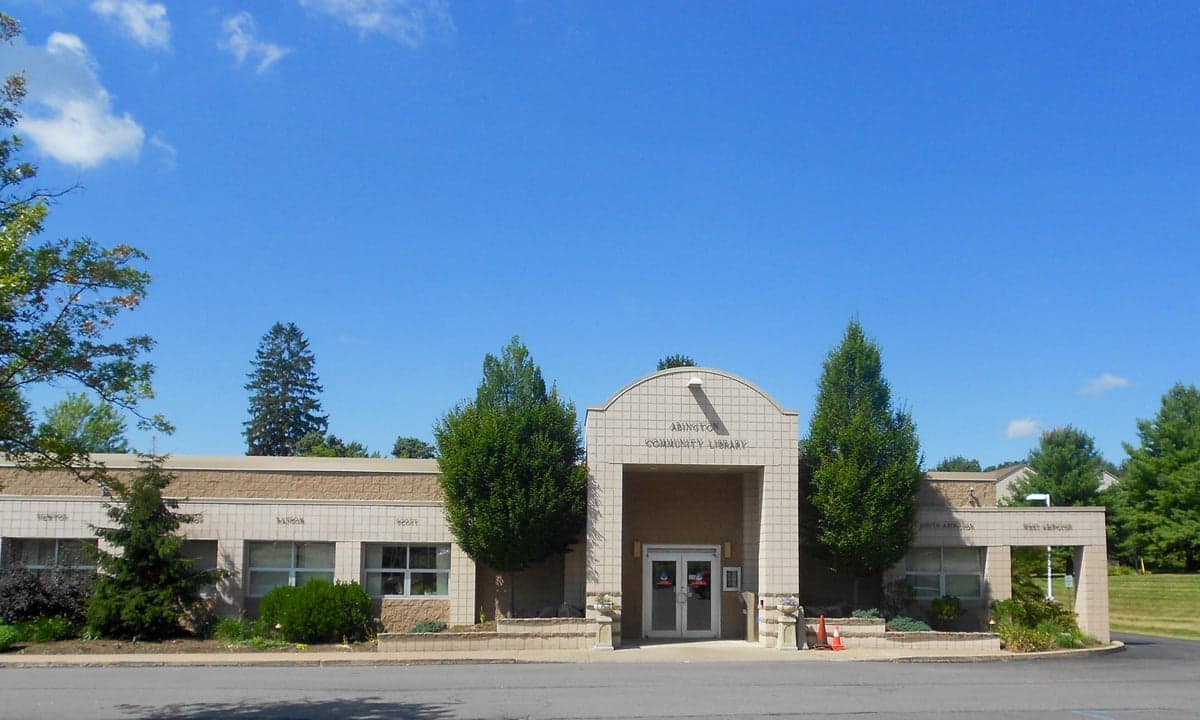
Photo: Wikipedia
Demographics of Clarks Summit, PA
Affluence Level in Clarks Summit, PA
An upper-middle-class area. Household wealth, education levels, and homeownership run ahead of national benchmarks.
People of Clarks Summit, PA
Clarks Summit, Pennsylvania, is a small, tight-knit borough of 5,058 residents that blends historic New England-style charm with a modern, family-oriented suburban character. The population is predominantly white (87.9%) and highly educated, with 57.5% holding a college degree, reflecting its role as a bedroom community for professionals working in Scranton and Wilkes-Barre. The borough’s identity is shaped by its quiet, tree-lined streets, a strong sense of local tradition, and a demographic profile that has remained remarkably stable over the past half-century.
How the city was settled and grew
Clarks Summit’s human history begins with the Abingtons, a region originally inhabited by the Lenape people before European settlers arrived in the late 18th century. The borough itself was formally incorporated in 1911, but its growth was driven by the arrival of the railroad and the development of the coal and ice industries in the nearby Lackawanna Valley. The first major wave of settlers were Yankees from New England and New York, drawn by fertile farmland and the promise of commerce along the turnpike connecting the Wyoming Valley to the northern tier. These early families built the core of what is now the State Street Historic District, where many of the borough’s oldest homes—Greek Revival and Victorian—still stand. A second wave, primarily Irish and German immigrants, arrived in the mid-19th century to work on the railroad and in local quarries. They settled in the West Side neighborhood, near the railroad tracks, and established St. Gregory’s Catholic Church, which remains a community anchor. By the early 20th century, Clarks Summit had become a summer retreat for wealthy Scranton families, who built large homes along North Abington Road, a corridor that still retains a stately, residential character.
Modern era (post-1965)
The post-1965 era saw Clarks Summit transform from a small railroad town into a sought-after suburb. The construction of Interstate 476 (the Northeast Extension of the Pennsylvania Turnpike) in the 1970s made the borough accessible to commuters, and the population grew steadily as families moved from Scranton and other urban centers seeking better schools and lower crime rates. This domestic in-migration was overwhelmingly white, and the borough’s racial composition remained largely unchanged: the foreign-born population today is just 1.4%, and the Black population is 0.4%. The Hickory Street area, with its mid-century ranches and split-levels, became the primary landing spot for these new suburban families. Meanwhile, the East Grove Street neighborhood, closer to the borough’s commercial core, saw a modest influx of Hispanic residents (now 6.3% of the population), many of whom moved from the Scranton area for work in construction and service industries. East/Southeast Asian residents (0.2%) and Indian-subcontinent residents (0.0%) are virtually absent, reflecting the borough’s limited draw for immigrant communities compared to larger cities. The borough’s character during this period was defined by its schools—the highly rated Abington Heights School District—and its role as a quiet, safe haven for families.
The future
Looking ahead, Clarks Summit’s population is projected to remain stable or decline slightly, as the borough is nearly built out and lacks land for major new development. The population is aging, with a median age of 45.6, and younger families are increasingly priced out by rising home values—the median home price is now over $300,000. Diversity is expected to increase only marginally, driven by a slow growth in the Hispanic population (currently 6.3%) as families move from Scranton and the surrounding region. The Glenburn Road corridor, on the borough’s eastern edge, is the most likely area to see new construction, but it will be limited to infill lots and small subdivisions. The borough’s cultural identity will likely remain rooted in its historic character and family-oriented values, with little pressure from large-scale immigration or rapid demographic change. The next decade will see Clarks Summit continue as a stable, predominantly white, college-educated community—a place where tradition and continuity are valued over transformation.
For someone moving in now, Clarks Summit offers a predictable, safe, and well-educated environment with strong schools and a deep sense of local history. It is not a place of rapid change or growing diversity, but rather a community that has consciously preserved its character through zoning and limited development. New residents will find a borough that values its past and expects newcomers to fit into its established rhythm.

* Values derived from national, state, county, city and local statistics and may differ in a specific area. Last updated: 2026-08-24T20:05:33.000Z
Narrative content on this page is AI-generated and may contain mistakes. Verify any details that matter before acting on them.
ReloMaps may earn a commission from affiliate links at no extra cost to you.

