 Popular
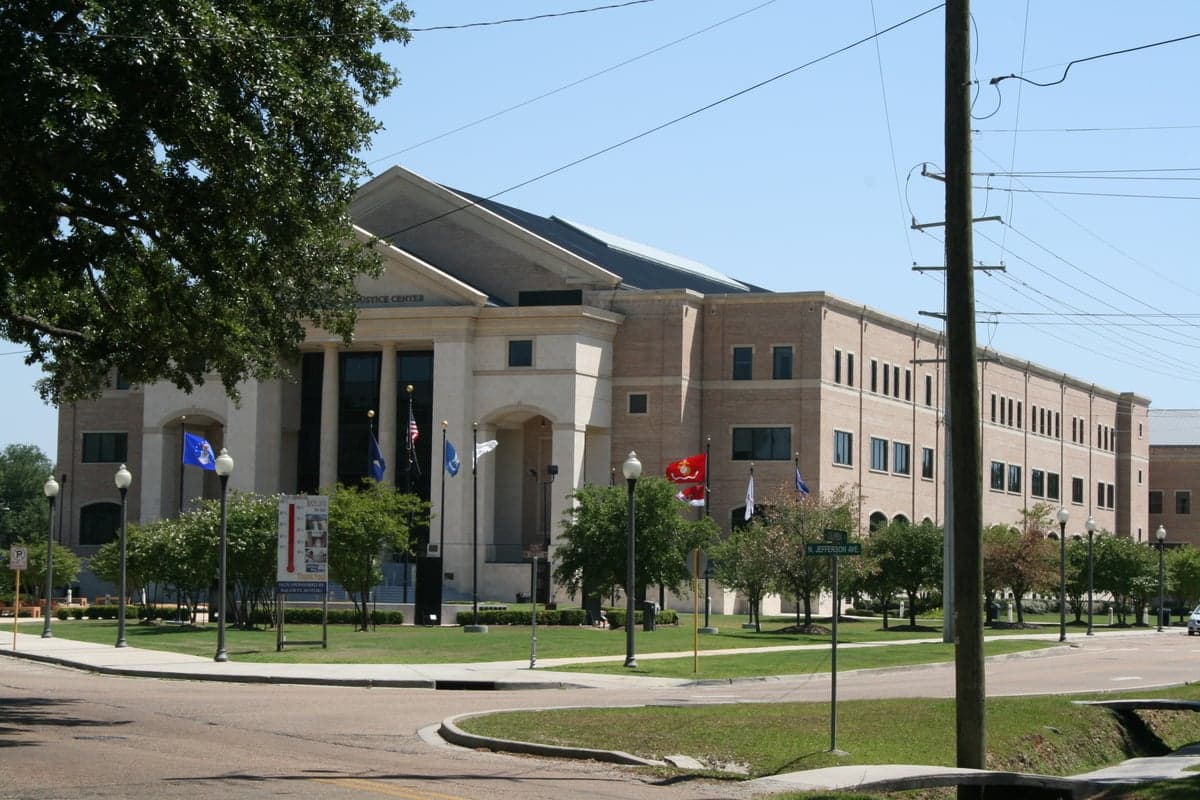
Photo: Wikipedia
Demographics of Covington, LA
Affluence Level in Covington, LA
A middle-class area roughly in line with national averages across income, home values, education, and employment.
People of Covington, LA
The people of Covington, Louisiana today form a predominantly white (74.9%), college-educated (36.7%) community of 11,568 residents, with a notably small foreign-born population of just 1.3%. The city's character is shaped by its role as a historic St. Tammany Parish seat and a growing bedroom suburb for New Orleans commuters, blending antebellum-era roots with modern suburban expansion. Distinctive identity markers include a strong local preservationist ethos, a visible Catholic and Protestant church presence, and a population that is significantly less diverse than the New Orleans metro area as a whole.
How the city was settled and grew
Covington was founded in 1813 by John Wharton Collins, a New Orleans merchant who purchased land on the Bogue Falaya River and laid out a grid of streets. The original population was drawn by the promise of a healthy, high-ground alternative to New Orleans's swampy, yellow-fever-prone environment. Early settlers were primarily Anglo-American planters and merchants from the Eastern Seaboard, along with a smaller number of French Creoles and free people of color. The historic Columbia Street Landing district became the commercial heart, where steamboats unloaded goods and passengers. By the mid-19th century, the Boston Street area housed the growing professional class of lawyers, doctors, and shopkeepers. The post-Civil War era saw the arrival of German and Irish immigrants who worked as laborers on the railroad and in the timber industry, settling in the Lee Lane and North Covington neighborhoods. The city's population remained small and overwhelmingly white through the early 20th century, with a small Black community concentrated in the Riverside area near the riverfront.
Modern era (post-1965)
The post-1965 period transformed Covington from a quiet river town into a rapidly growing suburb. The construction of Interstate 12 in the 1970s made the city accessible to New Orleans commuters, triggering a wave of domestic in-migration from the New Orleans metro area. This influx was overwhelmingly white and middle-to-upper-class, drawn by larger lots, lower crime rates, and the perception of better schools. The West 21st Avenue corridor and the Highway 21 corridor saw the development of new subdivisions like Beau Chene and Tchefuncta Club Estates, which attracted professionals and executives. The city's Black population, which had been a larger share historically, declined proportionally as the white population surged. The 2020 data shows a Black population of 14.8%, down from an estimated 20-25% in the 1970s. The Hispanic population, at 6.7%, is a relatively recent arrival, concentrated in service-industry jobs and living in rental housing along the North Highway 190 corridor. The East/Southeast Asian population (0.4%) and Indian subcontinent population (0.0%) remain negligible, reflecting the city's limited draw for immigrant communities compared to larger metro areas.
The future
The population of Covington is likely to continue its trajectory of slow, steady growth driven by domestic in-migration from the New Orleans area and other parts of Louisiana. The city is not homogenizing into a single bloc but is instead tribalizing into distinct enclaves: established families in historic neighborhoods like Columbia Street and Boston Street, newer suburbanites in master-planned communities like Beau Chene, and a growing but still small Hispanic population in lower-cost rental areas. The immigrant communities (foreign-born at 1.3%) are not growing significantly and show little sign of expanding beyond the current Hispanic cohort. The next 10-20 years will likely see Covington become slightly more diverse as the Hispanic share inches upward, but the city will remain overwhelmingly white and native-born. The college-educated share (36.7%) is above the national average and will likely rise as remote work and professional services continue to attract educated newcomers.
For someone moving in now, Covington is becoming a stable, predominantly white, family-oriented suburb with a strong sense of local history and a clear separation between established historic districts and newer suburban developments. The city offers a low-crime, high-amenity environment for those seeking a traditional small-town feel within commuting distance of New Orleans, but it is not a destination for those seeking racial or ethnic diversity or a large immigrant community.

* Values derived from national, state, county, city and local statistics and may differ in a specific area. Last updated: 2026-05-03T20:24:43.000Z
Narrative content on this page is AI-generated and may contain mistakes. Verify any details that matter before acting on them.
ReloMaps may earn a commission from affiliate links at no extra cost to you.

